The Edge Intelligence Revolution: How Edge AI is Redefining Enterprise Situational Awareness
By Enterprise Technology Desk
As enterprises worldwide grapple with an unprecedented deluge of data from millions of connected Internet of Things (IoT) devices, a profound architectural shift is quietly reshaping the digital landscape. The era of localized intelligence has officially arrived. What began years ago as isolated proof-of-concept experiments and experimental pilots has rapidly accelerated into critical, enterprise-grade deployments.
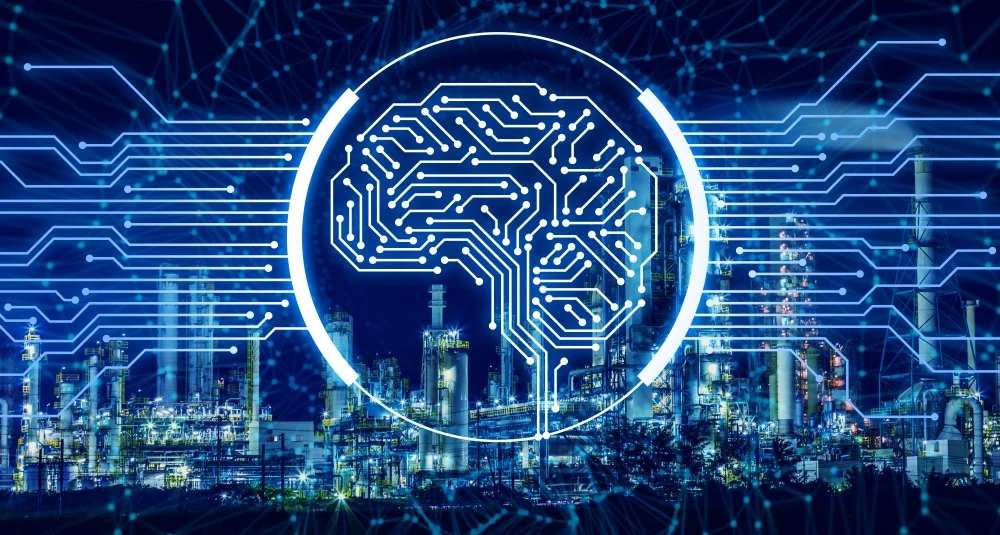
At the heart of this transformation is Edge AI—the deployment of artificial intelligence algorithms and machine learning models directly on local hardware devices, gateways, or servers situated close to where data is physically generated. By bringing computing power to the physical "edge" of the network rather than relying exclusively on distant centralized cloud servers, organizations are fundamentally altering how they interpret changing conditions and respond to dynamic environments. This capability, universally known as situational awareness, has become the holy grail for modern industries, ranging from automated manufacturing plants and busy healthcare campuses to high-security corporate headquarters and sprawling transport hubs.
Main Facts: The Rise of Edge AI and the Data Explosion
The momentum behind Edge AI is no longer a matter of speculative industry hype; it is backed by hard economic and technological realities. According to a recent IDC Spotlight paper, roughly 27% of surveyed global organizations have already fully integrated Edge AI into their operational frameworks. An additional 54% have active plans to deploy the technology within the next 24 months.
This massive wave of adoption is fueling explosive market growth. Industry analysts project that the global edge enterprise infrastructure market will skyrocket to an estimated $110 billion by 2030.
However, this rapid digital expansion introduces a complex double-edged sword. While the proliferation of sensors, smart cameras, and connected machinery grants organizations unprecedented visibility, it also unleashes a chaotic flood of raw data. In fast-paced settings like international airports, massive sports stadiums, or bustling logistics hubs, security teams and operational managers are routinely overwhelmed by the sheer volume of simultaneous data feeds.
To make sense of this information, organizations are heavily investing in robust security and monitoring apparatuses. Data from Fortune Business Insights reveals that the worldwide threat detection systems market was valued at $89.99 billion in 2025 and is projected to expand to $125.13 billion by 2034. Yet, investing in standalone threat detection or isolated IoT sensors is no longer enough. Because these diverse systems have historically operated in isolated silos, businesses struggle to achieve true contextual intelligence—the real-time understanding of what an event actually means within the broader operational picture.
Edge AI acts as the connective tissue, bridging the gap between raw, isolated data signals and cohesive, actionable intelligence.
Chronology: From Cloud-Centric Experimentation to Edge-Driven Reality
To understand how enterprise computing reached this pivotal juncture, it is helpful to trace the chronological evolution of artificial intelligence and cloud infrastructure over the past decade.
Phase 1: The Cloud-First Boom (Early 2010s – Early 2020s)
In the initial wave of the digital transformation and IoT boom, organizations rushed to connect every conceivable asset—from factory floor assembly arms to HVAC units and security cameras. The standard architectural design dictated that all data collected by these endpoints must be funneled upward through local networks to centralized cloud servers or massive enterprise data centers. Cloud-based AI algorithms processed the bulk data to unearth trends, generate predictive maintenance logs, and audit security footage.
While this centralized approach worked well for historical analysis and long-term business intelligence, it revealed critical structural flaws when applied to real-time operations. Network bandwidth costs soared, security vulnerabilities increased during long-distance data transit, and, most importantly, system latency spiked. In time-sensitive environments, waiting for data to travel to the cloud, be processed by a central server, and travel back to the operational site introduced unacceptable delays.
Phase 2: The Pilot Purgatory (2021 – 2024)
As machine learning models matured, businesses recognized the absolute necessity of embedding intelligence closer to operational assets. This sparked a wave of enterprise experimentation. However, early deployments frequently stumbled. According to comprehensive industry studies, while organizations eagerly launched pilots, many remained trapped in "pilot purgatory"—unable to scale their AI initiatives due to integration bottlenecks, prohibitive communication latency, and data privacy concerns.
Furthermore, as Rafee Tarafdar, Chief Technology Officer of Infosys, noted in an interview with Forbes, mastering enterprise AI required an iterative, experimental mindset. "With AI, the only way you learn is by experimenting and trying out. There’s no other way because the tech is changing so fast," Tarafdar observed. Organizations had to learn through trial and error that centralized cloud models could not efficiently manage the localized, real-time demands of physical infrastructure.
Phase 3: The Edge-First Transformation (2025 – Present)
The current landscape represents a maturation of enterprise strategy. Propelled by advances in low-power, high-performance silicon chips, specialized neural processing units (NPUs), and robust edge-computing frameworks, organizations are shifting from cloud-dependent architectures to edge-first designs.
As highlighted by AI ecosystem thought leader John Werner in a recent Forbes analysis, the exploding performance demands of AI are forcing systems engineers to fundamentally reconsider where computing physically takes place. The consensus has shifted: processing data at or near its source is no longer just an optimization technique—it is an operational imperative for speed, security, and responsiveness.
Supporting Data: The Metrics Driving Transformation
The transition toward edge-based architectures is validated by numerous macroeconomic and industry data points.
- IDC Enterprise Adoption Metrics: Approximately 27% of surveyed organizations have already deployed Edge AI, with another 54% planning integration within the next two years.
- Infrastructure Market Projections: The global edge enterprise infrastructure market is on an aggressive trajectory, heading toward a projected valuation of $110 billion by 2030.
- Threat Detection Market Expansion: Driven by increasing security complexities, the worldwide threat detection systems market grew to $89.99 billion in 2025 and is projected to surge to $125.13 billion by 2034.
- The Global AI Landscape: According to McKinsey & Company’s 2025 State of AI Survey, an overwhelming 88% of organizations have successfully deployed AI across at least one operational area of their business. However, a telling nearly two-thirds of those organizations remain constrained within the experimentation or piloting phase, struggling to achieve enterprise-wide scaling.
These figures illustrate a clear market divide: while digital adoption is nearly universal, true operational advantage now belongs exclusively to organizations that can successfully bridge the gap between their IoT hardware deployments and edge-computing intelligence.
Official Responses and Expert Perspectives
Industry leaders and technology innovators have increasingly focused their attention on the intersection of localized intelligence, context, and situational awareness.
Commenting on the architectural evolution of smart environments, Jamie Siminoff, founder of Ring and a pioneer in consumer and enterprise surveillance technology, discussed the paradigm shift in a recent interview with The Verge. Siminoff emphasized that the true value of modern AI lies far beyond simple binary triggers, such as basic motion detection. The strategic objective, he noted, is to evolve systems so they can understand complex events intelligently and provide meaningful, multi-layered context around them.
While Siminoff’s insights frequently stem from smart security ecosystems, the underlying philosophy translates directly to the enterprise sector: AI delivers exponential value only when disparate data points converge to paint a coherent, unified picture.
This perspective is echoed in enterprise IT boardrooms worldwide. CTOs are recognizing that edge deployments are not merely about offloading computational workloads from overloaded cloud networks. Rather, they are about empowering physical infrastructure with autonomous reflex arcs. By running advanced neural networks locally, hardware can evaluate threats, flag operational anomalies, and correlate sensor inputs in microseconds—capabilities that are physically impossible when bound by the round-trip latency of cloud connectivity.
Implications: Four Ways Edge AI Transforms Situational Awareness
For enterprise leaders, the implementation of Edge AI yields four profound operational transformations, fundamentally redefining organizational situational awareness.
1. Amplified Real-Time Threat Detection
Traditional security frameworks often fail because they rely on fragmented, independent security layers. Cameras record footage, access control systems log badge swipes, and metal detectors screen for weapons—all operating in isolation.
Edge AI breaks down these silos by analyzing data directly at the point of origin. When integrated with specialized security hardware, the impact is multiplicative. For example, systems like the CEIA OPENGATE weapons detection system utilize advanced electromagnetic technology at high-throughput entry points to identify potential metallic threats without requiring individuals to stop or empty their pockets.
As noted by deployment partners at GXC Inc., such solutions are engineered for modern venues where safety, seamless user experiences, and plug-and-play wireless setups are paramount. When data from an advanced weapons detector is processed alongside Edge AI-powered video analytics directly at the gate, security teams do not merely receive an isolated warning. Instead, they gain immediate contextual intelligence, determining instantly whether multiple independent systems are pointing toward the same validated risk. The result is proactive, highly accurate threat mitigation.
2. Early Catch of Operational Anomalies
Preventing catastrophic equipment failures or security breaches relies on identifying anomalies at their absolute earliest stage. In complex enterprise environments, early-stage anomalies—such as minute vibrations in heavy machinery, slight unauthorized perimeter probes, or subtle environmental shifts—are easily lost amid terabytes of routine logs and sensor feeds.
By the time human operators manually review logs and intervene, minor anomalies have frequently escalated into full-scale operational crises. Edge AI continuously scrutinizes operational data at the device level, establishing baseline behaviors and instantly flagging deviations in real time. Because these edge models continually learn from local operational data, their predictive accuracy compounds over time, drastically reducing operational risk.
3. Radical Reduction in Decision Latency
In high-stakes environments, situational awareness is only as valuable as its velocity. If critical operational intelligence takes minutes to travel from a remote sensor to a centralized cloud server and back to an on-site manager, decision-makers are forced to respond to an outdated reality. This delay—known as decision latency—cripples incident response times.
Edge AI eliminates unnecessary data transit by performing heavy computational analysis directly on local edge hardware. Only critical, high-priority alerts are transmitted to central operators or cloud dashboards. For example, if a heavy industrial motor in a manufacturing facility begins operating outside its normal vibrational tolerances, an Edge AI node detects the anomaly locally and instantly alerts on-site maintenance crews. Production downtime is prevented before the issue impacts the broader plant floor.
4. Synthesizing Disparate IoT Signals into Actionable Intelligence
Modern enterprises are flooded with data from smart cameras, spatial occupancy sensors, environmental monitors, and connected machinery. Viewed individually, each signal may appear completely innocuous. However, when these independent data points occur simultaneously, they often point to major, systemic operational events.
Edge AI excels at data correlation. By processing multiple IoT streams locally, the technology connects the dots between disparate events without requiring human operators to manually parse through thousands of data dashboards. The system synthesizes raw signals into coherent, actionable insights, enabling leadership teams to make confident, data-driven decisions.
Frequently Asked Questions (FAQs)
Which industries benefit the most from using Edge AI for situational awareness?
Edge AI delivers immense value across any industry that relies on real-time operational visibility.
- Manufacturing Facilities: Can detect equipment anomalies and mechanical failures before production is disrupted.
- Healthcare Institutions: Can monitor critical patient care environments and secure restricted medical campuses.
- Corporate Campuses & Public Venues: Can radically enhance perimeter security, crowd management, and threat detection.
How does Edge AI differ from cloud-based AI in IoT environments?
The primary differentiator is where data is computed. Cloud-based AI transmits raw data over networks to centralized servers for analysis, which introduces latency and heavy bandwidth consumption. Edge AI processes data directly on or near connected endpoints, enabling instantaneous anomaly detection, enhanced data privacy, and minimal reliance on continuous internet connectivity.
Why is contextual intelligence critical for situational awareness?
Individual IoT devices typically provide a fragmented, narrow window into a dynamic environment. Contextual intelligence bridges these gaps by correlating data streams from multiple sources—such as security cameras, environmental sensors, and equipment logs—to reveal the underlying relationships between events. This allows organizations to reliably distinguish between routine background activity and genuine operational risks.
Conclusion
The exponential growth of the Internet of Things guarantees that organizations will continue to face an ever-expanding ocean of data. However, the true bottleneck of digital transformation is no longer the ability to deploy more connected hardware; it is the ability to transform relentless data streams into immediate, actionable intelligence.
As McKinsey & Company’s 2025 State of AI survey highlights, while 88% of businesses have dipped their toes into AI, nearly two-thirds remain trapped in the experimental piloting phase. To break out of this cycle, the next phase of enterprise evolution must seamlessly bridge AI and IoT deployments directly at the edge. Only organizations that embrace edge-driven situational awareness will be equipped to navigate future complexities with absolute speed, precision, and confidence.