The End of "Free Loading": AWS Revolutionizes AI Economics with Edge-Based Traffic Monetization
In a landmark shift for the digital economy, Amazon Web Services (AWS) has unveiled a transformative capability for its WAF (Web Application Firewall) service: the ability for publishers and content owners to directly monetize AI bot traffic. This development marks a turning point in the ongoing tension between content creators and artificial intelligence developers, shifting the narrative from passive observation to active economic participation.
For years, website owners have functioned as the primary data providers for AI models, bearing the full brunt of infrastructure costs—bandwidth, compute, and storage—while receiving little in return. As AI-specific crawlers now account for more than 50% of web traffic for many providers, the "value extraction" model has come under intense scrutiny. AWS’s new solution provides a concrete, automated mechanism for publishers to reclaim the value of their data at the network edge, effectively turning the tide on uncompensated AI scraping.
The Paradigm Shift: Why AI Traffic Monetization Matters
The Economic Imbalance
The current state of the internet is defined by a significant asymmetry. Traditional search engine crawlers operate on a "give-and-take" basis: they index content and, in return, provide referral traffic that generates page views, ad impressions, and potential subscriptions. In contrast, modern AI bots—crawling for the purpose of training Large Language Models (LLMs) or powering RAG (Retrieval-Augmented Generation) systems—frequently consume vast quantities of proprietary content to generate summaries or responses within closed AI interfaces.
This behavior results in a "zero-referral" outcome for the publisher. The infrastructure cost of serving this traffic is shifted entirely onto the content creator, while the benefit—the synthesized output—is captured by the AI platform. With AI-specific crawler traffic growing by over 300% year-over-year, this imbalance has become an existential threat to many digital publishers, particularly those behind subscription walls or those reliant on high-volume advertising models.
Closing the Gap
While tools like robots.txt or standard rate-limiting have provided ways to block or restrict access, they have historically been "blunt instruments." Until now, there has been no standardized way to say, "You are welcome to access this data for your AI model, but you must pay for the privilege." AWS WAF’s new AI traffic monetization capability bridges this gap by integrating payment negotiation directly into the firewall’s request-handling logic.
Chronology: From Static Protection to Dynamic Monetization
The evolution of AWS WAF from a security-centric tool to a commerce-enabled gateway has been a multi-stage process:

- Phase 1: Visibility (Bot Control): AWS introduced WAF Bot Control to provide publishers with granular insights into bot activity. This allowed administrators to distinguish between "good" bots (search engines) and "bad" bots (scrapers, credential stuffers).
- Phase 2: Management (Rate Limiting/Blocking): Customers gained the ability to automatically throttle or block malicious agents. However, the decision was binary: allow or deny.
- Phase 3: The Monetization Frontier (Current): With the introduction of x402 protocol integration and blockchain-based settlement, AWS has enabled a tertiary option: "Pay-to-Access." By leveraging the Coinbase x402 Facilitator, AWS has turned the HTTP 402 "Payment Required" status code—long a theoretical standard—into a practical reality for machine-to-machine transactions.
Technical Framework: How the Monetization Flow Works
The architecture of this solution is designed to operate seamlessly at the network edge, ensuring that monetization does not introduce latency or require invasive changes to the origin infrastructure.
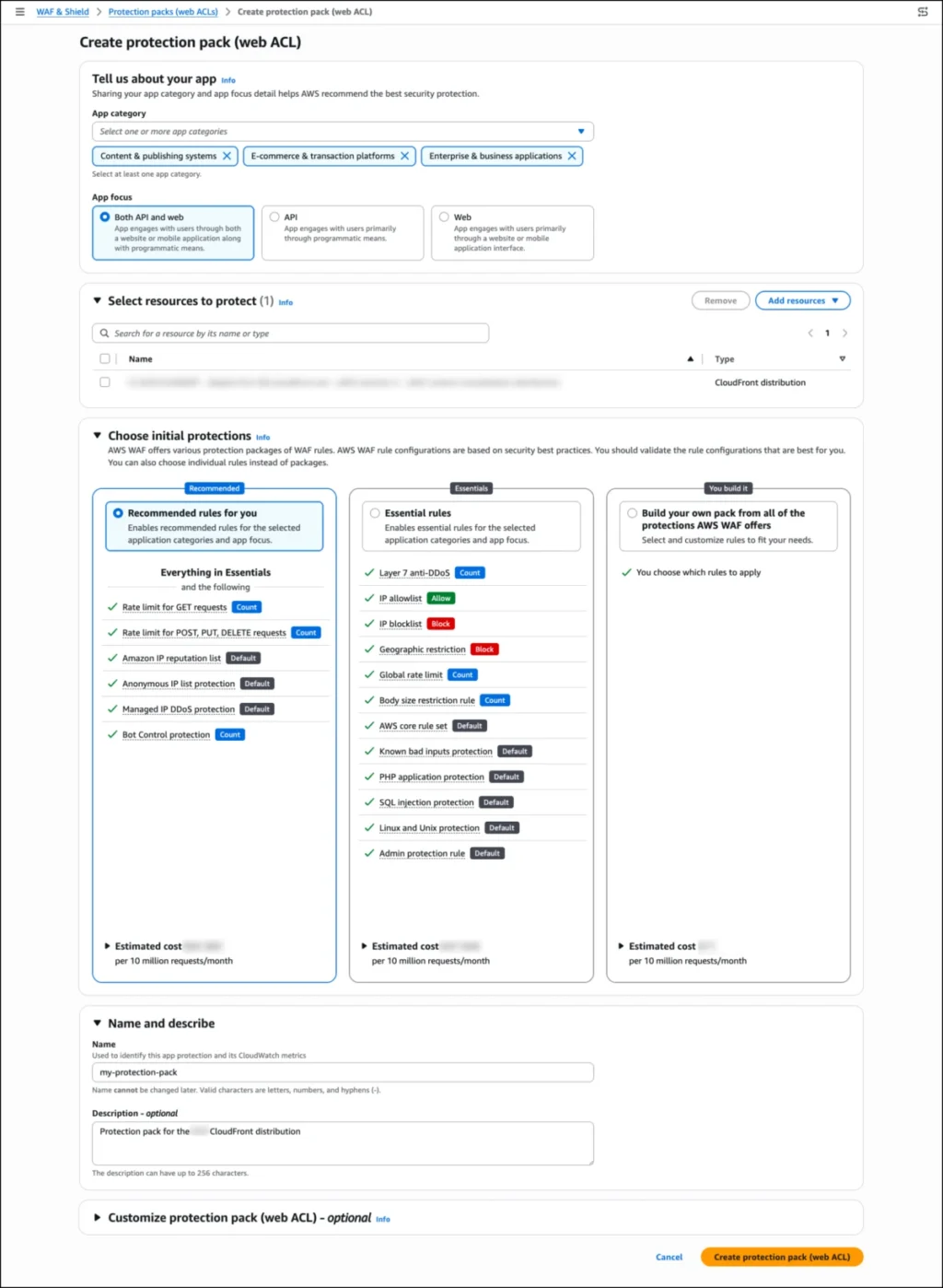
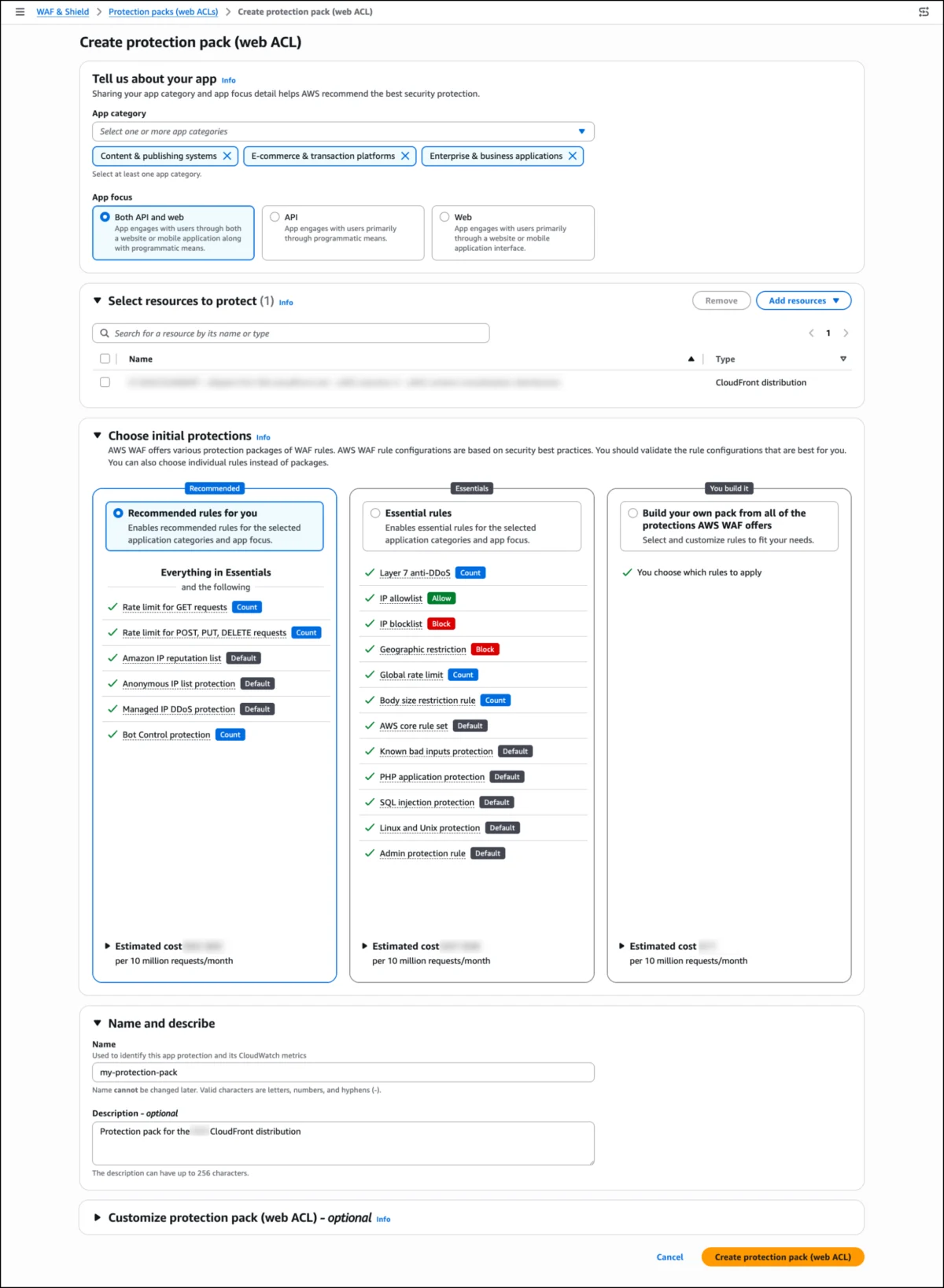
The Protection Pack: The Core Configuration Unit
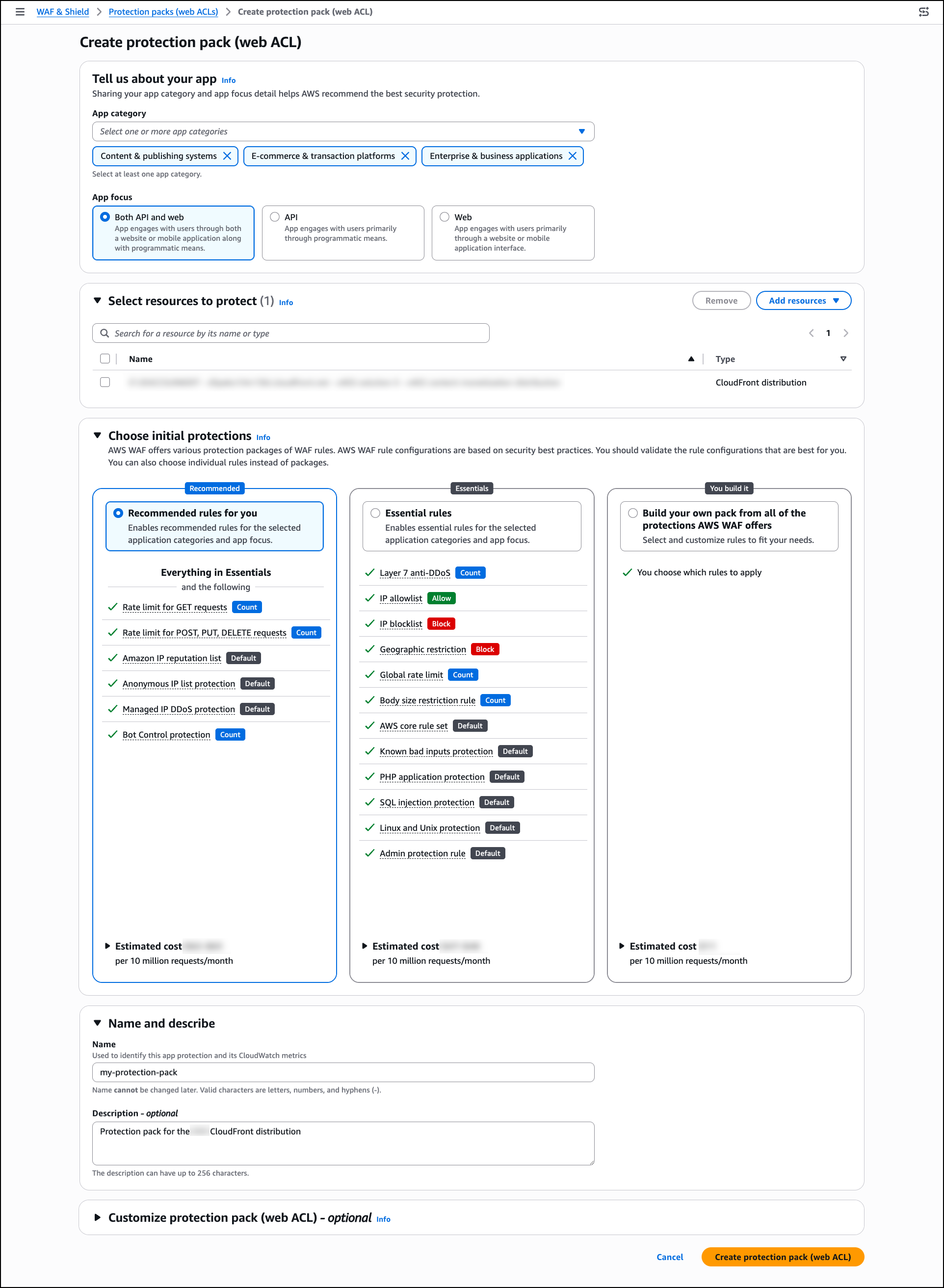
The "Protection Pack" acts as the control center for AI monetization. It is here that publishers define:
- Content Scope: Which paths are subject to monetization (e.g.,
/premium-articles/*vs./public-images/*). - Verification Tiers: AWS WAF classifies over 650 distinct bot types. Publishers can assign different pricing tiers based on the "value" of the bot—for example, charging a premium to commercial enterprise crawlers while allowing non-profit research bots free access.
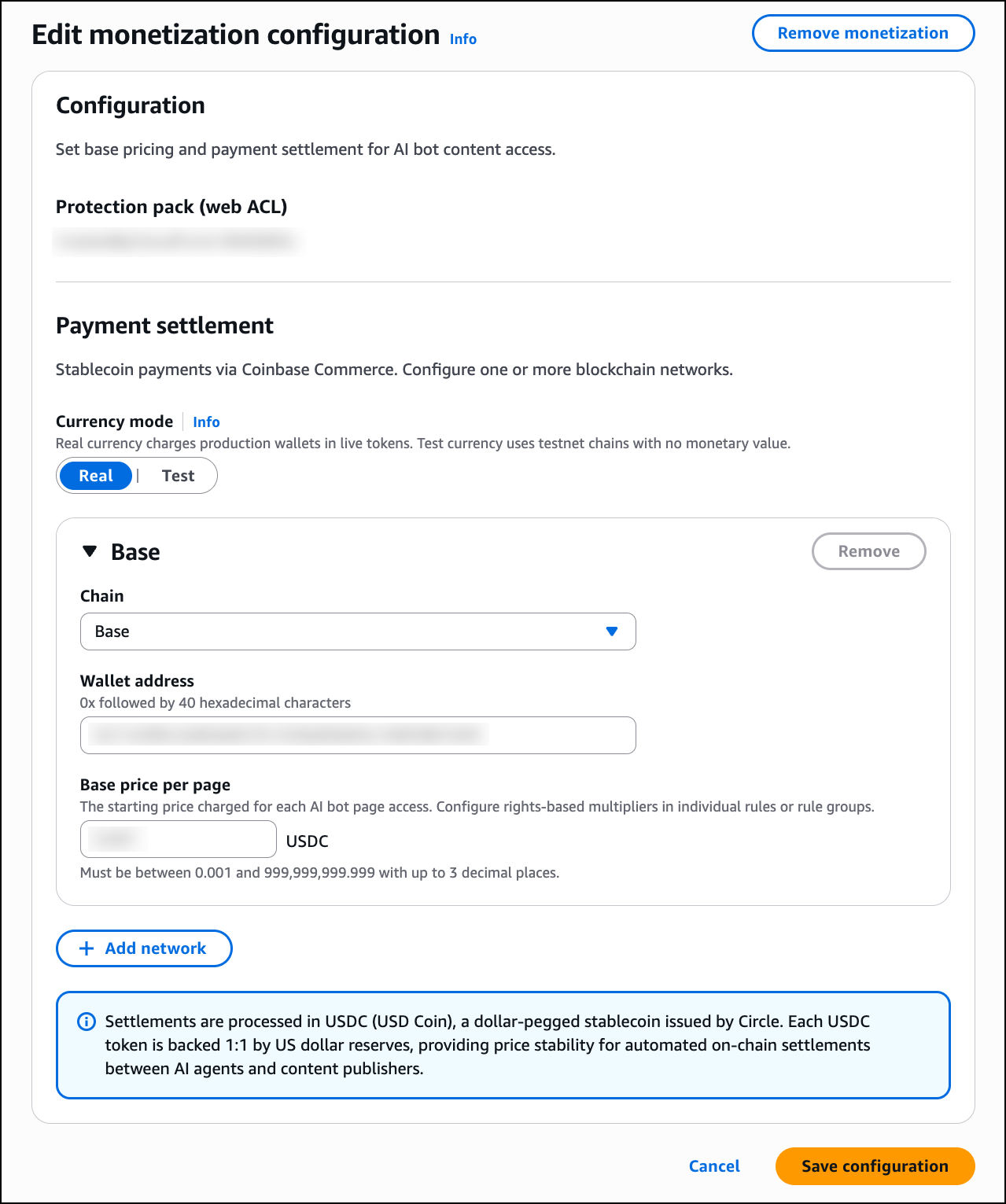
- Pricing Logic: Publishers set a base price in USDC (USD Coin) per request, creating a predictable revenue stream from high-volume scrapers.
The Payment Flow: The Role of x402
When a bot hits a protected resource, the WAF evaluates the agent’s signature. If the agent falls into a "Monetize" category, the WAF intercepts the request and returns an HTTP 402 response. This response is not a dead end; it is a "price manifest" in JSON format. This manifest details:
- The price for the content.
- Supported blockchain networks (such as Base or Solana).
- The destination wallet address for payment.
The AI agent, if designed to be compliant with modern machine-payment standards, reads this manifest, executes a transaction on the blockchain, and provides a signed receipt back to the WAF. Upon validation, the WAF transparently fetches the content and delivers it to the bot. This entire process occurs in milliseconds, hidden from the human user experience.
Supporting Data: Analytics and Revenue Oversight
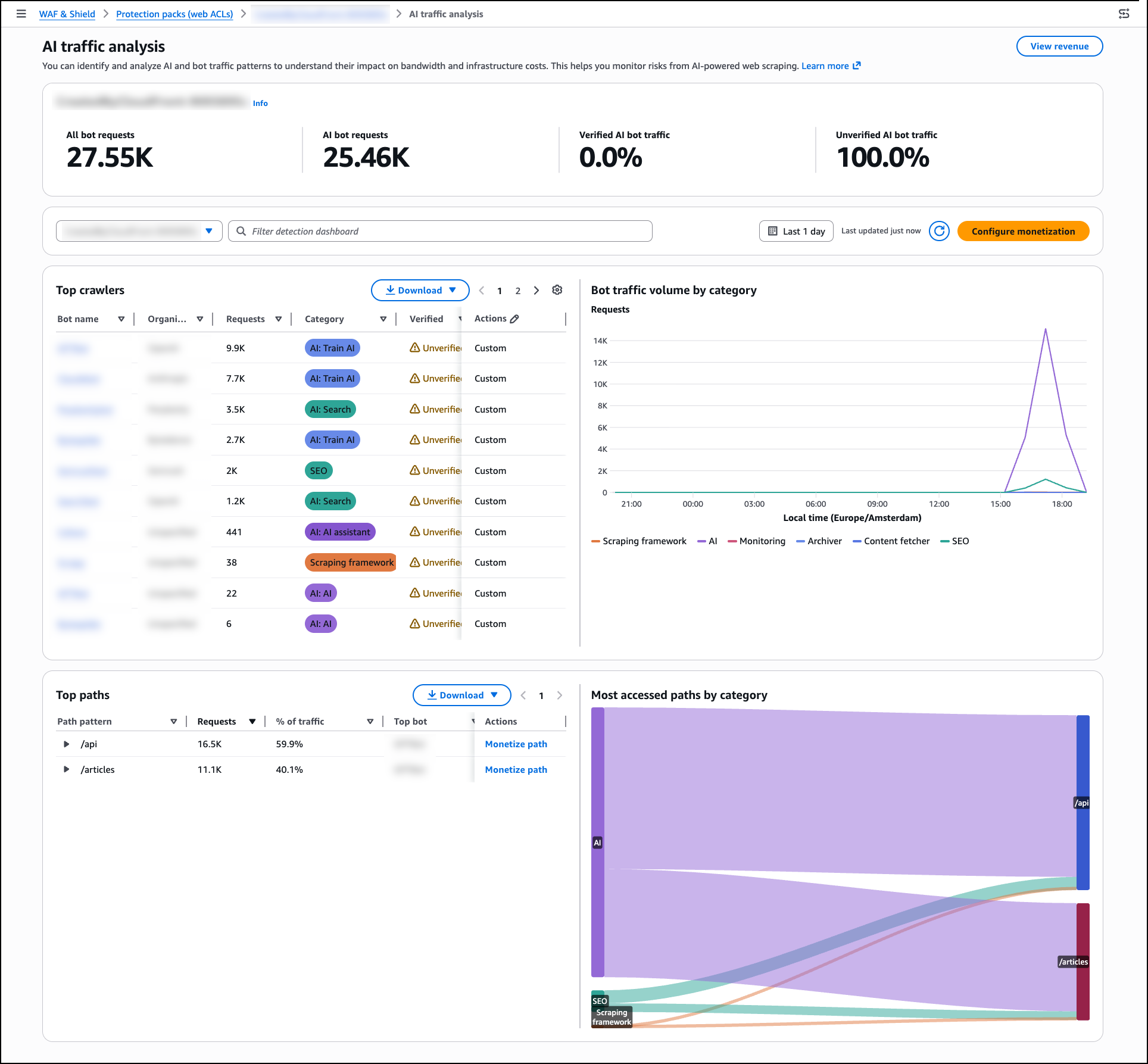
One of the most critical aspects of the new update is the AI Traffic Analysis Dashboard. Before activating payment rules, publishers can run their sites in "Observation Mode" to audit the impact of AI bots on their infrastructure.
- Infrastructure Impact: The dashboard calculates bandwidth consumption and estimated monthly egress costs specifically tied to bot activity.
- Revenue Forecasting: By applying "what-if" pricing models to historical traffic, publishers can estimate potential revenue before committing to a live monetization policy.
- Reconciliation: The Settlement tab allows financial teams to track payments, reconcile blockchain transactions, and identify failed attempts, providing a level of transparency that has previously been missing in web-scraping relations.
Implications for the Future of the Web
A New Revenue Stream for Publishers
For news organizations, research databases, and e-commerce platforms, this represents a fundamental shift in business models. Content is no longer just a "view-driver" for ad revenue; it is a raw material that can be sold on a per-request basis to the AI industry. This could potentially stabilize the media industry, as high-value data becomes a source of recurring, automated revenue.
Standardization of AI Ethics
By providing a formal "handshake" protocol (x402), AWS is encouraging a more ethical approach to AI data acquisition. AI developers who pay for access gain legal and technical "peace of mind," ensuring that their crawlers are not blocked and that they are operating within the clearly defined terms of service of the content owner. It moves the relationship from adversarial to contractual.
The Challenges Ahead
Despite the technical elegance of the solution, challenges remain. Not all AI crawlers are currently programmed to handle 402 responses or perform blockchain-based payments. There will be a transition period where publishers may have to block "non-compliant" bots while allowing "paying" bots, which could lead to a fragmented web where content is gated behind payment walls for machines. Additionally, the reliance on stablecoins for settlement may require publishers to update their financial and compliance workflows to handle cryptocurrency wallets.
Conclusion: The Edge as a Marketplace
The introduction of AI traffic monetization by AWS is a definitive statement: the era of the "free-for-all" internet is evolving into an era of "value-for-access." By leveraging the global reach of the AWS edge network, the company has provided a sophisticated, scalable, and automated way to manage the most significant traffic shift the internet has seen in a decade.
As the capability expands to include Stripe integration and broader Machine Payments Protocol (MPP) support, we can expect to see a rapid adoption of these "Protection Packs" across the enterprise web. For content owners, the message is clear: your data is an asset, and for the first time, you have the tools to ensure you are compensated for it at the exact moment of consumption.