The Evolution of Android Development: Inside the Strategy of Official Android Skills
By Editorial Staff, Tech Insights Division
In April, the Android Developer Relations team unveiled a new paradigm for AI-assisted development: the "Android Skills" repository. Designed to augment the capabilities of Large Language Models (LLMs) when interacting with the Android ecosystem, the project has quickly become a focal point for developers looking to optimize their workflows. However, as the project matures, Jose Alcérreca, Developer Relations Engineer, has provided deeper insight into the methodology, constraints, and long-term vision governing these digital extensions.
For developers navigating the intersection of generative AI and mobile engineering, understanding the "why" behind these tools is as important as the code they generate.
The Core Philosophy: Bridging the Knowledge Gap
At the heart of the Android Skills initiative lies a pragmatic philosophy: don’t teach a model what it already knows. In an era where SOTA (State-of-the-Art) models like Gemini are trained on vast swaths of internet data, including extensive technical documentation and code repositories, the utility of a "skill" is strictly defined by the presence of a knowledge gap.
Why Less is More
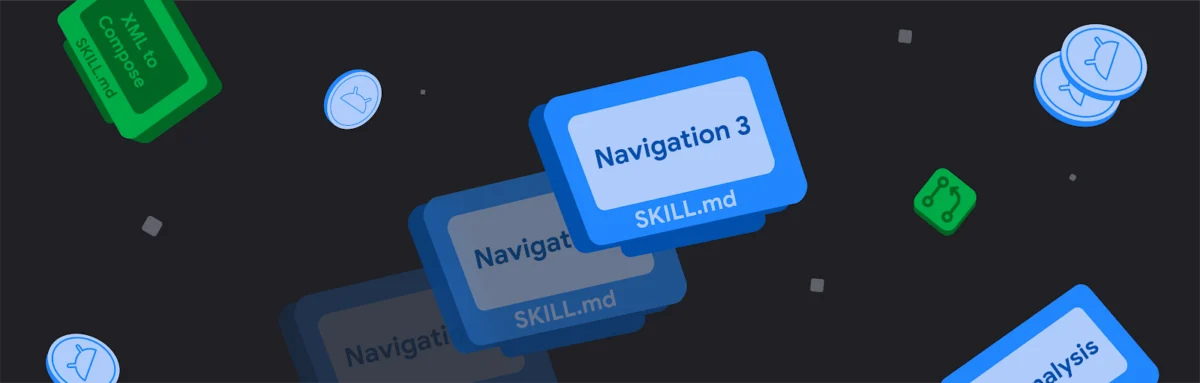
The Android team has been deliberate in its output, releasing roughly 20 official skills to date. These are not general-purpose tools for writing basic Kotlin or standard Jetpack Compose. Instead, they are hyper-focused on rapidly evolving areas of the Android platform—technologies that move faster than the training cycles of even the most advanced LLMs.
Current focal points include:
- AGP 9 (Android Gradle Plugin): Handling the latest build configurations.
- Navigation 3: Managing complex, modern navigation patterns.
- Advanced Camera APIs: Interfacing with nuanced hardware-software abstractions.
- Perfetto SQL: Providing specialized syntax support for performance tracing.
The restraint in releasing general-purpose skills is a matter of technical efficiency. Every time a developer installs a skill, it injects between 100 and 200 tokens into the baseline context of every task. If that skill is triggered, the token count can balloon into the thousands. For the average developer, "hoarding" skills is not just counterproductive—it is an expensive drain on context windows and latency.
Chronology: From Launch to Community Integration
The trajectory of the Android Skills project highlights the rapid pace of the AI-for-coding ecosystem.
- April 2024: Official launch of the Android Skills repository on GitHub. The release was met with immediate, high-volume interest from the developer community.
- Post-Launch Phase: The team began observing how developers interacted with these tools, leading to the identification of a clear distinction between "official" specialized skills and the "community-built" core skills.
- Current State: The project has moved into a cycle of continuous evaluation. As new model versions are released, the Android team re-tests their skill set to determine which remain necessary and which have been "absorbed" into the model’s internal knowledge.
- Future Outlook: The team is actively working on a deprecation pipeline, ensuring that the Android ecosystem remains lean by retiring skills as soon as they become redundant.
Supporting Data: The Rigor of Evaluation
One of the most critical aspects of the Android Skills project is the evaluation framework. The team treats these skills not as simple prompts, but as software products that require validation.
Integration Testing for AI
Before any skill is released, it must pass a battery of integration tests. These evals act as the "unit tests" of the AI world. For example, when testing a skill related to HorizontalPager in Wear OS, the evaluation suite:
- Initiates an Android Studio environment.
- Provides a specific task prompt ("Add a horizontal pager…").
- Executes build commands (e.g.,
./gradlew assembleDebug). - Judges the output against strict acceptance criteria (e.g., ensuring the correct use of
HorizontalPagerScaffold).
This rigorous testing process ensures that skills are not merely "suggestions" but verified methodologies. Crucially, these evals are run with access to the Android Knowledge Base. If a model can retrieve the correct answer by simply searching the official documentation, the Android team deems the skill unnecessary, reinforcing their commitment to avoiding redundant bloat.

Official Response: The "No-PR" Policy and Infrastructure Constraints
A common question from the open-source community is: "Why are pull requests disabled?"
The answer lies in the internal nature of the evaluation infrastructure. Because the Android team’s testing framework relies on proprietary internal tooling to measure model performance and accuracy, they cannot currently open-source the entire evaluation pipeline. Without this pipeline, they have no mechanism to verify the efficacy of incoming community PRs.
However, the team emphasizes that "disabled" does not mean "unheard." The repository serves as a hub for feedback, and developers are encouraged to report bugs, suggest optimizations, or request new skills via GitHub Issues. This feedback loop is the primary mechanism through which the Android team gauges real-world requirements.
Implications: The Future of Android Development
The Role of the Android Knowledge Base
The Android team is pushing a shift in how developers interact with AI agents. Rather than installing dozens of disparate, potentially low-quality skills, the recommended best practice is to leverage the Android Knowledge Base.
Whether using the agent directly in Android Studio or via the Android CLI, this tool provides the AI with access to the most up-to-date, official documentation. This is significantly more efficient than maintaining a library of local skills. For developers who find their agents are "hallucinating" or ignoring official specs, the team suggests a simple prompt engineering fix: add a directive to the AGENTS.md file (or equivalent) to "Always consult the official Android documentation when dealing with Android APIs."
The "Community-Sourced" Ecosystem
While the official Android repo remains lean, the broader community has stepped in to fill the gaps for standard library usage. Prominent figures like Chris Banes, Ivan Morgillo, and Jaewoong Eum have released comprehensive collections covering Compose, Kotlin auditing, and performance testing.
However, this comes with a warning: Quality Control is vital. The Android team cautions against installing "bulk" skill repositories found on GitHub. Many are AI-generated, untested, and potentially malicious or misaligned with Android best practices. Stick to reputable sources and verify the instructions within the skills before granting them access to your development environment.
The Ultimate Goal: Planned Obsolescence
Perhaps the most intriguing aspect of the Android Skills project is its stated end goal: deprecation.
Echoing the sentiments of researchers like Andrej Karpathy, the Android team views these skills as a temporary bridge. As SOTA models continue to evolve, they will inevitably ingest the knowledge currently contained in these specialized skills.
When a new model version is released, the Android team runs their evaluation suite again. If the model can successfully complete the task without the help of a specific skill, that skill is marked for retirement. This ensures that the developer’s environment remains uncluttered and that the "skill" layer remains a sharp, surgical tool rather than a bulky crutch.
Conclusion
The Android Skills project represents a mature approach to AI integration. It acknowledges that while LLMs are powerful, they are not omniscient. By providing verified, specialized extensions for fast-moving APIs while simultaneously pushing for better documentation-driven agent workflows, the Android team is creating a sustainable future for mobile developers. For the community, the message is clear: keep your tooling lean, prioritize official documentation, and trust that the best skills of today will eventually be the native knowledge of tomorrow.