The Evolution of DevOps: AWS Unveils Autonomous Release Management for DevOps Agent
In an era where AI-generated code is accelerating development cycles to unprecedented speeds, the "human bottleneck" in software delivery has become a critical pain point for engineering organizations. Today, Amazon Web Services (AWS) addressed this challenge head-on by announcing a significant expansion of the AWS DevOps Agent. This new release management capability, currently available in preview, promises to transform how teams approach code verification, dependency management, and production-readiness.
As organizations grapple with a deluge of pull requests, the DevOps Agent is positioning itself as an "always-available" teammate. By moving beyond simple automation into the realm of autonomous reasoning, the platform aims to ensure that velocity does not come at the cost of stability.
Main Facts: Redefining the Delivery Pipeline
The core of the announcement centers on two groundbreaking features: Release Readiness Review and Autonomous Release Testing. These tools are designed to sit between the development phase and the deployment phase, acting as an intelligent gatekeeper.
The AWS DevOps Agent operates by building a deep, holistic knowledge graph of a company’s entire environment—spanning AWS cloud infrastructure, multicloud deployments, and on-premises systems. Unlike traditional CI/CD tools that rely on static scripts, the Agent understands the semantic relationship between services and their dependencies.
Key Capabilities:
- Release Readiness Review: This feature evaluates incoming code against custom, natural-language standards defined by the engineering team. It scans for cross-repository dependency risks, compliance violations, and access control discrepancies that align with the AWS Well-Architected Framework.
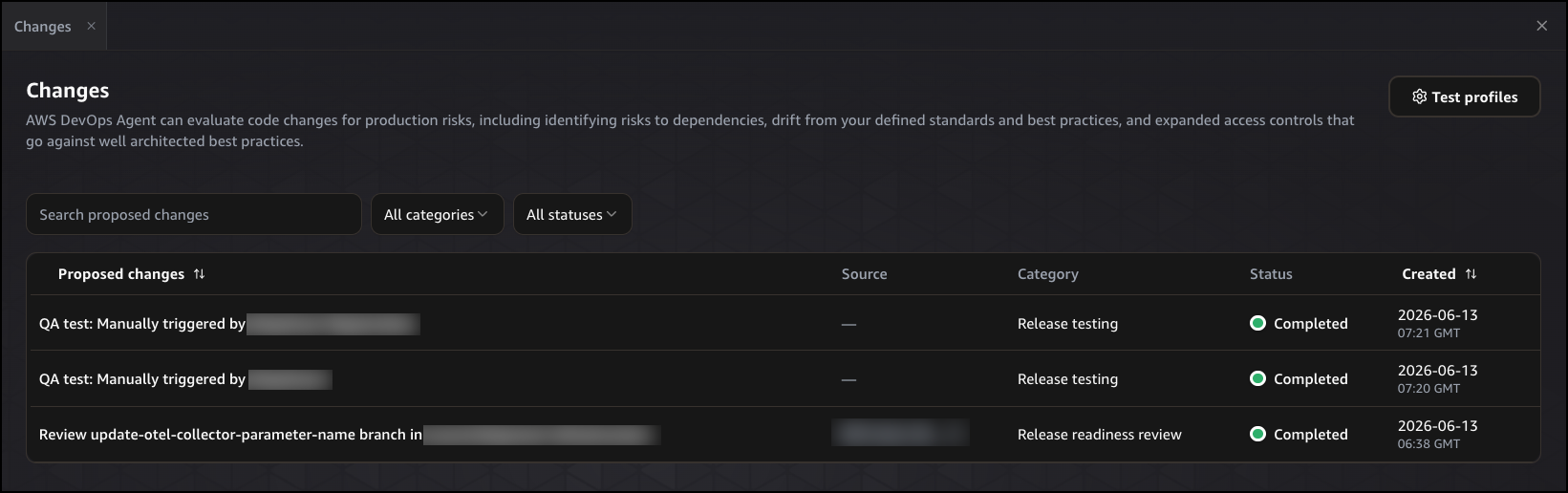
- Autonomous Release Testing: Instead of relying on rigid, pre-written test suites, the Agent generates bespoke test plans tailored specifically to the nature of the code change. It executes these tests in production-like, isolated AWS environments, verifying functional correctness and behavioral regressions before the code is ever merged.
- Unified Visibility: All findings are synthesized into actionable reports, accessible via the AWS console, IDE plugins (Kiro/Claude Code), and directly within GitHub or GitLab pull request comments.
Chronology: From Incident Response to Proactive Governance
To understand the significance of this update, one must look at the trajectory of the AWS DevOps Agent’s development.
- Initial Launch (General Availability): The Agent debuted as a post-deployment diagnostic powerhouse. Its primary value proposition was incident response—autonomously investigating production failures, identifying root causes, and suggesting mitigation steps.
- The "Shifting Left" Pivot: Recognizing that the best way to fix a bug is to prevent it from reaching production, AWS began integrating the Agent into the pre-deployment lifecycle.
- The Current Milestone (June 2026): With the announcement of the release management preview, the Agent now covers the entire software development lifecycle (SDLC), from initial code generation to long-term operational maintenance.
Supporting Data: Addressing the AI-Induced Review Crisis
The impetus for this release is rooted in a fundamental shift in software engineering: the rise of AI-assisted coding. Data from modern engineering teams shows that the volume of pull requests has increased significantly, outstripping the manual capacity of senior engineers to perform thorough code reviews.

The Hidden Costs of Velocity:
- Review Fatigue: When human reviewers are overwhelmed, they are more likely to approve code without deep examination, leading to "hidden" security vulnerabilities.
- Environment Drift: As teams rush, test environments often diverge from production configurations, rendering automated tests unreliable.
- The Queue Problem: A significant portion of the value generated by AI coding tools is currently trapped in "waiting rooms"—pull request queues that take days or weeks to clear.
AWS’s new solution addresses these inefficiencies by offloading the "bureaucratic" aspects of code review—compliance, dependency mapping, and security verification—to the Agent, allowing human engineers to focus on architectural decisions and high-level logic.
Official Perspective: Enabling Developer Autonomy
During the announcement, the focus remained on the balance between speed and governance. By allowing teams to define their own "instruction sets" in plain English, AWS is providing a framework that is flexible enough for a startup but robust enough for an enterprise.
For instance, an organization can provide instructions such as: "Ensure all S3 buckets are encrypted and no public network access is permitted for microservices handling PII." The Agent then incorporates these directives into its automated review process. If a developer submits a PR that violates these rules, the Agent will catch it immediately, providing the specific line numbers and the reasoning behind the "BLOCK" recommendation.
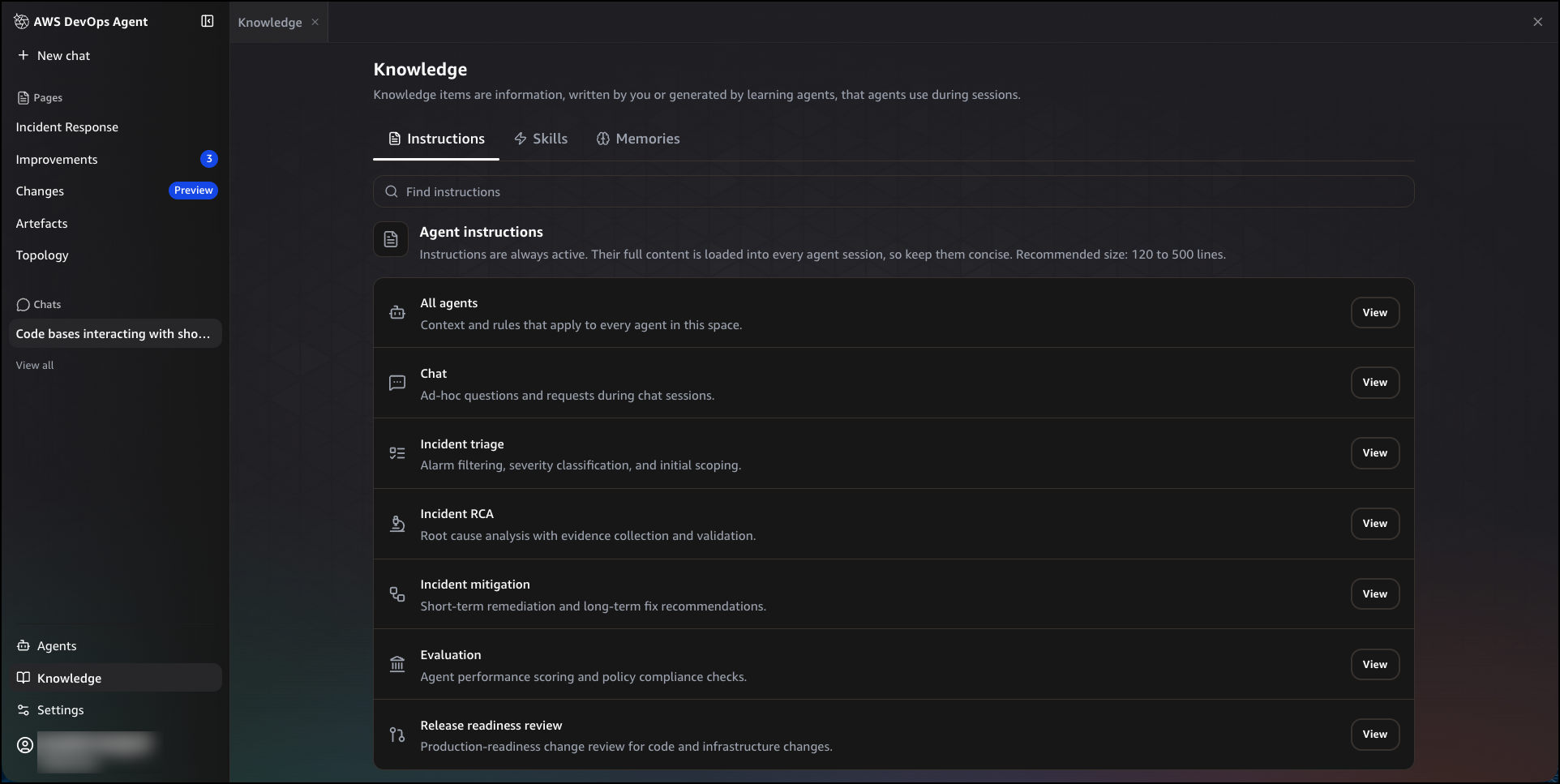
The transition to this model is seamless. By navigating to the "Knowledge" section of the AWS DevOps Agent console, team leads can configure these instructions, which are then applied across all repositories managed within their "Agent Space."
Implications: The Future of the "Autonomous Engineer"
The implications of this technology are profound for the DevOps landscape.
1. Standardization of Best Practices
By codifying tribal knowledge into "Instruction Sets," companies can effectively scale their internal best practices. As new engineers join the team, the Agent acts as a mentor, ensuring that code submissions meet the organizational bar without requiring constant intervention from senior staff.
2. The End of "Static" Testing
The shift toward autonomous, change-specific test generation represents a departure from the "checkbox" mentality of legacy testing. Because the Agent understands what the code change actually does, it can "reason" about the potential side effects. This minimizes the risk of regressions that might be missed by generic test scripts that haven’t been updated in months.
3. A New Role for the Human Reviewer
With the Agent handling the validation of security, dependency safety, and functional requirements, the human role in the code review process changes. Reviewers will spend less time commenting on syntax errors or missing test coverage and more time mentoring developers and validating business logic. This elevates the standard of code quality across the entire industry.
4. Integration into the IDE
Perhaps the most disruptive aspect is the integration with Kiro and Claude Code. By allowing developers to run these readiness checks before a commit is even pushed, the feedback loop is compressed from hours to seconds. This "Shift-Left" approach significantly reduces the cost of context switching, as developers can address potential issues while the code is still fresh in their minds.
Getting Started: A Step-by-Step Implementation
For engineering teams looking to adopt this capability, the process is straightforward:
- Connect Repositories: Link your GitHub or GitLab accounts to your AWS DevOps Agent Space. The agent immediately begins indexing your code to map dependencies.
- Define Standards: Use the "Instructions" tab in the Agent console to define your organizational standards.
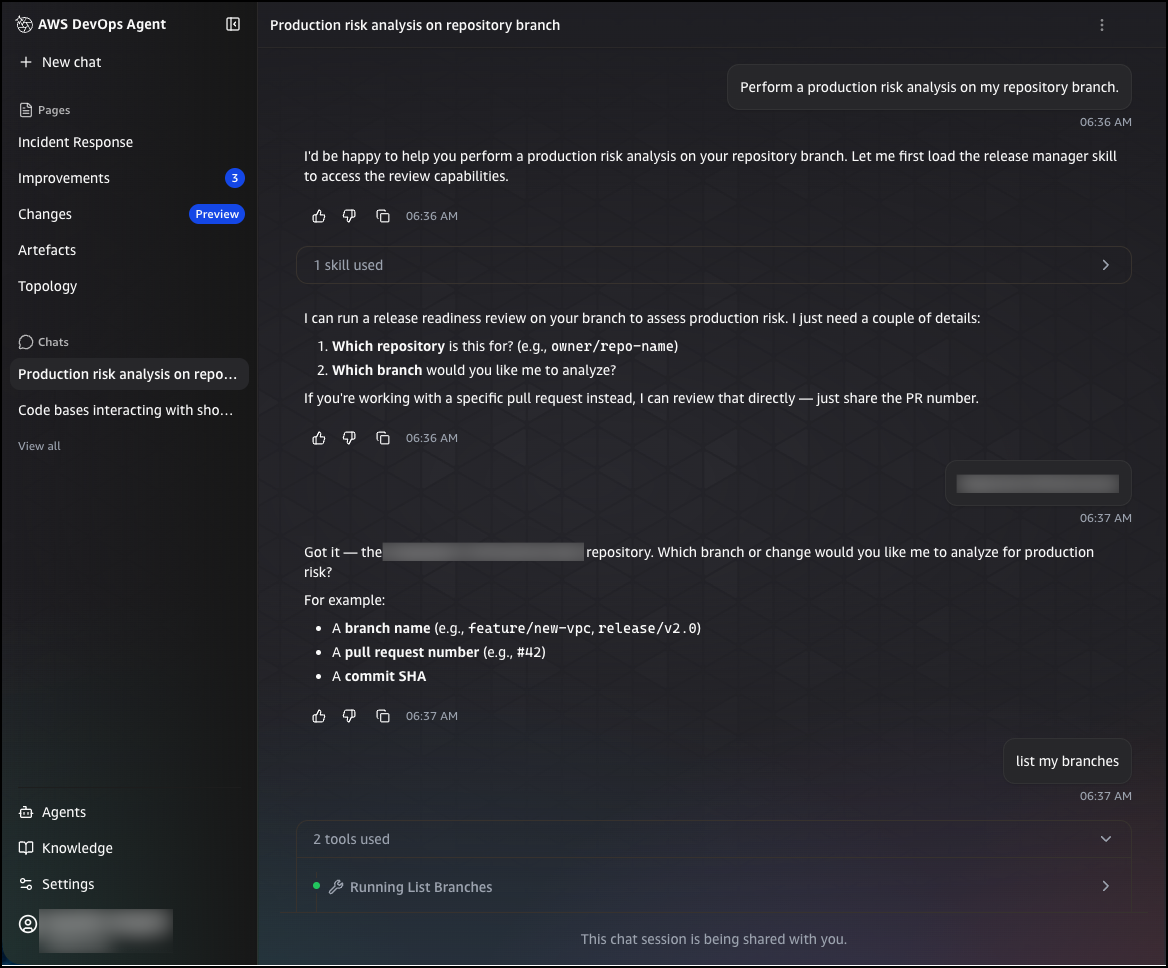
- Initiate Review: You can trigger a review automatically via a pull request or on-demand via the chat interface using natural language queries like: "Perform a production risk analysis on my repository branch."
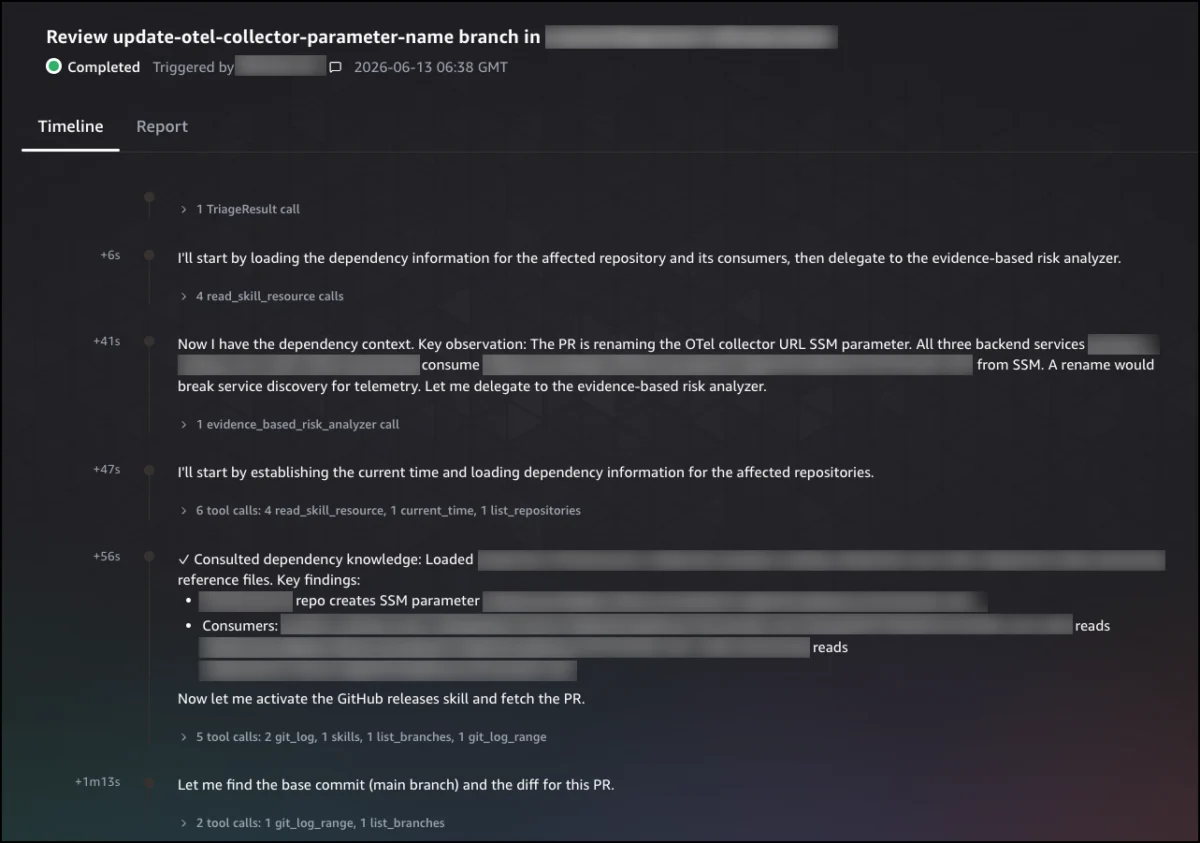
- Review the Timeline: Use the "Timeline" tab to audit the Agent’s reasoning process. This transparency is crucial for teams that require an audit trail for compliance purposes.
- Execute Tests: Use the chat interface to trigger autonomous tests on specific application URLs to verify that the change behaves correctly in a production-like environment.
Conclusion
The release of these new capabilities for the AWS DevOps Agent marks a turning point in the maturation of AI-driven software development. By transforming the DevOps Agent from an reactive tool into a proactive gatekeeper, AWS is enabling organizations to embrace the speed of AI-assisted coding without compromising the integrity of their production systems.
As we look toward the future, the integration of autonomous reasoning into the CI/CD pipeline seems not just advantageous, but necessary. In an increasingly complex cloud-native world, the ability to "know" the state of a system before a change is applied will be the hallmark of the most successful engineering organizations. The preview, currently available in the US East (N. Virginia) region, offers a glimpse into a future where software delivery is as automated and intelligent as the systems it produces.