The Fall of Radaris: How a Landmark Privacy Law Smashed a Decade-Long Data Broker Shell Game
For over ten years, the consumer data broker empire known as Radaris operated with virtual impunity. Built on a relentless foundation of people-search services, Radaris had long earned a notorious reputation for ignoring consumer opt-out requests, stonewalling privacy advocates, and burying its true ownership beneath a dizzying labyrinth of international shell companies.
However, that era of untouchability abruptly ended in a New Jersey courtroom. In a landmark legal development, a judge ordered the forfeiture and transfer of radaris.com—alongside more than a dozen associated data broker domains—directly to the plaintiffs. The ruling represents a severe blow to a shadow industry that has historically treated legal threats and compliance fines as mere costs of doing business.
The takedown stems from systematic violations of New Jersey’s Daniel’s Law, a stringent privacy statute designed to protect public servants, law enforcement personnel, judicial officials, and their families from digital exposure and targeted harassment.
Main Facts: The Anatomy of a Court-Ordered Domain Seizure
The core of the legal reckoning centers on Atlas Data Privacy Corp, a company aggressively pursuing data brokers alleged to have flouted Daniel’s Law. Enacted following a tragic family shooting at the home of a federal judge, the statute empowers designated public officials to demand the complete removal of their personal details from commercial people-search engines. Crucially, the law imposes steep statutory fines of $1,000 per violation against entities that ignore valid removal demands.
When Atlas targeted Radaris for publishing restricted records, the company responded with its traditional playbook: defensive stonewalling, jurisdictional confusion, and aggressive legal posturing. Unimpressed by the procedural evasion, the presiding judge ordered Verisign—the central registry for .com domains—to transfer ownership of radaris.com to Atlas.
Today, visitors attempting to navigate to radaris.com no longer find detailed dossiers on millions of Americans. Instead, the homepage features a formal notice detailing the court-ordered domain transfer, accompanied by investigative records exposing the operation’s true mechanics.
Chronology of a Decade-Long Shell Game
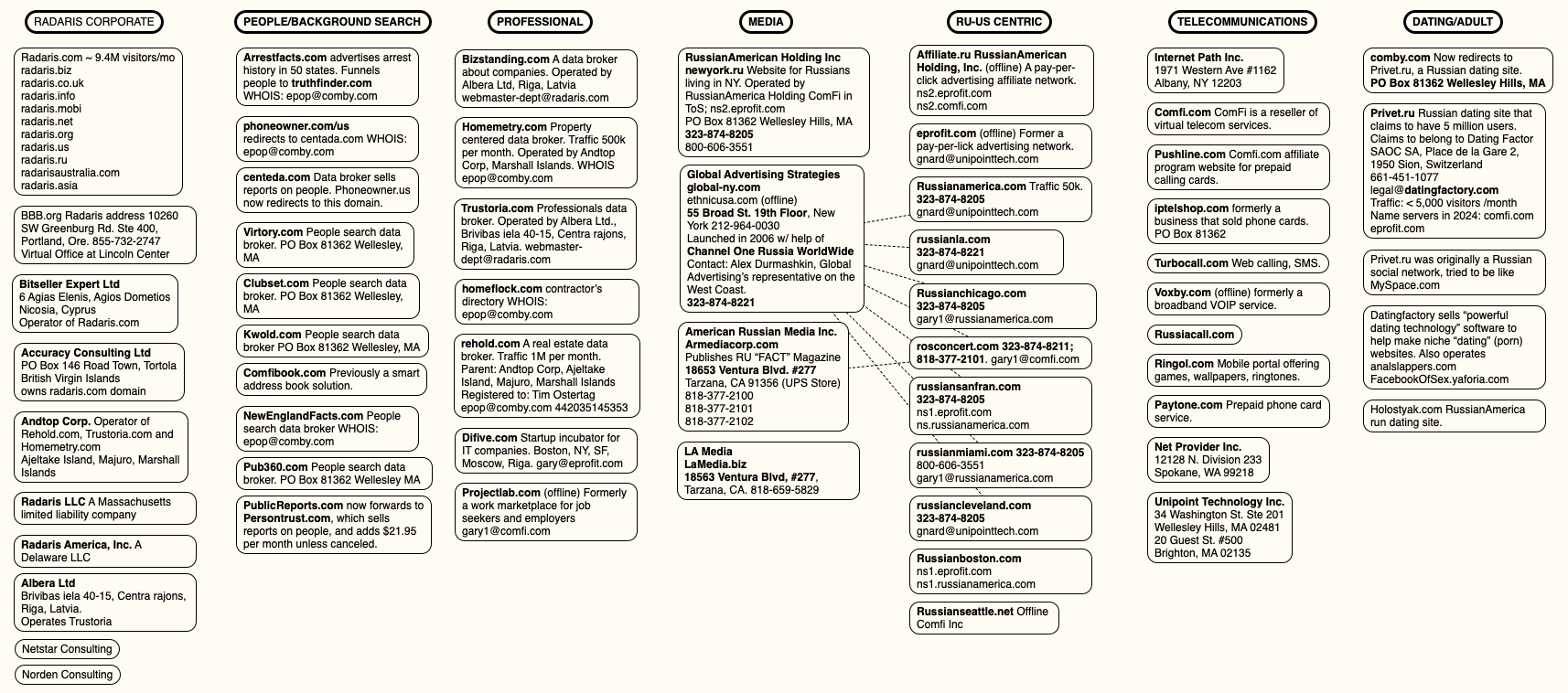
To understand how Radaris managed to evade accountability for so long requires tracing a decade-long trail of procedural maneuvers, corporate rebrandings, and offshore "island-hopping."
1. The 2017 Precedent and the Cyprus Connection
Radaris first brushed closely with structural accountability during a 2017 class-action lawsuit (Huebner v. Radaris, LLC). Because the company failed to mount a formal defense, the court issued a default judgment. When plaintiffs struggled to collect a $7.5 million payout, the court initially ordered the transfer of the radaris.com domain.
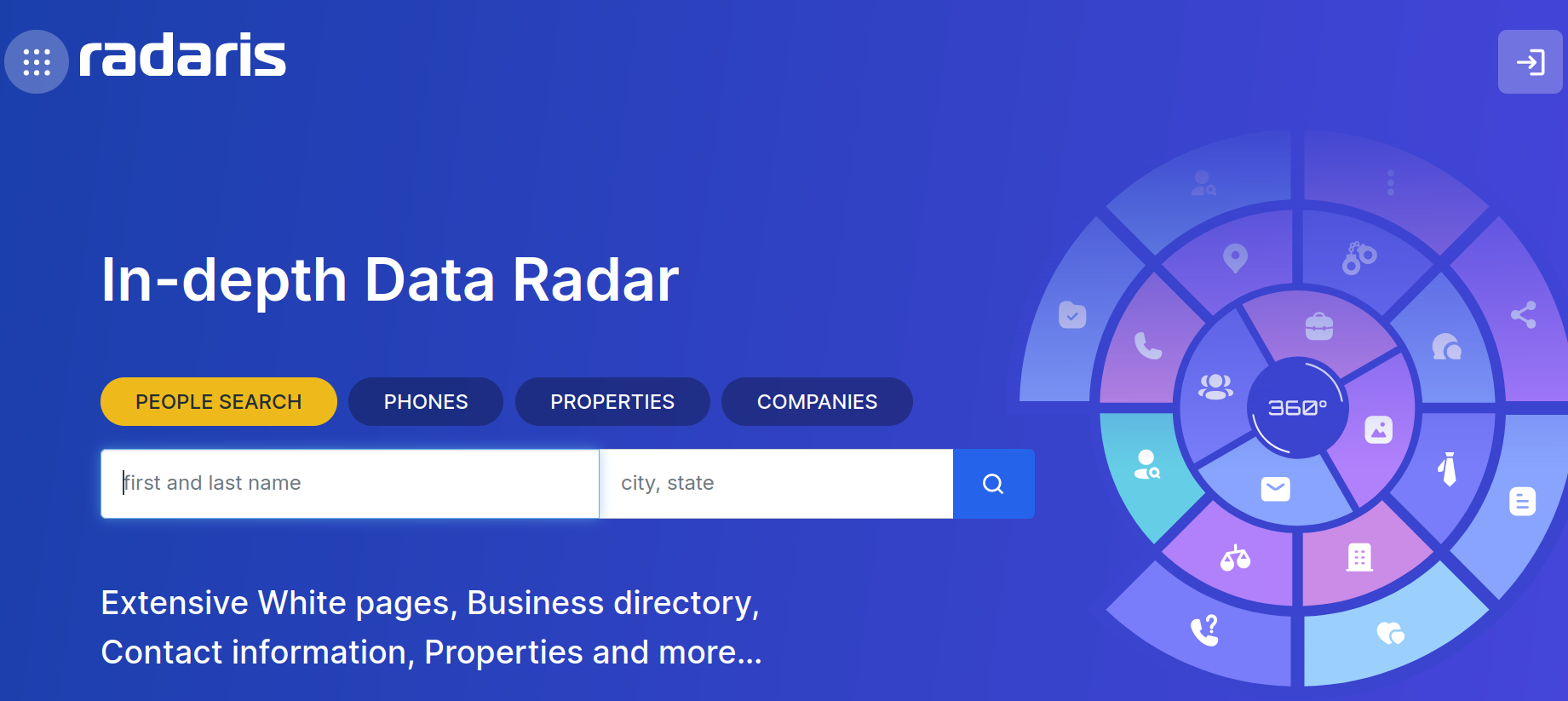
However, Radaris’s longtime attorney, Val Gurvits of the Boston Law Group, successfully appealed the verdict. Gurvits argued that the lawsuit had failed to name the true underlying owner of the domain: a Cyprus-incorporated entity named Bitseller Expert Limited. The judge halted the domain transfer, paving the way for a refiling.
2. The Marshall Islands Pivot
Rather than facing the music, the operators shifted strategies. The operational control of Radaris quietly transitioned from Bitseller to Andtop Company, an entity established in the Marshall Islands in October 2020. The plaintiffs in the 2017 case ultimately chose not to refile, allowing the network to expand unbothered.
3. The Massachusetts Connection & Fictitious CEOs
In February 2024, Atlas Data Privacy Corp formally sued Radaris under Daniel’s Law. Shortly after, investigative reporting by KrebsOnSecurity unmasked the true masterminds behind the operation: Igor and Dmitry (Dan) Lubarsky, Russian-born brothers residing in Massachusetts.
The brothers operated a sprawling network of people-search engines, Russian-language dating platforms, and affiliate networks. When first confronted, attorneys for the Lubarskys threatened defamation lawsuits and claimed the true owners were Ukrainians residing in Ukraine. Subsequent investigations revealed an even stranger detail: Radaris had built parts of its corporate facade using a fictitious CEO named "Gary Norden," an invented persona whose name was even featured in corporate press releases aimed at securing investor funding.
4. The Island-Hopping Phase Intensifies
When Atlas refiled its lawsuit in June 2025—dramatically expanding the scope to include a broader family of Radaris-linked brokers—the defendants doubled down on jurisdictional sleight-of-hand.
"We refer to this period as their island-hopping phase," explained Matt Adkisson, president and CEO of Atlas. "Privacy policies changed constantly, and new entities kept appearing from places like the Marshall Islands, the British Virgin Islands, and Seychelles. Behind the scenes, it felt like a shell game."
Adkisson noted that when defendants updated their terms of service to claim management by a newly minted Marshall Islands firm, local investigators discovered the entity did not even legally exist yet. Despite these maneuvers, a New Jersey judge ruled on August 26 that the defendants had repeatedly squandered their opportunities to defend the claims on the merits, leading directly to the current asset seizures.
Supporting Data: Uncovering the True Scale of the Operation
Discovery battles in the litigation yielded an enormous trove of internal documentation. Atlas reported securing more than 10,000 emails and corporate documents that validate years of investigative reporting regarding the true structure of the Radaris network.
The Unified Infrastructure
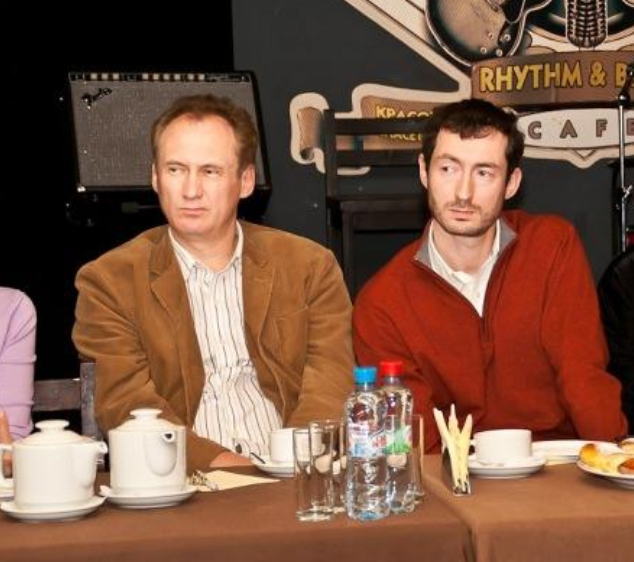
The documents confirm that a sprawling galaxy of nominal corporate entities—including Radaris America, Inc.; Bitseller Expert Limited; Digital Orbit Corp; Core Solutions Group Inc; Lucky Solutions Inc; Virtura Corp; Veripages Inc.; Nuform Solutions Inc.; Growth Data Advisors Inc.; and Property Experts, Inc—are in reality managed by the exact same group of three or four individuals.
These companies share identical banking apparatuses, payment processing channels, and virtual office addresses. Furthermore, their administrative, financial, and technical communications run through a centralized cluster of email domains anchored by difive.com and its successors (centerex.com, scienteco.com, eprofit.com, realmo.com, and pub360.com).
Lucrative Partnerships and Revenues
Internal financial documents pulled during litigation exposed the immense profitability of the people-search ecosystem:
- Radaris.com generated an estimated $42,000 per month in baseline revenue.
- Veripages.com pulled in roughly $45,000 monthly, heavily fueled by data-sharing and marketing partnerships with the Lifetime Value Company—the parent organization behind brands like PeopleLooker, PeopleSmart, NumberGuru, and the vehicle history platform Bumper.
- The Radaris family of sites funneled up to $25,000 a month through partnerships with Onerep, a privacy-washing enterprise that ostensibly helps users remove personal data while simultaneously operating its own people-search networks (such as Nuwber).
To date, the New Jersey court has authorized the transfer of 14 distinct domain names from the Radaris conglomerate to Atlas.
Official Responses and Legal Counter-Offensives
Faced with the loss of their crown-jewel domain, defense counsel pushed back aggressively against the legitimacy of the court’s actions.
Val Gurvits declined direct comment on the latest developments, noting that representation had shifted to attorney Victor Worms. In statements addressing the court, Worms argued that the New Jersey judiciary overstepped by issuing a default judgment against "Radaris.com" itself, which he contends is a non-entity lacking the legal capacity to be sued.
"We have made a motion to vacate that default judgment on the grounds that it is void since a non-entity has no legal capacity to sue or be sued," Worms stated. "We also intend to pursue all appropriate appeals because we believe the transfer of Radaris.com amounts to a forfeiture in violation of various constitutional principles."
Meanwhile, legal experts tracking the litigation point out that Radaris’s historical resilience relied entirely on plaintiff fatigue. Raj Parikh, a partner at PEM Law in New Jersey who handles Daniel’s Law litigation for Atlas, observed that the brokers previously "won by attrition"—out-resourcing opponents until attorneys abandoned complex cross-border pursuits.
Broader Implications: Daniel’s Law at a Crossroads
While the forfeiture of radaris.com represents a monumental victory for Atlas and New Jersey public officials, the broader war over data broker regulation hangs in a precarious legal balance.
The Constitutional Battlefront
Daniel’s Law is facing an intense constitutional counter-offensive. Roughly 150 consumer data broker firms currently targeted by Atlas have mobilized en masse, successfully shifting at least 70 of those lawsuits into federal court. The data broker industry argues that the New Jersey statute is overly broad and represents a direct violation of First Amendment protections regarding the distribution of public records.
While the U.S. Court of Appeals for the Third Circuit weighs the challenge, legal scholars anticipate the dispute will ultimately wind its way to the U.S. Supreme Court. State-level replication is also encountering turbulence; a federal district court ruled West Virginia’s iteration of Daniel’s Law facially unconstitutional under the First Amendment.
The Regulatory Void at the Federal Level
Privacy expert Justin Sherman, author of the forthcoming book The Middlemen, emphasizes that state-level carve-outs and piecemeal statutes will remain structurally limited unless the federal government addresses the root cause of the crisis: the legal availability of public records.
Sherman notes that state privacy laws routinely exempt records categorized as "public" or "government-held"—including voting registries, marriage licenses, property deeds, motor vehicle registries, court filings, and professional licenses. Consequently, people-search scraping will remain inherently viable.
Furthermore, the lack of baseline federal regulation governing data harvesting continues to create systemic vulnerabilities. Sherman points to recent high-profile disasters, such as the massive breach at IDScan.net, which exposed the driver’s license data of over 153 million Americans because no federal statute restricted how identity-verification scrapers could store or secure harvested government documents.
"The average person can look at Daniel’s Law and have a perfectly normal reaction, which is that everyone should be covered, not just police and judges," Sherman noted. "But we don’t need more wake-up calls. We’ve had eight million wake-up calls already on the need for better privacy laws. The lack of comprehensive federal privacy law is not for a lack of knowledge."
As the legal battles surrounding Daniel’s Law progress toward appellate courts, the seizure of Radaris stands as both a stark warning to the data broker underworld and a testament to the extraordinary friction required to pierce corporate secrecy in the digital age.