
The FOSS Weekly Digest: Kernel Shifts, Sovereign OS Adoption, and Major Ecosystem Rebrands
The landscape of Free and Open Source Software (FOSS) is currently undergoing a period of rapid evolution. From structural changes in the world’s most popular Linux distribution to sovereign states opting for hardened, open-source workstation environments, the industry is signaling a departure from traditional maintenance models toward more agile, security-conscious infrastructures.
This week’s report covers the critical shift in Canonical’s kernel update strategy, the rise of sovereign NixOS deployments, and a wave of rebrands and consolidations reshaping the desktop Linux experience.

1. Canonical’s Strategic Pivot: Accelerating the Kernel Lifecycle
Canonical has officially announced a significant alteration to the Ubuntu kernel update cycle, moving from a four-week cadence to a two-week schedule. This change, while seemingly administrative, carries profound implications for system stability and security.
The Driver: AI-Assisted Vulnerability Hunting
The primary catalyst for this shift is the changing nature of the threat landscape. With the integration of AI-assisted vulnerability research, security researchers and malicious actors alike are identifying Common Vulnerabilities and Exposures (CVEs) at a velocity that traditional four-week patching cycles can no longer accommodate. By moving to a two-week cycle, Canonical aims to ensure that kernel-level exploits are mitigated before they can be weaponized in the wild.

Because of the natural overlap in these cycles, users can effectively expect a new kernel release every week. While this provides unparalleled security, it places a premium on robust testing pipelines to ensure that the increased frequency of updates does not introduce regressions for enterprise workloads.
Deployment Updates
In parallel with the kernel shift, Canonical has officially enabled seamless upgrades from Ubuntu 24.04 LTS to Ubuntu 26.04.1. This bridge represents a critical pathway for long-term support users looking to modernize their infrastructure without undergoing a full reinstall. Furthermore, the community continues to monitor the delayed beta release of Ubuntu 26.10, which is slated to arrive imminently, signaling the next iteration of Ubuntu’s non-LTS development trajectory.

2. Sovereign Adoption: The Rise of NixOS
One of the most compelling trends of 2025 and 2026 is the migration of national digital agencies toward sovereign, open-source operating systems.
The Netherlands and France: A Shift to NixOS
The Dutch government recently made headlines by announcing the development of a NixOS-powered work environment, a move prompted by the decision to curtail access to certain legacy proprietary software ecosystems. However, as industry analysts have noted, the Netherlands is following a path already blazed by France. The French digital agency has been successfully deploying NixOS across internal workstations for months, utilizing a security-hardened, open-source configuration known as "Sécurix."

The selection of NixOS is not accidental. Its functional, declarative nature allows for reproducible builds—a critical requirement for government agencies that need to ensure every workstation is configured identically and can be audited for security compliance with high precision.
3. Ecosystem Consolidation and Rebranding
The FOSS ecosystem is currently undergoing a "spring cleaning" phase, marked by project rebrands and the consolidation of fragmented distributions.

Nura (formerly postmarketOS)
After a rigorous selection process that began in March 2025, postmarketOS has officially rebranded as Nura. The transition involved over 300 community submissions, followed by exhaustive trademark reviews and a democratic voting process. The move aims to provide the project with a distinct brand identity as it continues to push the boundaries of mobile Linux.
openSUSE Leap Consolidation
In a move toward efficiency, the openSUSE project is consolidating its distribution lineup. The "Leap Micro" flavor—previously a distinct, immutable edition designed for containerized and edge workloads—is being retired. Its functionality is being absorbed into Leap 16.1, which will now offer an optional installer mode to provide the same immutable benefits. This consolidation simplifies the project’s maintenance burden and provides users with a more unified installation experience.

GhostBSD and the Future of Mocka
GhostBSD, a distribution beloved for its FreeBSD-based desktop experience, is looking toward the future. Lead developers have confirmed the creation of a new desktop environment, Mocka, which is being built from scratch. Mocka is intended to eventually replace the current MATE implementation. Unlike many desktop projects that fork existing codebases, Mocka is being written with zero shared code from MATE, ensuring a clean, modern architecture. (The name, notably, is the result of an accidental typo that stuck.)
AlmaLinux Software Certification
AlmaLinux has introduced a formal software certification program. This initiative provides a structured catalog where publishers can list their products, allowing enterprise users to verify hardware and software compatibility. By providing a public catalog with a free, read-only API for bulk data export, AlmaLinux is positioning itself as a leader in enterprise-grade, community-driven stability.
4. Community and Developer Highlights
Beyond the infrastructure updates, the community continues to foster creativity and learning.
The Rise of Tuxdle
The "Tuxdle" project, a word-guessing game centered around Linux terminology, has exploded in popularity. With over 500 daily active players in its first week, the developer has already implemented advanced features, including streak tracking, daily performance statistics, and puzzle difficulty metrics. It stands as a testament to the community’s desire for engaging, niche-focused educational entertainment.

Command Conqueror: A Hands-on CTF
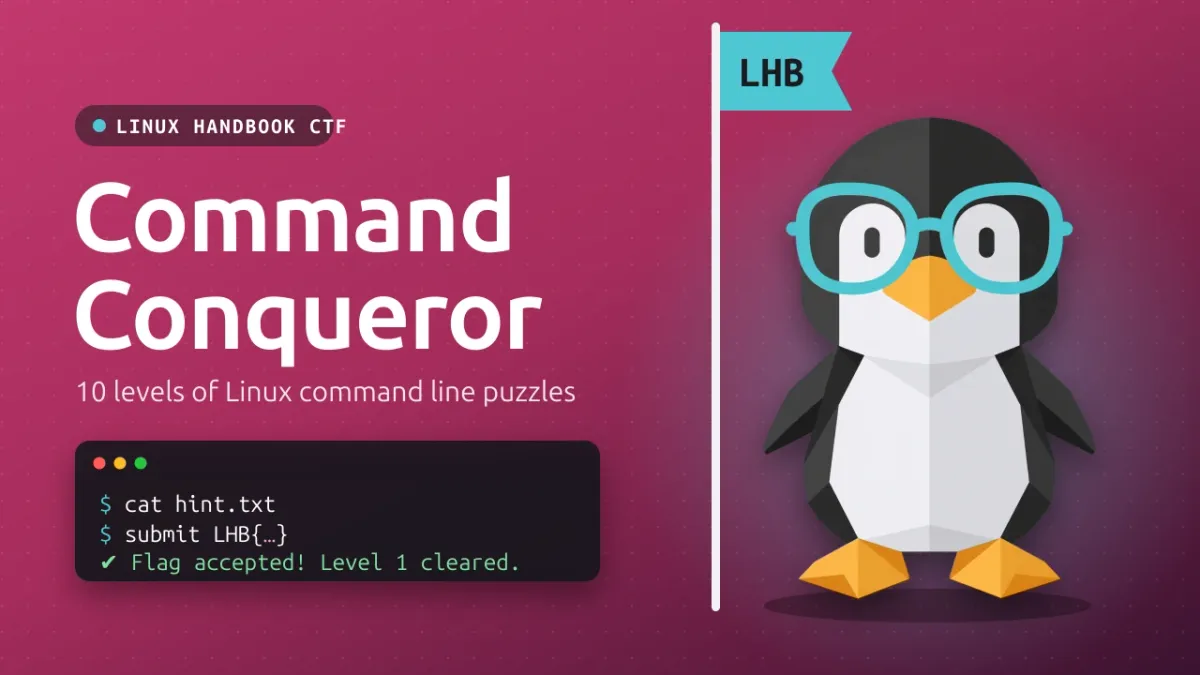
For those seeking more technical rigor, the Linux Handbook has launched "Command Conqueror," a Capture the Flag (CTF) game consisting of ten levels of escalating difficulty. By utilizing Docker containers for each level, the game allows users to practice SUID privilege escalation and hidden file discovery without requiring a complex virtual machine setup or a user account.
5. Educational Initiatives and Best Practices
As the Linux ecosystem grows, so does the need for high-quality documentation. It’s FOSS has recently overhauled its course navigation, organizing the terminal and Bash scripting modules into a chapter-based sidebar format.

Understanding Upstream and Downstream
A recurring point of confusion for new Linux users is the distinction between "upstream" and "downstream" development. Upstream refers to the original source code repository (e.g., the Linux kernel.org), while downstream refers to the modified packages maintained by distributions (e.g., Debian or Fedora). Understanding this distinction is vital for effective bug reporting; users are encouraged to identify whether their issue resides in the base software or in the specific packaging of their chosen distribution.
The Homelab Revolution
For self-hosting enthusiasts, the struggle of managing IP addresses and ports is being mitigated through internal domain management. By deploying AdGuard as a DNS sinkhole and Nginx Proxy Manager for reverse proxying, users can assign clean, human-readable hostnames (e.g., jellyfin.internal) to their services. This shift not only improves accessibility but also mirrors enterprise-grade network architecture in a home environment.

6. Historical Perspective: The GNU Legacy
Finally, it is worth reflecting on the origins of this movement. On September 27, 1983, Richard Stallman announced the GNU Project. The initiative to build a free, Unix-compatible operating system did more than just create software—it established the concept of "copyleft" and the GNU General Public License (GPL).
The impact of this announcement cannot be overstated; it fundamentally changed the power dynamic between software developers and users, ensuring that code remains a collaborative, modifiable asset rather than a locked-down commodity. As we look at the modern, hyper-connected landscape of 2026, the principles of the GNU Project remain the bedrock upon which the entire FOSS industry stands.

Conclusion: The Path Forward
The rapid pace of change—from Ubuntu’s new weekly kernel cadence to the adoption of immutable desktop environments—suggests that the Linux ecosystem is maturing. It is becoming more secure, more standardized, and more integrated into the fabric of national infrastructure. While the challenges of AI-driven vulnerabilities and the threat of proprietary lock-in remain, the FOSS community is responding with increased collaboration, better educational resources, and a renewed commitment to open-source sovereignty.
Whether you are a system administrator managing an immutable server fleet or a hobbyist playing a game of Tuxdle, the trends this week highlight a vibrant, resilient, and continuously evolving ecosystem.








