The Intelligence Edge: Why Situational Awareness is the New Enterprise Imperative
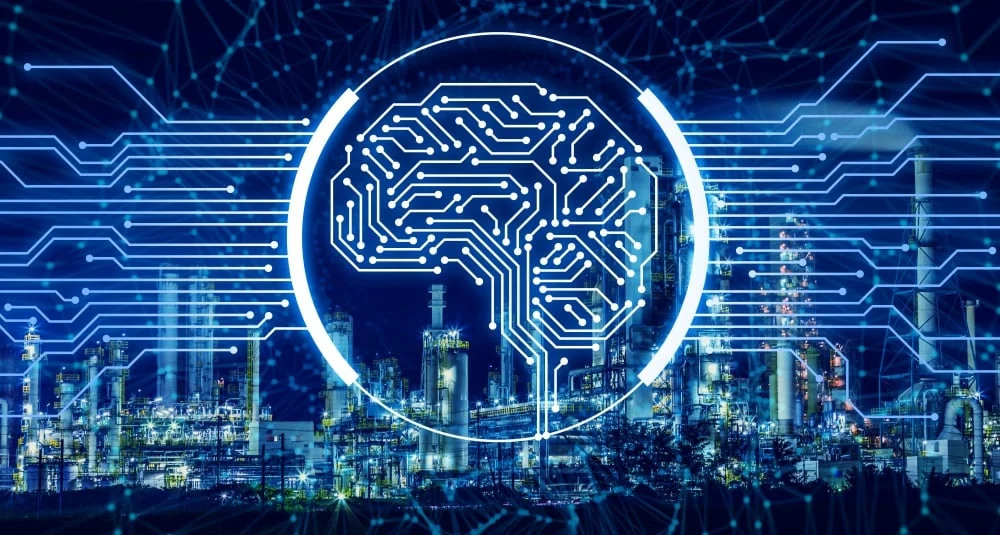
The era of localized intelligence has arrived, marking a definitive shift in how global enterprises manage infrastructure. For years, the promise of Edge AI was theoretical—a vision of distributed computing power capable of "thinking" at the point of action. Today, that vision has transitioned from pilot projects to critical, high-stakes deployments. As organizations struggle to manage the deluge of data generated by modern IoT ecosystems, Edge AI has emerged as the essential bridge between raw information and meaningful, real-time situational awareness.
The State of the Edge: A Market in Motion
According to a recent IDC Spotlight report, the adoption curve for Edge AI is steepening. Approximately 27% of surveyed organizations have already fully integrated Edge AI into their workflows, with an additional 54% intending to achieve full deployment within the next 24 months. This rapid acceleration is fueling a massive capital shift, with the edge enterprise infrastructure market projected to reach a staggering $110 billion by 2030.
This growth is not merely a trend; it is a tactical response to the increasing complexity of modern operational environments. Whether it is a sprawling smart manufacturing plant, a high-traffic international airport, or a sensitive healthcare campus, the ability to interpret changing conditions and respond instantaneously is no longer a luxury—it is a baseline requirement for operational resilience.
The Four Pillars of Edge-Driven Situational Awareness
To navigate this landscape, enterprises are leveraging Edge AI to transform how they perceive their environment. By analyzing data at the source rather than shuttling it to a centralized cloud, organizations are achieving four key objectives.
1. Real-Time Threat Detection and Security Synergy
Security teams today are inundated with data from fragmented, siloed systems. In complex environments like stadiums or corporate headquarters, monitoring separate feeds—video, access control, and motion sensors—often leads to "alert fatigue."
The global threat detection systems market reflects this urgency, valued at $89.99 billion in 2025 and projected to balloon to $125.13 billion by 2034. Edge AI provides the necessary synthesis for this influx of information. By processing data locally, the system can identify suspicious patterns that a human operator—or a disconnected sensor—would miss.
A prime example of this synergy is the integration of high-throughput weapons detection systems like the CEIA OPENGATE. When paired with Edge AI-powered video analytics, the system transcends its role as a simple detector. Instead of acting as an isolated solution, it becomes a node in an intelligent network. By correlating electromagnetic threat detection with visual behavioral analytics, security teams gain a holistic, contextual view of potential risks, allowing for proactive intervention rather than reactive investigation.
2. Identifying Operational Anomalies Before They Escalate
The holy grail of industrial management is the "zero-downtime" environment. Achieving this requires catching anomalies—tiny, often invisible deviations in equipment vibration, temperature, or energy usage—at their nascent stage.
Edge AI excels here by scrutinizing data at the source. Because the AI model runs locally on the equipment, it establishes a "baseline" of normal operation. When an anomaly occurs, the Edge AI recognizes the deviation immediately.
However, as Rafee Tarafdar, CTO of Infosys, noted in a Forbes interview, this is an iterative process: "With AI, the only way you learn is by experimenting and trying out. There’s no other way because the tech is changing so fast." For enterprises, this means Edge AI deployments must be treated as a journey of constant calibration, where the system becomes more adept at identifying risks as it ingests more localized operational data.
3. Eliminating Decision Latency
In emergency response or critical infrastructure, time is the most expensive commodity. "Decision latency"—the delay between an event occurring and an operator being able to act on it—is often caused by the time required to transmit data to the cloud, process it, and send a notification back.
John Werner, an AI ecosystem thought leader, recently highlighted in Forbes that AI is forcing engineers to fundamentally reconsider computing architecture. By moving the processing to the edge, the round-trip delay is effectively eliminated. When a machine in a manufacturing facility vibrates outside of its threshold, the Edge AI detects the issue and triggers an alert in milliseconds, allowing maintenance crews to intervene before the equipment fails. This immediacy is the definition of superior situational awareness.
4. Synthesizing Disparate IoT Signals
The modern enterprise is a web of interconnected devices: smart cameras, occupancy sensors, and performance monitors. Individually, these signals provide limited value. Together, they represent a "digital nervous system."
The evolution of AI, as discussed by Ring founder Jamie Siminoff, is moving beyond simple motion detection toward "contextual understanding." Edge AI acts as the translator for these disparate IoT signals. It doesn’t just see a camera feed; it understands that the camera feed, combined with a door sensor and an energy monitor, indicates a specific, unauthorized event. By processing these relationships at the edge, the system presents actionable intelligence to human operators rather than a mountain of raw data.
Chronology: The Evolution of Edge Intelligence
- 2020–2022 (The Pilot Phase): Enterprises began testing the feasibility of Edge AI, primarily focusing on bandwidth reduction and basic anomaly detection.
- 2023–2024 (The Infrastructure Push): Increased investment in 5G and IoT infrastructure enabled higher throughput, allowing for more complex video and sensor fusion at the edge.
- 2025 (The Current State): The market has moved to "Integrated Situational Awareness," where edge devices from different vendors (security, HVAC, operations) are being linked into unified, AI-driven command centers.
- 2026–2030 (The Autonomous Era): Anticipated growth in self-correcting systems, where Edge AI does not just alert humans but makes autonomous adjustments to equipment and security protocols in real time.
Supporting Data and Market Outlook
The transition to edge-centric models is backed by significant industry analysis. According to McKinsey & Company’s 2025 State of AI survey, 88% of organizations have deployed AI in at least one business function. However, the report highlights a critical bottleneck: nearly two-thirds of these organizations remain in the experimentation or piloting phase.
| Metric | Insight |
|---|---|
| Edge Enterprise Market (2030) | Projected $110 Billion |
| Threat Detection Market (2025) | $89.99 Billion |
| Threat Detection Market (2034) | $125.13 Billion |
| AI Adoption Status (McKinsey) | 88% deployed; 66% still in pilot/experiment phase |
Implications for the Future of Enterprise
The primary implication for business leaders is clear: the challenge of the next five years is not the acquisition of data, but the contextualization of it. Organizations that continue to rely on centralized, cloud-only processing models will face increasing decision latency, bandwidth costs, and security blind spots.
For a Chief Information Officer or a Director of Operations, the shift toward Edge AI is a move toward autonomy. By embedding intelligence into the very fabric of their physical assets, companies are building a "self-aware" infrastructure.
Actionable Steps for Implementation
- Audit Data Silos: Identify which IoT systems currently operate in isolation and prioritize them for integration via an Edge AI gateway.
- Pilot with Purpose: Move beyond general AI experiments. Choose a specific, high-latency pain point—such as facility security or machine maintenance—and deploy an edge-based solution.
- Invest in Compute-Ready Hardware: Ensure that future IoT procurement includes hardware capable of running lightweight, localized AI models.
- Prioritize Interoperability: As seen with tools like CEIA OPENGATE, the value of the device is multiplied when it can share data with other systems. Favor vendors that utilize open APIs and standard communication protocols.
Conclusion: The Path Forward
The "experimentation phase" of AI is drawing to a close. As the digital and physical worlds continue to merge, the organizations that will thrive are those that can process, interpret, and act upon information exactly where it happens. By embracing Edge AI, businesses are not just upgrading their technology; they are fundamentally enhancing their ability to see, understand, and react to the world in real time. The age of the situationally aware enterprise has begun, and the competitive advantage belongs to those who act at the edge.