The Silent Revolution: How Industrial IoT is Redefining Asset Management Through Smart Level Sensing
In the modern industrial landscape, data is the new currency. From the sprawling infrastructure of oil terminals to the precise requirements of chemical manufacturing and the critical nature of municipal water systems, the mandate for global industry is clear: maximize efficiency, slash waste, and eliminate the costly downtime that plagues traditional operations. At the heart of this transformation lies a technology that has evolved from a simple gauge into a sophisticated intelligence hub: the modern industrial level sensor.
As industries pivot toward Industry 4.0, the reliance on manual, human-centric monitoring is rapidly becoming a relic of the past. The shift toward Industrial Internet of Things (IIoT)-enabled level sensing is not merely an incremental upgrade; it is a fundamental reconfiguration of how organizations manage their most critical assets.
The Chronology of Monitoring: From Manual Inspection to Autonomous Intelligence
For over a century, inventory and liquid management were defined by the "clip-board and boots" approach. Workers were required to physically traverse facility grounds, climbing atop silos, tanks, and reservoirs to verify levels with manual dipsticks or sight glasses.
The Era of Manual Inefficiency (1900–2010)
For decades, this manual model was the industry standard. However, it was inherently flawed. It introduced significant latency between the actual state of an asset and the report reaching management. It was rife with human error, safety risks—such as exposure to hazardous chemicals or heights—and represented a massive, recurring labor cost that provided little in the way of actionable insights.
The Rise of Wired Automation (2010–2018)
As automation entered the mainstream, wired level-sensing technologies (such as 4-20mA analog signals) began to replace manual checks. While these systems offered improved accuracy, they remained tethered by expensive cabling infrastructure, making them prohibitively difficult to scale in large or geographically dispersed facilities.
The IIoT Paradigm Shift (2018–Present)
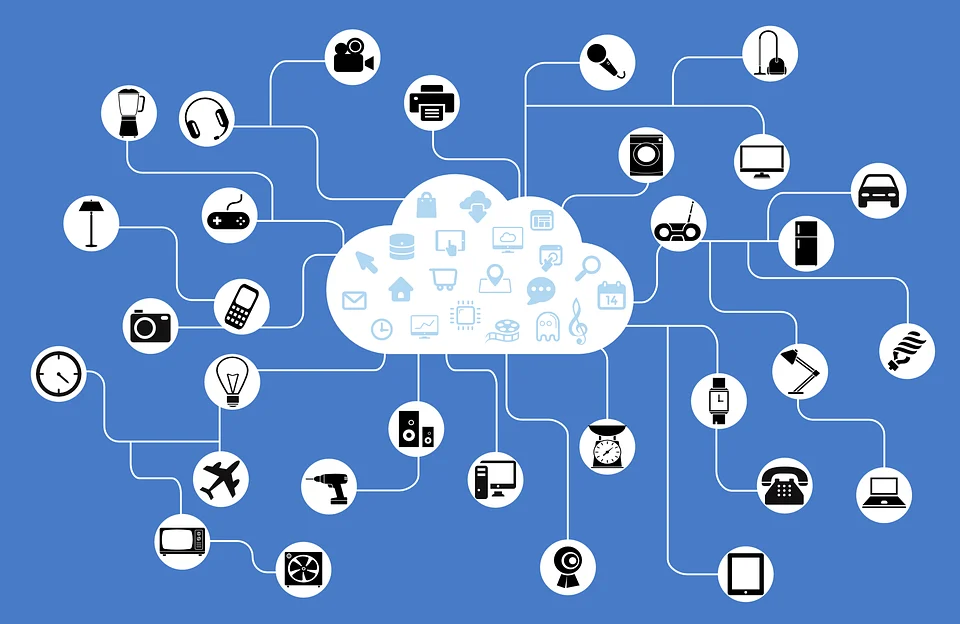
The current era is characterized by the convergence of wireless connectivity, cloud computing, and advanced sensing. By integrating sensors with protocols like LoRaWAN, NB-IoT, and LTE-M, organizations can now achieve "constant visibility." Today, an operator in a control room thousands of miles away can monitor the granular level of a chemical tank in real time via a smartphone or web dashboard.
Supporting Data and The Technical Architecture
Modern smart level monitoring systems are complex ecosystems comprising three primary layers: the sensing hardware, the transmission layer, and the analytical engine.
The Sensing Hardware
The industry is currently moving away from contact-based mechanical floats toward non-contact solutions.
- Radar Level Sensors: Utilizing frequency-modulated continuous-wave (FMCW) radar, these devices offer millimeter-level accuracy. They are immune to changes in temperature, pressure, or the dielectric constant of the liquid, making them the gold standard for volatile chemical environments.
- Ultrasonic Sensors: These remain a cost-effective, reliable choice for non-contact applications where environmental conditions are stable and installation complexity must be kept to a minimum.
Wireless Connectivity: Cutting the Cord
The transition to wireless is the catalyst for the current growth phase. According to recent industrial market research, wireless sensor nodes have reduced the total cost of ownership (TCO) for monitoring systems by approximately 40% when compared to legacy wired systems. Key technologies include:
- LoRaWAN: Ideal for long-range, low-power applications in remote rural or expansive industrial sites.
- NB-IoT/LTE-M: Leveraging existing cellular infrastructure to provide secure, high-bandwidth data transmission with deep penetration into subterranean or dense urban environments.
Official Industry Perspectives and Strategic Implications
Industry leaders, including municipal water authorities and oil and gas giants, have begun to publish internal findings on the implications of this digital transition.
The Water Management Case Study
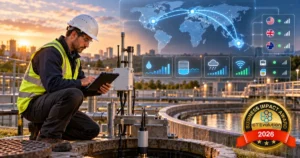
Municipal water systems represent the "killer app" for IIoT monitoring. Utilities are managing hundreds of distributed assets—pump stations, reservoirs, and stormwater basins. Officials from major utility districts have reported that by implementing sensor-fed predictive analytics, they have reduced emergency maintenance call-outs by 30% annually.
"The transition is not just about measuring water," says one lead systems integrator for a major municipal water district. "It is about predictive resource management. When we know the exact level of a reservoir in real time, we can optimize pump operation during off-peak electricity hours, directly impacting our bottom line and sustainability footprint."
The Oil and Gas Mandate
In the energy sector, the stakes are environmental as much as they are financial. The ability to detect a potential overflow or a leak in a remote pipeline via real-time telemetry is a transformative safety feature. By minimizing the frequency of manual site visits, companies are drastically reducing the "person-hours of risk"—the amount of time personnel spend in dangerous or high-pressure environments.
Implications for Predictive Maintenance
Perhaps the most significant value proposition of smart level monitoring is the transition from reactive to predictive maintenance.
In traditional models, equipment was serviced on a fixed schedule (e.g., every 90 days), regardless of whether it needed it. This often led to "over-servicing" functional equipment or "under-servicing" failing equipment. Smart sensors generate the historical data necessary for machine learning models to identify "normal" vs. "anomalous" behavior.
For instance, if a tank level drops at an inconsistent rate, the system can flag a potential leak or a faulty valve long before a catastrophic failure occurs. This predictive capability turns the sensor from a measurement tool into a strategic asset, significantly extending the lifespan of infrastructure and reducing capital expenditure (CapEx) on replacement parts.
Navigating Challenges: Security and Integration
Despite the clear benefits, the path toward full automation is not without friction.
The Cybersecurity Frontier
As industrial assets move onto the network, they become potential targets for bad actors. The "attack surface" of a plant has expanded. Organizations are now required to invest heavily in end-to-end encryption, secure device authentication, and localized edge computing to ensure that sensitive operational data is not intercepted or manipulated.
The Integration Gap
Legacy hardware remains a stubborn obstacle. Many industrial facilities are "brownfield" sites, containing a mix of 30-year-old tanks and modern IoT sensors. The technical complexity of retrofitting older equipment to talk to a modern, cloud-based API is significant. This has created a secondary market for "IoT gateways"—bridge devices that convert legacy analog signals into digital, cloud-ready packets.
The Future: Toward Autonomous Industrial Operations
The trajectory of this technology is clear: we are moving toward a future of autonomous, AI-driven industrial operations.
In the next five years, we can expect to see:
- Self-Calibrating Sensors: Using AI to detect and correct for environmental drift or sensor degradation automatically.
- Edge Intelligence: Sensors that process data locally and only send alerts when anomalies are detected, further reducing power consumption and data costs.
- Cross-Platform Integration: Level sensor data will be increasingly integrated with procurement software. For example, when a chemical storage tank reaches a 20% threshold, the system will automatically trigger a reorder with the vendor and schedule a delivery, creating a "self-healing" supply chain.
Conclusion
The modern level sensor is no longer a peripheral device; it is the cornerstone of the data-driven industrial enterprise. By replacing guesswork with precise, real-time intelligence, companies are achieving unprecedented levels of operational efficiency and safety.
While challenges regarding cybersecurity and legacy integration remain, the return on investment—seen in reduced downtime, minimized environmental risk, and lower labor costs—is undeniable. As we move further into the decade, those organizations that treat their data as a strategic asset, enabled by robust smart sensing infrastructure, will be the ones that define the future of global industry. The era of the "siloed" asset is over; the era of the connected, intelligent, and autonomous industrial operation has begun.