The Next Frontier: OpenAI’s GPT-5.5 and Codex Arrive on Amazon Bedrock
In a landmark development for the generative AI ecosystem, Amazon Web Services (AWS) has officially announced the integration of OpenAI’s most advanced frontier models—GPT-5.5 and GPT-5.4—alongside the powerful Codex coding agent into the Amazon Bedrock platform. This strategic expansion marks a significant milestone in the ongoing collaboration between two of the tech industry’s most influential entities, providing enterprise-grade security and scalability to OpenAI’s state-of-the-art architectures.
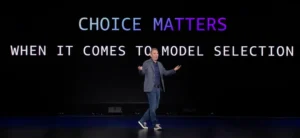
The integration, which follows an initial preview during the "What’s Next with AWS 2026" event, enables developers to leverage high-performance AI models within a managed, secure environment. By routing model inference through the new "Responses" API on Bedrock, AWS is providing a streamlined pathway for organizations to deploy complex, agentic workflows, sophisticated reasoning tasks, and high-velocity software development pipelines.
Main Facts: A New Standard for Enterprise AI
The arrival of GPT-5.5 and GPT-5.4 on Amazon Bedrock is not merely an addition of new endpoints; it represents a fundamental shift in how developers can interact with frontier models.
GPT-5.5 and GPT-5.4: Capabilities and Use Cases
According to OpenAI, the GPT-5.5 iteration is engineered for the most demanding professional workloads, excelling in complex reasoning, multi-step agentic workflows, and intensive data processing. Conversely, GPT-5.4 is positioned as the optimal balance between high-end performance and cost-efficiency, making it the preferred choice for scaling applications where budget-to-performance ratios are critical.
The Power of Codex
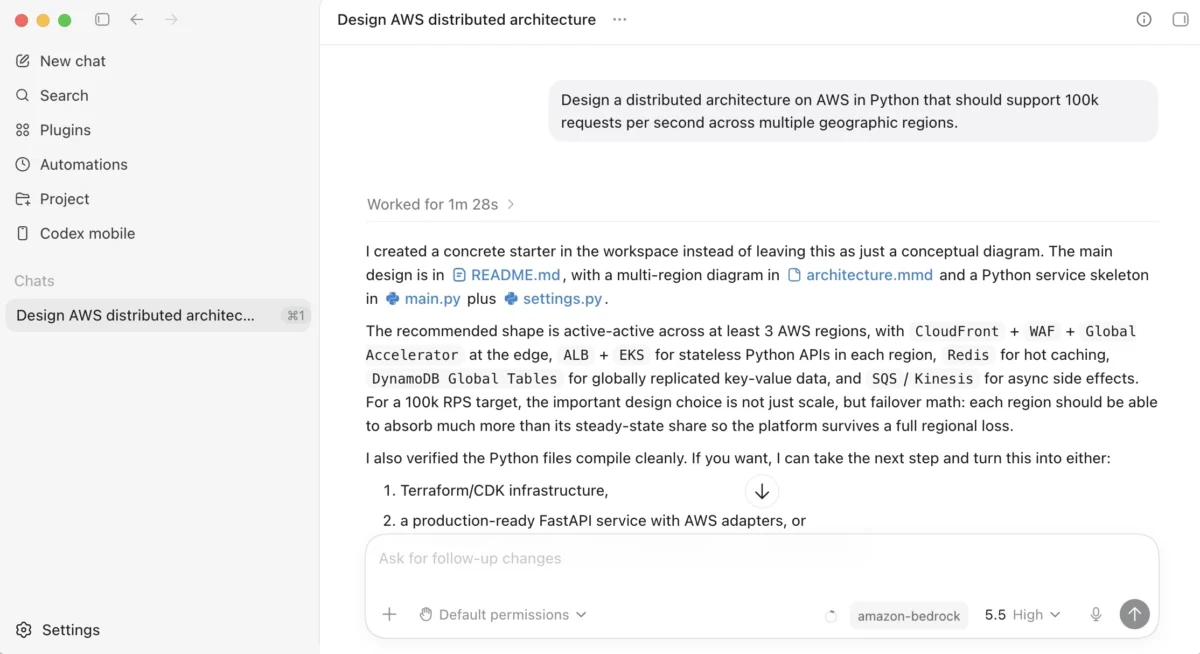
Alongside these models, the integration of Codex provides a massive upgrade to developer toolsets. With over 4 million developers already utilizing Codex on a weekly basis, the tool has become a staple for refactoring, debugging, testing, and validating codebases. By utilizing GPT-5.5 as its underlying inference engine, Codex now offers a new class of intelligence capable of navigating complex, long-horizon developer workflows, fundamentally changing how software architecture is designed and implemented.
The "Responses" API
Central to this launch is the transition to the Responses API, a next-generation inference engine built specifically for the demands of modern AI applications. This API facilitates:
- Model-managed multi-turn state: Ensuring that long-running conversations maintain context without excessive overhead.
- Hosted tools and function orchestration: Simplifying the integration of external APIs and data sources.
- Security and Residency: Adhering to strict data residency requirements, where all processing remains within the selected Bedrock region.
Chronology: From Preview to Global Deployment
The deployment of these models has been rapid and iterative, reflecting the high demand for enterprise-ready AI.
- May 24, 2026: Initial preview of OpenAI models on Bedrock showcased during the "What’s Next with AWS 2026" event.
- June 1, 2026: Official launch of GPT-5.5 and GPT-5.4 on Bedrock. Initial support restricted to the Responses API with console support slated for future updates.
- June 3, 2026: Expansion of GPT-5.4 availability to the AWS GovCloud (US-West) Region, catering to regulated industries with stringent compliance requirements.
- June 7, 2026: Full integration of the new Amazon Bedrock console, offering an optimized, user-friendly interface for managing OpenAI-compatible APIs.
Supporting Data and Implementation Mechanics
The technical implementation of these models is designed to be developer-centric, allowing for a "plug-and-play" experience with existing OpenAI SDKs.
Programmatic Access
Developers can interact with these models using standard tools such as curl or the OpenAI Python SDK. By simply setting the OPENAI_BASE_URL to the Bedrock-mantle endpoint and providing the BEDROCK_API_KEY, developers can immediately begin querying the models.
Example Python Implementation:

import os
from openai import OpenAI

client = OpenAI(
    base_url=os.environ["OPENAI_BASE_URL"],
    api_key=os.environ["OPENAI_API_KEY"],
)

response = client.responses.create(
    model="openai.gpt-5.5",
    input=["role": "developer", "content": "You are a cloud expert."],
    reasoning="effort": "medium",
)
Codex Integration
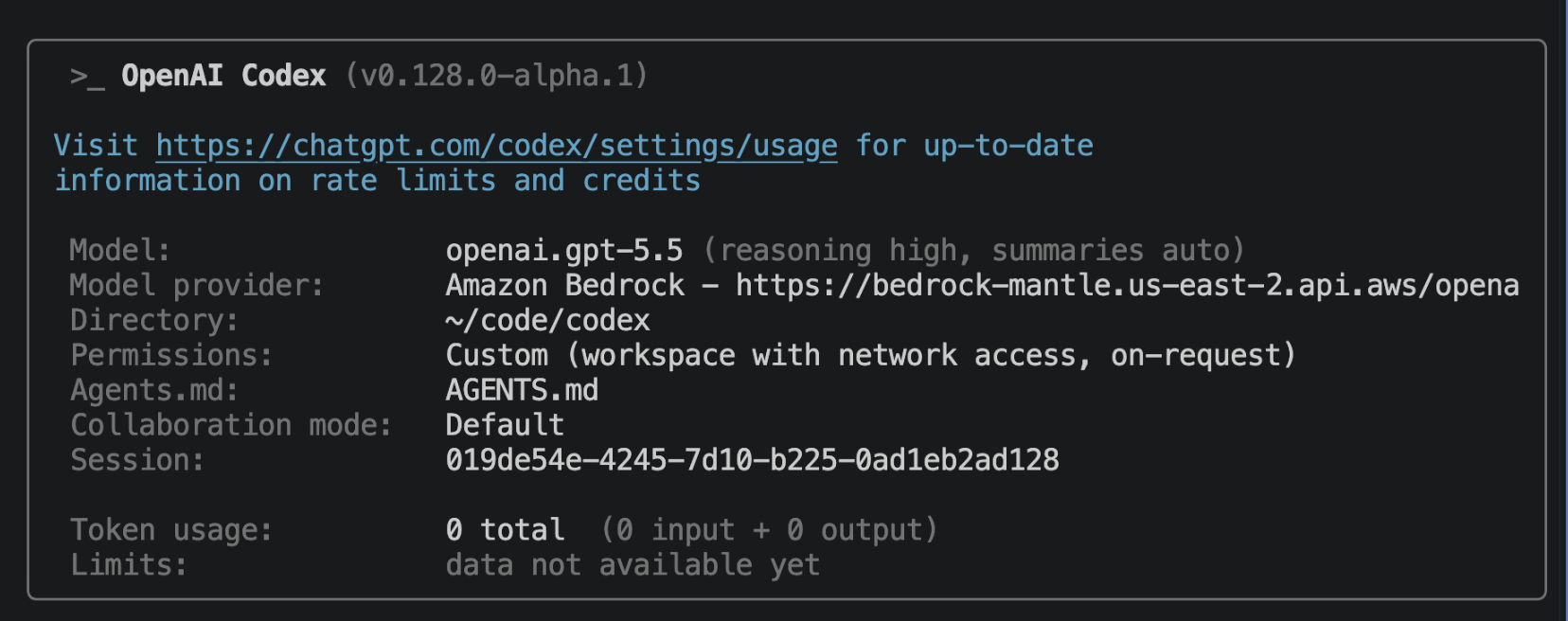
For developers using the Codex App, CLI, or VS Code extensions, the configuration is handled via a config.toml file. This architecture supports both AWS SDK credential chains and direct Bedrock API keys, ensuring that whether a user is working in a local environment or a cloud-hosted workspace, authentication is seamless and secure.
Official Responses and Strategic Intent
AWS and OpenAI have framed this collaboration as a direct response to the "enterprise-AI gap"—the challenge of moving high-quality models out of experimental sandboxes and into production-grade, secure cloud environments.
"By bringing GPT-5.5 and Codex to Amazon Bedrock, we are empowering our customers to build the next generation of intelligent software," an AWS spokesperson stated during the rollout. "We’ve focused on removing the barriers of entry—eliminating seat licenses and per-developer commitments—so that innovation can scale based on usage rather than administrative hurdles."
OpenAI’s leadership echoed this sentiment, emphasizing that the partnership allows their models to operate within the robust security perimeter of AWS, a prerequisite for many Fortune 500 companies considering the adoption of frontier AI.
Implications: The Future of Cloud-Native Development
The implications of this integration extend far beyond the technical ease of API calls. We are witnessing a fundamental shift in the economics and architecture of software development.
1. The Death of the "Seat License" Model
By moving to a per-token pricing model with no seat licenses, AWS is effectively commoditizing high-level intelligence. This move forces a competitive environment where the focus shifts from software sales to model efficiency and infrastructure reliability.
2. Agentic Workflows as the Default
The emphasis on "long-horizon developer workflows" suggests that the industry is moving away from simple prompt-response bots toward persistent AI agents. With Bedrock’s ability to handle state management and tool orchestration, developers can now build systems that act as autonomous agents, capable of planning, executing, and testing complex code deployments without human intervention.
3. Regulatory Compliance and Sovereignty
The immediate availability of GPT-5.4 in GovCloud signals that AWS is positioning Bedrock as the gold standard for the public sector. By ensuring that data stays within specific geographic boundaries, AWS is addressing the primary concern of governments and highly regulated financial institutions: data sovereignty.
4. The Developer Experience (DX) Evolution
With the integration of Codex into VS Code and JetBrains, the IDE is evolving from a text editor into a collaborative cockpit. The ability to route Codex inference through Bedrock means that enterprises can keep their proprietary codebases secure within their AWS VPCs while still benefiting from the world’s most advanced coding intelligence.
Conclusion
The integration of GPT-5.5, GPT-5.4, and Codex into Amazon Bedrock marks a pivotal transition in the AI lifecycle. It moves the conversation from "what can these models do?" to "how can we scale them securely?" By leveraging AWS’s massive cloud infrastructure and OpenAI’s frontier intelligence, the barrier to building high-consequence, AI-driven applications has been significantly lowered. As these tools continue to mature, the focus will undoubtedly shift toward orchestration and agent autonomy, setting the stage for a new era of industrial-strength, AI-powered innovation.