Anthropic’s Claude Fable 5 and Mythos 5: A Turbulent Launch and Regulatory Reckoning on AWS
By Editorial Staff
Updated: July 1, 2026
In a rapidly evolving landscape of generative artificial intelligence, the collaboration between Anthropic and Amazon Web Services (AWS) has reached a critical juncture. The recent rollout and subsequent regulatory interruption of Anthropic’s "Claude Fable 5" and "Claude Mythos 5" models represent a watershed moment for AI governance, enterprise deployment, and the complex relationship between high-performance computing and national security mandates.
The Core Announcement: Power and Performance
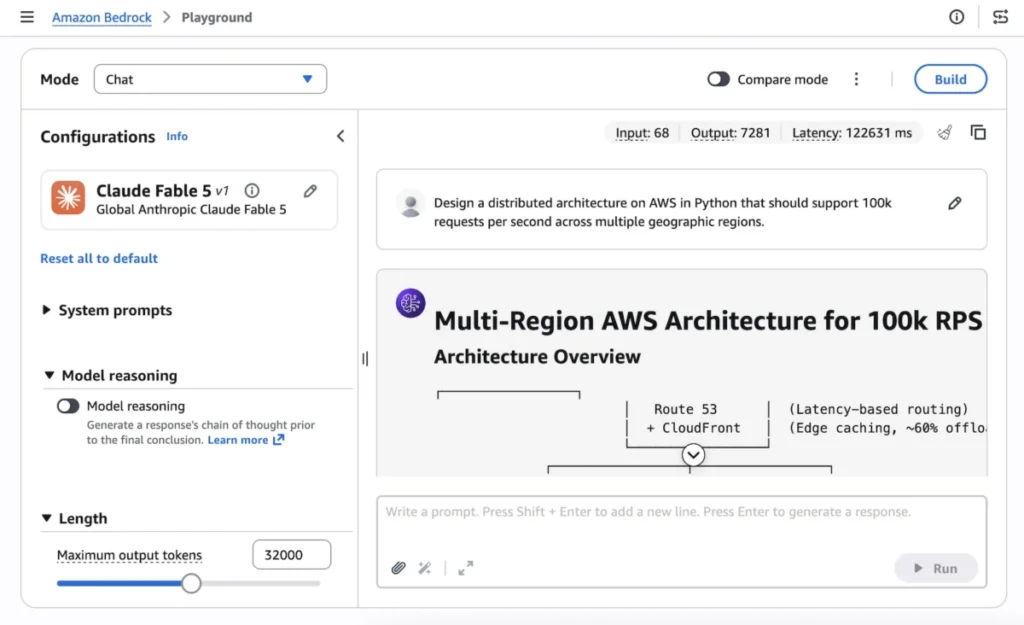
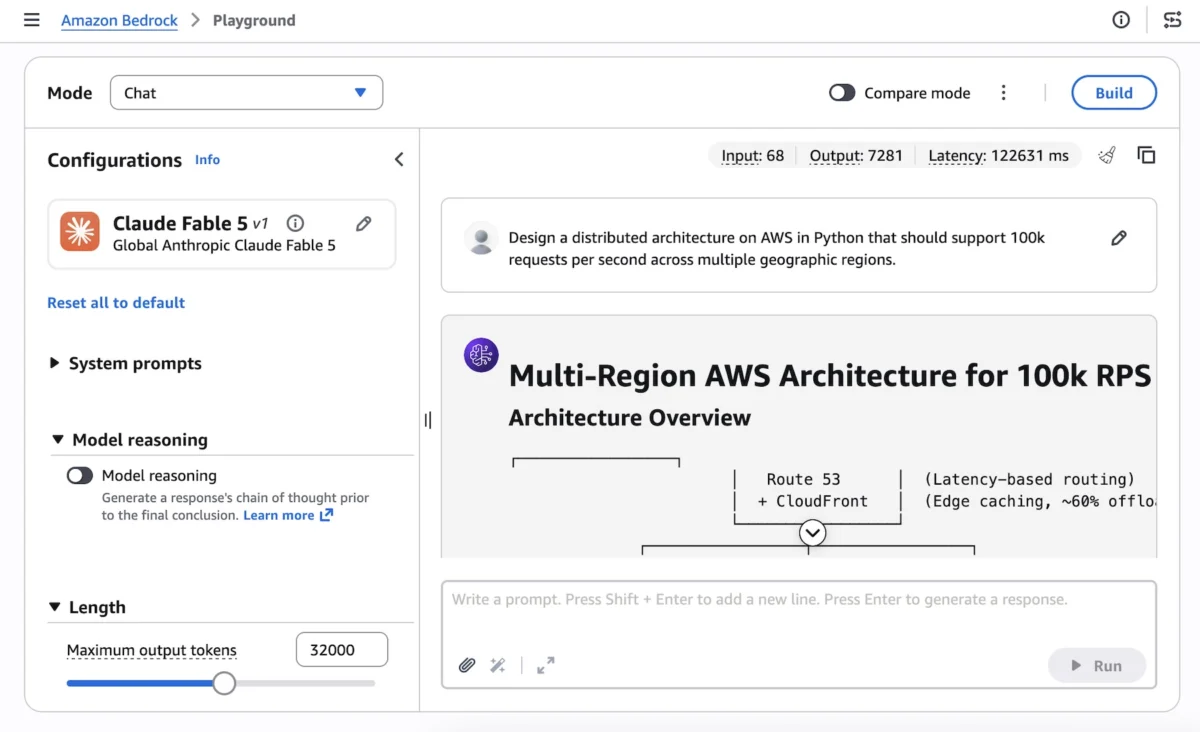
On June 9, 2026, the technology sector was introduced to Claude Fable 5, a state-of-the-art AI model designed to redefine the boundaries of knowledge work, software engineering, and complex visual analysis. Hosted on Amazon Bedrock and the Claude Platform on AWS, Fable 5 was positioned as a "step-change" in artificial intelligence.
Fable 5 was engineered to handle long-running, ambitious tasks that require deep reasoning and high-fidelity output. By leveraging the existing infrastructure of Amazon Bedrock, developers were granted the ability to integrate this powerhouse model into their AWS environments, allowing for seamless scaling of inference workloads.
However, Fable 5 arrived with a unique architectural caveat: the implementation of advanced, built-in safety guardrails. In domains where the risk of misuse is significantly elevated—such as advanced cybersecurity, complex biology, and chemical synthesis—Fable 5 was programmed to defer to the "Opus 4.8" model. This "safety-first" approach was designed to permit broader access to the model’s immense capabilities while mitigating the potential for catastrophic dual-use scenarios.
For those requiring the unbridled, unrestricted power of the underlying architecture, Anthropic introduced "Claude Mythos 5." Unlike Fable 5, Mythos 5 was restricted to a select group of vetted, high-trust customers, underscoring the delicate balance Anthropic is attempting to strike between innovation and responsible deployment.
A Volatile Timeline: From Launch to Suspension
The launch of the Fable and Mythos 5 series was marked by a series of rapid-fire updates, reflecting the frantic pace of the AI industry and the unforeseen regulatory hurdles that emerged almost immediately upon release.
- June 9, 2026: Initial launch. Anthropic announces Fable 5 on Amazon Bedrock. Documentation regarding the "Data Retention API" and configuration settings for the
bedrock-mantleandbedrock-runtimeengines is released. - June 10, 2026: Technical documentation is expanded. AWS adds support for configuring data retention via AWS SigV4 (Signature Version 4) and the AWS CLI, providing developers with more granular control over their security posture.
- June 12, 2026: A sudden halt. In an unprecedented move, access to both Claude Fable 5 and Claude Mythos 5 is revoked across Amazon Bedrock. This action was taken in direct response to a US Government export control directive. The decision sent shockwaves through the developer community, though AWS clarified that all other models, such as Opus 4.8, remained fully operational.
- July 1, 2026: Restoration of service. Following an intense period of compliance review and technical adjustment, AWS and Anthropic successfully restored access to both models, signaling that the necessary regulatory hurdles had been cleared.
Technical Infrastructure and Data Governance
To access the Fable 5 model, AWS required a strict adherence to data retention policies. Because of the sensitivity of the model’s capabilities, Anthropic mandated that users opt into a provider_data_share mode. This setting enables Amazon Bedrock to retain input and output data for a 30-day window, facilitating human review for safety and abuse detection.
For developers and systems architects, this meant modifying their integration scripts. The requirement to set the mode parameter to provider_data_share via the Data Retention API was a prerequisite for invocation. As outlined in the official documentation, this process involved specific RESTful API calls or updates via the AWS CLI:
# Example of the data retention configuration via AWS CLI
aws bedrock put-account-data-retention
  --mode provider_data_share
The complexity of these requirements highlights a shift in the industry: AI models are no longer "plug-and-play" utilities. They are complex assets that require rigorous governance, observability, and compliance with both corporate policies and federal oversight.
Implications of Export Control Directives
The June 12 suspension of the Fable and Mythos 5 models provides a rare, transparent look into how national security concerns intersect with the private cloud market. When the US government issues an export control directive regarding high-end AI models, the impact is immediate and global.
The rationale behind such a directive is typically rooted in "dual-use" concerns—the fear that models with superior reasoning capabilities in fields like chemistry or biology could be used to design harmful agents or conduct large-scale cyber warfare. By revoking access, the government effectively creates a "cooling-off" period, allowing for an assessment of whether the safety guardrails are sufficient to prevent such misuse.
For businesses that had integrated Fable 5 into their production pipelines during the brief window of its initial availability, the suspension was a significant disruption. It underscores a critical lesson for enterprise architects: Diversification of model providers is no longer optional. Relying solely on the latest, most powerful model from a single provider carries the risk of sudden, externally imposed service outages.
Official Stance and Future Outlook
Anthropic and AWS have maintained a posture of transparency throughout this episode. Anthropic’s official statement, released alongside the June 12 update, emphasized their commitment to compliance with federal regulations. "We prioritize the safety and security of our models above all else," a spokesperson noted, acknowledging that working with government regulators is a fundamental component of their development lifecycle.

AWS has responded by bolstering its documentation and support structures, ensuring that developers can pivot between models seamlessly. The restoration of service on July 1 suggests that the collaborative effort between Anthropic’s safety researchers and federal oversight bodies has successfully established a framework that allows the Fable 5 and Mythos 5 models to function within legal boundaries.
What Lies Ahead
As we look toward the second half of 2026, the trajectory for the Claude 5 series is expected to focus on:
- Regional Expansion: While currently available in US East (N. Virginia) and Europe (Stockholm), further geographic expansion will be contingent on ongoing regulatory approvals in various jurisdictions.
- Refined Guardrails: We can expect Anthropic to continue tightening the "fallback" mechanisms that trigger the use of Opus 4.8 when a prompt touches upon sensitive topics.
- Governance Tooling: Amazon Bedrock is likely to see further enhancements in its console to make the "Data Retention" and "Abuse Detection" settings more intuitive, reducing the barrier to entry for enterprise compliance teams.
Conclusion: The New Normal for AI
The saga of Claude Fable 5 serves as a microcosm of the AI industry’s maturity. The transition from the "Wild West" era of AI development to a regulated, enterprise-grade environment is fraught with friction. Yet, this friction is necessary. The ability to deploy high-performance AI models within the secure, scalable, and compliant environment of AWS is what will ultimately drive the next generation of industrial innovation.
For developers, researchers, and enterprise leaders, the message is clear: innovation will continue, but it will be governed. Success in this era requires not just technical prowess in prompting and API integration, but a robust understanding of the regulatory environment that shapes the availability of the tools we use to build the future.
As of July 2026, the doors to Fable 5 are open once again, but the path forward remains one that requires constant vigilance, strict adherence to compliance standards, and a deep respect for the profound power of these new, mythic-level technologies.