Accelerating the Agentic Era: AWS Unveils Amazon Bedrock Managed Knowledge Base
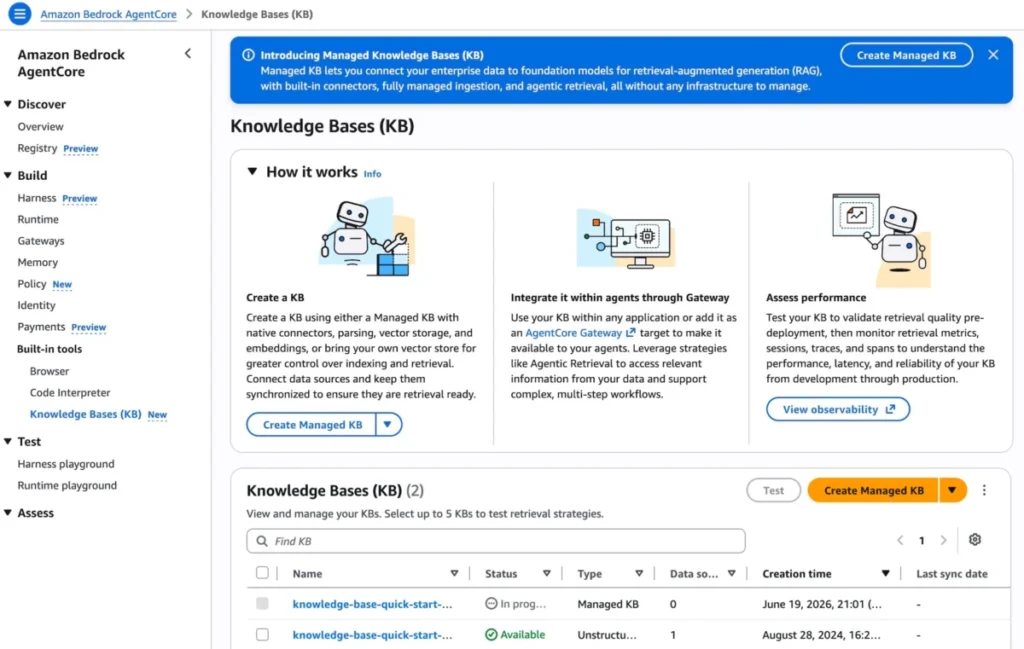
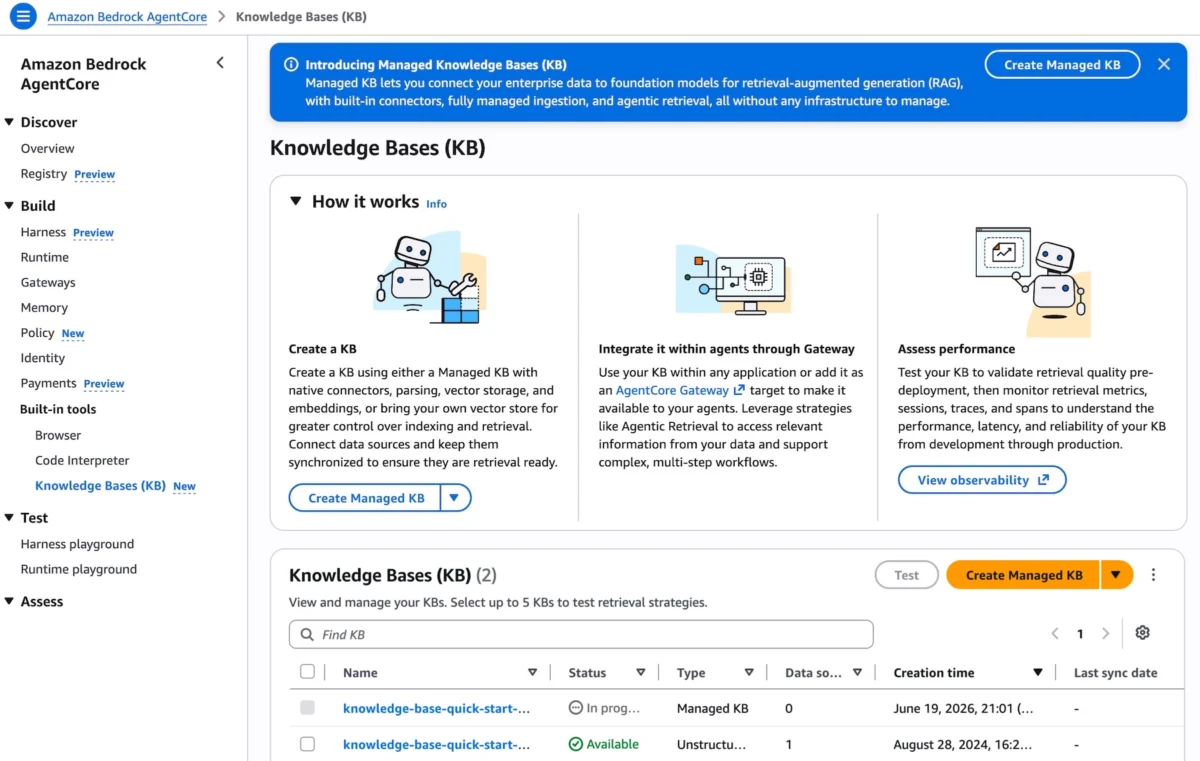
In a major leap forward for enterprise-grade generative AI, Amazon Web Services (AWS) has announced the launch of Amazon Bedrock Managed Knowledge Base. This new suite of capabilities is designed to eliminate the heavy lifting traditionally associated with Retrieval-Augmented Generation (RAG) pipelines. By abstracting the complex infrastructure required to connect proprietary data with foundation models, AWS is enabling organizations to transition from experimental AI prototypes to robust, production-ready agentic applications in a matter of minutes.
The State of Generative AI: Why Infrastructure is the New Bottleneck
The promise of generative AI in the enterprise has always been tethered to the quality and accessibility of proprietary data. To build an AI agent that doesn’t just hallucinate, but provides grounded, accurate answers, developers have historically had to build, manage, and scale their own RAG pipelines. This process involves a precarious stack of storage, retrieval mechanisms, embedding models, re-ranking algorithms, and foundational model selection.
For many development teams, these tasks are "undifferentiated heavy lifting"—essential work that does not inherently add unique value to the end product but consumes vast amounts of engineering time. The launch of Amazon Bedrock Managed Knowledge Base seeks to shift that focus, allowing developers to prioritize business logic and user outcomes over infrastructure orchestration.
Chronology of Development: From Manual RAG to Managed Primitives
The evolution of Amazon Bedrock has been marked by a consistent effort to simplify the AI stack.
- Early 2024: AWS introduced the basic foundations of Knowledge Bases for Bedrock, providing a way for users to link S3 buckets to models.
- Late 2024/Early 2025: As agentic AI (agents capable of executing multi-step tasks) gained traction, developers began struggling with the limitations of basic RAG, specifically regarding multi-hop reasoning and data parsing.
- June 2026: AWS officially bridges the gap between raw data and agentic intelligence with the release of the Managed Knowledge Base. This update introduces "Smart Parsing," "Agentic Retriever," and native integration with the Amazon Bedrock AgentCore Gateway, signaling a shift toward fully autonomous data retrieval.
Core Innovations: How the Managed Knowledge Base Works
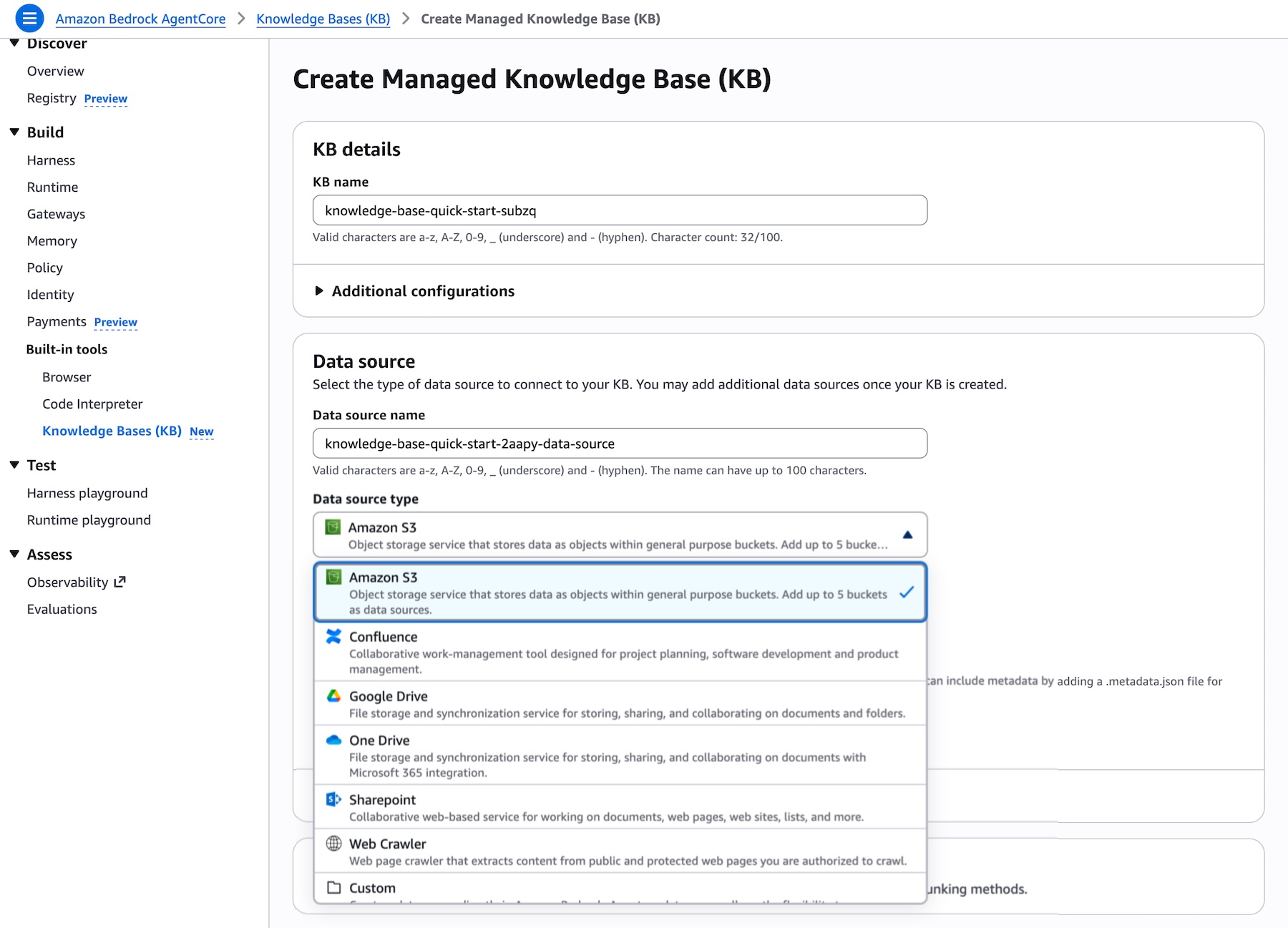
Amazon Bedrock Managed Knowledge Base functions as a single, managed primitive that replaces the fragmented components of a traditional RAG pipeline. By providing a default configuration—including optimized embeddings and re-ranker models—AWS allows users to achieve high-performance results out of the box, while maintaining the flexibility to swap components as specific use cases evolve.
1. Smart Parsing: The Key to Data Ingestion
Data in the enterprise is notoriously messy. PDFs, spreadsheets, presentations, and web documents all present unique formatting challenges that can degrade retrieval quality. The new Smart Parsing feature automates the ingestion process. By analyzing document structure and content types, it applies optimal parsing strategies without requiring manual configuration. This eliminates weeks of trial and error that teams previously spent fine-tuning data pipelines to ensure accuracy.

2. The Agentic Retriever: Enabling Complex Reasoning
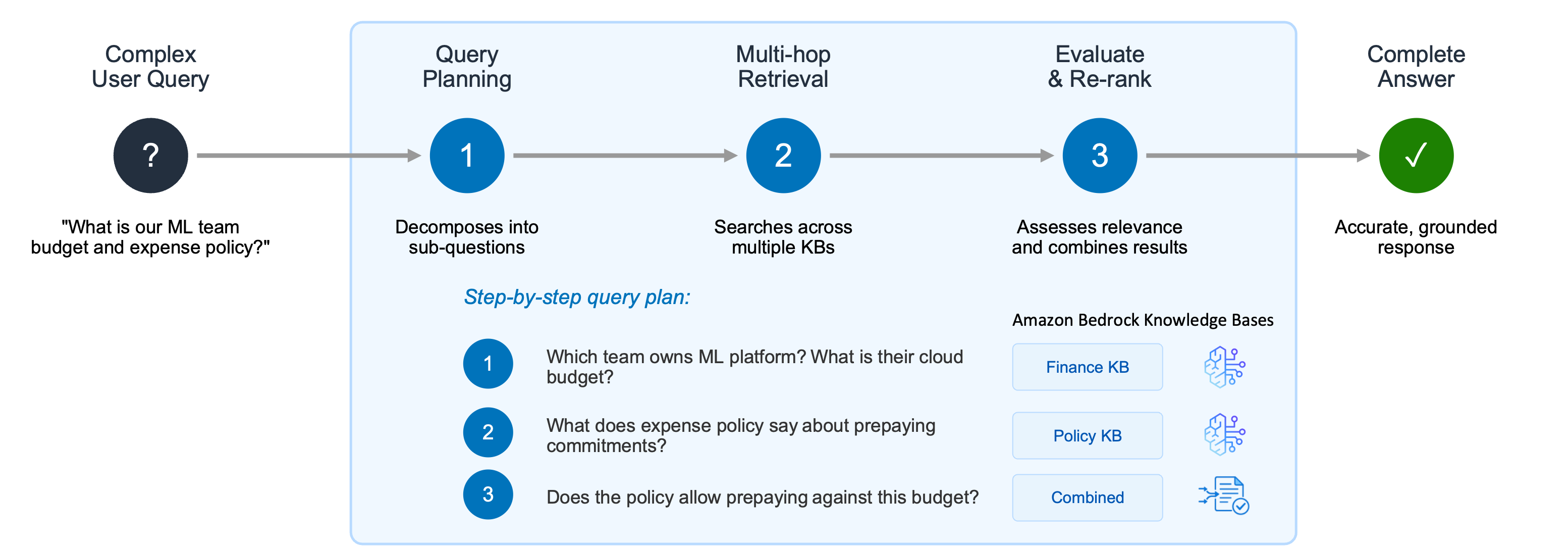
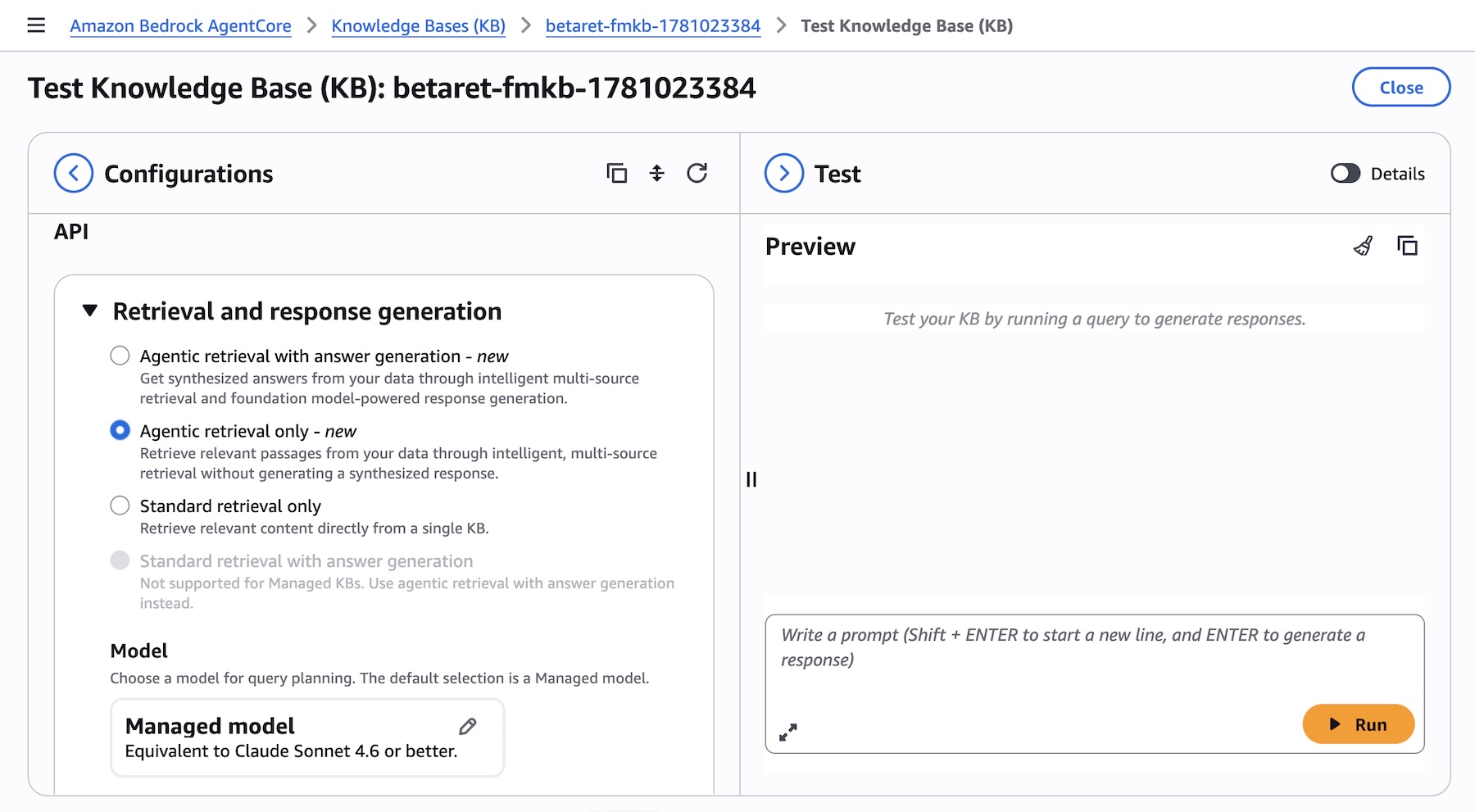
Perhaps the most significant advancement is the Agentic Retriever. Standard retrieval methods often fail when faced with complex, multi-part questions. For example, if an employee asks, "Does our current budget for the ML team allow for a prepayment of annual software commitments?", a standard search might return isolated documents on budgets and separate documents on expense policies.
The Agentic Retriever decomposes these queries into a logical, multi-step plan:
- Identify the ML team’s specific budget.
- Retrieve the relevant sections of the corporate expense policy.
- Synthesize the two data points to provide a grounded, actionable answer.
This multi-hop reasoning is performed automatically, dramatically increasing the reliability of agentic responses.
Integration and Observability: The AgentCore Gateway
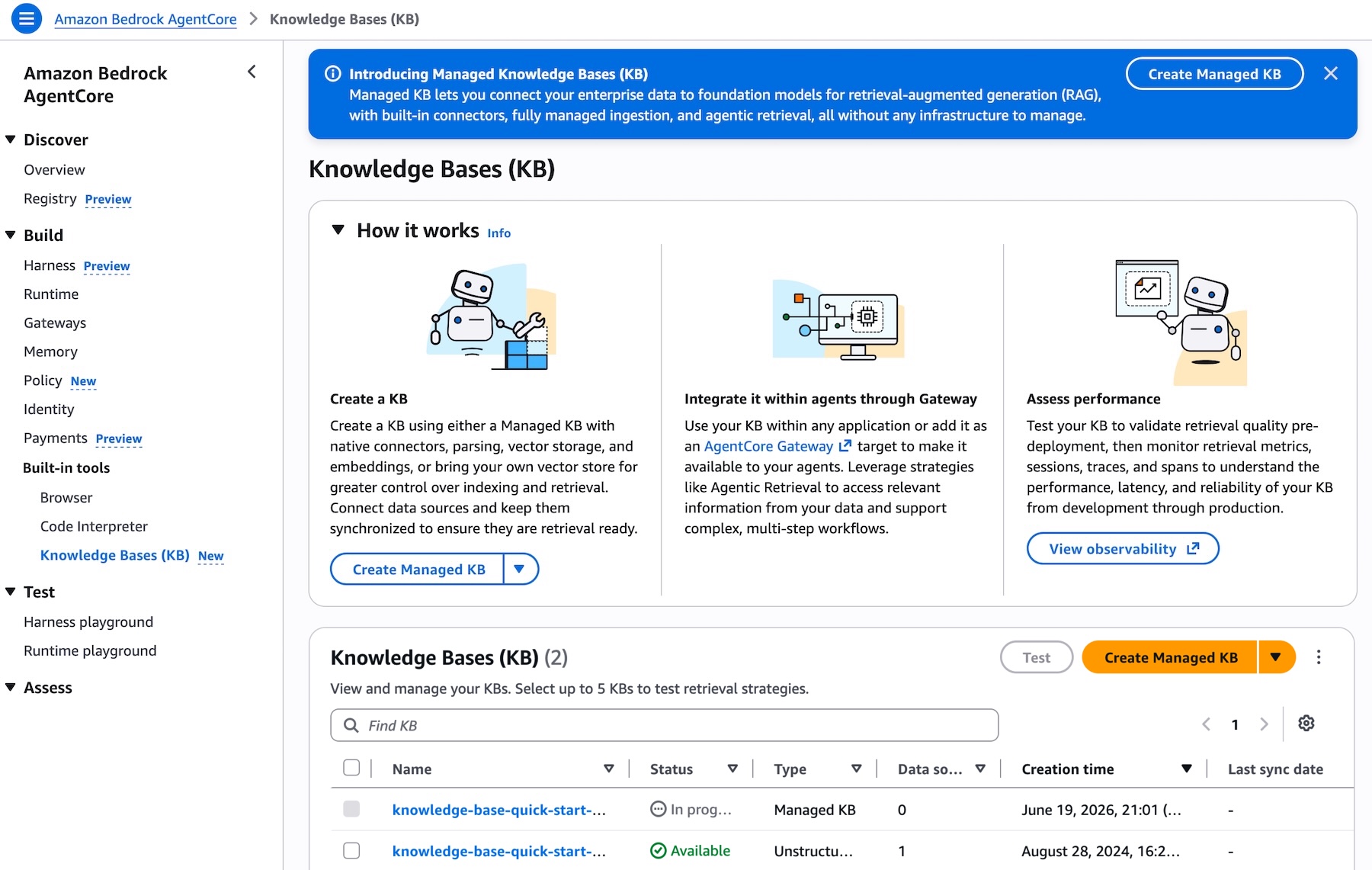
The integration of Managed Knowledge Base with Amazon Bedrock AgentCore Gateway represents a strategic move to standardize how agents interact with data. By treating the Knowledge Base as a "pre-built target type," AWS has simplified the integration process to just a few lines of code.
Furthermore, the implementation of the Model Context Protocol (MCP) ensures that these knowledge bases are not siloed within the AWS ecosystem. The service automatically makes these tools discoverable by popular open-source frameworks, including LangChain, LlamaIndex, CrewAI, and LangGraph. This interoperability ensures that developers are not locked into a proprietary walled garden, maintaining the flexibility to build across diverse AI stacks.
Implications for the Enterprise
The release of this service has profound implications for how businesses will deploy AI over the next 24 months.
Lowering the Barrier to Entry
By removing the complexity of vector database management and retrieval orchestration, AWS is democratizing access to enterprise AI. Smaller teams and startups can now build high-end AI agents that were previously only possible for companies with large, dedicated ML-Ops teams.
Operational Efficiency and Cost Management
The pay-as-you-go pricing model, based on data storage size and the number of retrievals, allows businesses to scale their costs linearly with their usage. This avoids the upfront infrastructure investments that have historically made AI projects difficult to justify to financial controllers.
The Shift Toward "Agentic" Search
The transition from simple semantic search to "agentic retrieval" marks a fundamental change in the user experience. Users no longer need to know exactly how to search for information; they can ask questions in natural language, and the system acts as an intelligent assistant that performs the necessary research on their behalf.
Official Perspective and Support
Daniel Abib, a key voice in the AWS developer community, emphasized that this release is not just about convenience, but about "production-grade reliability." By providing built-in observability and evaluation metrics via the AgentCore dashboard, AWS is addressing the "black box" problem that has plagued many AI deployments. Developers now have the visibility required to audit why a model provided a specific answer, which is a critical requirement for highly regulated industries like finance, healthcare, and law.
Strategic Flexibility: A Non-Lock-in Approach
A critical takeaway from the AWS announcement is the commitment to model flexibility. While AWS provides an optimized default stack, the system is designed to allow developers to bring their own foundation models, embedding models, and re-rankers. This "separation of concerns"—where AWS manages the plumbing while the developer maintains control over the brain (the models)—is a crucial differentiator in a market currently crowded with rigid, end-to-end proprietary solutions.
Conclusion: A New Standard for RAG
The introduction of Amazon Bedrock Managed Knowledge Base signals the end of the "bespoke RAG" era. As generative AI moves into the core of enterprise operations, the focus is shifting from "how do we build this?" to "what problems can we solve now that this is built?"
With regional availability already spanning major global hubs—from North America to Asia-Pacific and Europe—AWS has positioned itself to support the rapid scaling of agentic AI globally. For organizations that have been sidelined by the complexity of AI infrastructure, the message is clear: the barrier to entry has been dismantled. The era of the truly autonomous, data-aware enterprise agent has officially arrived.
For developers looking to get started, the AWS Bedrock Knowledge Bases Developer Guide provides a comprehensive roadmap for implementation, including best practices for connecting to various data sources like SharePoint, Google Drive, and custom web crawlers.