The Analog Heart in a Digital Home: How a Vintage Radio Became a Toddler’s Smart Jukebox
FOR IMMEDIATE RELEASE
[City, State] – [Date] – In an age dominated by sleek touchscreens and voice-activated assistants, a unique project is capturing the imagination of parents and tech enthusiasts alike, blending the tactile charm of vintage electronics with the power of modern smart home technology. Spearheaded by an ingenious maker known online as [nbr23], a once-obsolete Panasonic radio has been reborn as "Radio-Gaga," a bespoke, toddler-proof jukebox controller that offers young children autonomous control over their musical universe through a Home Assistant-powered ecosystem. This innovative solution addresses the universal challenge of engaging young minds with music in a tangible, screen-free manner, offering a fascinating glimpse into the evolving landscape of DIY smart home innovation and child-centric technology.
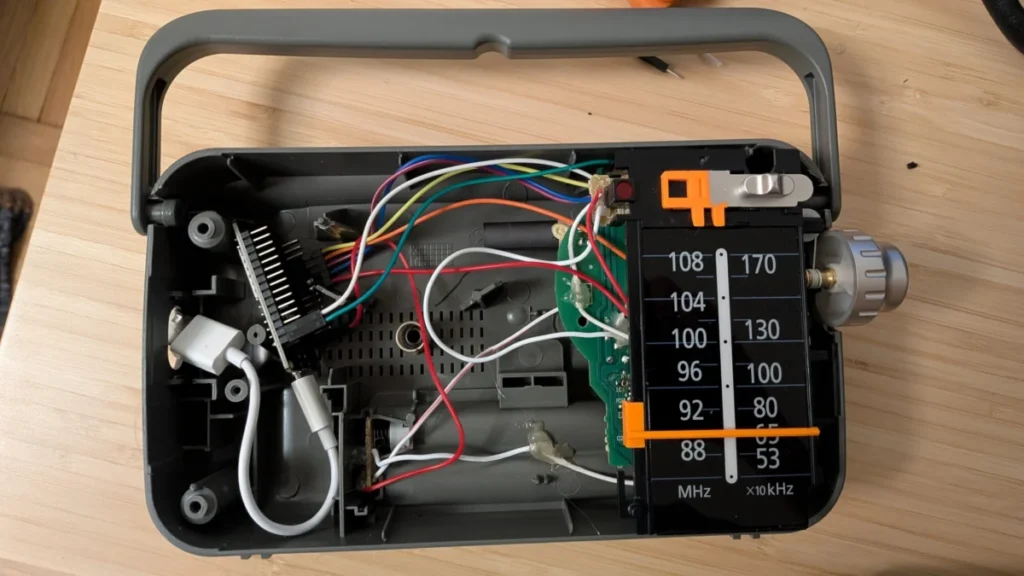
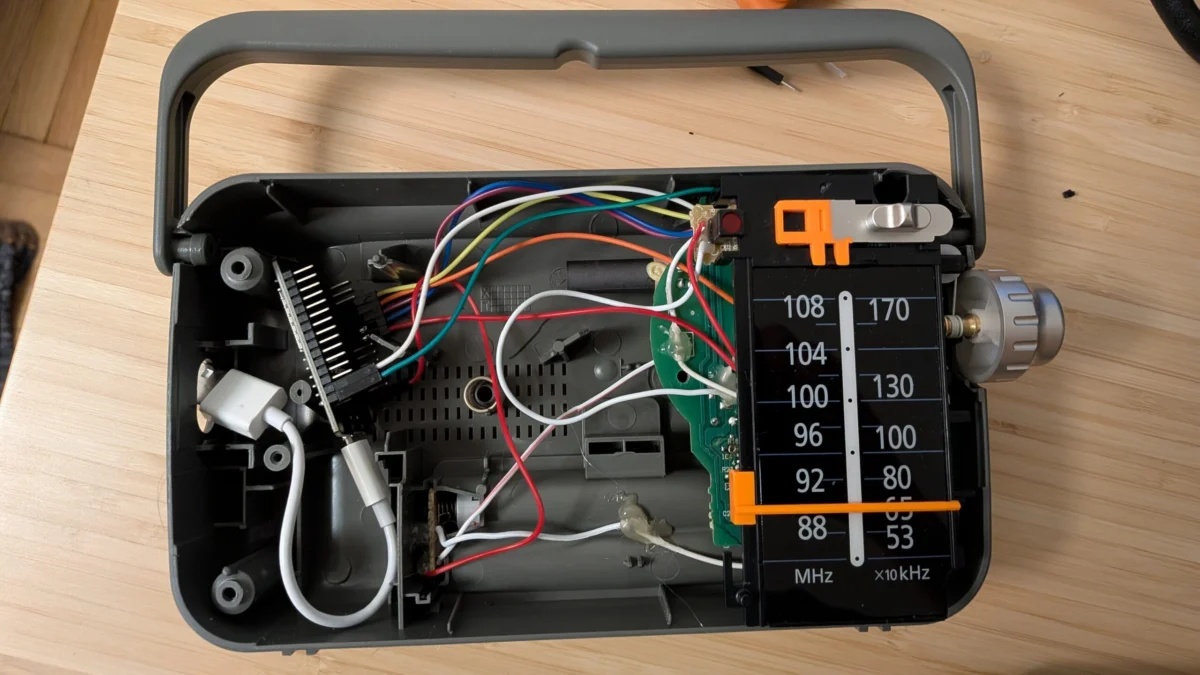
The project, which has garnered significant attention within the maker community, showcases a clever repurposing of hardware. The classic radio, stripped of its original broadcasting components, now serves purely as an interface. Its robust dials and buttons, familiar to generations, are meticulously rewired to an ESP32 microcontroller, translating a toddler’s enthusiastic twists and presses into digital commands. These commands are then relayed to a Home Assistant server, which orchestrates the playback of music from a home lab setup to a dedicated USB speaker. The result is a system that is not only functional but deeply intuitive for its pint-sized user, offering a refreshing alternative to the often-complex interfaces of contemporary audio devices.
"Humans of all ages like music, but you can’t exactly pass a toddler the aux cable," [nbr23] muses in his project documentation. "That’s not to say the younger set don’t have their own particular tastes—they absolutely do, and they absolutely love to take control and inflict them on the rest of us." This sentiment lies at the heart of Radio-Gaga, a testament to how creative engineering can solve everyday parenting dilemmas, providing both entertainment and a valuable lesson in cause-and-effect for the most impatient of tiny humans.
The Genesis of an Idea: Bridging Toddler Enthusiasm and Smart Home Tech
The inspiration for Radio-Gaga sprung from a common parental observation: a toddler’s innate love for music coupled with an equally strong desire for tactile interaction and control. While digital music streaming services offer an endless library, their interfaces are rarely designed for the developing motor skills and cognitive understanding of a two or three-year-old. [nbr23] recognized that his child, like many, thrived on physical engagement—the satisfying click of a button, the smooth turn of a dial. The challenge was to marry this preference for tangible controls with the convenience and vastness of a digital music collection.
The creator’s initial thought process likely involved surveying available options. Commercial children’s music players exist, offering simplified interfaces or NFC-tag activation, but these often come with proprietary ecosystems, limited customization, or a modern aesthetic that lacks the charm and durability of older electronics. [nbr23], a seasoned tinkerer familiar with the versatility of platforms like Home Assistant, envisioned something more integrated, more personalized, and fundamentally more robust than many off-the-shelf solutions.
The choice of a vintage Panasonic radio was deliberate. Beyond its aesthetic appeal and the nostalgic connection it might evoke in adults, these older devices often feature generously sized, sturdy controls—perfect for small hands still refining their dexterity. The robust plastic casing and a design ethos built for longevity in a pre-disposable electronics era also made it an ideal candidate for repurposing. It offered a pre-fabricated, toddler-proof enclosure that would have been costly and time-consuming to design from scratch. The decision to gut the radio, removing all its original internal components, was the first step in transforming it from a passive receiver of signals into an active transmitter of commands.
A Chronology of Ingenuity: From Concept to "Radio-Gaga"
The development of Radio-Gaga unfolded as a meticulous process of reverse engineering, electronic integration, and software customization, typical of many ambitious DIY smart home projects.
Phase 1: The Core Hardware Integration
The journey began with the deconstruction of the Panasonic radio. The original speaker, tuner, amplifier, and power supply were carefully removed, leaving behind the shell, the control panel, and the mechanical components of the dials and buttons. The next critical step was to identify how these mechanical inputs could be translated into electronic signals.
- Potentiometers for Volume and Tuning: The volume and tuning dials, traditionally connected to analog potentiometers, were prime candidates for reuse. Potentiometers, which vary electrical resistance as they are turned, are ideal for controlling continuous functions like volume. [nbr23] connected these to the analog input pins of an ESP32 microcontroller. The ESP32 would then read the varying resistance as a change in voltage, translating it into a digital value representing the desired volume level or track selection.
- Buttons for Playback Control: The push-buttons on the radio, perhaps for station presets or power, were rewired to the digital input pins of the ESP32. When a button is pressed, it completes a circuit, signaling the ESP32 to trigger a specific command—play, pause, skip forward, or skip backward.
- The ESP32 Microcontroller: The ESP32 served as the brain of the remote control. Chosen for its integrated Wi-Fi capabilities, it became the communication bridge between the physical controls and the smart home ecosystem. Its low power consumption was also a crucial factor, especially for a battery-powered device.
Phase 2: The Software Backbone – Home Assistant and ESPhome
With the hardware wired, the next challenge was to make it "smart." This involved two key software components:
- ESPhome: This open-source firmware for ESP devices allowed [nbr23] to program the ESP32 without deep C++ knowledge. Using a YAML configuration file, he defined how the ESP32 should interpret the potentiometer readings and button presses. More importantly, ESPhome facilitated seamless integration with Home Assistant. For instance, turning the volume dial would publish a message to Home Assistant, indicating a new volume percentage. Pressing a button would publish a specific event, like "media_player_play_pause."
- Home Assistant: As the central smart home hub, Home Assistant received these commands from the ESP32. Within Home Assistant, automations were configured to link these incoming signals to actions on a media player entity. For example, an automation might state: "When ‘radio_gaga_volume’ changes, set the volume of ‘media_player.usb_speaker’ to the new value." Similarly, button presses would trigger specific media player functions like
media_player.media_play_pauseormedia_player.media_next_track. - Music Source: The actual music files were served from a "homelab"—likely a dedicated server or a Network Attached Storage (NAS) device—ensuring a robust and customizable music library. The audio output was directed to a separate USB speaker, keeping the control unit itself free of bulky audio components and allowing for flexible speaker placement.
Phase 3: Overcoming Technical Hurdles and Refining User Experience
No DIY project is without its challenges, and Radio-Gaga presented a notable one related to startup time.
- The DHCP Delay: Initially, [nbr23] observed an unsatisfactorily slow startup time for the device. The delay, which could stretch to several seconds, was particularly problematic when catering to an impatient toddler. Investigation revealed that the single longest step in getting the tunes going was the negotiation of a DHCP lease. DHCP (Dynamic Host Configuration Protocol) is a network protocol that automatically assigns IP addresses to devices on a network. While convenient, the negotiation process can sometimes introduce delays, especially in busy networks or with certain router configurations.
- The Static IP Solution: The elegant solution was to assign the ESP32 a static IP address on the network. By hardcoding a specific IP address, the device no longer needed to go through the DHCP negotiation process every time it powered on. This simple but effective change drastically reduced the startup time, getting the tunes playing in under a second—a speed fast enough even for the most demanding tiny human. This particular lesson, highlighted by [nbr23], underscores the practical optimizations often discovered during real-world smart home deployments.
Phase 4: Acknowledging Limitations and Future Possibilities
One notable flaw in the current architecture is the reliance on batteries for the remote control unit. "If the batteries die on the remote, ‘Let it Go’ does not until an adult intervenes manually or recharges the remote," [nbr23] candidly admits. This highlights a common trade-off in battery-powered devices: convenience versus constant availability. Future iterations might explore rechargeable battery packs with longer life, or even a low-battery indicator system integrated with Home Assistant to alert parents before the music suddenly cuts out.
Despite this, the project’s success lies in its core functionality and the sheer joy it brings. The toddler now has a tangible, understandable interface to control their beloved music, fostering a sense of autonomy and engagement that screen-based alternatives often fail to provide.
Supporting Data: The Broader Context of DIY, Smart Homes, and Child Development
Radio-Gaga is more than just a clever hack; it’s a microcosm of several burgeoning trends that are reshaping how we interact with technology and raise our children.
The Proliferation of the Maker Movement and Open-Source Hardware/Software
The project stands as a shining example of the "maker movement" in action. Driven by accessible tools like microcontrollers (ESP32, Raspberry Pi), open-source software platforms (Home Assistant, ESPhome), and a wealth of online tutorials and communities, individuals are increasingly empowered to design, build, and customize technology to meet their unique needs. This democratizes innovation, moving beyond mass-produced, one-size-fits-all solutions. The ability to repurpose an old radio, rather than buying a new device, also aligns with principles of sustainability and upcycling, reducing electronic waste.
The Rise of Home Assistant and Personalized Smart Home Ecosystems
Home Assistant, an open-source home automation platform, is central to Radio-Gaga’s functionality. Its flexibility and extensive integrations allow users to connect disparate devices and create complex automations. Projects like Radio-Gaga demonstrate the power of Home Assistant not just for convenience (e.g., turning lights on/off) but for truly personalized, problem-solving applications. It represents a shift from proprietary smart home systems to user-controlled, privacy-focused ecosystems where users have full ownership and control over their data and devices.
Technology in Early Childhood: A Balanced Approach
The debate around screen time versus tangible play for young children is ongoing. While digital devices offer educational content, concerns about passive consumption, impact on attention spans, and lack of tactile engagement persist. Radio-Gaga offers a compelling third path: leveraging digital content (music streaming) through a completely analog, tactile interface.
- Promoting Autonomy and Control: For a toddler, the ability to independently select music and adjust volume provides a significant sense of control over their environment. This autonomy is crucial for developing self-efficacy and confidence.
- Developing Fine Motor Skills: Manipulating dials and pressing buttons actively engages fine motor skills, hand-eye coordination, and spatial awareness—skills that are less exercised with passive screen swiping.
- Understanding Cause and Effect: The immediate and tangible response of the music system to their actions helps children understand basic principles of cause and effect in a concrete way.
- Stimulating Auditory Development: Exposure to a wide range of music, controlled by the child, can support auditory processing and appreciation for different genres.
Comparison to Commercial Alternatives
While commercial products like Yoto Players, Tonies Box, or Jooki offer similar "child-friendly" music experiences, they often rely on proprietary content systems, NFC tags (which, while tactile, are different from traditional controls), or app-based configuration. Radio-Gaga distinguishes itself by:
- Openness and Customization: Complete control over music library, playback rules, and hardware.
- Retro Aesthetic: The charm of a vintage radio offers a unique sensory experience.
- Tactile Purity: Focus on traditional dials and buttons, free from digital screens or complex pairing processes.
- Cost-Effectiveness: Often, repurposing old electronics and using open-source software can be significantly cheaper than buying new, specialized children’s gadgets.
Official Responses and Community Acclaim
While no official "response" from a corporation or government body is expected for a personal DIY project, the reception within the global maker community, parenting forums, and smart home enthusiast groups has been overwhelmingly positive.
On platforms like Hackaday, Reddit’s r/HomeAssistant, and specialized electronics forums, projects like Radio-Gaga are celebrated for their ingenuity, practicality, and the spirit of sharing knowledge. Comments often highlight:
- "Brilliant Solution": Many parents instantly recognize the problem [nbr23] solved and laud the elegance of his approach. The frustration of toddlers demanding control over music is universal, and this project offers a refreshing perspective.
- Technical Elegance: The clever use of the ESP32, ESPhome, and Home Assistant to create a robust and responsive system is appreciated by technical users. The static IP optimization, in particular, resonated with those who have faced similar network-related delays in their own projects.
- Inspiration for Others: A significant "response" is the inspiration it provides. Many express intentions to replicate or adapt the project, perhaps using a different vintage enclosure or adding new features. This ripple effect is a cornerstone of the open-source and maker ethos.
- Nostalgia and Aesthetics: The choice of a vintage radio often elicits nostalgic comments, appreciating the blend of old-world charm with modern technology. The aesthetic appeal of Radio-Gaga is a strong draw.
From a broader child development perspective, experts in early childhood education often advocate for play that is open-ended, child-led, and involves tangible manipulation. While not a formal endorsement, the principles behind Radio-Gaga align well with recommendations for fostering curiosity, problem-solving skills, and independent play in young children. The project implicitly supports the idea that technology, when thoughtfully designed and integrated, can be a tool for enrichment rather than just distraction.
Implications: The Future of Tangible Interfaces and Personalized Tech
The Radio-Gaga project holds several significant implications, pointing towards potential trends in technology, design, and parenting.
The Enduring Appeal of Tangible Interfaces
In an increasingly digital and virtual world, Radio-Gaga underscores the enduring human (and especially child) need for tangible interfaces. While touchscreens offer versatility, they lack the haptic feedback, the satisfying resistance of a dial, or the definite click of a button. For children still developing their sensory and motor skills, these physical interactions are not just preferred; they are crucial for learning and engagement. This suggests a potential future where physical controls might see a resurgence, perhaps integrated with digital backends, offering a richer, multi-sensory user experience. This could extend beyond children’s devices to specialized controls for adults, where precision or tactile feedback is paramount.
Scalability and Customization: Beyond the Toddler Jukebox
The underlying architecture of Radio-Gaga—an ESP32 sending commands to Home Assistant—is highly scalable and customizable. The concept could be adapted for various applications:
- Smart Home Control Panels: Imagine an old car dashboard repurposed to control lights, climate, and security.
- Specialized Industrial Interfaces: For environments where gloves are worn or visual focus is critical, tactile controls offer a reliable alternative to touchscreens.
- Accessibility Devices: Simplified, robust physical controls could greatly benefit individuals with certain motor or cognitive impairments.
- Educational Tools: Interactive learning stations that use physical objects to trigger digital content.
The project highlights the immense flexibility of open-source smart home platforms to create highly personalized solutions that transcend the limitations of commercial products.
Inspiring a New Generation of Makers and Problem-Solvers
By sharing his project, [nbr23] is not just showcasing a clever hack; he is inspiring others. Parents, educators, and hobbyists can look at Radio-Gaga and see how readily available components and a bit of ingenuity can solve real-world problems. This fosters a culture of critical thinking, creativity, and hands-on learning, potentially encouraging a new generation to explore electronics, programming, and design. The narrative of taking something old and making it new, making it smart, is particularly powerful in an era concerned with resource efficiency and sustainability.
The Blurring Lines Between DIY and Commercial Products
Projects like Radio-Gaga challenge the traditional product development cycle. Instead of waiting for companies to design and market child-friendly music players, individuals are taking matters into their own hands. This "prosumer" trend—where consumers also act as producers—is likely to grow, driven by accessible technology and online communities. This could push commercial manufacturers to offer more customizable, open, or modular products, or to focus on niche markets that DIY solutions cannot easily serve.
In conclusion, Radio-Gaga stands as a remarkable testament to human ingenuity and the power of blending nostalgic aesthetics with cutting-edge smart home technology. It not only provides a delightful and empowering musical experience for a toddler but also serves as a potent symbol of the maker movement’s potential to craft deeply personal, functional, and inspiring solutions for the modern world. As our digital lives become ever more pervasive, the subtle click of a repurposed dial might just be the most profound interaction of all.