From Legacy to Legacy: The Return of Anthony Pinto and the Birth of ‘Bingers’
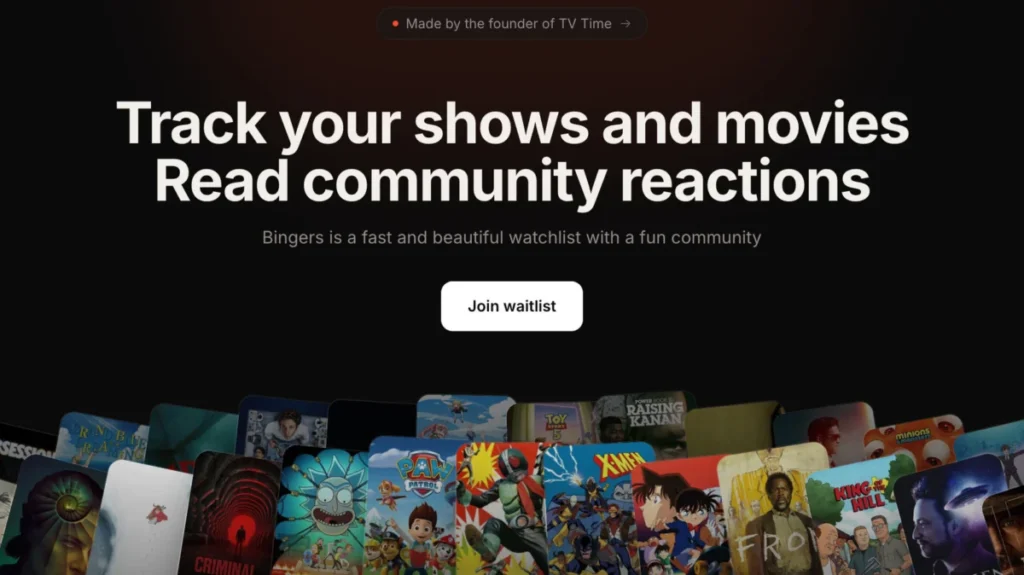
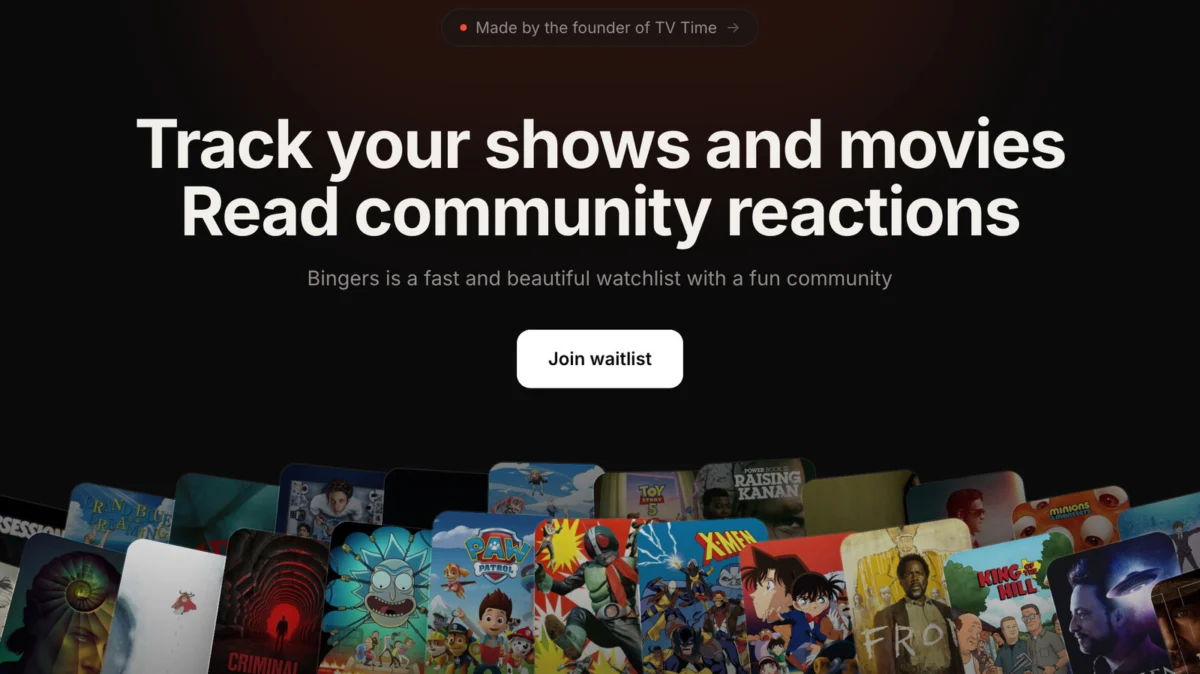
In the rapidly evolving landscape of digital media consumption, the tools we use to organize our viewing habits have become as essential as the streaming platforms themselves. For over a decade, millions of users relied on TV Time—a digital companion that tracked episodes, offered release reminders, and fostered global fan communities. However, following a tumultuous corporate history and a recent announcement of its impending closure, a void has opened in the market. Stepping into that void is Anthony Pinto, the original founder of TV Time, with his latest venture: Bingers.
As the industry grapples with the fallout of the TV Time shutdown, Bingers emerges not merely as a replacement, but as a deliberate "modern-day alternative." With a launch scheduled for the end of July, the app promises to restore the community-driven features that fans lost while simultaneously modernizing the user experience to meet the demands of a new era.
The Main Facts: A Fresh Start for TV Tracking
Bingers is positioned as a direct successor to the legacy of the original TV Time. The core functionality remains familiar to power users: a centralized hub where enthusiasts can track their progress through television series and films, receive notifications for upcoming episode releases, and engage in social discourse within dedicated fan spaces.
The transition, however, is not just a carbon copy. Pinto has emphasized that Bingers is built upon a philosophy of sustainability and efficiency. By utilizing modern development frameworks, the app is designed to maintain exceptionally low server costs—a strategic pivot intended to ensure the service remains operational indefinitely, avoiding the financial pitfalls that led to its predecessor’s demise.
A Chronological History: From Side Project to Industry Staple
The story of Bingers is inextricably linked to the evolution of the television tracking industry. To understand why this launch is significant, one must look at the trajectory of its predecessor.
2011: The Inception
The saga began in 2011 when Anthony Pinto launched "TVShow Time" as a personal "funny side project." At the time, the streaming revolution was in its infancy, and the fragmentation of content across various networks made it difficult for viewers to keep track of their "watch list." The app gained immediate traction, resonating with a demographic that found joy in the gamification of television consumption.
2016: The Acquisition Era
By 2016, the app—now rebranded as TV Time—had become a powerhouse of user-generated data. Its growth caught the attention of Whip Media, a data and analytics company, which acquired the service. Under Whip Media’s ownership, the app continued to scale, leveraging its massive user base to provide insights into global viewing trends.
2021: The Milestone
In 2021, TV Time reached a landmark milestone: 20 million registered users. It was widely regarded as the industry leader in the "second screen" experience. However, the corporate landscape began to shift as private equity and data-focused firms entered the fold. Eventually, the app was sold to Blue Torch Capital.
2026: The End of an Era
The decline of TV Time was swift and, for its dedicated user base, heartbreaking. In early July 2026, the company announced that the service would officially shut down on July 15. The justification was stark: the service was "no longer sustainable to continue operating as a free app," as the parent company shifted its focus toward AI-driven enterprise solutions rather than consumer-facing social utilities.
Supporting Data: The Economics of the "Second Screen"
The closure of TV Time serves as a case study in the difficulties of maintaining free-to-use social apps in a high-cost cloud environment. When an app serves millions of users, the costs associated with cloud hosting, database management, and API integrations grow exponentially.
Pinto’s assessment of the situation highlights a critical issue: the burden of legacy code. As apps grow older, they often become "bloated," requiring more computing power to perform simple tasks. By building Bingers from the ground up, Pinto is aiming to bypass this "technical debt."
The competitive landscape is currently defined by two major players:
- Serializd: A popular, community-focused tracker that has gained significant market share among TV enthusiasts.
- Letterboxd: The gold standard for film logging, which has become so culturally influential that it recently faced reports of interest from major industry players like Netflix, Paramount, and Sony.
Bingers enters this competitive fray with a unique advantage: the ability to import data from TV Time. By allowing users to migrate their historical data, Bingers is lowering the "switching cost," making it far more likely that the 20 million displaced TV Time users will find a new home rather than scattering to various competitors.
Official Responses and Developer Vision
In recent communications, Anthony Pinto has been transparent about the "why" behind the launch of Bingers. He acknowledges the frustration of the TV Time community, noting that the closure felt like the loss of a digital home for many.
"We are building Bingers in a way that keeps server costs very, very low," Pinto stated in a recent interview. "This approach allows the app to be self-sustaining. The goal is for Bingers to stay around forever this time."
When asked about the user interface and experience, Pinto described the vision as a distillation of the "most beloved features" of TV Time, stripped of the excess that bogged down the original app. He promises a faster, more responsive experience that leverages modern UI patterns, ensuring that the app feels native to the latest mobile operating systems.
Implications: The Future of Media Curation
The launch of Bingers has significant implications for how we interact with digital media. As streaming platforms continue to increase prices and fragment their content libraries, the need for third-party trackers is higher than ever. These apps act as a "neutral ground" where content from Netflix, Disney+, Hulu, and others can be viewed as a unified library.
1. The Power of User Data
The transition from TV Time to Bingers highlights the fragility of user-curated data. Millions of users spent years logging every show they watched, effectively creating a personalized media diary. When a company shuts down, that history is at risk. Bingers’ commitment to data import tools is a vital step in "data sovereignty," acknowledging that the history belongs to the user, not the corporate entity.
2. The AI Shift
The reason provided for the closure of TV Time—a focus on AI—is reflective of a broader trend in the tech industry. Many consumer-facing apps are being shuttered as parent companies pivot to AI-as-a-Service models, which promise higher profit margins. This creates a market opportunity for independent, community-focused developers like Pinto to step in and offer products that prioritize the user experience over corporate data mining.
3. Community as a Moat
In an age of algorithms, the social component of apps like Bingers is their greatest asset. Users do not just want to track shows; they want to see what their friends are watching and engage in discussions. By maintaining these social features, Bingers is betting that human-centric curation will remain more valuable than the automated recommendations provided by streaming giants.
Conclusion: A New Chapter for Television Fans
As we look toward the end of July, the launch of Bingers represents more than just a new app; it represents a commitment to the community of television fans who were left behind by the corporatization of their favorite tools. By combining the nostalgia of the original TV Time experience with the efficiency of modern software development, Anthony Pinto is attempting to build something that lasts.
The success of Bingers will ultimately depend on its ability to scale while remaining lean. If it can deliver on its promise of a faster, more stable platform that respects the years of history users built on previous platforms, it will be well-positioned to dominate the tracking market. For the millions of viewers who have been orphaned by the closure of their favorite apps, Bingers offers a promising path forward—a way to ensure that their passion for storytelling, and their history of engaging with it, is preserved for years to come.
Whether it can stand up against giants like Letterboxd or the growing influence of Serializd remains to be seen, but one thing is clear: the market for dedicated, user-centric media tracking is far from dead—it is simply evolving.