The Consolidation Crisis: WGA Joins Legal Battle to Block Massive Media Merger
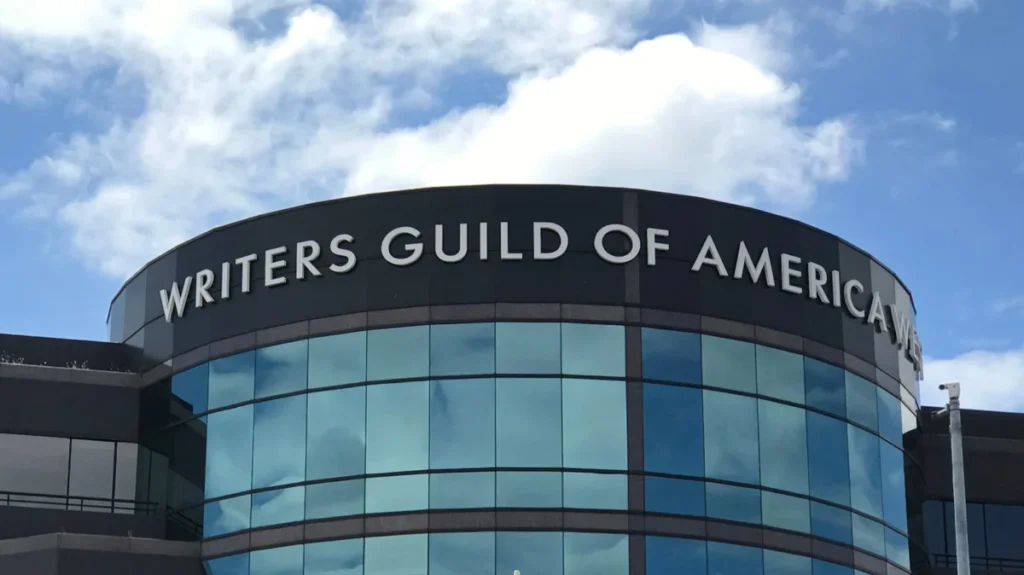
In a landmark legal challenge that could reshape the landscape of American entertainment, the Writers Guild of America East and West (WGA) have officially filed an antitrust lawsuit aimed at blocking the proposed merger between Paramount and Warner Bros. Discovery. This move marks a significant escalation in the industry’s resistance against the massive consolidation of media power, specifically targeting the control exerted by the Ellison family and the overarching trend of "mega-mergers" that threaten to hollow out the creative economy.
The WGA’s intervention arrives at a critical juncture, amplifying the pressure on regulators and corporate boards alike. With billions of dollars at stake and the future of creative labor on the line, the battle over this $110 billion deal is no longer just a boardroom negotiation—it is a fight for the structural integrity of the American media landscape.
The Core Grievance: Antitrust and the Creative Workforce
At the heart of the WGA’s lawsuit is the argument that the merger violates federal antitrust laws by creating a monopolistic environment that is fundamentally hostile to creative professionals. The unions contend that the resulting entity would possess unprecedented leverage, allowing it to dictate terms, suppress wages, and drastically reduce employment opportunities for writers across the board.
The complaint alleges that the merged entity would have both the incentive and the "market power" to suppress labor costs. By controlling a vast, combined library of intellectual property and distribution channels, the new corporation would effectively eliminate competition for talent. When a single entity controls a third of the U.S. entertainment media, the bargaining power of the individual creator is effectively dismantled.
"The history of these mergers is a history of layoffs, cost-cutting, and the erosion of original storytelling," the WGA stated in its filing. The union argues that when competition is stripped from the marketplace, studios stop competing for the best ideas and instead converge on the "lowest-risk" projects. This trend, they warn, will lead to a homogenization of content, where innovative, risky, and diverse voices are sidelined in favor of safe, algorithmically-driven sequels and remakes.
A Chronology of Consolidation
To understand the gravity of the current situation, one must look back at the rapid-fire series of transactions that brought the industry to this breaking point.
- April 2022: The merger between Warner Bros. and Discovery is finalized, creating a new media giant. Almost immediately, the industry began to see the "synergies" that the WGA warned about: massive layoffs, the shelving of completed projects, and a aggressive pivot toward cost-cutting.
- Early 2025: Paramount and Skydance finalize their merger, a deal that solidified the Ellison family’s control over a significant portion of the legacy media landscape. This move was viewed by many as a precursor to even larger consolidation.
- Mid-2025: Amidst a fierce battle for market dominance, Paramount engages in a high-stakes struggle to finalize a $110 billion merger with Warner Bros. Discovery. During this period, the company successfully fought off an aggressive bid from Netflix, which sought to carve out and acquire specific portions of the WBD business.
- June 2025: The Department of Justice grants approval for the $110 billion Paramount-Skydance-WBD deal. The decision was met with immediate backlash from labor unions and consumer advocacy groups.
- Present Day: Following the DOJ’s approval, a coalition of 12 state attorneys general files a separate antitrust lawsuit to block the deal, shortly followed by the WGA’s formal legal challenge.
Supporting Data: Why "Synergy" is a Red Flag
The WGA’s case is bolstered by recent historical data regarding media consolidation. Since the 2022 Warner Bros.-Discovery merger, the industry has seen a notable decline in the number of active production deals. According to industry reports, headcount across major studios has dropped by nearly 15% in the last three years, largely attributed to the consolidation of administrative and creative departments.
Furthermore, the "creative output" metric—a measure of how many new, original scripts are greenlit annually—has stagnated. The WGA highlights that in a competitive market, multiple studios bid for original projects, driving up prices and ensuring that diverse voices have a platform. In a consolidated market, the "buyer’s club" is small, and the price of a script is often suppressed by an unspoken consensus among the few remaining gatekeepers.
The lawsuit also points to the "Ellison Factor." By concentrating control of a third of U.S. entertainment media within a single billionaire family, the merger risks creating a "company town" dynamic on a national scale. When one family holds the keys to the majority of production, distribution, and streaming infrastructure, they gain the power to influence not just what gets made, but who is allowed to tell the stories.
Official Responses and the Legal Battleground
The response from the corporate entities involved has been one of measured confidence. Representatives for the Paramount-Skydance entity have publicly stated that the merger is "pro-competitive" and will allow for greater investment in technology and content quality. They argue that in an era of streaming dominance—where Netflix, Amazon, and Apple hold immense power—legacy studios must merge to survive and compete.
However, this argument is being met with skepticism from legal scholars and regulators. The 12 state attorneys general leading the parallel antitrust suit argue that the merger is a classic case of horizontal consolidation that will result in higher prices for consumers and lower wages for workers.
"The Department of Justice’s approval was a mistake," said a spokesperson for the coalition of attorneys general. "We are committed to proving that this merger will cause irreparable harm to the competitive landscape of American media."
The WGA’s legal team is expected to focus their argument on the "monopsony" power—the idea that a single buyer has too much power over the labor market. They plan to present evidence showing that the cost-cutting measures promised to shareholders are, by definition, the systematic reduction of writers’ earnings and creative opportunities.
Implications for the Future of Entertainment
The implications of this lawsuit extend far beyond the courtroom. If the WGA and the state attorneys general succeed, it would signal a massive shift in how the government views media consolidation. For decades, the trend has been toward "bigger is better," with regulators largely turning a blind eye to the erosion of competitive markets. A win here could serve as a precedent that halts future mergers and perhaps even forces the divestiture of certain assets.
Conversely, if the merger proceeds, it will likely accelerate the transition of Hollywood into a utility-like industry. Content creation will be dominated by a handful of massive conglomerates that prioritize quarterly earnings and "risk-mitigation" over the creative experimentation that defined the Golden Age of television and film.
For the working writer, the stakes are existential. The industry is currently grappling with the impacts of artificial intelligence, changing streaming models, and global market shifts. A consolidated landscape where there are fewer places to sell a script or pitch a show is a landscape where the profession itself becomes increasingly precarious.
Conclusion
The lawsuit filed by the WGA is a watershed moment. It represents a rare instance where labor organizations are not just negotiating for better contracts, but are actively intervening in the corporate structural evolution of their industry. As the case moves through the court system, it will force a public reckoning with the true cost of "mega-mergers."
Whether the courts decide to prioritize the efficiency of capital or the health of a competitive, creative labor market remains to be seen. What is certain, however, is that the era of unchallenged media consolidation is facing its most significant hurdle to date. The eyes of the entertainment world—and the regulators who oversee it—are fixed on this unfolding drama, waiting to see if the power of the few can be checked by the collective action of those who actually create the content.