OpenStrap Project Unlocks WHOOP 4.0, Challenging Proprietary Fitness Tech and Championing Data Sovereignty
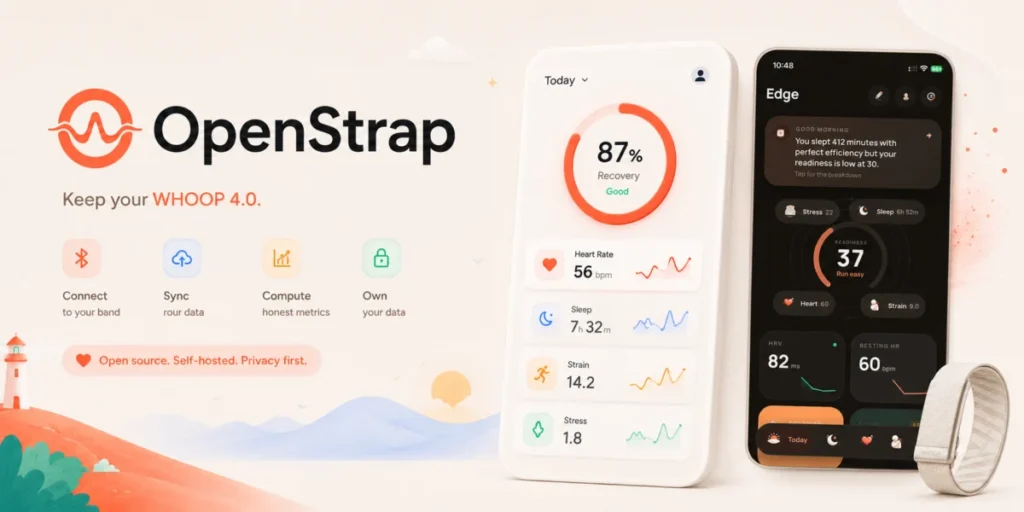
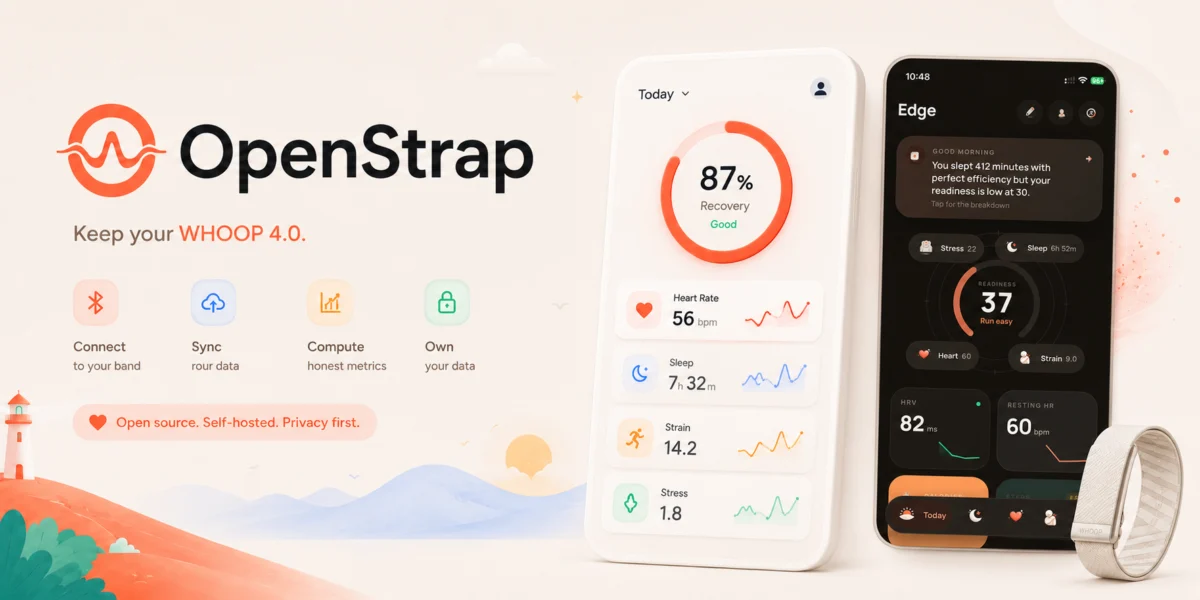
San Francisco, CA – [Current Date] – In a significant development for the wearable technology sector and a clear win for consumer autonomy, an independent open-source initiative known as OpenStrap has successfully reverse-engineered the proprietary protocols of the WHOOP 4.0 fitness tracker. This breakthrough allows users to access and process their biometric data without the mandatory, annual subscription traditionally required by WHOOP, addressing growing concerns about device ownership, data privacy, and the environmental impact of planned obsolescence in smart devices.
The OpenStrap project, available on GitHub, offers a subscription-free application that interprets the data streamed from the WHOOP 4.0 device. Unlike the official WHOOP app, which centralizes data on its servers and necessitates a continuous financial commitment for functionality, OpenStrap performs all calculations locally on the user’s phone. This serverless approach ensures that sensitive health information remains entirely private, never leaving the device, and empowers users with full control over their biometric insights. The initiative challenges the prevailing "hardware-as-a-service" model, advocating instead for the fundamental right to fully own and utilize purchased devices.
The Core of the Challenge: Proprietary Ecosystems and the Subscription Trap
At its heart, the OpenStrap project confronts a contentious aspect of modern technology: the increasing reliance on proprietary ecosystems and subscription-based models that effectively lease, rather than sell, functionality to consumers. WHOOP, while a respected name in elite athletic and health circles, operates on a unique business model where the fitness tracker itself is often provided at a minimal upfront cost, or even free, contingent upon a mandatory yearly or monthly subscription to its accompanying app. Without this subscription, the sophisticated sensors and data collection capabilities of the WHOOP 4.0 become largely inert, rendering the device a piece of non-functional hardware.
This model, while generating recurring revenue for companies, raises profound questions for consumers. The concept of "owning" a device becomes ambiguous when its core utility is tethered to an ongoing service. For many, the expectation is that once a physical product is purchased, its fundamental features should remain accessible indefinitely, irrespective of future service subscriptions. This is particularly salient in the context of advanced health trackers, where personal data is collected continuously. The inability to use a device without a subscription transforms it from a personal asset into a dependent component of a larger, controlled system.
The implications extend beyond mere convenience. When a user discontinues their subscription, the device effectively becomes what critics often term "manufactured e-waste." A perfectly functional piece of hardware, designed with advanced sensors and processing capabilities, is rendered obsolete not by technological decay, but by a business decision. This contributes to the escalating global problem of electronic waste, which strains landfills and wastes valuable resources embedded in discarded devices. The OpenStrap project directly tackles this issue, offering a lifeline to WHOOP 4.0 devices that would otherwise face an untimely demise.
The philosophy underpinning OpenStrap aligns with a growing movement within the tech community that champions open standards, user freedom, and the right to repair. It posits that users should have sovereign control over their own data and the devices they purchase, fostering innovation and extending the lifespan of electronics. By providing an alternative means to interact with the WHOOP 4.0, OpenStrap not only liberates users from the subscription constraint but also offers a powerful demonstration of how community-driven initiatives can challenge established industry norms.
Chronology of a Breakthrough: Dissecting the WHOOP 4.0 Protocol
The journey to create OpenStrap was a testament to the dedication and ingenuity characteristic of the open-source community. The project’s genesis stemmed from a fundamental desire to reclaim device ownership and data privacy, a sentiment shared by many tech enthusiasts and privacy advocates. The developers, likely driven by personal frustration with the subscription model, embarked on a meticulous reverse-engineering effort.
The Initial Challenge: Unveiling the Proprietary Bluetooth Protocol
The primary hurdle for the OpenStrap team was the WHOOP 4.0’s reliance on proprietary Bluetooth protocols. Unlike standard, open Bluetooth profiles (like those used for headphones or basic health devices), WHOOP had implemented a custom communication layer designed to exclusively interface with its official application. This meant that simply connecting to the device via generic Bluetooth tools would yield unintelligible data. The initial phase involved painstaking observation and analysis of the data exchange between the official WHOOP app and the tracker. This often entails using Bluetooth sniffers and debuggers to capture and decode packets, a process akin to eavesdropping on a conversation and then painstakingly deciphering a secret code.
The Revelation: A Surprisingly Simple Core
Despite the initial complexity, the OpenStrap team discovered that the underlying Bluetooth protocol was "relatively simple." This doesn’t imply a lack of sophistication in the WHOOP 4.0 hardware, but rather that the proprietary layer focused on secure, efficient data transfer rather than an overly convoluted encryption or obfuscation scheme. The WHOOP 4.0, at its essence, functions as a highly sensitive array of sensors on the wrist – collecting raw data on heart rate, skin temperature, accelerometer readings for movement, and galvanic skin response, among others. The challenge wasn’t necessarily in breaking complex encryption (though secure pairing would have been present), but in understanding the specific data structures and commands used to initiate data streams and interpret the raw sensor outputs.
Overcoming Technical Quirks: Clocks, Calibration, and Context
The reverse-engineering process was not without its "quirks," as highlighted by the OpenStrap developers. Two key challenges stood out:
- Hardware Clock Synchronization: The WHOOP 4.0 device’s internal clock needed to be synchronized, otherwise, it would default to "zero Unix time." This is crucial because all biometric data is time-stamped. Without proper synchronization, data would be meaningless in terms of real-world context. The team had to identify the specific Bluetooth command or sequence that sets the device’s clock, ensuring accurate temporal indexing of collected data.
- Analog Sensor Calibration: Sensors like ambient temperature often provide raw Analog-to-Digital Converter (ADC) values. These are numerical representations of an analog signal, not direct temperature readings in Celsius or Fahrenheit. To make them "terribly useful," calibration is required. This involves understanding the sensor’s characteristics, potentially comparing its readings against known external references, and developing algorithms to convert raw ADC values into meaningful physical units. This step likely involved empirical testing and careful data analysis.
From Decoding to Application: Building OpenStrap
Once the communication protocol was understood and the data streams decoded, the next phase involved building the OpenStrap application itself. This included:
- Developing Custom Algorithms: Rather than merely replicating WHOOP’s proprietary algorithms, OpenStrap’s developers committed to creating their own processing methods. These are based on "public research," drawing from established scientific literature on heart rate variability (HRV), sleep stage detection, physiological strain assessment, and recovery metrics. This ensures both transparency and independent validation of the health insights provided.
- Implementing Local Data Processing: A core tenet of OpenStrap is its serverless architecture. All calculations are performed locally on the user’s phone at a 1 Hz interval. This means that every second, the app processes new data points from the WHOOP 4.0, computes relevant metrics, and stores them directly on the device, eliminating the need for cloud uploads and central servers.
- User Interface Development: Finally, a user-friendly interface was developed to display these metrics clearly and intuitively, mimicking much of the functionality found in the official WHOOP app but with a focus on privacy and user control.
The ongoing development of OpenStrap demonstrates the iterative nature of open-source projects, with continuous refinement and community contributions enhancing its capabilities and expanding its reach.
Supporting Data: The Technical Underpinnings and Market Realities
The success of OpenStrap hinges on a sophisticated understanding of both hardware communication and physiological data processing. Its technical architecture stands in stark contrast to the dominant cloud-centric models of the wearable tech industry.
Technical Architecture of OpenStrap: A Paradigm Shift
OpenStrap’s design philosophy is rooted in data sovereignty and local processing.
- Algorithms from Public Research: The project’s commitment to "algorithms and processing methods developed from scratch, based on public research" is a critical differentiator. This implies that the metrics OpenStrap generates—such as recovery scores, sleep stages, and daily strain—are derived from scientifically validated methods available in academic literature, rather than proprietary "black box" calculations. Examples of such research include established methodologies for calculating Heart Rate Variability (HRV) as a proxy for autonomic nervous system activity, algorithms for detecting sleep architecture (REM, deep, light sleep) from accelerometer and heart rate data, and models for quantifying physiological strain based on heart rate zones and duration. This approach not only ensures transparency but also allows for community-driven improvements and validation of the health insights.
- 1 Hz Local Calculation: Processing data at a 1 Hz (one Hertz, or once per second) interval locally on the phone is a computationally intensive but privacy-preserving choice. This real-time processing ensures that the user receives immediate feedback and that all raw data and derived metrics remain on their device. In contrast, many commercial trackers upload raw data to cloud servers, where calculations are performed, and results are then sent back to the app. This local processing model significantly reduces latency and eliminates the potential for data breaches or unauthorized access on third-party servers.
- Serverless Nature and Privacy: The "serverless nature" of OpenStrap is its most compelling privacy feature. In an era where data breaches are common and personal health information is a valuable commodity, keeping all biometric data confined to the user’s personal device is a powerful safeguard. Users gain complete control over their health data, deciding if, when, and with whom to share it. This contrasts sharply with cloud-based models, where users implicitly trust the company with their most intimate physiological data, often without a clear understanding of data retention policies, anonymization practices, or potential uses beyond the explicit service.
The Bluetooth Protocol: A Closer Look
The WHOOP 4.0, like many modern wearables, leverages Bluetooth Low Energy (BLE) for communication. While BLE is an open standard, device manufacturers can define custom "services" and "characteristics" within the BLE framework to exchange specific types of data. This is where "proprietary Bluetooth protocols" come into play. OpenStrap’s success means they identified:
- Service UUIDs: Unique identifiers for WHOOP’s custom Bluetooth services.
- Characteristic UUIDs: Unique identifiers for specific data points (e.g., heart rate, temperature, accelerometer X-axis, gyroscope Y-axis) within those services.
- Data Formats: How the raw bytes transmitted for each characteristic are structured and encoded (e.g., little-endian, big-endian, specific bit allocations for different sensor readings).
- Command Structures: The specific byte sequences required to initiate data streaming, synchronize the clock, or perform other device configurations.
By "subscribing to the Bluetooth feed," OpenStrap’s app acts like a sophisticated listener, identifying the relevant data streams and then applying the decoded formats to translate raw bytes into meaningful physiological values.
The Broader Wearable Tech Market Landscape
The wearable technology market is a fiercely competitive arena, dominated by giants like Apple (Apple Watch), Google (Fitbit), and Garmin, alongside specialized players like WHOOP.
- WHOOP’s Niche: WHOOP has carved out a niche by focusing intensely on performance optimization, recovery, and sleep, particularly appealing to athletes, fitness enthusiasts, and individuals seeking deep physiological insights. Its data presentation is often seen as more granular and actionable for performance than general-purpose smartwatches.
- Subscription Trend: The subscription model, while central to WHOOP, is not unique in tech. Software-as-a-Service (SaaS) has become pervasive, and hardware companies are increasingly looking for recurring revenue streams. Peloton, for example, combines hardware with a mandatory content subscription. However, the difference with WHOOP is the complete disablement of hardware functionality without the subscription, a more extreme stance than many competitors.
- Demand for Privacy and Control: Paradoxically, as more personal data is collected, there’s a rising tide of consumer demand for data privacy and control. Regulations like GDPR and CCPA reflect this societal shift. Open-source projects like OpenStrap tap into this sentiment, offering a tangible solution for users who feel increasingly disenfranchised by opaque data practices.
Environmental Impact of E-waste:
The "manufactured e-waste" issue is a significant concern. The United Nations estimates that the world generates over 50 million metric tons of e-waste annually, a figure projected to grow. Much of this waste contains valuable rare earth metals and hazardous substances. When devices like a WHOOP 4.0, which contain advanced sensors and processors, are rendered unusable due to a lack of software support or a discontinued subscription, they prematurely enter the waste stream. Projects like OpenStrap directly combat this by extending the functional lifespan of devices, promoting a circular economy approach to electronics. Keeping "at least a few out of the landfill" translates into fewer resources consumed for new devices and less pollution from discarded ones.
Official Responses and Industry Perspectives
Given the nature of the OpenStrap project, official responses from WHOOP have not been publicly issued in relation to this specific initiative. However, one can infer potential stances and broader industry perspectives based on common practices and legal precedents.
WHOOP’s Hypothetical Stance:
Should WHOOP choose to comment or take action, their response would likely center on several key points:
- Intellectual Property (IP) Concerns: WHOOP would likely assert that its proprietary Bluetooth protocols, data processing algorithms, and the overall design of its ecosystem constitute valuable intellectual property. Reverse engineering, even for non-commercial purposes, can sometimes be viewed as an infringement on these rights, although legal frameworks often have provisions for interoperability and fair use.
- Data Accuracy and Service Quality: WHOOP could argue that OpenStrap’s independently developed algorithms, while based on public research, might not match the accuracy or validated methodologies of their own proprietary systems, which are continually refined with vast datasets and specialized expertise. They might express concerns that third-party applications could provide inaccurate or misleading health insights, potentially impacting user well-being or the reputation of the WHOOP brand.
- Warranty and Support: It’s highly probable that using a third-party application like OpenStrap would void any existing warranty on the WHOOP 4.0 device. Furthermore, WHOOP would likely refuse to provide customer support for issues arising from or exacerbated by the use of non-official software.
- Defense of the Subscription Model: WHOOP consistently justifies its subscription model by emphasizing continuous innovation, ongoing research and development, personalized coaching features, and the high cost of maintaining a sophisticated data infrastructure. They would argue that the subscription is not just for access, but for a premium, evolving service that OpenStrap cannot replicate. They might also highlight the "free" or low-cost hardware as a benefit tied to this service model.
- Security Risks: While OpenStrap’s serverless nature enhances privacy, WHOOP might raise hypothetical security concerns related to unauthorized access to the device itself or the potential for malicious third-party apps to exploit vulnerabilities.
Broader Industry Experts’ Perspectives:
- The Right to Reverse Engineer: Legal and ethical debates around reverse engineering are long-standing. Generally, reverse engineering for interoperability, research, or non-commercial purposes is often protected under various legal doctrines (e.g., fair use, specific provisions in copyright law like the DMCA in the US for circumvention of access controls if it doesn’t infringe copyright). However, the specific legal landscape varies by jurisdiction and the exact nature of the reverse engineering. Many experts advocate for the right to reverse engineer to promote competition, innovation, and user control.
- The Future of "Hardware-as-a-Service": Industry analysts are divided on the long-term viability and ethical implications of strictly enforced "hardware-as-a-service" models. While recurring revenue is attractive for businesses, consumer backlash over perceived loss of ownership can be significant. Projects like OpenStrap serve as a potent reminder that consumers value control.
- Open Source vs. Proprietary: The tech industry thrives on both open-source collaboration and proprietary innovation. Open-source projects often push boundaries and force proprietary companies to innovate more rapidly or become more user-friendly. OpenStrap exemplifies how open-source can act as a counterbalance to monopolistic tendencies or restrictive business practices.
- Data Sovereignty as a Growing Imperative: Privacy advocates and policymakers increasingly emphasize data sovereignty—the idea that personal data should be subject to the laws and governance structures of the country where it is collected or processed, and that individuals should have ultimate control over it. OpenStrap’s local processing model is a practical manifestation of this principle.
Legal Implications:
While OpenStrap is a non-commercial, community-driven project, the act of reverse engineering proprietary protocols can exist in a legal gray area. Companies often include terms of service that forbid such activities. However, the intent behind OpenStrap—to extend device utility and enhance user privacy—is a strong ethical argument. Legal challenges, if they were to arise, would likely be complex, weighing corporate IP rights against consumer rights, fair use, and the public interest in reducing e-waste and promoting data autonomy. Historically, many successful interoperability efforts have navigated these waters, sometimes leading to changes in corporate policy or even legal precedents.
Implications: Empowering Users and Shaping the Future of Wearables
The OpenStrap project is more than just an app; it represents a significant ideological statement with far-reaching implications for the wearable technology market, consumer rights, and the future of device ownership.
Empowering the User and Redefining Ownership:
Perhaps the most immediate implication is the empowerment of the WHOOP 4.0 user. By decoupling the device’s functionality from a mandatory subscription, OpenStrap transforms the WHOOP 4.0 from a leased service into a truly owned asset. This shift grants users unprecedented control over their device and, crucially, their personal biometric data. They are no longer dependent on a single corporate entity for the utility of their hardware, nor are they compelled to pay indefinitely for features they’ve already purchased in a physical sense. This redefines what "ownership" means in the context of smart devices, moving towards a model where consumers have sovereignty over their technology.
The Future of Open Source in Wearables:
OpenStrap could serve as a powerful precedent and a blueprint for similar initiatives across the wearable tech landscape. Many other smart devices, from smart home gadgets to other fitness trackers, operate within proprietary ecosystems that limit user control and foster planned obsolescence. The success of OpenStrap demonstrates that dedicated open-source communities can successfully challenge these closed systems, inspiring similar efforts to reverse-engineer protocols and develop alternative software for other devices. This could lead to a broader movement towards "open wearables," where hardware specifications and communication protocols are openly published, fostering innovation and extending device lifespans.
Impact on WHOOP and Competitors:
While OpenStrap is a niche project for a specific device, its existence could exert subtle pressure on WHOOP and other companies employing similar business models.
- For WHOOP: The project highlights consumer demand for flexibility and privacy. While unlikely to cause a mass exodus of subscribers (as many users value WHOOP’s official coaching and analytics), it might prompt WHOOP to consider offering more tiered subscription options, "offline" modes, or clearer pathways for data export and device longevity. It underscores the importance of perceived value beyond mere functionality.
- For Competitors: Other wearable manufacturers might view OpenStrap as a cautionary tale, reinforcing the need for balanced business models that respect user ownership and privacy, or risk alienating a segment of their potential market. It could also encourage more companies to explore open APIs or developer programs to foster innovation around their platforms.
Sustainability and Longevity:
The environmental benefit of extending the life of electronic devices cannot be overstated. By enabling the continued use of WHOOP 4.0 devices even after subscriptions lapse, OpenStrap directly contributes to reducing e-waste. This aligns with global efforts towards a circular economy, minimizing resource extraction and landfill burden. It transforms what would otherwise be a defunct piece of hardware into a valuable, functional tool, promoting conscious consumption and sustainable technology practices.
Data Sovereignty and Privacy:
In an increasingly data-driven world, the issue of data sovereignty is paramount. OpenStrap’s serverless architecture provides a concrete example of how personal health data can be managed entirely on the user’s device, eliminating the risks associated with cloud storage and third-party access. This model empowers individuals to be the sole custodians of their most sensitive information, setting a high standard for privacy that could influence future product designs and consumer expectations. As data privacy regulations become stricter, solutions like OpenStrap offer a glimpse into a future where users have ultimate control over their digital selves.
Call to Action and Future Development:
The OpenStrap project, currently accessible via GitHub, represents an ongoing effort. Its future development will likely depend on community contributions, bug fixes, and feature enhancements. As more users adopt it, feedback will refine its algorithms, improve its interface, and potentially expand its compatibility. The project serves as an invitation for developers, privacy advocates, and WHOOP 4.0 owners to engage, contribute, and further solidify the principles of open access and user control in the rapidly evolving world of wearable technology. It’s a clear signal that the era of unquestioned corporate control over hardware functionality may be drawing to a close, ushering in a new chapter of user-centric innovation.