The End of an Era: The Final MPEG-4 Visual Patent Expires, Marking a Milestone for Digital Media
For over two decades, the digital landscape has been defined by a complex web of intellectual property rights that governed how we watch, stream, and share video. On July 19, 2026, a significant chapter in that history quietly drew to a close. The MPEG-4 Visual Patent Portfolio License—a mechanism that once dictated the cost and compliance of nearly every video encoder and decoder on the planet—has officially expired. With the sunsetting of the final remaining patent, the era of centralized, royalty-based licensing for this specific standard has come to an end.
The Final Curtain: A Global Sunset
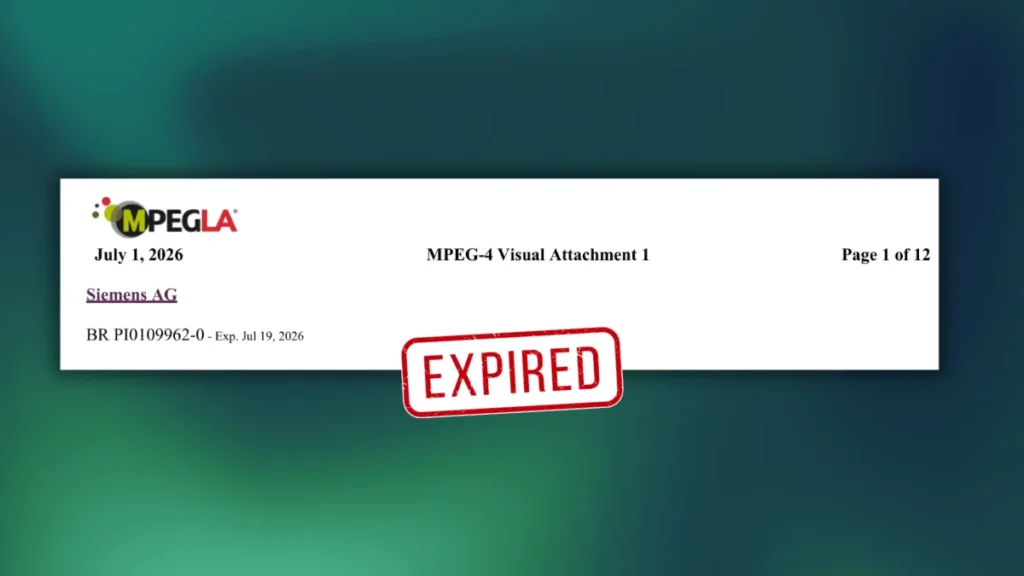
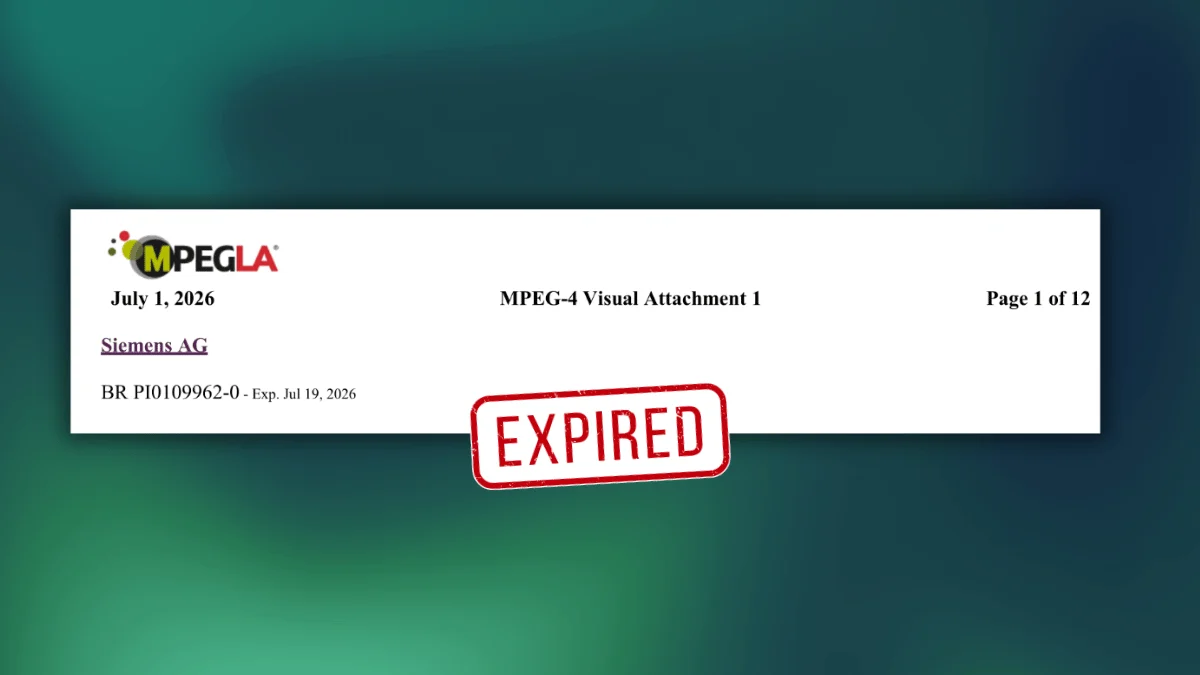
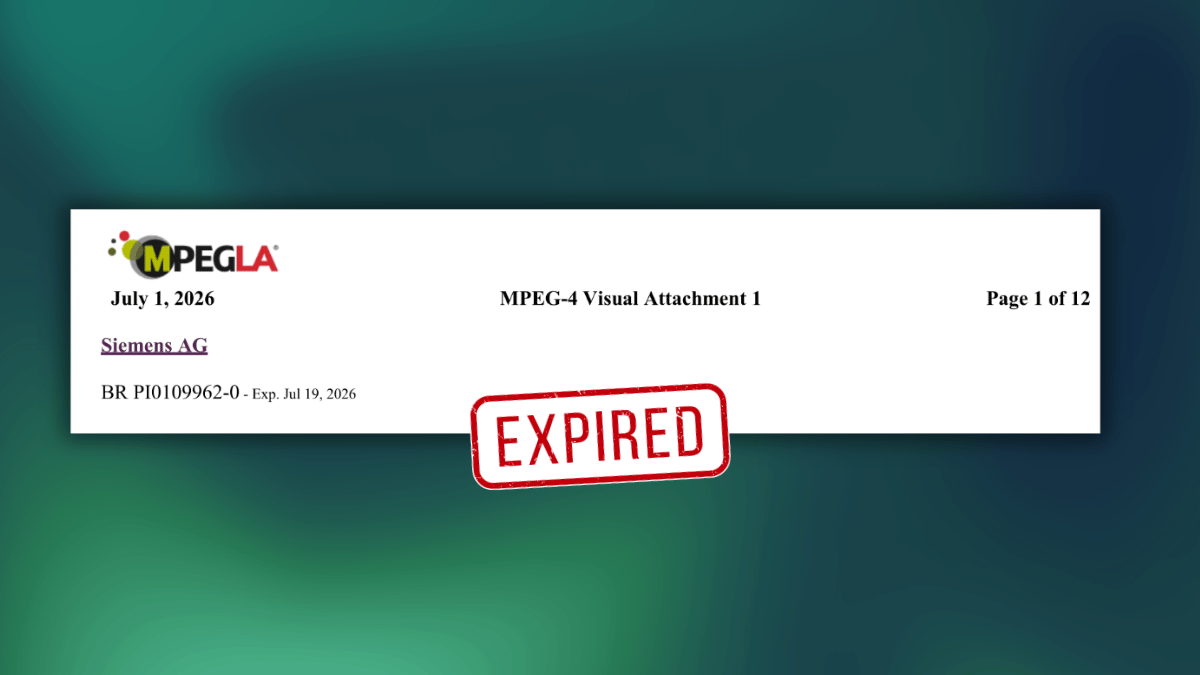
The culmination of this long-running licensing program occurred with the expiration of a single patent held by Siemens AG in Brazil. Identified as BR PI0109962-0 and titled "process for storing and processing image information from successive images over time," this patent served as the last sentinel in a massive portfolio that once included contributions from industry titans such as Canon, LG, Microsoft, Panasonic, Sony, and Toshiba.
For years, the VIA Licensing Alliance (formerly MPEG LA) managed this portfolio, ensuring that any company wishing to deploy MPEG-4 Visual technology—from simple media players to complex broadcast infrastructure—paid the necessary tolls. As of July 18, 2026, the official program page remained live, serving as a digital monument to the licensing regime. By the morning of July 19, the page had been scrubbed, signaling that the administrative body no longer has a legal basis to collect royalties for the standard.
Chronology of a Winding Down
The expiration of the MPEG-4 Visual license was not a sudden event, but a slow, decades-long attrition of intellectual property. The licensing program, which began on January 1, 2000, was designed to monetize the essential patents behind the MPEG-4 Part 2 Visual standard. As the years progressed, individual patents within the pool reached their statutory expiration limits in different jurisdictions.
A Global Timeline of Expirations:
- The Early Years (2018–2021): The portfolio began to thin significantly during this period. Two critical Siemens patents in the United States, US 6,636,637 and US 7,068,721, expired in January 2018 and March 2022, respectively. Meanwhile, the European version of the final Brazilian patent, EP 1,279,291, expired in April 2021 across major markets, including Germany, France, and the UK.
- The Closing Window (2022–2023): As the pool neared its total expiration, the final major US-based patents dropped out. Koninklijke Philips N.V.’s US 6,959,046 expired on December 7, 2022, followed by Dolby Laboratories Licensing Corporation’s US 7,395,211 on November 14, 2023.
- The Last Stand (2026): By mid-2026, only the Brazilian patent remained active. Its expiration on July 19 marked the absolute end of the MPEG-4 Visual Portfolio License.
Understanding the Landscape: Codecs vs. Containers
To understand the significance of this expiration, it is necessary to distinguish between the technology and the container. MPEG-4 Visual is formally classified as Part 2 of the MPEG-4 suite of standards. It is a compression standard (a codec) that determines how raw video data is mathematically squeezed into a smaller, manageable file size.
Many consumers confuse this with the MP4 file format, which is actually Part 14 of the same suite. The MP4 container is essentially a digital "envelope" that can hold various types of data, including audio and video encoded with different codecs—such as H.264/AVC, HEVC (H.265), and the royalty-free AV1.
While the MPEG-4 Visual codec itself is now free of this specific patent pool, the ecosystem remains vast. The Moving Picture Experts Group (MPEG), working under the auspices of the ISO/IEC, continues to develop standards, but the administrative burden of patent pools is always a separate commercial entity from the technical working group.
The Implications for Industry and Consumers
The expiration of the patent pool carries profound implications for software developers, hardware manufacturers, and the broader tech industry.
1. The End of Royalty Obligations
For the hundreds of licensees—ranging from tech giants like Apple and Sony to smaller firms and specialized broadcast equipment manufacturers—the immediate impact is financial. Companies are no longer obligated to pay per-unit royalties or subscription fees to the VIA Licensing Alliance for the use of MPEG-4 Visual. This removes a layer of "patent tax" on legacy hardware and software that continues to support the format.
2. A Cleaner Legal Environment for Open Source
For the open-source community, this is a moment of liberation. While many open-source projects had already implemented support for MPEG-4 Visual, the existence of a patent pool always created a "legal shadow." Developers often had to navigate the risks associated with potential infringement claims. With the pool officially dissolved, the fear of litigation from the collective patent holders has been effectively neutralized.
3. Does "Expired" Mean "Free of All Patents"?
It is a common misconception that the expiration of a portfolio means the technology is now completely "patent-free" in the absolute sense. While the VIA Licensing Alliance pool has dissolved, it is theoretically possible for an independent, non-member entity to hold a peripheral, "essential" patent that was never part of the original pool. However, given the comprehensive nature of the MPEG-4 Visual license—which claimed to cover the essential patents of over 30 global corporations—it is highly unlikely that any entity could successfully enforce a patent claim against the standard today.
Official Responses and Industry Context
The transition has been met with relative silence from the patent holders themselves. Most of the companies involved—such as Microsoft, LG, and Canon—have long since shifted their focus toward newer, more efficient standards like H.264, H.265, and VVC.
The VIA Licensing Alliance has likewise maintained a professional, if quiet, exit. By removing the program from their active licensing list, they have signaled that there is no longer a business case for maintaining the administrative structure.
According to analyses provided by Electronic Engineering Times regarding the history of MPEG licensing, this cycle is a standard part of the technology lifecycle. Licensing programs are intended to provide a return on investment for the R&D efforts of the mid-1990s and early 2000s. Once the statutory period for those patents concludes, the technology is intended to enter the "public domain" of industry standards, ensuring that older technology can remain in use without becoming a liability.
Looking Forward: The Evolution of Compression
The sunsetting of MPEG-4 Visual serves as a reminder of how quickly the digital media world moves. While MPEG-4 Part 2 was once the gold standard for internet video, it has been superseded by H.264 (AVC) and its successors.
However, the demise of this license is a victory for digital preservation. As archivists and developers look to maintain compatibility with decades of legacy video files, they can now do so without the constraints of commercial licensing. The expiration ensures that the tools we use to access our history will remain functional and legally accessible, rather than being locked behind the toll booths of expired commercial contracts.
As we move further into the era of 8K video, AI-driven compression, and real-time streaming, the lessons learned from the MPEG-4 licensing wars remain relevant. The industry continues to balance the need for open standards against the desire for patent-driven revenue. For now, however, we can celebrate the fact that a significant, foundational piece of our digital infrastructure has officially entered the public fold.