Precision Metabolism: New Handheld Breathalyzer Revolutionizes Fat-Burning Tracking

For years, the fitness and wellness industry has been obsessed with the "what" of body composition: how much do you weigh, what is your body fat percentage, and how much muscle mass are you carrying? Devices ranging from consumer-grade smart scales to clinical-grade bioelectrical impedance monitors have become staples in the homes of health-conscious individuals. Yet, these tools often provide a static snapshot rather than a dynamic view of metabolic function.
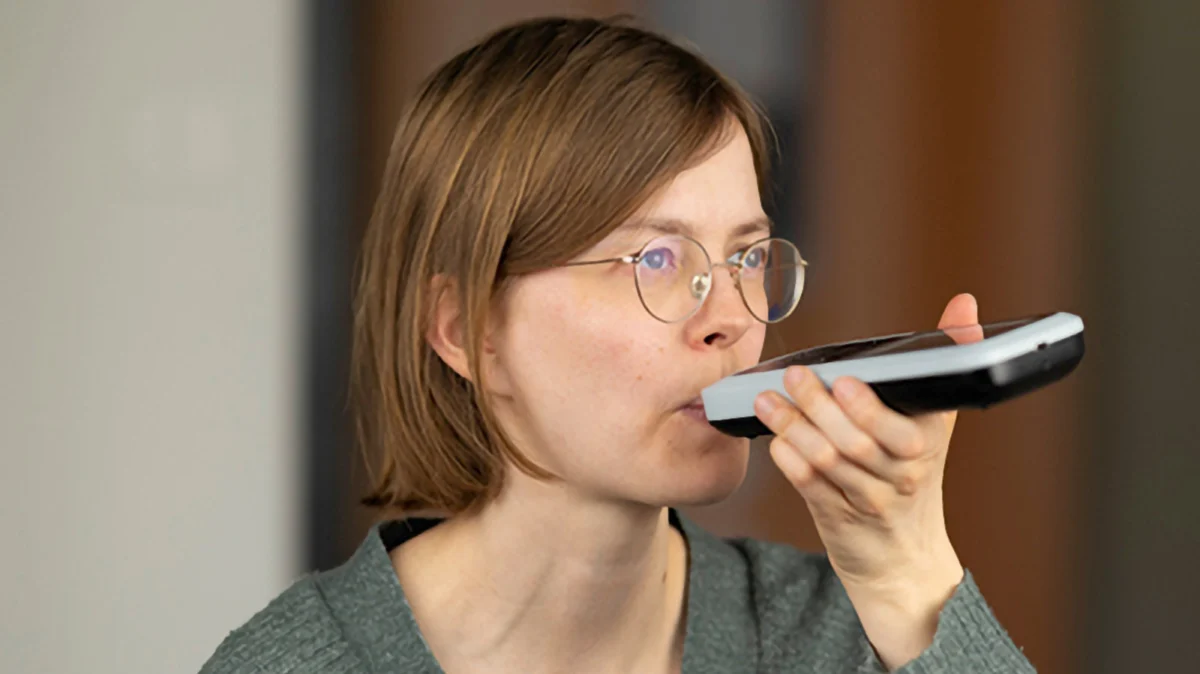
A groundbreaking development, recently published in the scientific journal Device, is shifting the focus from static composition to metabolic timing. Researchers have unveiled a sophisticated, handheld breathalyzer capable of measuring exactly when the body enters a state of fat oxidation—commonly known as ketosis. By analyzing acetone levels in exhaled breath, this new technology promises to bring laboratory-grade metabolic tracking into the palms of everyday users.
The Science of Metabolic Tracking: Beyond the Scale
The core challenge in personal health management has always been the "when." Knowing that your body is currently burning fat for fuel—rather than relying on glycogen stores—is the "holy grail" for athletes optimizing performance, individuals following ketogenic diets, and patients managing weight-loss regimens.
Traditionally, identifying ketosis required invasive measures. Clinical standards have long relied on blood ketone testing, which, while highly accurate, is cumbersome, painful, and impractical for daily use. Other methods, such as urine strips, offer a qualitative rather than quantitative look, often reflecting past metabolic states rather than the immediate reality.
The new device, commercially branded as Nutrion by the company Alivion, bypasses these hurdles. It operates on the physiological principle that when the body breaks down fat for energy, it produces ketones, including acetoacetate, beta-hydroxybutyrate, and acetone. Acetone is volatile and is expelled through the lungs. By quantifying the concentration of acetone in a user’s breath, the device provides a direct, real-time proxy for the rate of fat oxidation occurring within the body.
Chronology: From Lab Bench to Handheld Innovation
The journey toward a viable consumer breathalyzer for metabolism has been one of iterative engineering and rigorous clinical validation.
- Early Conceptualization: The initial challenge was the inherent instability of breath testing. Previous attempts to measure metabolic markers in breath struggled with "noise"—environmental factors like humidity, temperature, and inconsistent exhalation flow rates that would skew results compared to the gold standard of mass spectrometry used in labs.
- The Research Phase: Under the supervision of Andreas Güntner, a team of researchers focused on creating a sensor platform that could withstand the variables of a non-clinical environment. They engineered a specialized filtration system capable of stripping away moisture and common environmental contaminants that typically interfere with acetone detection.
- The Clinical Trials: In a study involving 12 participants across diverse diet and exercise scenarios, the research team put the prototype to the test. By comparing the device’s readings against established laboratory metabolic analyzers, they demonstrated a high correlation, proving that the handheld unit could replicate professional-grade results.
- The Digital Integration: Recognizing that hardware alone cannot solve the human error factor, the team developed a companion mobile application. This software serves as a guide, providing real-time feedback on breathing technique—ensuring the user provides the correct pressure and volume for an accurate sample.
- Commercialization: With the validation of the science, the technology moved from a research prototype to the Nutrion device, marking a significant milestone in the move from academic discovery to consumer-facing health tech.
Supporting Data and Technical Breakthroughs
The efficacy of the Nutrion device lies in its ability to solve the "sampling problem." In a clinical setting, an analyst controls the environment. At home, a user might be in a humid gym, a cold car, or an office.
The research published in Device highlights three key innovations:
- Selective Sensing: The sensors are calibrated to be highly sensitive to acetone, ignoring the vast array of other volatile organic compounds (VOCs) found in human breath.
- Adaptive Sampling: The device doesn’t just "take a breath." It analyzes the exhalation profile. By tracking the volume and speed of the air, the device ensures that the sample is derived from deep-lung air (alveolar air), which is the most reflective of actual blood-gas concentrations.
- Pressure Feedback: The companion app acts as a diagnostic tool. If a user exhales too quickly or stops too soon, the app prompts a re-test. This ensures that the concentration of acetone measured is consistent with the data seen in the clinical study.
The correlation between the breathalyzer’s readings and blood-based ketone tests was significant enough that the researchers believe it could eventually replace the need for finger-prick tests in many therapeutic settings.

Implications for Health and Wellness
The arrival of a reliable, non-invasive metabolic tracker has profound implications across several sectors of the health industry.
Personalized Nutrition and Performance
Athletes often engage in "metabolic flexibility" training, aiming to teach their bodies to switch efficiently between glucose and fat burning. A real-time tracker allows them to see the immediate impact of a meal or a training session on their metabolism. For the first time, a runner can see exactly how their body responds to a "fasted cardio" session versus a carbohydrate-loaded workout.
Medical Weight Loss and GLP-1 Therapy
With the rise of GLP-1 receptor agonists (such as Wegovy or Ozempic), medical professionals are looking for better ways to monitor patient progress. While weight loss is the primary outcome, understanding how these drugs affect the body’s underlying metabolic rate is essential. Breathalyzers like Nutrion could provide doctors with objective data on whether a patient is achieving a state of fat-burning efficiency, rather than simply losing muscle mass due to calorie restriction.
The Evolution of Metabolic Health
The device follows in the footsteps of previous ventures like Lumen, which attempted to measure metabolism using carbon dioxide. While earlier iterations were met with skepticism regarding their accuracy, the rigorous peer-reviewed study behind the Nutrion device suggests a new era of "metabolic transparency."
Addressing Limitations and Future Outlook
Despite the excitement, researchers are careful to note that the device is not a "magic bullet." The study conducted was limited to 12 participants, which, while statistically significant for a proof-of-concept study, represents a small sample size. Future, larger-scale longitudinal studies will be necessary to determine if the device maintains its accuracy over months or years of use in the hands of the general public.
Furthermore, biological variance remains a factor. Individual differences in lung capacity, baseline metabolic rates, and even oral microbiome composition can influence breath chemistry. While the researchers have implemented filters, the real-world application will likely reveal new challenges that were not present in the controlled environment of the study.
Conclusion
The development of a handheld, acetone-based breathalyzer represents a major technological leap forward in personal health monitoring. By moving away from the blunt instrument of the bathroom scale and toward the nuanced, molecular analysis of our own breath, we are entering a new phase of self-quantification.
If the technology continues to hold up under wider adoption and long-term use, it could become as common as the digital thermometer or the blood-pressure cuff. It serves as a reminder that the most sophisticated laboratory in the world—the human body—is constantly broadcasting data about its own state; we are finally developing the tools to listen.