Unearthing a Digital Relic: The Wizard’s Castle and the Cryptic Genius of 1980s BASIC
Main Facts
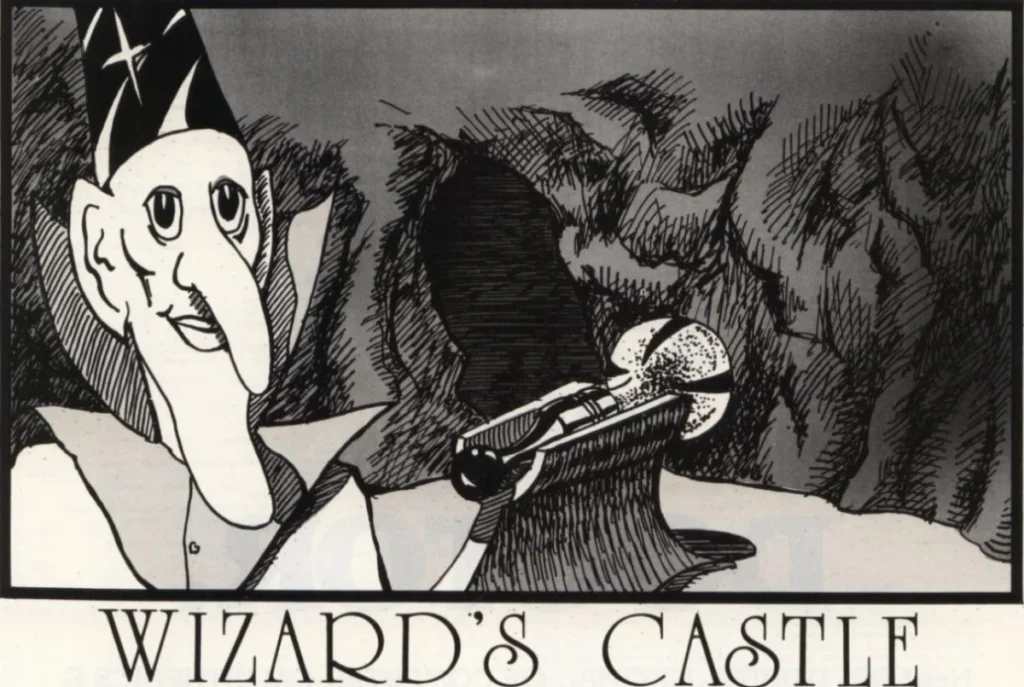
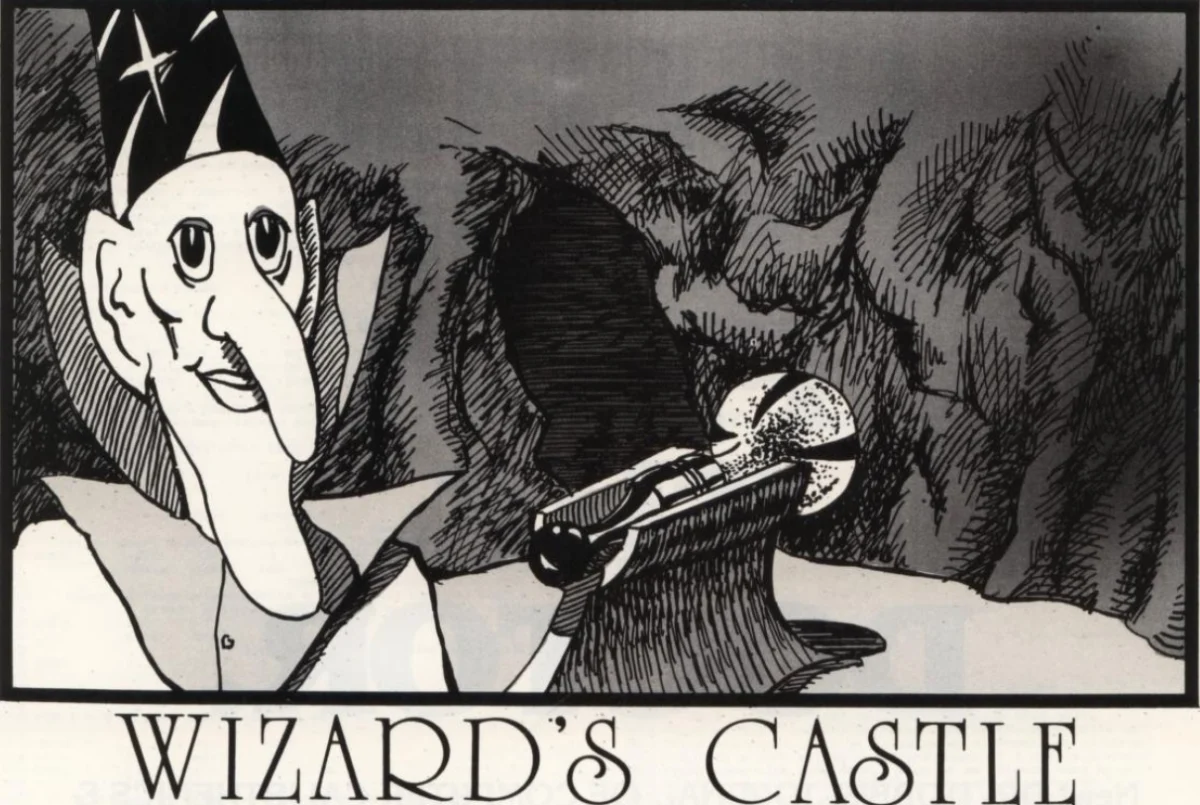
A recent dive into the archives of early personal computing has unearthed a fascinating relic: a BASIC game named "The Wizard’s Castle," originally published in a 1980 magazine for the Exidy Sorcerer home computer. The rediscovery, detailed by computing enthusiast Beej, has shed light on the extraordinary ingenuity – and often cryptic practices – employed by programmers during the nascent era of personal computing. At the heart of this digital archaeology lies a peculiar snippet of BASIC code, seemingly innocuous yet profoundly functional, where a standard REM (remark) statement was cleverly repurposed to conceal and execute machine language instructions. This revelation serves as a potent reminder of a time when memory was measured in kilobytes, processing power was rudimentary, and the boundaries between high-level programming languages and low-level machine code were frequently blurred by necessity and creative problem-solving.
The specific lines of code that captivated modern analysts read:
10 REM"_(C2SLFF4
40 POKE 260,218: POKE 261,1: T = USR(0): T = PEEK(-2049)
80 Q = RND(-(2*T+1))
On the surface, line 10 appears to be a simple comment, intended for human readers and ignored by the interpreter. However, as Beej’s analysis painstakingly reveals, this comment was, in fact, a carefully crafted payload of machine language. Lines 40 and 80 then orchestrate its execution and utilize its output. The POKE commands write specific values directly into memory addresses, effectively telling the USR (User Subroutine) function where to find and execute a machine language program. The PEEK command then retrieves a value from memory, which is subsequently used to seed the random number generator (RND) in line 80. This intricate dance of commands, once a common optimization technique, showcases the intimate understanding early programmers had of their machines’ internal architecture, transforming what seems like an error or an oversight into a stroke of minimalist genius. The implications of such practices extend beyond mere nostalgia, offering valuable insights into the foundations of modern computing and the enduring spirit of innovation that defined its formative years.
Chronology
The Dawn of Home Computing: A Frontier of Innovation
The late 1970s and early 1980s represented a pivotal period in technological history, marking the transition from mainframe behemoths and hobbyist kits to the accessible personal computer. Companies like Apple, Commodore, Tandy (with its TRS-80), and Exidy emerged, each vying for a share of this burgeoning market with their distinct machines. These early computers, characterized by their limited memory (often 4KB to 64KB RAM), slow processors (typically 1-4 MHz), and rudimentary operating systems, were fertile ground for a new breed of pioneers: the home programmer. Software distribution was largely analog; dedicated computer magazines became indispensable resources, publishing pages upon pages of code listings that enthusiasts would painstakingly type into their machines, line by line, often for hours on end. This communal act of creation and consumption fostered a deep engagement with the technology, where understanding how software worked was as much a part of the experience as simply running it.
The Exidy Sorcerer’s Niche: Power for the Enthusiast
Amidst the more commercially successful machines, the Exidy Sorcerer carved out a respectable, albeit smaller, niche. Released in 1978 by the arcade game manufacturer Exidy, the Sorcerer was designed for serious hobbyists and developers, distinguishing itself with several advanced features for its time. It boasted a Zilog Z80 microprocessor, a powerful 8-bit chip, and an S-100 expansion bus, allowing for significant customization and upgrades. Crucially, the Sorcerer offered high-resolution graphics (albeit in a character-based form, which could be programmed for custom character sets) and a robust Microsoft BASIC interpreter in ROM, making it a capable platform for game development and complex applications. Its unique approach to character graphics and its emphasis on expandability made it a favorite among those who wanted to push the boundaries of what home computers could achieve, often attracting users who possessed a deeper technical acumen than the average consumer.
"The Wizard’s Castle" Emerges: A Glimpse into Early Gaming
It was into this vibrant ecosystem that "The Wizard’s Castle" was introduced. Appearing in a 1980 computing magazine, likely as a type-in listing, the game epitomized the text-adventure and early role-playing game genres popular at the time. Without the sophisticated graphics or sound of modern games, these titles relied heavily on narrative, player imagination, and clever programming to create immersive experiences. Players would navigate fantastical worlds, solve puzzles, and engage in combat through text commands and descriptions. "The Wizard’s Castle" would have offered an engaging, if spartan, experience for its era, pushing the limits of the Sorcerer’s capabilities. The act of typing in the game’s code, debugging errors, and perhaps even modifying it, would have been an integral part of its appeal, forging a direct connection between the player and the program’s inner workings – a connection that modern, opaque software often obscures.
Beej’s Modern Rediscovery: Bridging Decades of Code
Decades later, the digital legacy of "The Wizard’s Castle" was brought back into the spotlight through the meticulous work of Beej, a modern computing enthusiast. His blog post, detailing the peculiar BASIC code, exemplifies the ongoing effort within the retrocomputing community to preserve, analyze, and understand the technological heritage of the past. This process often involves reverse-engineering old programs, studying vintage manuals, and even emulating historical hardware to bring these forgotten artifacts back to life. Beej’s discovery is not merely an academic exercise; it’s a testament to the enduring fascination with how early programmers tackled immense technical challenges with limited resources. It highlights the ingenuity required to make these machines perform, and by dissecting such code, modern enthusiasts gain a deeper appreciation for the foundational principles upon which today’s advanced computing systems are built. This kind of historical analysis bridges the gap between generations of programmers, offering lessons in optimization, resourcefulness, and the fundamental interactions between software and hardware.
Supporting Data
The Cryptic Code Unveiled: A Deep Dive into Memory Manipulation
The heart of "The Wizard’s Castle" mystery lies in its seemingly innocuous three lines of BASIC code, which upon closer inspection, reveal a masterclass in early memory manipulation and resource optimization. Understanding this snippet requires dissecting each component and appreciating the architectural constraints of the Exidy Sorcerer and similar 8-bit machines.
Let’s break down the code:
-
10 REM"_(C2SLFF4: At first glance, this is a standardREMstatement, indicating a remark or comment that the BASIC interpreter should ignore during execution. However, the crucial insight lies in how BASIC interpreters of that era stored such lines. When a BASIC program was entered, it wasn’t stored as raw text. Instead, it underwent a process called tokenization. Keywords likePRINT,GOTO,REM, andPOKEwere replaced by single-byte tokens to save precious memory and speed up execution. A line typically consisted of a pointer to the next line, a two-byte line number, a single-byte token for the command (e.g.,REMtoken), and then the data associated with that command. For aREMstatement, the bytes following theREMtoken were stored verbatim until a null terminator (byte 0) or the end of the line was reached. This meant that the string"_(C2SLFF4was stored directly in memory, byte by byte, immediately after theREMtoken and line number. This string is, in fact, the machine language program, cleverly disguised as a comment. -
40 POKE 260,218: POKE 261,1: T = USR(0): T = PEEK(-2049): This line is where the magic truly begins.POKE 260,218: POKE 261,1: ThePOKEcommand is a fundamental tool in early BASIC, allowing direct writing of a single byte to a specific memory address. In 8-bit systems like the Sorcerer (which uses a Z80 CPU), memory addresses are 16-bit values, meaning they require two bytes to represent. Locations 260 and 261 (often referred to as0104hand0105hin hexadecimal) were part of a specific memory area used by the Sorcerer’s BASIC interpreter to store a "jump vector" or an address for theUSRfunction. When combined,261(high byte) and260(low byte) form the 16-bit address:(1 * 256) + 218 = 256 + 218 = 474. This calculation reveals that thePOKEcommands are meticulously setting theUSRjump vector to address474.T = USR(0): TheUSRfunction in BASIC is designed to call a user-defined machine language routine. The argument(0)is often a placeholder or a value passed to the machine code. Critically, theUSRfunction doesn’t just call any machine code; it calls the code located at the address specified by theUSRjump vector – which we just set to474. So,USR(0)executes the machine language bytes hidden within ourREMstatement!T = PEEK(-2049): After the machine language routine executes, it needs to return a value. ThePEEKcommand reads a byte (or often, a 16-bit word depending on implementation) from a specified memory address. The value-2049is unusual; in a signed 16-bit representation, it might correspond to a specific high memory address (e.g.,0xF7FFin hex, or63487). More commonly, in this context, it refers to a system memory location where the machine language routine stores its result before returning control to BASIC. This retrieved valueTis the output of our hidden machine code.
-
*`80 Q = RND(-(2T+1))
**: Finally, the retrieved valueTis put to use. TheRNDfunction generates a pseudo-random number. EarlyRNDimplementations often required a "seed" value to initialize their internal state. A negative argument toRNDwas a common way to provide this seed, ensuring that each run of the program produced a different sequence of random numbers. The machine language routine in line 10 likely captures some entropy from the system (e.g., timing of keypresses, system clock ticks, or even just memory contents that vary slightly) and returns it asT`, thus providing a truly unpredictable seed for the game’s random events.
The Inner Workings of Early BASIC: A Resource-Constrained World
This coding trick is deeply rooted in the fundamental architecture and limitations of early microcomputers.
- Tokenization and Memory Maps: The tokenization process, while saving memory, also created predictable memory layouts. Program lines started at known addresses (e.g., 469 for the first line on many Z80 BASICs). The precise structure of a
REMline (next line pointer, line number,REMtoken, then verbatim text) meant that the content ofREMline 10 started at a fixed, calculable address (474 in this case). This predictability was key to thePOKEtrick. - Direct Memory Access:
POKEandPEEKwere powerful, but dangerous, commands. They bypassed any operating system abstractions (which barely existed) and allowed direct interaction with hardware, memory-mapped I/O, and even the BASIC interpreter’s internal variables. This gave programmers unparalleled control but also introduced significant risks of crashing the system. - Machine Language Integration: The
USRfunction was a crucial bridge. BASIC was relatively slow for tasks requiring high speed or direct hardware control (like graphical updates or complex calculations). Machine language (assembly code) could perform these tasks orders of magnitude faster.USRallowed BASIC programs to offload critical sections to highly optimized assembly routines, enhancing performance and capabilities.
The ‘Hacker’ Ethos of the Era: Pushing the Limits
This coding style wasn’t born out of malice but out of necessity and a genuine hacker ethos (in its original, positive sense). With extremely limited memory and processor speed, every byte and every clock cycle counted. Programmers were compelled to be incredibly resourceful, finding unconventional ways to achieve their goals. The lack of robust operating systems or high-level APIs meant that a deep understanding of the machine’s internal workings was not optional; it was essential. This era fostered a culture of exploration, experimentation, and a relentless drive to push hardware to its absolute limits, often leading to clever, albeit sometimes arcane, solutions like the one found in "The Wizard’s Castle."
Industry Perspectives and Legacy Recognition
The Developers’ Mindset: Ingenuity Born of Constraint
For the original developer of "The Wizard’s Castle," the choice to embed machine code within a REM statement was not a quirk but a deliberate, sophisticated optimization. In an environment where every byte of memory and every CPU cycle was precious, such techniques were a badge of honor, demonstrating a profound understanding of the machine. The mindset would have been one of ingenious problem-solving: how to generate a truly random seed without consuming too much program space or execution time, and without requiring users to type in a separate machine code loader. This wasn’t just about making the game work; it was about making it work efficiently and elegantly within severe constraints. There was a shared, almost unspoken, understanding among the community of programmers about these "unwritten rules" of optimization, where pushing the boundaries of the interpreter itself was a mark of skill.
Modern Interpretations and Emulation: Keeping the Past Alive
Today, such techniques are viewed with a mix of awe, academic interest, and a sense of historical preservation. The retrocomputing community, comprising enthusiasts, historians, and academics, actively seeks out and analyzes these vintage programs. Platforms like MAME (Multiple Arcade Machine Emulator) and MESS (Multi-Emulator Super System, now integrated into MAME) are vital tools in this endeavor, allowing modern users to accurately run and study software from decades past on contemporary hardware. These emulators meticulously recreate the behavior of the original machines, down to their CPU timings and memory maps, enabling researchers to understand precisely why and how such cryptic code functioned. This interest isn’t just nostalgia; it’s a critical effort to document and learn from the foundational innovations that shaped our digital world, preventing a significant part of technological history from being lost forever.
The Evolution of Programming Languages: From POKE to Abstraction
The "Wizard’s Castle" code stands in stark contrast to modern programming paradigms. Today’s high-level languages like Python, Java, or C# prioritize abstraction, safety, and developer productivity. Memory management is handled automatically, direct hardware access is typically restricted to operating system kernels, and random number generators are robustly implemented within standard libraries, requiring no manual seeding or POKE operations. The very idea of embedding executable code within a comment would be unthinkable – and impossible – in a modern compiled or interpreted language, which enforces strict separation of code and data, and provides memory protection.
This evolution highlights a fundamental trade-off: early programmers had immense, albeit dangerous, control over their machines. Modern programmers sacrifice this direct control for ease of development, security, and portability. While a modern developer can create complex applications with far less effort, they rarely possess the deep, byte-level understanding of hardware that was a prerequisite for early pioneers. The journey from POKE to sophisticated APIs represents a continuous drive towards making computing more accessible and powerful, but it also underscores the unique challenges and creative solutions that defined its formative years.
Implications
Lessons in Resource Management: Efficiency as a Core Principle
The discovery within "The Wizard’s Castle" offers profound lessons in resource management, a principle that remains critically relevant even in an age of seemingly limitless computing power. The extreme memory constraints (kilobytes, not gigabytes) and slow processors of the 1980s forced programmers to adopt an unparalleled level of efficiency. Every byte, every instruction cycle, every line of code was scrutinized for potential optimization. This meticulous approach, where machine code was painstakingly embedded to save a few bytes or milliseconds, highlights the enduring value of understanding the underlying hardware and writing lean, optimized code. While modern systems are vastly more powerful, the principles of efficient resource utilization are still paramount in embedded systems, mobile development, high-performance computing, and in the quest for sustainable software that consumes less energy. The Sorcerer programmer’s ingenuity serves as a timeless reminder that true mastery involves not just making something work, but making it work optimally within its given constraints.
The Art of Creative Problem-Solving: The Original Hacker Spirit
Beyond technical efficiency, this relic celebrates the art of creative problem-solving. Faced with limitations that would stymie many modern developers, early programmers didn’t give up; they innovated. They bent the rules of their tools, repurposed features, and delved into the deepest layers of their machines to achieve their goals. The use of a REM statement to hide executable code is a quintessential example of this "hacker" spirit in its purest, most positive form: an unconventional, clever solution to a difficult technical challenge. It embodies a mindset of curiosity, exploration, and a refusal to accept conventional boundaries. This ingenuity is not merely historical curiosity; it’s a timeless human trait that fuels innovation across all fields, demonstrating that the most impactful solutions often emerge from looking beyond the obvious and embracing lateral thinking.
Preserving Digital Heritage: A Fragile Legacy
The analysis of "The Wizard’s Castle" underscores the critical importance of digital heritage preservation. Early software, often distributed on ephemeral media like cassette tapes or through magazine listings, is incredibly fragile. Without dedicated efforts by individuals like Beej and organizations committed to retrocomputing, these crucial artifacts of our digital past could easily be lost forever. Each piece of rediscovered code, each painstakingly emulated system, contributes to a collective memory of how computing evolved. This preservation effort is not just about nostalgia; it’s about understanding our technological lineage, learning from past triumphs and challenges, and ensuring that future generations can access and learn from the foundational innovations that paved the way for modern computing. It reminds us that the history of software is as rich and complex as any other cultural or scientific history.
The Enduring Appeal of Retrocomputing: Connecting Past to Future
Finally, the fascination with "The Wizard’s Castle" and its cryptic code speaks to the enduring appeal of retrocomputing. For some, it’s a nostalgic journey back to simpler times. For others, it’s an educational endeavor, a way to grasp the fundamental concepts of computing without the layers of abstraction present today. Seeing a machine come alive with a few lines of BASIC and carefully crafted machine code reveals a "magic" that can be obscured by today’s complex operating systems and development environments. It allows modern programmers to appreciate the bedrock upon which their own sophisticated tools are built, fostering a deeper understanding and respect for the pioneers who laid the groundwork. This connection between the past and the present is vital, ensuring that the spirit of innovation, resourcefulness, and deep technical understanding that characterized early computing continues to inspire future generations of technologists.