Decoding the Footprint: How Raspberry Pi is Quantifying Scope 3 Emissions in Hardware Manufacturing
As global industries face mounting pressure to transition toward sustainable operations, corporate carbon accounting has evolved from a voluntary public-relations exercise into a rigorous, data-driven science. For technology companies, however, calculating a true environmental footprint presents a formidable challenge. While emissions tied to corporate offices and data centers—known as Scope 1 and Scope 2 emissions—can be measured relatively easily through utility bills and direct fuel consumption, the vast majority of a hardware manufacturer’s impact lies hidden deep within its supply chain.
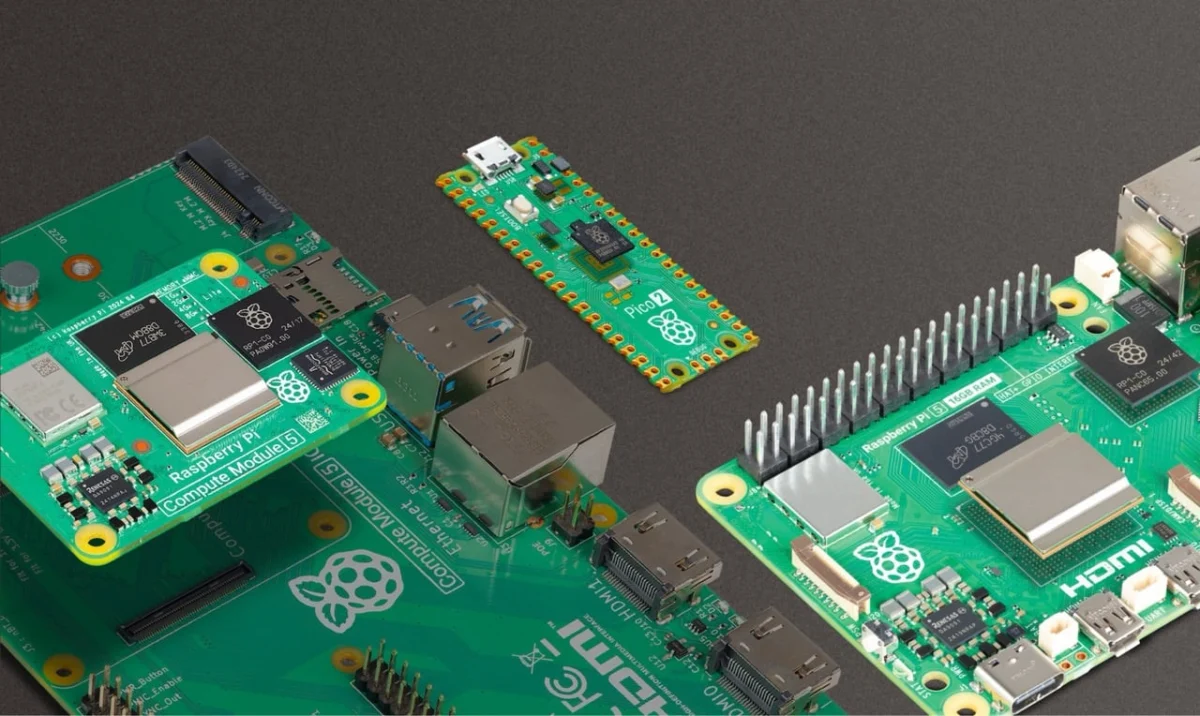
For Raspberry Pi, the renowned creator of affordable, high-performance single-board computers, the bulk of its environmental footprint does not originate from its corporate facilities. Instead, it is embedded directly into the physical devices distributed to millions of hobbyists, educators, and industrial engineers worldwide. In the standardized language of carbon accounting, these indirect value-chain impacts fall squarely under Scope 3 emissions. Ranging from raw material extraction and component manufacturing to international transport, quantifying Scope 3 is widely considered one of the trickiest frontiers in corporate sustainability.
Unlike a municipal building or an office park, there is no single utility meter capable of reading the carbon cost of an integrated circuit board. To solve this complexity, Raspberry Pi has pioneered a meticulous, bottom-up methodology to lifecycle assessment (LCA), transforming raw hardware architecture into transparent, defensible emissions data.
Main Facts: The Scope 3 Challenge in Hardware Manufacturing
To understand the scale of Raspberry Pi’s carbon accounting initiative, one must first understand the structural nature of Scope 3 emissions. Defined by the Greenhouse Gas Protocol, Scope 3 encompasses all indirect emissions that occur in a company’s value chain. For a fabless or outsourced hardware designer, these emissions are heavily weighted toward "Category 1: Purchased Goods and Services."
- The Facility vs. Product Disconnect: Direct operational emissions (Scope 1 and 2) represent a fraction of Raspberry Pi’s total environmental footprint. The true carbon load is tied to the physical materials comprising each board.
- Granular Accounting: Rather than relying on top-down macroeconomic averages or broad industry estimates, Raspberry Pi utilizes a component-level inventory approach.
- The Database Backbone: The company maps individual material weights to ecoinvent, a globally recognized life cycle inventory (LCI) database, to establish precise emissions factors.
- Excluding User Phase: Crucially, the current life cycle assessments exclude the operational use phase. Because a Raspberry Pi can be deployed anywhere—from a low-power home automation server running continuously to an intermittent educational robotics kit powered by renewable or fossil sources—calculating a standardized usage footprint remains practically unfeasible.
- Actionable Sustainability: The primary objective of this granular accounting is not merely regulatory compliance, but actionable design intelligence: identifying precisely which components drive the highest environmental costs to inform future hardware iterations.
Chronology: Developing the Methodology
The journey toward precise Scope 3 accounting was not established overnight. It required a methodical, multi-stage evolution spanning data collection, database integration, and specialized third-party collaboration.
Phase 1: Establishing the Bill of Materials (BoM) Baseline
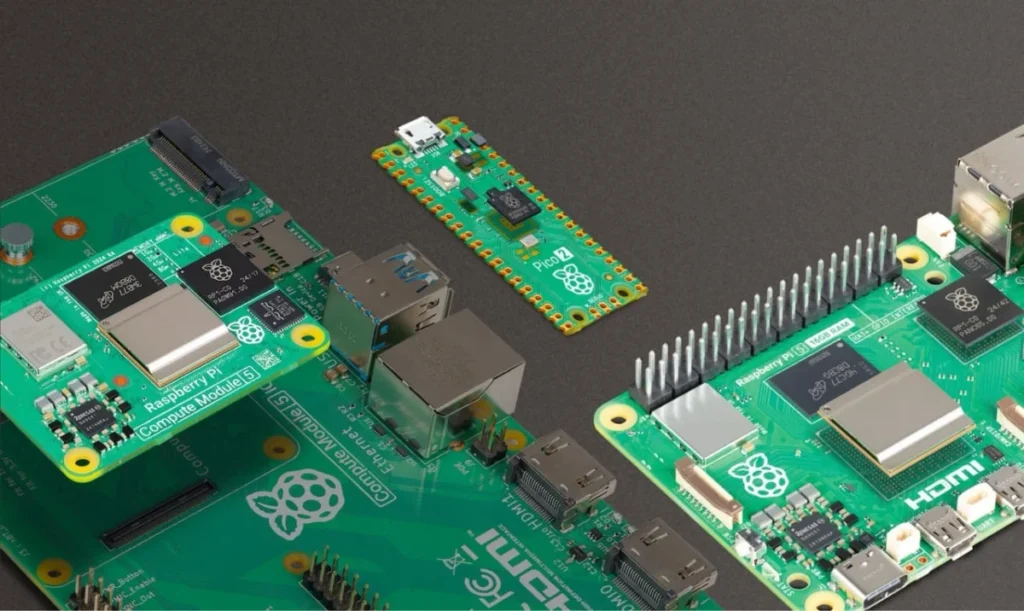
The foundational step of Raspberry Pi’s methodology begins at the engineering drawing board. Every single product is completely unraveled into its constituent parts. This includes major structural elements such as the printed circuit board (PCB), silicon chips, and physical connectors, extending all the way down to microscopic passive components like individual capacitors and resistors.
Engineers then determine the exact physical weight of every element. These figures are extracted directly from manufacturer technical datasheets or verified through precise physical measurements in a lab environment. Weight serves as the indispensable bridge connecting a tangible physical object to an abstract carbon emissions figure.
Phase 2: Integration with ecoinvent
Once the weights and material compositions of every component are cataloged, the data enters an analytical phase. Raspberry Pi maps each identified material to the ecoinvent database.
Widely regarded as one of the most rigorous and comprehensive life cycle inventory databases in existence, ecoinvent houses detailed environmental data covering thousands of global industrial processes, material extractions, and energy flows. By matching a gram of copper, a gram of aluminum, or a specific polymer to its corresponding ecoinvent dataset, the company derives a precise emissions factor. Aggregating these values provides a comprehensive, bottom-up estimate of the embodied carbon for an entire hardware product.
Phase 3: Partnering for Full Lifecycle Assessments
Recognizing that internal teams required specialized environmental science expertise to validate these models, Raspberry Pi partnered with Inhabit, a dedicated sustainability consultancy specializing in product life cycle assessments (LCAs).
Working in tandem, the two organizations developed a comprehensive LCA framework for the products in scope. This framework looked far beyond basic material extraction, factoring in manufacturing overhead, assembly processes, and global distribution logistics. Although Inhabit was subsequently acquired, the robust methodological architecture developed during this partnership remains foundational to Raspberry Pi’s ongoing sustainability reporting.
Supporting Data: The Mechanics of Embodied Carbon
To appreciate why Raspberry Pi’s methodology represents a leap forward for consumer electronics, one must examine the mechanics of embodied carbon calculations. In traditional financial accounting, components are evaluated solely on cost, availability, and electrical performance. In environmental accounting, the ledger is calculated in kilograms of carbon dioxide equivalent ($textkg CO_2texte$).
[Component Identification]
       │
       ▼
[Bill of Materials (BoM)] ──► [Weight Extraction (Datasheets/Lab)]
                                       │
                                       ▼
                              [ecoinvent Database Mapping]
                                       │
                                       ▼
                              [Emissions Factor Applied]
                                       │
                                       ▼
[Comprehensive Life Cycle Assessment (LCA)]
The Weight-to-Carbon Bridge
The formula underlying the accounting model relies on multiplying the mass of a specific material by its localized life-cycle emissions factor:
$$textEmissions = textMass of Material (kg) times textLCI Emissions Factor ($textkg CO_2texte$ per kg)$$
However, modern circuit boards are complex amalgams of fiberglass, copper traces, gold plating, solder alloys, silicon dies, and various plastics. A top-down approach—taking the total weight of a device and multiplying it by an average electronics manufacturing factor—introduces massive margins of error. By breaking down the device to the capacitor and resistor level, Raspberry Pi eliminates these blind spots.
The Role of the ecoinvent Database
The ecoinvent database provides regionalized and process-specific datasets. For instance, the carbon intensity of aluminum smelted using coal-fired power in one region differs dramatically from aluminum produced via hydroelectric energy elsewhere. By cross-referencing component material profiles with ecoinvent processes, the carbon accounting model accounts for these subtle supply chain nuances.
Official Responses and Industry Perspectives
The transition toward granular Scope 3 accounting has altered how Raspberry Pi communicates its environmental impact to stakeholders, regulators, and the broader tech community.
Industry analysts have frequently highlighted the consumer electronics sector as a notoriously difficult space for lifecycle transparency. Devices are assembled from globally dispersed supply chains where Tier 1, Tier 2, and Tier 3 suppliers often guard proprietary manufacturing processes.
By detailing its reliance on bottom-up BoM analysis, Raspberry Pi’s sustainability disclosures emphasize transparency over estimation. Company leadership has consistently maintained that corporate carbon reporting should function as an engineering tool rather than a marketing checklist.
"Carbon reporting isn’t just a compliance exercise," corporate disclosures emphasize. "When done properly, it’s the first step towards building products that are less harmful to the planet."
By making their carbon accounting defensible and transparent, the organization aims to set a benchmark for affordable hardware manufacturing—proving that low-cost computing does not require sacrificing environmental accountability.
Implications: What This Means for the Future of Hardware
The implementation of this LCA methodology carries profound implications for Raspberry Pi’s future product design, supply chain management, and the broader technology hardware sector.
1. Pinpointing Hotspots for Design Optimization
The most immediate benefit of a bottom-up LCA is actionable intelligence. When a company knows the exact carbon cost of every individual component on a circuit board, design priorities shift.
- If a particular connector type or metal alloy accounts for an disproportionate share of a board’s embodied carbon, engineers can actively seek lower-impact alternatives during the R&D phase.
- Material substitution becomes a targeted engineering decision rather than a generalized guessing game.
2. Preparing for Stricter Global Regulations
Regulatory frameworks around the world—most notably the European Union’s Corporate Sustainability Reporting Directive (CSRD) and expanding Ecodesign for Sustainable Products Regulations (ESPR)—are tightening scrutiny on supply chain emissions. Companies that rely on generic industry averages for Scope 3 reporting face increasing legal and financial risks. Raspberry Pi’s granular, data-backed approach provides a defensible shield against regulatory compliance challenges.
3. Fostering Supply Chain Transparency
As Raspberry Pi continues to refine its LCA practices, pressure naturally flows upstream to component vendors. Manufacturers who can provide precise, verified environmental data for their silicon wafers, passives, and PCBs will hold a distinct competitive advantage over those relying on opaque supply chains.
4. Setting a Precedent for Affordable Tech
Historically, comprehensive lifecycle assessments and carbon tracking have been the exclusive domain of multinational conglomerates with massive sustainability budgets—companies producing high-margin enterprise hardware. Raspberry Pi’s methodology demonstrates that rigorous Scope 3 accounting can be scaled down to affordable, high-volume computing hardware.
Ultimately, decoding the carbon footprint of a single-board computer proves that sustainability and accessibility can coexist. By treating carbon as a measurable physical component of the bill of materials, Raspberry Pi is laying the groundwork for a cleaner, more transparent hardware ecosystem for the decades to come.