Beyond the Border: 10 Remarkable Japanese Gadgets That Defy Western Convention
In the global landscape of consumer electronics, the United States market is often defined by the "Big Three": efficiency, standardization, and mass-market appeal. We have become accustomed to smartphones that all look largely identical, smart home devices that prioritize universal compatibility, and health tech that follows a rigid set of clinical guidelines. Yet, if one turns their gaze toward the bustling electronics districts of Akihabara or the curated shelves of Tokyo’s specialized boutiques, a different philosophy emerges.
In Japan, there exists a storied tradition of Chindogu—the art of the "unusably useless" invention—and a parallel, high-tech evolution that prioritizes hyper-specific problem solving. These are not merely gadgets; they are solutions to anxieties, inconveniences, and desires that Western manufacturers have largely deemed too niche to address. From the AI-driven companions that aim to be roommates rather than assistants to mechanical exoskeletons that redefine the concept of standing, Japan’s tech sector is currently producing a wave of innovation that remains tantalizingly out of reach for the average American consumer.
The Philosophical Divide: Innovation Through Specificity
To understand why these gadgets rarely cross the Pacific, one must look at the cultural approach to product design. While Silicon Valley often seeks to create "platform" technologies—devices that attempt to do everything for everyone—Japanese manufacturers frequently design for the specific constraints of the Japanese lifestyle. High population density, smaller living spaces, and a deep-seated cultural appreciation for public decorum all influence the R&D process.
The following list explores ten of the most fascinating pieces of technology that are currently defining the Japanese domestic market, offering a glimpse into a future where tech is tailored to the nuances of daily human experience.
1. Sharp Poketomo: The AI Roommate
Artificial Intelligence has long been relegated to the cold, disembodied voices of virtual assistants like Alexa or Siri. The Sharp Poketomo, however, attempts to bridge the gap between software and sentient companionship.
The Evolution of Digital Presence
Unlike a smartphone app, the Poketomo is a physical, palm-sized robot inspired by the meerkat. It doesn’t just process data; it monitors its environment. It remembers faces, tracks surroundings, and, most importantly, maintains a "memory" of previous interactions. If you tell the Poketomo about your day, it doesn’t just summarize your calendar; it writes a daily log from its own perspective.
- Chronology: Launched in Japan in early 2026, the device expanded its reach to the Taiwanese market by July 1, 2026.
- Implications: At approximately $400 plus a recurring subscription, the Poketomo is testing the threshold of the "uncanny valley." It raises a profound societal question: when a device begins to keep its own emotional record of your life, does it move from a tool to a dependent?
2. Sharp AQUOS R11: Beyond the Spec Sheet
While the U.S. smartphone market is locked in a tug-of-war between Apple and Samsung, Sharp continues to iterate on its AQUOS line. The AQUOS R11 is not merely a flagship competitor; it is a sensory device.
- Hardware Specs: Featuring a 6.5-inch Pro IGZO OLED display with a variable refresh rate of 1Hz to 240Hz and a staggering 3,600 nits of peak brightness, it is a technical marvel.
- The "Acharium" Experience: The standout feature is "Acharium," which uses light and sound to modulate the atmosphere of the room. It is an acknowledgment that a phone is not just a tool for consumption, but a hub of the user’s environment.
3. Thanko Fanbrella POLE PLUS: Solving the Multitasking Paradox
In the sweltering heat of a Japanese summer, the struggle to remain cool while maintaining sun protection is a universal grievance. Thanko’s solution is characteristically direct.
- Design Philosophy: The Fanbrella POLE PLUS integrates a high-powered fan directly into the shaft of a UV-blocking umbrella.
- Supporting Data: The latest iteration boasts a 20 percent increase in airflow compared to its predecessor, with a 4.5-hour battery life. It weighs only 350 grams, effectively rendering the "portable fan + umbrella" juggling act obsolete for just $47.
4. Thanko TeteMousse: The Automated Grooming Revolution
Hair care is often a labor-intensive ritual. The TeteMousse is an IPX7 waterproof electric scalp brush that solves the "lathering problem."
- The Goal: Designer Shinomiya explicitly aimed this product at the "lazy consumer." By automating the conversion of shampoo into foam, the device removes the manual labor of hair washing. It is a prime example of Japanese tech addressing the friction points of mundane domestic chores.
5. Thanko Kutsu Araimasenka 3: The Dedicated Shoe Washer
In most American homes, the idea of a dedicated, countertop-sized washing machine for footwear would seem like a luxury or a waste of space. In Japan, where clean footwear is a pillar of social etiquette, it is a necessity.
- Functionality: This $93 appliance uses a rotating brush system to scrub sneakers clean. It handles two pairs of children’s shoes or one adult pair, and the removable brush allows for cleaning other small, abrasive items, keeping them far away from the main laundry cycle.
6. Thanko Flowing Water Mat Lite: Personalized Climate Control
While Western sleep tech focuses on "smart mattresses" that can cost thousands of dollars, the Flowing Water Mat Lite offers a low-power, high-efficiency alternative.
- Mechanism: Using a 1.7-liter water tank and a 6W USB-powered pump, it circulates chilled water through a mat. It avoids the "heat soak" effect of standard cooling pads by continuously cycling the water through a cooling unit.
7. siroca Mekubari Fan: The Intelligent Observer
Most fans are "blind"—they oscillate mechanically, regardless of whether a human is present. The siroca Mekubari Fan utilizes facial and upper-body recognition to track users.
- Modes: Its "hitorijime" (all to yourself) mode follows one person, while "yamawake" (sharing) detects multiple individuals. Furthermore, it abandons the remote control in favor of hand-gesture recognition, allowing users to control airflow with a flick of the wrist.
8. Doshisha Gorilla’s Two Grips Massager
The fitness recovery market in the U.S. is dominated by bulky massage guns and massive compression boots. The Gorilla’s Two Grips takes a different approach.
- Mechanism: It uses eight inflatable airbags and "pokopoko" textured pads to deliver a deep, targeted squeeze. The company explicitly warns that the device is designed for the Japanese market and should not be used in foreign countries, likely due to electrical and safety certifications—a recurring theme for these highly specialized niche products.
9. King Jim Oshizukani Light: The Silent Mediator
Conflict resolution is often a matter of social awkwardness. The Oshizukani Light ("Please Be Quiet Light") is a passive-aggressive, yet highly effective, tool for shared workspaces.
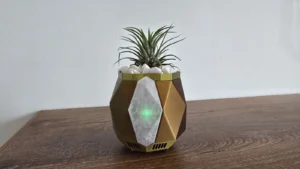
- Implications: It uses a microphone to detect noise thresholds (60, 70, or 80 dBA). When the limit is breached, the device glows to signal that the room is too loud. It is a masterclass in using light as a non-confrontational social regulator in high-density environments.
10. ArchelisFX Stick: The Wearable Chair
Perhaps the most ambitious item on this list is the ArchelisFX Stick. It is a mechanical exoskeleton that allows the wearer to "sit while standing."
- Official Response: Archelis maintains that this is an industrial tool rather than a consumer product. It requires no electricity, no batteries, and no software—just pure mechanical engineering that shifts body weight from the feet to the legs. By allowing workers to maintain a "standing-sit" position, it drastically reduces physical fatigue.
The Broader Implications: Why These Gadgets Matter
The existence of these ten gadgets highlights a fundamental difference in how technology is perceived across the globe. While the U.S. tends to prioritize the "next big platform," Japanese innovation is often characterized by its commitment to "micro-convenience."
These products do not seek to change the world; they seek to make a specific moment in the day—washing one’s hair, standing in a factory, or sleeping on a hot night—slightly more tolerable. As the global population ages and the demand for personalized, assistive, and high-efficiency home technology grows, the lessons learned from the Japanese market may prove to be the blueprint for the next generation of consumer electronics.
For now, these devices remain "As Seen in Japan"—a fascinating, curated collection of the world’s most inventive solutions to the problems we didn’t know we had, and the ones we were too tired to fix.