Two Decades in the Cloud: How Amazon EC2 Redefined Global Computing Infrastructure
Main Facts: The 20th Anniversary of a Cloud Revolution
Twenty years ago, a modest blog post authored by Jeff Barr altered the trajectory of the technology industry forever. On that day, the Amazon Elastic Compute Cloud (EC2) Beta was introduced to the world. What began as a simple, experimental offering—featuring resizable Linux virtual servers billed by the hour, limited to a single instance type (m1.small) within one localized Region (US East)—has since evolved into the beating heart of the modern internet.
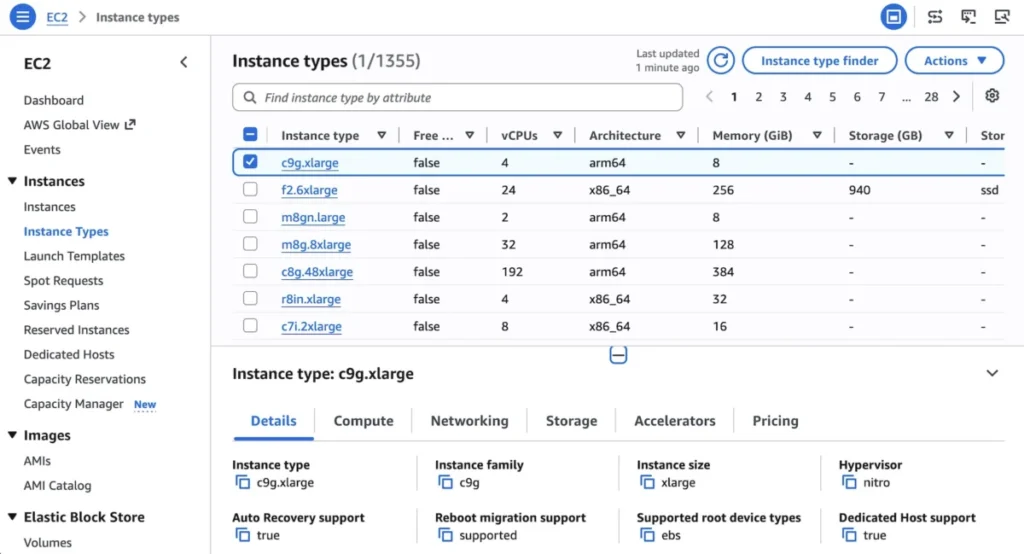
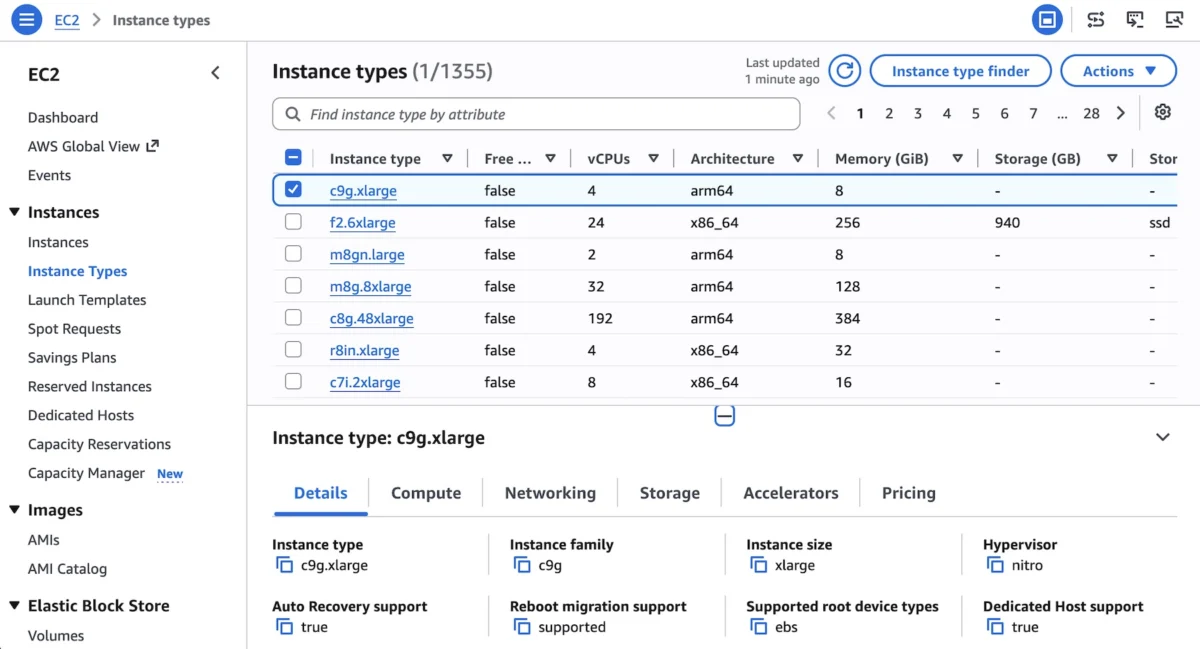
Today, Amazon EC2 stands as the foundational compute layer powering millions of businesses, governments, startups, and massive global enterprises. From humble beginnings in a single data center footprint, EC2 has scaled into a sprawling, hyper-global infrastructure spanning 39 AWS Regions worldwide. The service has grown from a single instance type to more than 1,200 distinct configurations, meticulously tailored for general-purpose computing, high-performance workloads, memory-intensive operations, accelerated AI training, and massive data storage.
Yet, despite two decades of exponential feature expansion and architectural breakthroughs, the core value proposition of Amazon EC2 remains unaltered: it provides secure, highly elastic compute capacity in minutes, allowing organizations to pay strictly for what they consume and scale effortlessly on demand without long-term commitments.
Chronology: Milestones That Shaped Twenty Years of EC2
To understand the scale of Amazon EC2 today, one must trace the critical technological milestones that transformed a basic virtual machine rental service into an all-encompassing global computing fabric.
The Formative Years (2006–2009)
- 2006 (The Launch): Jeff Barr launches the Amazon EC2 Beta, giving developers on-demand access to virtual servers and introducing the pay-as-you-go economic model to enterprise IT.
- 2008 (Persistent Storage): The introduction of Amazon Elastic Block Store (EBS) solved a critical early limitation, providing robust, low-latency, persistent block storage volumes that could be attached to running EC2 instances.
- 2009 (Elasticity and Security): AWS rapidly matured the platform by launching Elastic Load Balancing (ELB), Auto Scaling, and Amazon CloudWatch—giving applications unprecedented high availability and automated scaling capabilities. That same year, Amazon Virtual Private Cloud (VPC) arrived, granting customers logically isolated, highly secure private networks within the cloud.
The Era of Custom Hardware and Hybrid Expansion (2017–2019)
- 2017 (The Nitro System): AWS fundamentally revolutionized cloud virtualization performance and security with the AWS Nitro System. By offloading virtualization functions to dedicated hardware and software, Nitro delivered near-bare-metal performance and enhanced security isolation.
- 2018 (Graviton Processors & Hybrid Cloud): AWS introduced its first custom-designed, Arm-based silicon—AWS Graviton processors—tailored explicitly for cost-optimized, scale-out workloads. Simultaneously, AWS Outposts brought local EC2 infrastructure directly into on-premises customer data centers.
- 2019 (Edge and 5G Integration): EC2 broke past traditional regional boundaries with AWS Local Zones, which placed compute resources closer to major population centers, and AWS Wavelength, embedding EC2 power directly inside global 5G telecommunications carrier networks for ultra-low latency applications.
Supporting Data: EC2 by the Numbers
The sheer scale of Amazon EC2’s growth over the past twenty years is quantified by a series of staggering milestones and metrics:
- 1 to 1,200+ Instance Types: Expanding far beyond the original
m1.smallLinux instance, modern EC2 instances are categorized into specialized families, including general-purpose, compute-optimized, memory-optimized, storage-optimized, accelerated computing (GPU-powered), and high-performance computing (HPC) nodes. - 39 Global Regions: What started as a single Region in US East now encompasses 39 geographically isolated AWS Regions, underpinned by hundreds of Availability Zones distributed across the globe.
- The Underlying Engine for All Modern AWS Services: Amazon EC2 is not merely a standalone product; it is the fundamental compute engine supporting nearly every higher-level AWS service. Container orchestration platforms like Amazon ECS and Amazon EKS, serverless architectures like AWS Lambda and AWS Fargate, data processing engines like Amazon EMR and AWS Batch, and cutting-edge artificial intelligence environments like Amazon SageMaker and Amazon Bedrock ultimately rely on EC2 infrastructure to execute workloads.
Official Responses and Perspectives
Reflecting on the milestone, AWS leadership has emphasized that the philosophy of starting small and iterating rapidly has been the bedrock of their enduring success.
"We made strong foundational decisions in 2006, and we left room for the service to grow," notes Channy Yun, principal developer advocate at AWS. "Twenty years later, that strategy of creating services that are minimal-yet-useful, launching quickly, and iterating rapidly in response to customer feedback continues to guide how we build."
AWS executives frequently point out that the architectural patterns witnessed today—ranging from basic corporate web servers to trillion-parameter foundation model training clusters powering generative AI—all share a common origin story: they begin with a developer making the simple decision to launch an EC2 instance.

Furthermore, industry analysts note that EC2’s early bet on cloud virtualization paved the way for the entire modern software-as-a-service (SaaS) and platform-as-a-service (PaaS) economy. Without the risk taken by Amazon in 2006 to democratize compute power, the modern startup ecosystem as we know it would likely look radically different.
Implications: The Next Twenty Years of Cloud Computing
As Amazon EC2 enters its third decade, the implications for the technology sector are profound. The original use case of EC2—renting virtual servers to host websites and databases—has evolved into orchestrating complex, global neural networks and training frontier artificial intelligence models.
Fueling the Generative AI Boom
The explosive demand for generative artificial intelligence has placed unprecedented pressure on cloud infrastructure. Modern EC2 instances equipped with specialized GPU and accelerator chips now train trillion-parameter foundation models at scales that were entirely unimaginable in 2006. The flexibility that once allowed a startup to spin up a single server in minutes is now utilized by enterprises to provision thousands of high-performance accelerated instances dynamically, training AI models in days rather than months.
The Convergence of Edge, Hybrid, and Custom Silicon
Looking forward, EC2’s trajectory points firmly toward pervasive, borderless computing. Through initiatives like AWS Graviton, AWS Nitro, and hybrid deployments via Outposts, Local Zones, and Wavelength, the boundary between the cloud and the physical edge is dissolving. Enterprises no longer view the cloud as a remote destination, but rather as an extensible operating system that can run anywhere their data lives—whether that is in a hyperscale AWS facility, an on-premises enterprise rack, a factory floor, or embedded within a 5G mobile network.
As Channy Yun aptly summarizes: "The next twenty years of cloud computing will demand capabilities we have not yet imagined. Amazon EC2 will continue to be the foundation where your workloads run."