
GlitchCaster Turns Idle 3D Printers into Precision Hardware Security Testing Rigs
By Technology & Hardware Security Desk
Main Facts: Revolutionizing Electromagnetic Fault Injection
In the rapidly evolving landscape of hardware security evaluation, repeatability has long been the elusive holy grail. Traditional Electromagnetic Fault Injection (EMFI)—a powerful technique used to bypass security checks, extract cryptographic keys, or induce arbitrary code execution in microcontrollers—often relies on manual probe placement. This introduces human error, making consistent, reproducible results difficult to achieve.
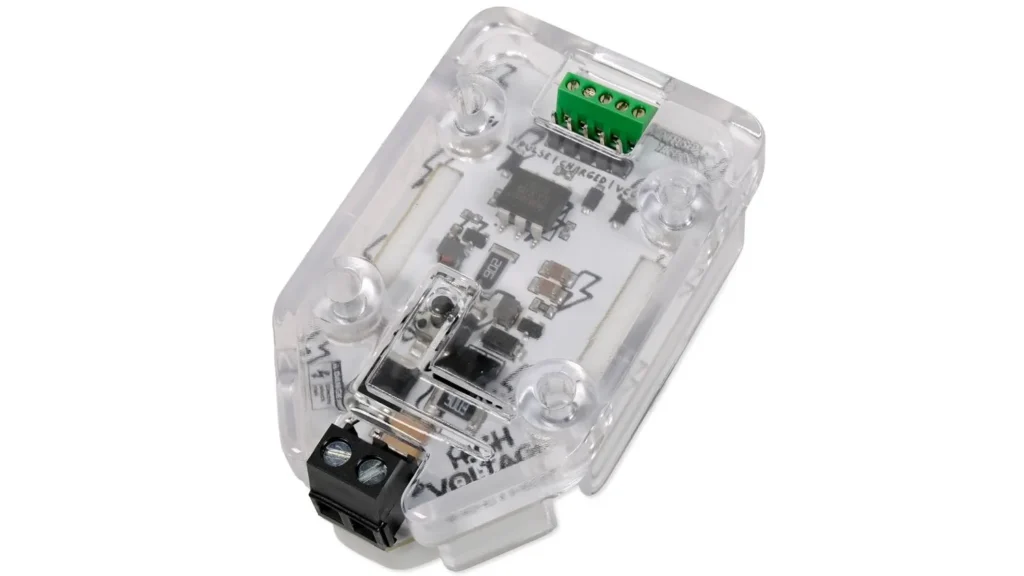
Enter GlitchCaster, an innovative open-source EMFI evaluation device developed by Diffused Tactics and launched via Crowd Supply. GlitchCaster solves the precision problem by mounting directly onto the print head of an idle 3D printer or a CNC milling machine. By leveraging the existing X, Y, and Z-axis kinematics of these machines, the device transforms workshop machinery into a high-precision, automated three-axis fault injection rig.
At its core, GlitchCaster is engineered to generate a controlled, high-voltage electromagnetic pulse—approximately 250 V—directed through specialized coil probes. When brought into close proximity with a target microcontroller or Integrated Circuit (IC), the device emits a transient electromagnetic field. This calculated disturbance is timed down to the clock cycle to disrupt the target’s internal logic precisely when it performs a critical security check, such as a password verification or a secure boot routine.
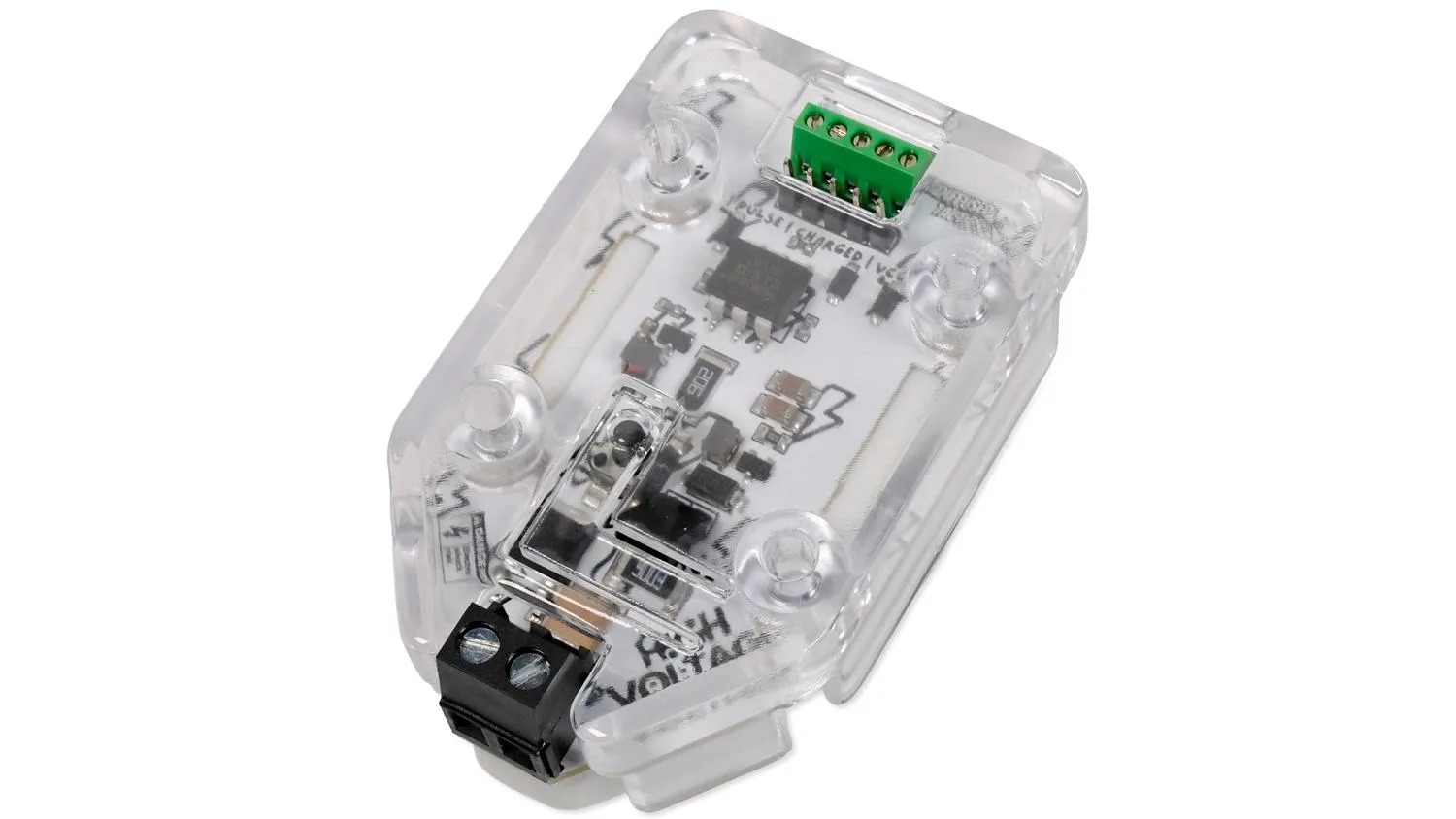
Unlike all-in-one commercial lab equipment that can cost tens of thousands of dollars, GlitchCaster adopts a modular, accessible architecture. It features a robust 250V flyback DC/DC power supply, a 630V 470nF storage capacitor, and open 2.54mm headers and screw terminals that allow security researchers to interface their choice of GPIO and PWM controllers. Fully compatible with PicoEMP-based firmware ecosystems, GlitchCaster brings professional-grade hardware penetration testing capabilities directly to the desks of hobbyists, academic researchers, and professional security auditors alike.
Chronology: From Concept to Crowd Supply
The journey of GlitchCaster reflects the grassroots, maker-driven innovation that frequently defines breakthroughs in open-source hardware security tools.
Phase I: The Need for Reproducible Faults
Historically, hardware hackers looking to perform EMFI either invested in prohibitively expensive, proprietary fault injection stations or built bespoke, fragile setups using manual XYZ stages. While projects like PicoEMP laid the groundwork for affordable pulse generation, positioning the probe consistently over a microscopic silicon die remained a manual, tedious chore. Slight variations in angle, distance, and pressure could mean the difference between a successful fault and a completely unresponsive target device.
Phase II: Prototyping and Mechanical Integration
The creators at Diffused Tactics recognized an underutilized resource sitting in countless workshops and laboratories: retired or idle 3D printers and CNC routers. These machines are, by design, sub-millimeter accurate positioning systems. By designing a custom mounting bracket that mimics the standard 40mm fan topology found on many printer and CNC toolheads, the team created a universal adapter. The GlitchCaster hardware could now effortlessly snap onto existing workshop hardware without requiring custom mechanical redesigns.
Phase III: Circuitry Refinement and Firmware Porting
With the mechanics solved, the engineering focus shifted to the electrical discharge circuit and firmware compatibility. The team integrated an LDA111 and ATB3225-based flyback DC/DC converter to safely step up voltage, pairing it with a high-safety-margin 630V 470nF storage capacitor. To ensure rapid adoption within the community, the firmware was designed to be fully compatible with established PicoEMP-based projects.
Phase IV: Crowd Supply Launch and Open-Source Release
Transitioning from a workshop prototype to a structured product, Diffused Tactics partnered with Crowd Supply to bring GlitchCaster to the broader engineering community. The campaign outlines the complete ecosystem—including the main PCB, SMA adapter boards, and controller layouts—empowering security engineers to build, modify, and deploy their own automated fault injection benches.
Supporting Data: Technical Specifications and Hardware Architecture
To understand how GlitchCaster achieves its performance, one must examine the engineering specifications of its modular Printed Circuit Board (PCB) stack and electrical subsystems.

Electrical Specifications & Power Delivery
- Pulse Voltage: Generates an electromagnetic pulse of approximately 250 V.
- Flyback Circuitry: Utilizes a DC/DC flyback topology centered around the LDA111 driver and ATB3225 inductor components.
- Energy Storage: Equipped with a 630V, 470nF storage capacitor, providing a healthy voltage headroom above the 250V operational pulse to ensure longevity and component stability.
- Probe Coils: Features a standard 4.7 µH coil probe built around a 4 x 15 mm ferrite core with a 17.5-turn winding.
- Connector Flexibility: Includes an adapter board allowing seamless swapping between through-hole lead coils and SMA-connected probes.
- Signal Interconnects: Bundled with 24-inch jumper wires, offering ample length to route signals from the moving machine head to the stationary controller without creating cable strain or interference hazards.
Physical Dimensions (PCB Footprint)
- Main PCB: 71 mm × 32 mm × 1.65 mm (housing the high-voltage flyback and core switching logic).
- SMA Adapter Board: 11.6 mm × 10.1 mm × 1.65 mm (expanding to 29.3 mm total length with connectors included).
- Controller Board: 71 mm × 30 mm × 1.65 mm.
Prototyping Ecosystem
GlitchCaster lacks a built-in controller on the main board intentionally, granting users the freedom to select their preferred hardware interface. For those seeking an out-of-the-box prototyping experience, the platform integrates smoothly with development environments like the Raspberry Pi Pico primer kit, allowing developers to leverage existing GPIOs and PWM libraries for precise trigger synchronization.
Official Responses and Developer Insights
The development team behind Diffused Tactics has emphasized that GlitchCaster was born out of practicality and a desire to democratize advanced hardware security analysis.
"Security testing should not be gated behind five-figure laboratory budgets or restricted by the physical steadiness of a researcher’s hand," notes the core documentation from Diffused Tactics. "By utilizing the precision mechanics of machines that makers already own, we remove the barrier to entry for repeatable electromagnetic fault injection."
Early community feedback from the hardware hacking scene has underscored the cleverness of the 40mm fan mount design. Because the 40mm form factor is ubiquitous across cooling fans on 3D printer hotends, laser engravers, and CNC spindles, GlitchCaster can be mounted alongside or in place of existing hardware with minimal friction.
Security educators have also praised the firmware’s open nature. Because the system inherits the logic of PicoEMP-based projects, students and professionals familiar with basic microcontroller programming can easily dive into the source code, adjust trigger delays, modify pulse widths, and log injection success rates without learning a proprietary software suite.
Implications: What GlitchCaster Means for Hardware Security
The release of GlitchCaster carries significant implications for both device manufacturers and the broader hardware security community.
Democratizing Side-Channel and Fault Analysis
Historically, executing sophisticated attacks like EMFI or Voltage Glitching required specialized, expensive gear. This created an asymmetry where only well-funded security agencies, enterprise red teams, and academic institutions could rigorously test silicon against transient electromagnetic disturbances. By turning everyday 3D printers into high-precision fault injection benches, GlitchCaster lowers the financial and logistical barriers to entry. Educational institutions can now set up robust hardware security labs at a fraction of traditional costs.
Raising the Bar for IoT and Embedded Security
As more everyday devices become "smart," the attack surface for Internet of Things (IoT) hardware expands exponentially. Microcontrollers controlling smart locks, automotive subsystems, industrial sensors, and medical devices are frequently vulnerable to fault injection if developers do not implement robust countermeasures (such as redundant execution checks, sensor meshes, and glitch-resistant hardware design).
With tools like GlitchCaster becoming widely accessible, independent security researchers and bug bounty hunters can more easily audit consumer-grade electronics. Manufacturers will face increased pressure to harden their silicon against electromagnetic interference, knowing that vulnerability assessment is no longer confined to elite corporate labs.
The Rise of Repurposed Workshop Infrastructure
GlitchCaster highlights a broader, sustainable trend in engineering: the convergence of digital fabrication tools and electronic test equipment. Instead of letting obsolete or underutilized 3D printers gather dust, makerspaces and engineering labs can repurpose them into dynamic testing platforms. This philosophy of hardware recycling not only reduces e-waste and capital expenditure but also fosters cross-disciplinary innovation between mechanical engineering, additive manufacturing, and cybersecurity.
Conclusion
GlitchCaster bridges the gap between crude, manual fault injection and exorbitant laboratory automation. By ingeniously harnessing the XYZ kinematics of standard workshop machines, it turns a common 3D printer into a surgical tool for silicon security analysis. As the project rolls out via Crowd Supply, it promises to empower a new generation of security researchers to probe, test, and ultimately secure the microcontrollers powering our modern digital world.








