Breaking the Cold Chain: ARPA-H Launches Ambitious $87 Million Initiative to Stabilize Cell-Based Medicines
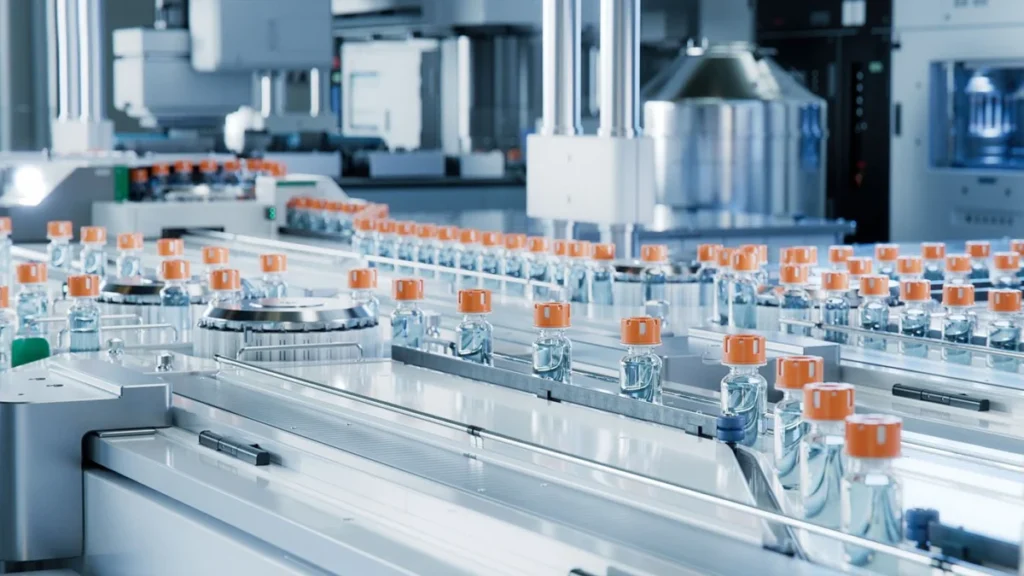
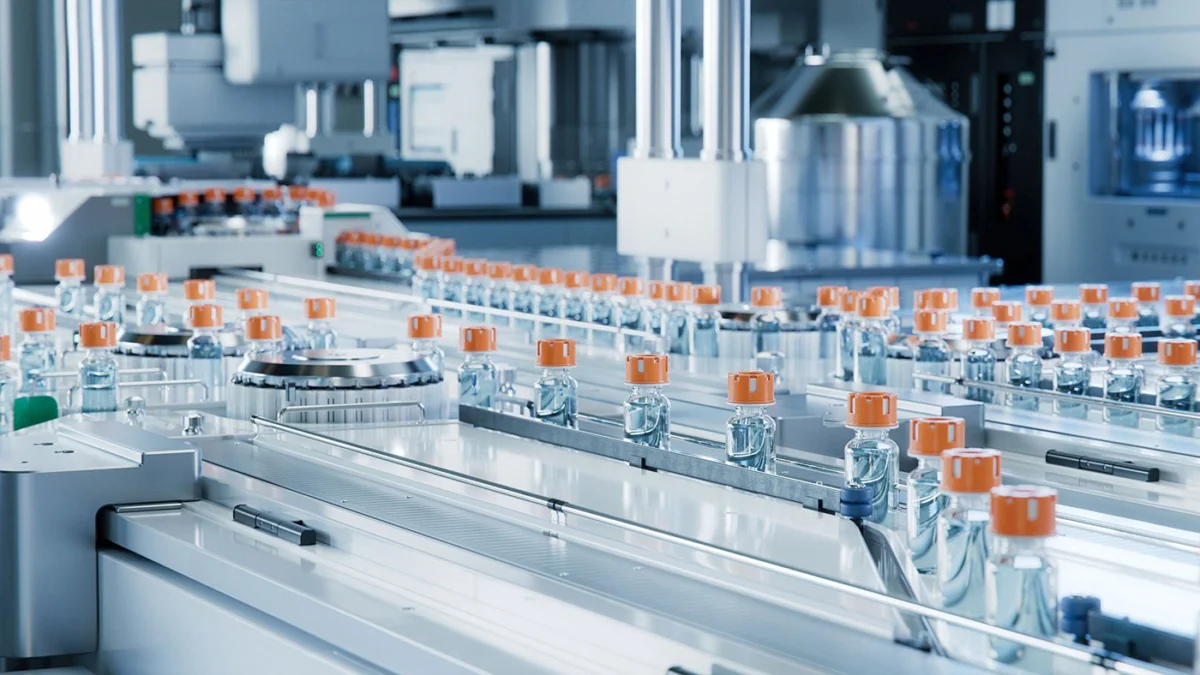
The landscape of modern medicine is undergoing a profound transformation, shifting from small-molecule pharmaceuticals to living, cell-based therapies. However, this revolution faces a significant logistical bottleneck: the "cold chain." Most life-saving cellular therapies—such as CAR-T cancer treatments—require stringent, ultra-cold storage and transport conditions, making them expensive, fragile, and inaccessible in many regions.
Seeking to shatter these constraints, the Advanced Research Projects Agency for Health (ARPA-H), a high-profile agency within the U.S. Department of Health and Human Services (HHS), has launched its BioStabilization Systems (BoSS) program. With a total commitment of up to $87 million over four years, BoSS aims to develop groundbreaking methods to produce, store, and transport cell-based biologics at room temperature. By eliminating the reliance on liquid nitrogen and specialized freezers, this initiative could fundamentally redefine the accessibility and affordability of next-generation medicine.
The Core Mandate: Eliminating the Cold Chain
The BoSS program is designed as a multi-disciplinary effort to solve one of the most stubborn challenges in biotechnology: keeping living cells alive, functional, and "off-line" for extended periods without degradation. The program operates across two primary technical pillars:
- Biostabilization Interventions: Developing methods to induce a state of suspended animation—or "quiescence"—in therapeutic cells, allowing them to remain stable for long durations before being "reanimated" upon demand.
- Scalable Bioprocessing: Engineering automated, commercially viable manufacturing systems that can integrate these stabilization techniques into high-volume clinical workflows.
The initiative has officially moved into its 15-month Phase I, during which teams will refine their laboratory concepts into prototypes that can meet increasingly rigorous benchmarks for cell viability, production speed, and shelf-life stability.
A Chronology of Innovation: The BoSS Program Launch
The journey to ambient-temperature storage has been characterized by decades of incremental progress, often frustrated by the biological complexity of maintaining cell integrity during dehydration and freezing.
- September 2024: The BoSS program officially commences, with ARPA-H announcing the first round of funding and the selection of three primary multi-institutional teams.
- The Development Phase: Over the next 15 months, these teams will test their respective technologies against government-mandated benchmarks.
- The Four-Year Horizon: The program is structured as a multi-phase trajectory. Success in Phase I will be a prerequisite for continued funding, with the ultimate goal of developing a commercially ready, automated platform by the end of the four-year cycle.
- Independent Validation: Throughout this timeline, the American Type Culture Collection (ATCC) serves as the Independent Verification and Validation (IV&V) partner, providing standardized cell banks and unbiased assessments to ensure the technology is truly scalable and reliable.
Meet the Teams: Three Paths to Stability
ARPA-H has curated a diverse set of approaches, ranging from advanced hydrogel encapsulation to "cyborg" cellular engineering.
1. The RAB Team: Precision Engineering and Hydrogels
The Reversible Ambient Temperature (RAB) team, which has secured an initial award of up to $7.3 million, is focused on the simultaneous control of cell states and their physical environment. Led by Draper (administrative lead) and Likarda (technical lead), the team includes CaseBioscience, CPSI Biotech, Fresenius Kabi, MiNK Therapeutics, and the University of Colorado.
Likarda’s contribution centers on its proprietary "Core-Shell Spherification" hydrogel technology. By encapsulating living cells within a protective hydrogel matrix, the team creates a micro-environment that shields cells from the stresses of freezing and dehydration. Draper is concurrently developing custom instrumentation to automate this process, transforming a delicate, manual laboratory technique into a robust, industrial-scale workflow. The team utilizes AI-assisted design of experiments (DoE) to optimize the complex interplay between hydrogel composition, cellular metabolism, and recovery media.
2. The DesiCorp Initiative: High-Throughput Thin-Film Drying
Led by DesiCorp, this team is tackling the problem through high-throughput screening and Thin-Film Freeze-Drying (TFFD). The consortium—including the University of Louisville, the University of Texas at Austin, Via Therapeutics, VeriSIM Life, and Ossium Health—aims to identify biocompatible formulations that slow cellular metabolism to near-zero levels.
UT Austin researchers are leading the optimization of TFFD process parameters, ensuring that the technology can handle the delicate nature of therapeutic cells while maintaining aseptic standards. By leveraging AI to scan vast libraries of chemical formulations, the team expects to rapidly identify the "secret sauce" required to allow cells to survive the transition to a dry state and resume their therapeutic function upon rehydration.
3. CYBORGEL: The "Cyborg" Cell Approach
Perhaps the most innovative, and certainly the most uniquely named, project is CYBORGEL, led by the University of California, Davis. Having received an initial $6 million, this team is building on the pioneering work of Professor Cheemeng Tan.
The core of their technology involves "intracellular gelation." By forming water-rich polymer networks inside living cells, the team creates a hybrid—or "cyborg"—state. This gel acts as an internal scaffolding that prevents cell division and degradation while keeping the cell biologically "ready." The team, which includes researchers from the Mayo Clinic, Case Western Reserve University, University of Georgia, and Sersense, will test this method on high-stakes clinical targets: CAR T-cells for cancer and placental mesenchymal stem cells for spina bifida treatment. If successful, CYBORGEL could represent the ultimate solution to the storage of highly sensitive genetic therapies.
Supporting Data and Technical Hurdles
The fundamental challenge, as noted by Dr. John Baust, an expert in biopreservation and collaborator with CPSI Biotech, is the "dry state." Scientists have spent over twenty years attempting to dry living cells without causing catastrophic damage to the cellular membrane or internal proteins.
"The concept of preserving living cells in a dry state has been pursued for more than two decades, but significant scientific and engineering barriers have yielded limited success," Dr. Baust explains. The BoSS program is unique because it forces a convergence of disparate disciplines—materials science, AI-driven process engineering, and cellular biology—to tackle these barriers simultaneously.
The success of these programs will be measured by specific metrics:
- Viability Rates: The percentage of cells that remain active post-reanimation.
- Functional Recovery: Whether the cells retain their original therapeutic potency (e.g., the ability of a CAR-T cell to identify and kill a cancer cell).
- Stability Duration: The length of time a product can sit at room temperature before requiring a quality check.
Official Perspectives: A Paradigm Shift
The stakes for the BoSS program extend far beyond the laboratory. Jason Fiering of Draper emphasizes the collaborative nature of the effort: "The RAB team brings together deep expertise in cryoprotection, encapsulation, and cell state… Working in parallel, our interdisciplinary engineering team will develop the customized instruments needed to transfer these processes to clinical manufacturing environments."
For ARPA-H, the program is a strategic investment in national public health. By enabling the development of "domestic reserves" of cell-based medicines, the agency is looking toward a future where hospitals can stockpile therapies for cancer, rare genetic disorders, and even pandemic-related responses without relying on fragile, energy-intensive storage infrastructure.
Implications: A New Era for Global Health
The implications of a successful BoSS program are monumental. Currently, cell therapies are largely confined to major academic medical centers that possess the necessary cryo-infrastructure. By enabling room-temperature storage and shipping, the BoSS program could:
- Democratize Access: Smaller community hospitals and clinics in rural or developing regions could finally administer advanced cellular therapies.
- Reduce Costs: The "cold chain" is one of the largest cost-drivers in modern medicine. Shipping, storage, and the high rate of product loss due to temperature excursions are baked into the price of current treatments. Removing these factors could lead to significant reductions in cost.
- Enhance Preparedness: In the event of a public health emergency, the ability to store biological materials at room temperature would allow for rapid, decentralized distribution of treatments, bypassing the bottleneck of specialized shipping providers.
As the 15-month Phase I progresses, the eyes of the global biotech industry will be fixed on these three teams. While the scientific barriers remain steep, the convergence of AI, advanced materials, and automated engineering suggests that the era of the "cold chain" may finally be approaching its end. Should the BoSS program achieve its goals, the "cyborg" cells and hydrogel-encapsulated therapies of today will become the standard, shelf-stable medicines of tomorrow.