Bringing AI-Powered Gaming Cross-Platform: How Developers Can Port TensorFlow Lite Board Game Agents to Flutter
By Wei Wei, Developer Advocate
The landscape of mobile app development and on-device machine learning continues to undergo a profound transformation. For years, deploying advanced machine learning models—such as reinforcement learning (RL) agents—meant writing platform-specific native code. Developers targeting both Android and iOS faced the daunting task of maintaining distinct codebases for their model interpreters, inference pipelines, and user interfaces.
Today, that paradigm is shifting. Following the recent release of the official TensorFlow Lite plugin for Flutter, developers now possess a streamlined pathway to bring intelligent, high-performance, on-device machine learning models to a truly cross-platform framework.
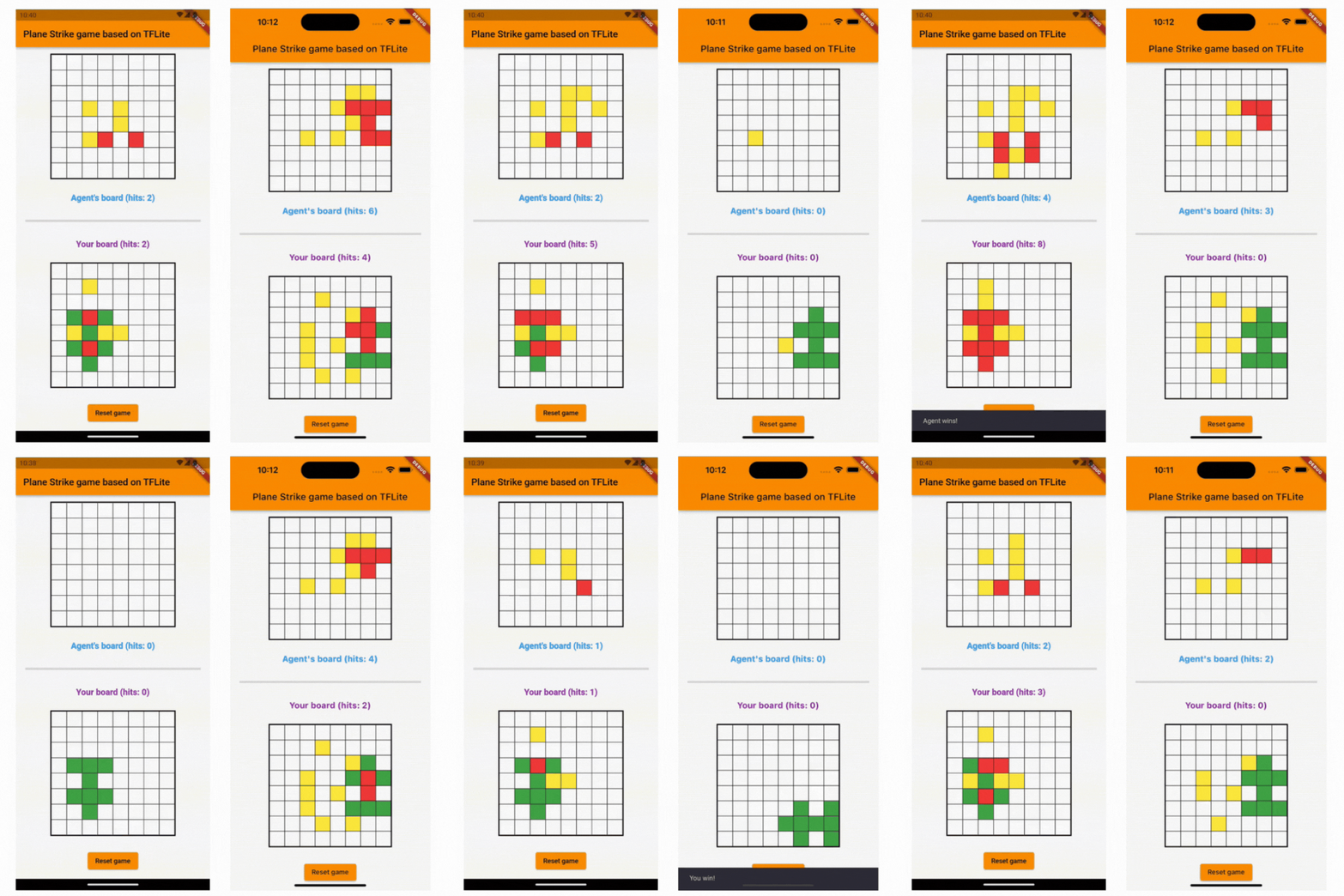
This comprehensive guide explores the final chapter of a popular tutorial series. Having previously demonstrated how to train a reinforcement learning agent using TensorFlow, TensorFlow Agents, and JAX, and subsequently deploying it on native Android, the development team has officially ported the "Plane Strike" board game application to Flutter. By leveraging the new TFLite plugin, developers can now deploy reinforcement learning models seamlessly across both Android and iOS using a single, unified codebase.
Main Facts: The Intersection of Reinforcement Learning and Cross-Platform Flutter
To understand the significance of this development, it is vital to examine the core components that make up this technological stack:
- The Objective: Port an existing, trained reinforcement learning board game agent—playing the strategic game "Plane Strike"—from a native Android implementation to a cross-platform Flutter application.
- The Core Technology: The recently released official TensorFlow Lite (TFLite) Plugin for Flutter, which bridges the gap between Dart-based cross-platform UIs and high-performance C/C++ TFLite runtimes.
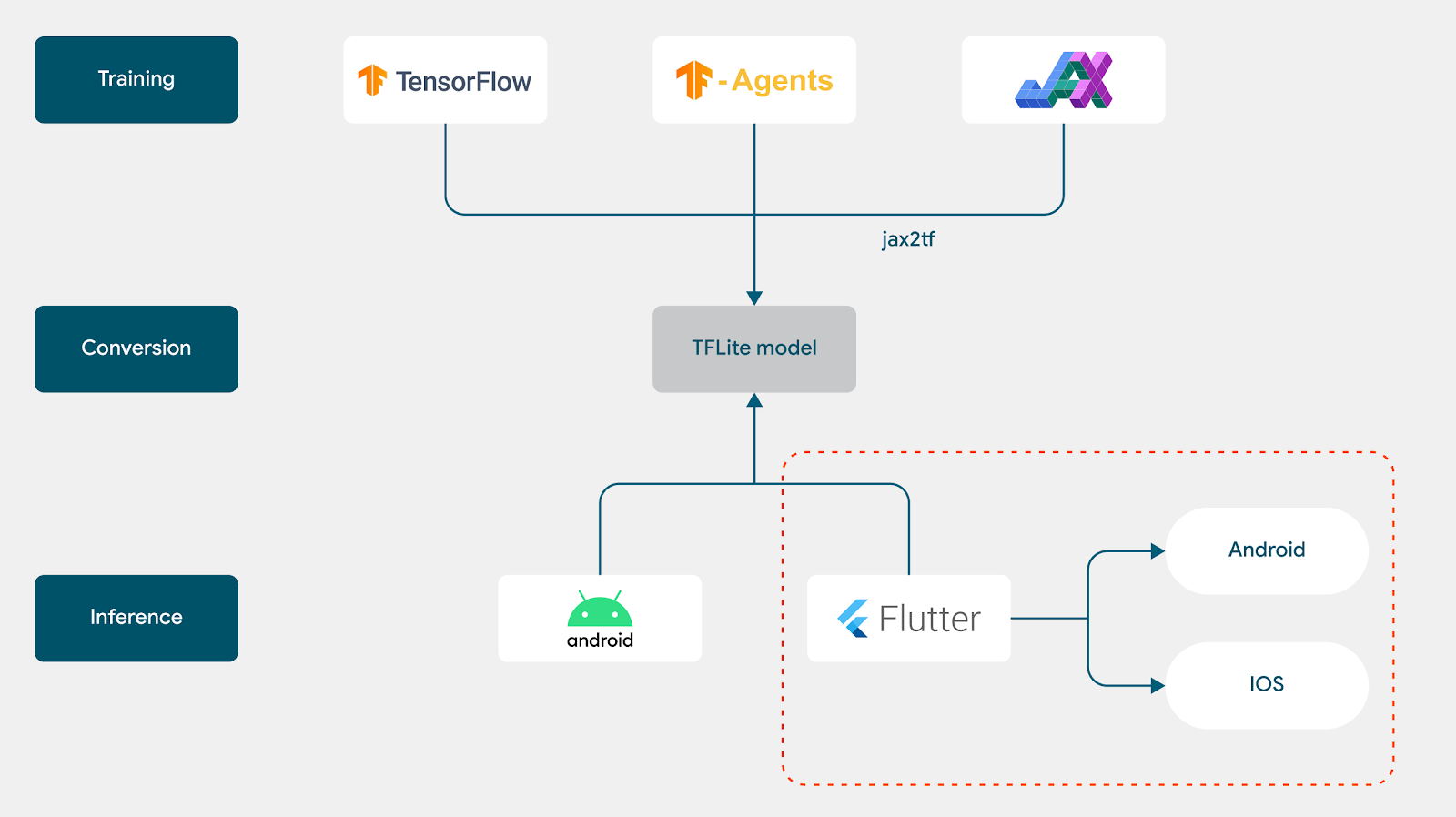
- The Machine Learning Foundation: The underlying AI model was originally trained using industry-standard frameworks like TensorFlow, TensorFlow Agents, and JAX, emphasizing that the model training pipeline remains completely independent of the frontend deployment choice.
- Target Platforms: Thanks to the capabilities of Flutter and the TFLite plugin, the resulting board game app runs natively and fluidly on both Android and iOS devices.
- Open Source Availability: The complete, production-ready source code, including model files, frontend rendering logic, and inference scripts, has been made publicly available on GitHub via the official TensorFlow repository.
Chronology: The Evolution of the "Plane Strike" AI Project
The journey toward a cross-platform, AI-driven board game has been deliberate and methodical, unfolding across several distinct phases over the past few years:

Phase 1: Training and Native Android Proof-of-Concept (2021)
The initiative began with the release of the foundational blog post, Building a board game app with TensorFlow: a new TensorFlow Lite reference app. In this initial phase, developers established how a reinforcement learning agent could be trained to master "Plane Strike," a simplified grid-based tactical game. Once trained, the model was converted into the lightweight TFLite format and embedded directly into a native Java/Kotlin Android application, proving that complex RL agents could execute inference locally on mobile hardware without relying on cloud-based servers.
Phase 2: Expanding ML Framework Support with JAX (2022)
As modern machine learning diversified, developers sought alternative training methodologies. The second major milestone, Building a reinforcement learning agent with JAX, and deploying it on Android with TensorFlow Lite, expanded the ecosystem. It proved that developers were not restricted to traditional TensorFlow pipelines; agents trained using JAX could also be successfully serialized, converted, and deployed on mobile devices using TFLite.
Phase 3: The Birth of the Flutter TFLite Plugin (August 2023)
A major bottleneck for mobile developers has historically been the lack of official, well-maintained cross-platform bindings for hardware-accelerated machine learning. That changed with the official release of the TensorFlow Lite plugin for Flutter, announced in August 2023. This plugin provided the missing link, offering robust, efficient API wrappers to load models and execute inference directly within Dart and Flutter applications.
Phase 4: Cross-Platform Realization (Present Day)
With the official plugin now available, the development cycle reaches its logical conclusion: porting the "Plane Strike" reinforcement learning agent to Flutter. By stripping away platform-specific boilerplate code, developers can now write a single inference pipeline that serves users across both major mobile operating systems.
Supporting Data & Technical Implementation: How the Flutter TFLite Plugin Works
Transitioning a machine learning model from a native environment to Flutter is remarkably straightforward thanks to the clean design of the TFLite plugin. Because the heavy lifting—training the agent and converting it into a .tflite flat buffer—was already completed in earlier phases, the Flutter implementation focuses entirely on model loading, state management, and real-time inference execution.
1. Initializing and Loading the Model
The first step in the Flutter application lifecycle is loading the pre-trained TFLite model from the app’s asset bundle. The Interpreter.fromAsset method handles this efficiently:

Interpreter? _interpreter;
final String _modelFile = 'plane_strike_model.tflite';

void _loadModel() async
  // Create the interpreter from assets
  _interpreter = await Interpreter.fromAsset(_modelFile);
2. Executing Inference and Making Predictions
Once the interpreter is initialized, the app captures the current state of the user’s game board, packages it into the expected input tensor shape, and invokes the TFLite interpreter.
The core prediction logic utilizes an argmax operation over the model’s output array to determine the AI’s optimal next strike position:
int predict(List<List<double>> boardState)
  // Reshape input data to match model expectations
  var input = [boardState];
  var output = List.filled(_boardSize * _boardSize, 0.0)
      .reshape([1, _boardSize * _boardSize]);

  // Run model inference locally on-device
  _interpreter?.run(input, output);

  // Extract the highest probability move using argmax
  double max = output[0][0];
  int maxIdx = 0;

  for (int i = 1; i < _boardSize * _boardSize; i++)
    if (max < output[0][i])
      maxIdx = i;
      max = output[0][i];


  return maxIdx;
This streamlined snippet highlights the elegance of the approach: within just a few lines of Dart code, the application feeds complex numerical game states into a neural network and receives an optimized, mathematically calculated move in milliseconds.
Official Responses and Community Feedback
The developer community has responded enthusiastically to the evolution of this tutorial series.
- Bridging the Community Divide: While the initial Android-centric tutorials were widely praised for offering clear, end-to-end guidance, the Flutter community had consistently voiced a strong demand for cross-platform parity. Google’s developer relations team noted that hearing this feedback directly inspired the final port to Flutter.
- Focus on Open Collaboration: By hosting the complete example project within the official
tensorflow/flutter-tfliteGitHub repository, the maintainers have provided a gold standard for developers looking to combine state-of-the-art machine learning with cross-platform UI frameworks. - Empowering Independent Creators: Official statements from the TensorFlow and Google Developers teams emphasize that these reference apps are not just educational tools, but launchpads for production applications. Developers are actively encouraged to take the provided architecture, modify the underlying reinforcement learning parameters, and build entirely new gaming experiences.
Implications for the Future of Mobile AI Development
The successful porting of the "Plane Strike" RL agent to Flutter carries significant implications for software engineers, mobile developers, and the broader artificial intelligence ecosystem:
1. Democratization of On-Device Intelligence
Historically, integrating machine learning models into cross-platform mobile apps required deep expertise in native platform development (JNI for Android, Objective-C/Swift bridges for iOS). The maturation of the TensorFlow Lite plugin for Flutter lowers the barrier to entry significantly. Developers fluent in Dart can now harness the full power of edge AI without needing to write custom native platform wrappers.
2. Privacy, Latency, and Cost Efficiency
By running reinforcement learning agents locally on the user’s device via TFLite, applications eliminate the need for round-trip network requests to cloud servers. This results in:
- Zero Network Latency: The AI responds instantly to user inputs, creating a fluid, responsive gaming experience.
- Enhanced Privacy: User gameplay data and board states do not need to be transmitted to external servers for processing.
- Reduced Infrastructure Costs: Developers save significantly on cloud computing bills, as the computational burden of inference is offloaded entirely to the end-user’s smartphone CPU/GPU/NPU.
3. The Expanding Horizon of Cross-Platform ML
While this tutorial series focused specifically on a turn-based board game powered by reinforcement learning, the underlying architecture is universally applicable. The same workflow—training a model in TensorFlow or JAX, converting it to TFLite, and integrating it via the Flutter plugin—can be applied to a vast array of domains, including real-time computer vision, natural language processing, audio classification, and predictive text input.
Conclusion and Next Steps
This release marks the conclusion of a comprehensive educational mini-series demonstrating how to leverage TensorFlow, JAX, and Flutter to build intelligent mobile applications. However, it also serves as a starting point for the developer community.
Developers interested in pushing the boundaries of on-device AI are encouraged to:
- Clone the official repository from GitHub.
- Experiment with modifying the reinforcement learning reward functions to alter the AI’s strategic behavior.
- Share their creations with the global developer community by tagging @TensorFlow, @googledevs, and fellow creators.
The tools are ready, the framework is cross-platform, and the intelligence is local. What will you build next?