AWS Supercharges Elastic Container Service: Faster Auto Scaling Revolutionizes Cloud Agility
In an era where digital traffic can spike from zero to millions in a matter of seconds, the ability for infrastructure to react in real-time is not just a convenience—it is a business imperative. Amazon Web Services (AWS) has announced a significant leap forward in cloud orchestration with the launch of high-resolution, 20-second interval auto scaling for the Amazon Elastic Container Service (Amazon ECS). This update fundamentally shifts the paradigm of how containerized workloads respond to volatile demand, promising a dramatic reduction in the time required to provision resources.
The Evolution of Container Orchestration
For years, Amazon ECS has been the backbone of scalable, containerized applications. Its service auto scaling capabilities—which include predictive scaling for recurring patterns, scheduled scaling for known events, and target tracking for real-time spikes—have provided engineers with a robust toolkit to manage resources.
Historically, however, the "heartbeat" of these scaling decisions was pegged to 60-second intervals. While sufficient for many enterprise applications, the 60-second lag could represent a significant bottleneck for hyper-growth platforms, gaming backends, or high-frequency trading applications where every second of latency translates directly into user experience degradation or lost revenue. By introducing 20-second high-resolution metrics, AWS is essentially accelerating the responsiveness of the cloud, allowing infrastructure to "breathe" in sync with modern traffic patterns.
Supporting Data: The Impact of 76% Faster Scaling
The metrics provided by AWS benchmarking teams highlight the profound impact of this change. In a series of stress tests conducted by the engineering teams, the transition from standard resolution to the new 20-second high-resolution monitoring yielded staggering improvements in system performance.

- Triggering the Scale-out: Previously, the time required to trigger a scale-out event—the moment an application detected the need for more resources—was approximately 363 seconds. With the new high-resolution configuration, that time was slashed to 86 seconds. This represents a 76% improvement, or a 4.2x increase in speed.
- End-to-End Provisioning: When considering the total lifecycle of scaling—from the initial detection of a load spike to the full provisioning and deployment of new, ready-to-serve tasks—the time was reduced from 386 seconds to 109 seconds. This 72% improvement (3.5x faster) ensures that an application’s capacity can keep pace with aggressive surges in traffic, preventing the dreaded "cold start" performance issues that often plague autoscaled environments.
How It Works: Implementing the 20-Second Advantage
The technical implementation of this new capability is designed to integrate seamlessly into existing workflows, whether the user prefers the AWS Management Console, the AWS Command Line Interface (CLI), or infrastructure-as-code tools like AWS CloudFormation.
Configuration via the Console
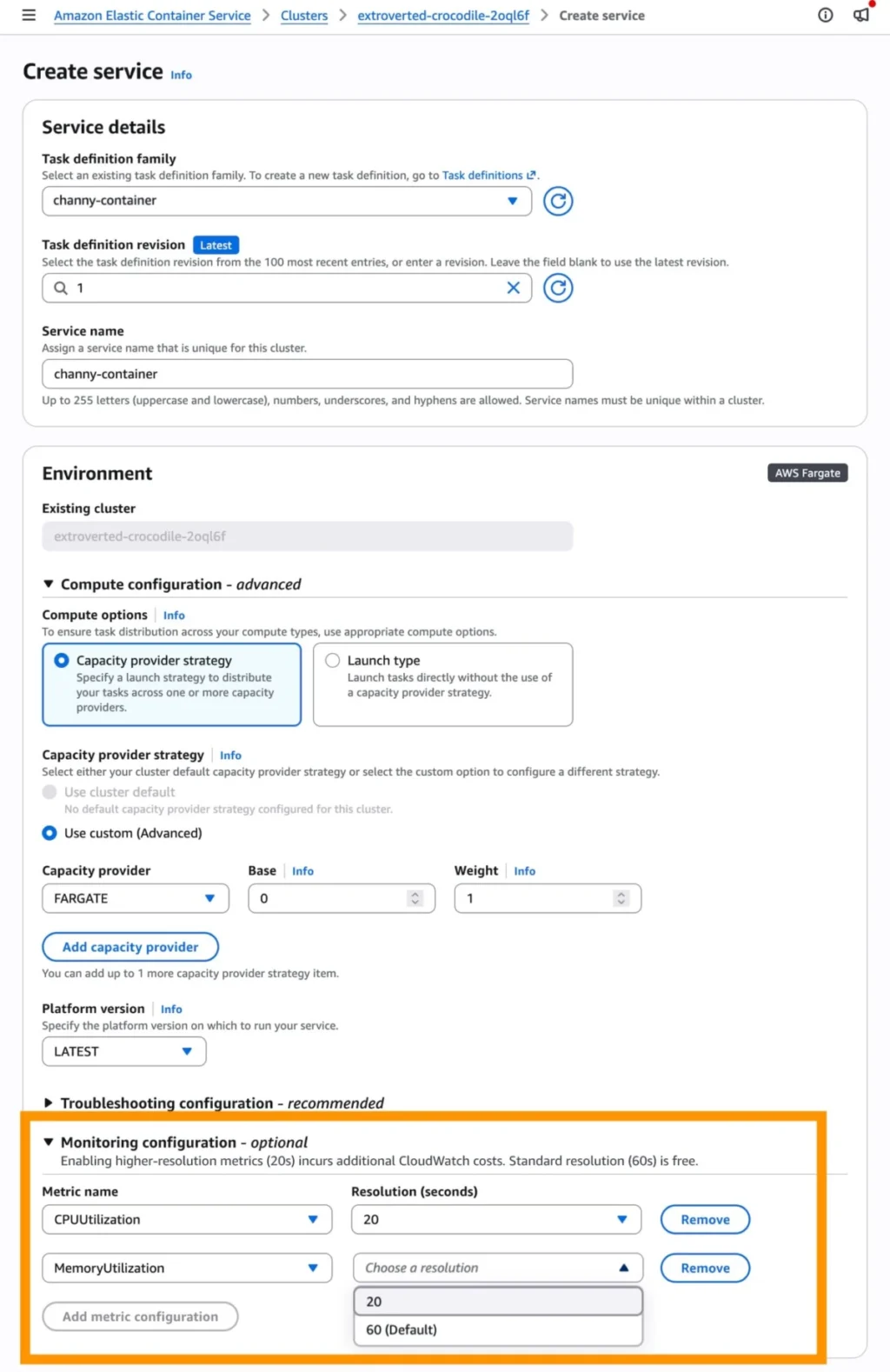
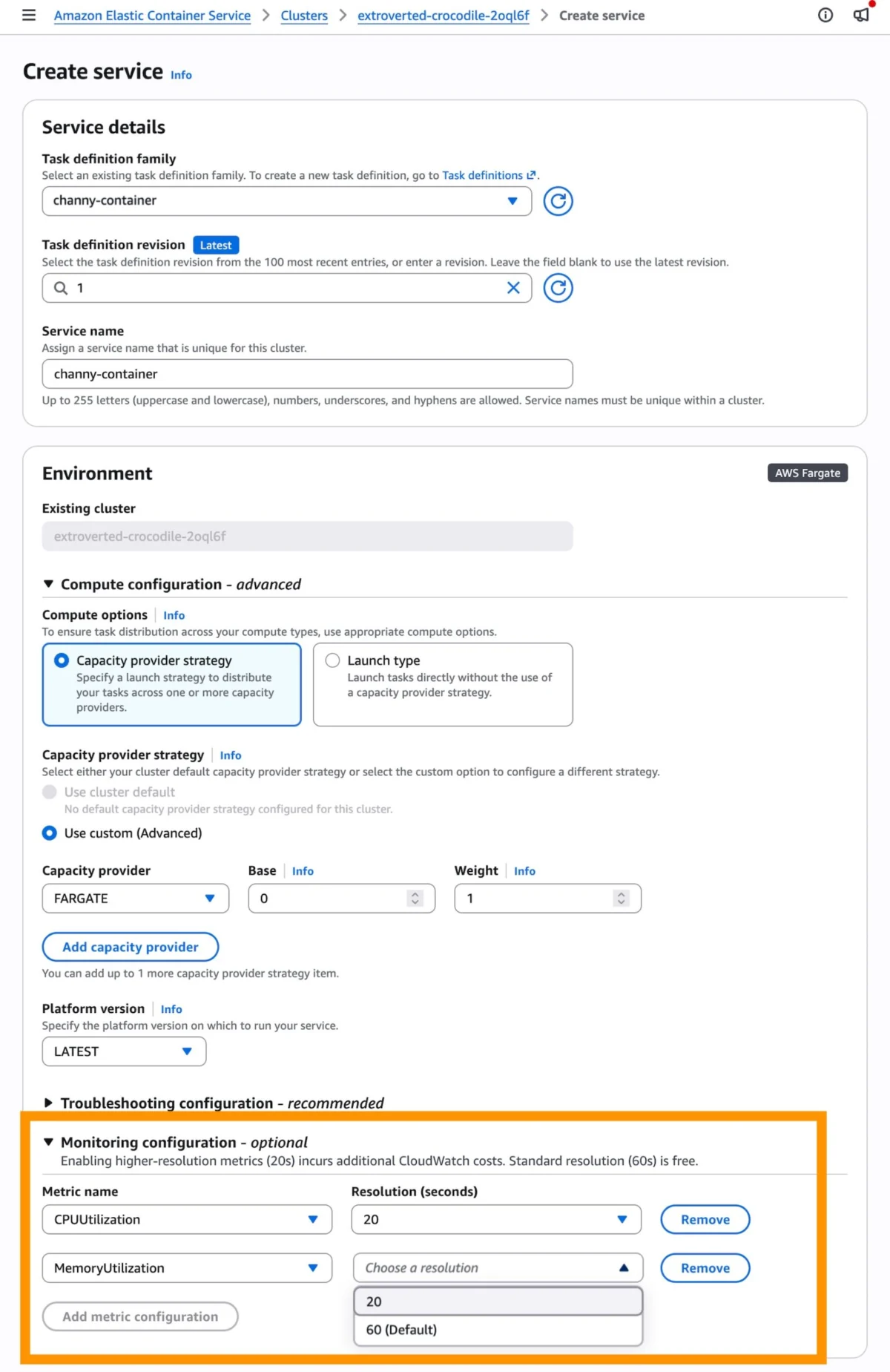
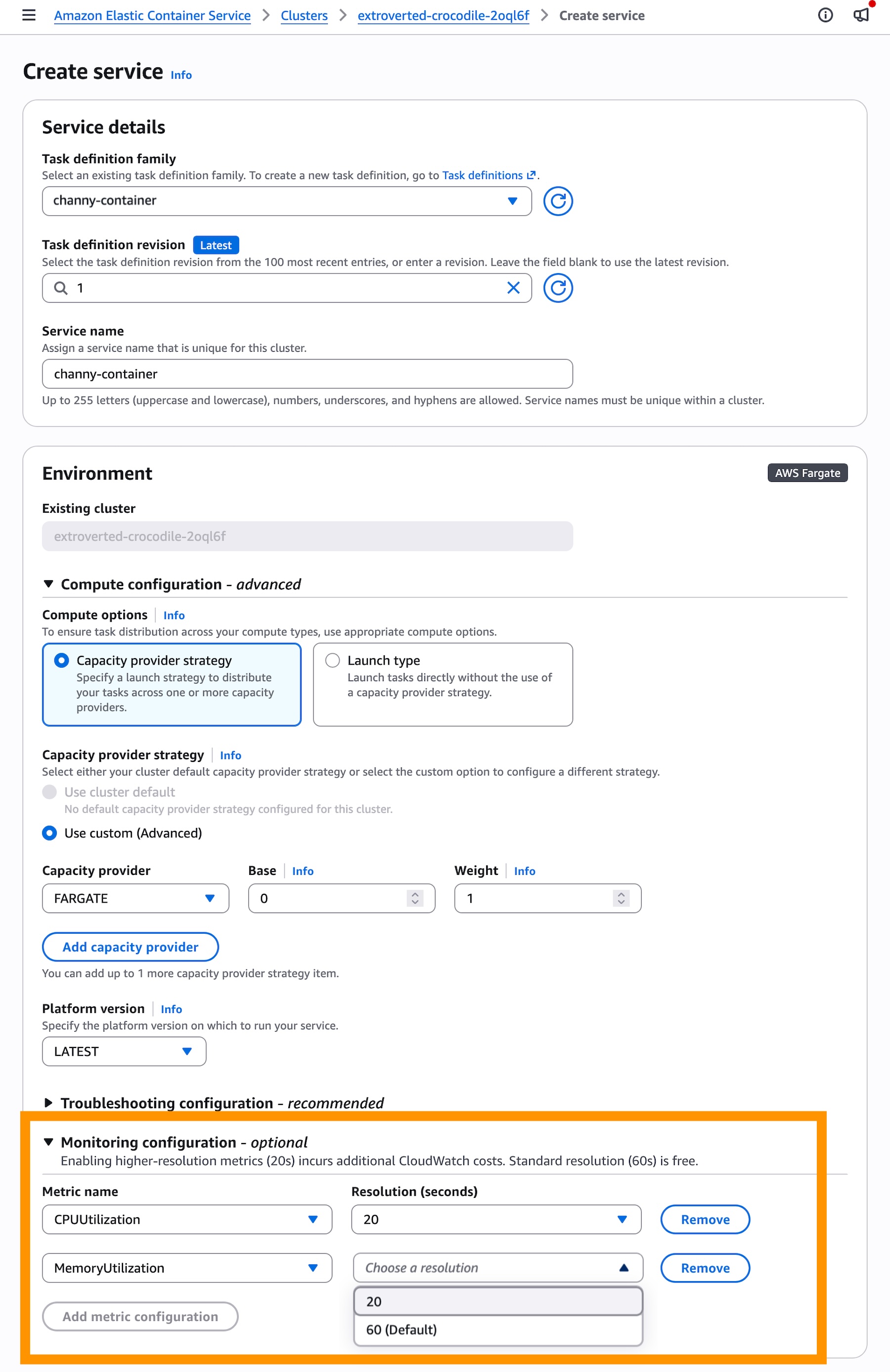
For developers managing services via the AWS Management Console, the process begins during the service creation or update phase. Under the "Monitoring configuration" section, users can now explicitly toggle the 20-second resolution metrics.
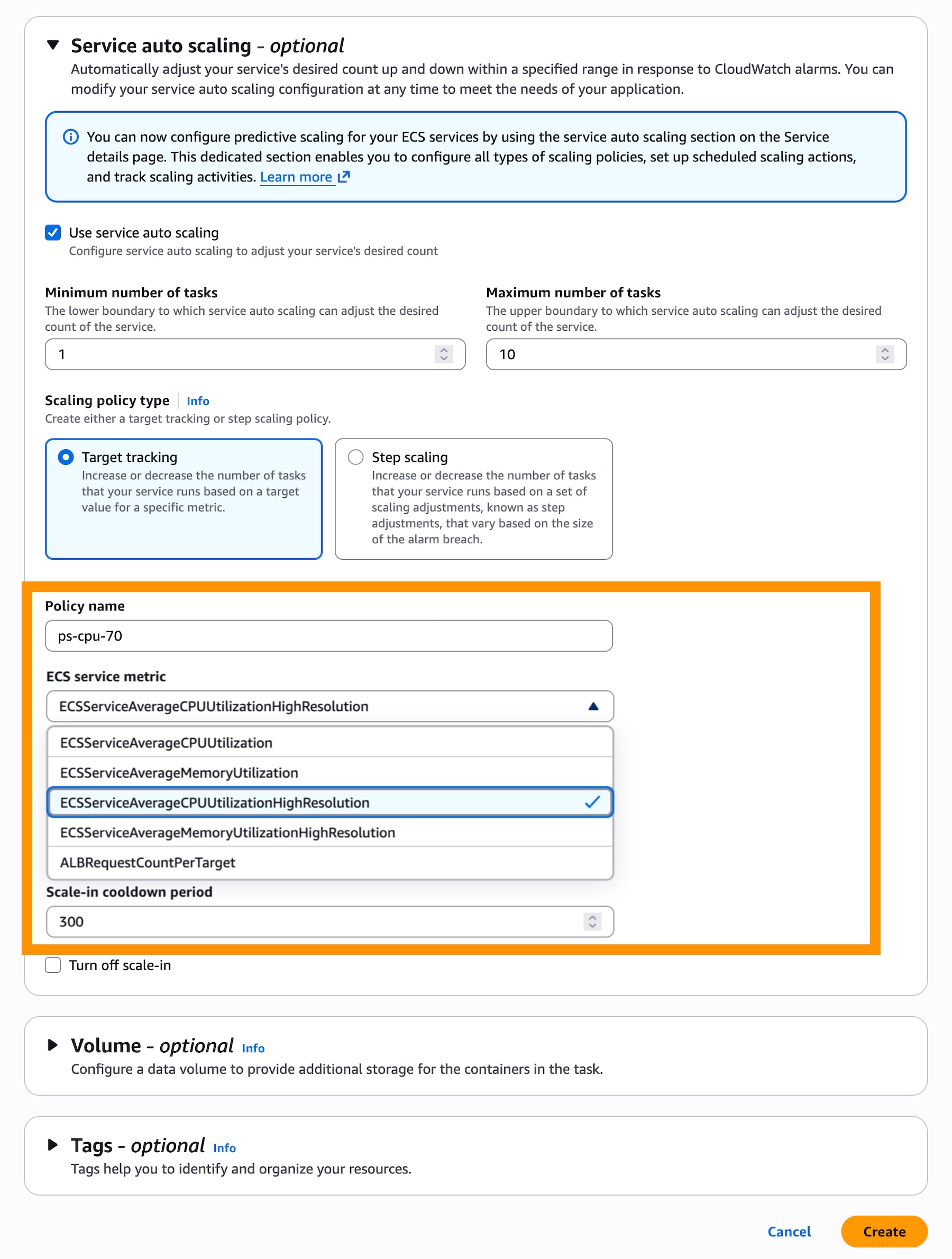
Once enabled, the configuration carries over into the "Service auto scaling" module. Here, users select "Target Tracking" as the scaling policy type. The update introduces new, specialized metrics—ECSServiceAverageCPUUtilizationHighResolution and ECSServiceAverageMemoryUtilizationHighResolution—which allow the ECS agent to monitor performance at a granular level.
Cross-Platform Compatibility
A critical feature of this update is its universal applicability across the ECS ecosystem. Whether an organization is running workloads on the serverless AWS Fargate compute engine, ECS Managed Instances, or traditional Amazon EC2 clusters, the high-resolution scaling works uniformly. This ensures that regardless of the underlying abstraction layer, the responsiveness of the container environment remains consistent and high-performing.

Implications for Modern Software Architecture
The shift to sub-minute scaling resolution has broad implications for how software architects design and maintain distributed systems.
1. Enhanced Cost-Efficiency Through Precision
Traditional auto-scaling often relies on "over-provisioning" as a safety net. Because scaling took several minutes, engineers frequently set conservative thresholds to ensure that if a spike occurred, the system would have a buffer before the new containers came online. With the ability to scale 3.5x faster, architects can now set tighter, more aggressive scaling thresholds, significantly reducing the amount of "idle" compute power that sits unused in a cluster.
2. Resilience During Unpredictable "Flash Crowds"
In the world of e-commerce, such as during Black Friday or viral marketing events, "flash crowds" can overwhelm infrastructure before traditional auto-scalers can catch up. By reducing the trigger time by over four minutes, businesses can mitigate the risk of downtime or 5xx errors during peak traffic, directly protecting the bottom line and maintaining user trust.
3. Operational Agility for DevOps Teams
For DevOps and Site Reliability Engineering (SRE) teams, this update removes the guesswork associated with "scaling lag." By moving the decision-making logic closer to real-time, the need for complex, custom-built "pre-warming" scripts or over-engineered predictive scaling models is reduced. The system now effectively manages the volatility of the cloud as a native function of the platform.
Official Perspective and Economic Considerations
Channy Yun, a principal developer advocate at AWS, emphasizes that while the feature is available immediately at no additional cost for the ECS service itself, users should be mindful of the economic dimension of high-resolution metrics.
Because high-resolution metrics require more frequent data transmission and storage within Amazon CloudWatch, they introduce a new pricing dimension. AWS encourages teams to perform a cost-benefit analysis: for services with highly predictable, low-volatility traffic, the standard 60-second resolution remains a cost-effective and perfectly valid choice. However, for services where rapid scaling is a competitive differentiator, the incremental cost of the high-resolution metrics is expected to be offset by the gains in efficiency and service reliability.
Looking Ahead: The Future of Autonomous Infrastructure
This announcement is a testament to the ongoing evolution of the cloud from a "managed" environment to an "autonomous" one. As machine learning algorithms become more integrated into the AWS ecosystem, the ability for these systems to make micro-adjustments in near real-time becomes a foundational capability.
AWS has invited users to participate in the feedback loop, encouraging engineers to share their experiences and use cases via the AWS re:Post for ECS community. This collaborative approach ensures that as AWS continues to refine its orchestration engines, the features delivered are directly aligned with the most pressing pain points of developers in the field.
Conclusion
The introduction of 20-second high-resolution auto scaling for Amazon ECS is more than just a speed upgrade; it is a fundamental maturation of cloud infrastructure. By closing the gap between demand detection and resource provisioning, AWS has provided its users with a powerful tool to build more resilient, efficient, and responsive applications. For any organization operating at scale, the decision to migrate to high-resolution metrics is no longer just a technical optimization—it is a strategic move to ensure their infrastructure can survive and thrive in the fast-paced, unpredictable environment of the modern internet.
As we move forward, the "time-to-scale" metric will likely become a key performance indicator (KPI) for SRE teams everywhere, with this update serving as the new gold standard for cloud agility.