Amazon S3 Tables Embraces Apache Iceberg V3: A New Era for Petabyte-Scale Cloud Analytics
SEATTLE — In a major milestone for enterprise cloud data architecture, Amazon Web Services (AWS) has announced full support for all data types and advanced capabilities outlined in the Apache Iceberg V3 specification across Amazon S3 Tables. Rolled out globally to all AWS regions where S3 Tables are available, this development marks a critical shift in how organizations handle semi-structured information, high-performance row-level mutations, and complex data governance at petabyte scale.
The announcement positions AWS at the vanguard of the open-format data lakehouse movement. By bridging the gap between rigid relational schemas and the chaotic velocity of unstructured and semi-structured event streams, the integration of Iceberg V3 into S3 Tables eliminates long-standing architectural bottlenecks. Enterprise data teams can now create native V3 tables or execute seamless, in-place upgrades of legacy V2 structures, unlocking high-performance features like deletion vectors, built-in row lineage, and novel data types such as variants, nanosecond-precision timestamps, and geospatial geometries.
Main Facts: What the Apache Iceberg V3 Integration Delivers
The adoption of the Apache Iceberg V3 specification within Amazon S3 Tables is not merely an incremental version bump; it is a fundamental re-engineering of how data lakes manage updates, deletes, and complex data structures.
At its core, the update introduces several transformative features designed to mitigate the operational drag traditionally associated with large-scale analytical tables:
- Compact Deletion Vectors: Under the older V2 specification, executing row-level deletions—such as regulatory compliance requests to scrub user data—generated thousands of small positional delete files. These files severely degraded query performance until an intensive background compaction process was run. V3 replaces positional delete files with a streamlined, compact binary format known as deletion vectors. A deletion of 50,000 records now writes a single, lightweight deletion vector file, drastically reducing I/O overhead and accelerating query speeds.
- Native Row Lineage: V3 automatically injects system columns—specifically
_row_idand_last_updated_sequence_number—into every record. Downstream Extract, Transform, Load (ETL) pipelines can leverage these fields to identify and ingest only newly modified rows via incremental reads, bypassing the resource-intensive requirement of scanning entire multi-billion-row tables. - The Variant Data Type: Historically, semi-structured formats like JSON payloads had to be ingested as raw strings, forcing compute engines to repeatedly parse the text at read-time, inflating CPU costs and query latency. The V3
variantdata type stores semi-structured data natively in a columnar format. During writes, the engine shreds the data into hidden columns and generates statistics that enable aggressive file pruning during execution, drastically lowering I/O. - Advanced Data Types: Beyond variants, V3 brings native support for nanosecond-precision timestamps, unknown types, and comprehensive geospatial formats (
geometryandgeography), eliminating cumbersome string or integer workarounds.
Chronology: The Evolution to S3 Tables and the V3 Standard
To understand the significance of this release, it is necessary to examine the timeline of how modern data lakes evolved from raw object storage into structured, ACID-compliant table formats.
- The Rise of Object Storage Lakes: For over a decade, Amazon S3 served as the foundational layer for data lakes, allowing organizations to store virtually infinite amounts of Parquet, ORC, and JSON files cost-effectively. However, these raw storage layers lacked the transactional guarantees (Atomicity, Consistency, Isolation, Durability) characteristic of traditional data warehouses.
- The Emergence of Apache Iceberg: Created to solve the limitations of earlier table formats, Apache Iceberg emerged as the dominant open standard for petabyte-scale analytics. It introduced time travel, schema evolution, and hidden partitioning while keeping data in open file formats on object storage.
- The Bottlenecks of Iceberg V2: As adoption scaled into tens of billions of rows, enterprises began hitting operational limits. While V2 introduced row-level mutations, the reliance on positional delete files created severe write amplification and read-time latency penalties, requiring heavy reliance on background compaction jobs.
- The Launch of Amazon S3 Tables: AWS introduced S3 Tables as a purpose-built storage layer optimized specifically for Apache Iceberg, offering fully managed automation for compaction, maintenance, replication, and Intelligent-Tiering.
- Today (Iceberg V3 Integration): AWS bridges the remaining architectural gaps by introducing comprehensive, native support for the Apache Iceberg V3 specification, providing immediate backward and forward compatibility for enterprises migrating their data estates.
Supporting Data and Practical Implementation
For data engineering teams managing complex workloads, the transition to Iceberg V3 translates directly into measurable efficiency gains. Consider a retail analytics operation tracking multi-channel clickstream events. Under previous architectures, handling diverse JSON payloads required rigid schema definitions or expensive runtime parsing functions.
Using the new V3 variant type in Amazon S3 Tables, engineers can instantiate a unified table structure without predefined schemas:
CREATE TABLE my_catalog.namespace.clickstream (
  event_id bigint,
  event_time timestamp,
  user_id string,
  payload variant
)
USING iceberg
TBLPROPERTIES ('format-version' = '3')
Data ingestion becomes frictionless, accommodating disparate event payloads within the same column:
INSERT INTO my_catalog.namespace.clickstream VALUES
  (1, current_timestamp(), 'user-42',
   PARSE_JSON('"action": "purchase", "amount": 99.99, "items": ["laptop_stand"]')),
  (2, current_timestamp(), 'user-17',
   PARSE_JSON('"action": "page_view", "url": "/products/webcam", "duration_ms": 4200'));
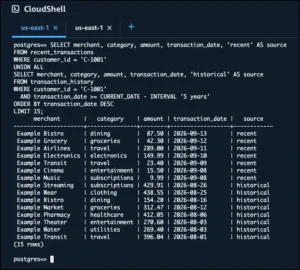
When querying this data using analytics engines such as Amazon EMR Spark, analysts can leverage native extraction functions without incurring the performance penalties associated with raw string parsing:
SELECT
  event_id,
  user_id,
  variant_get(payload, '$.action', 'string') AS action,
  variant_get(payload, '$.amount', 'double') AS amount
FROM my_catalog.namespace.clickstream
WHERE variant_get(payload, '$.action', 'string') = 'purchase'
  AND variant_get(payload, '$.amount', 'double') > 50.00
Furthermore, configuring merge-on-read operations via table properties enables deletion vectors, ensuring compliance deletes execute instantly without triggering immediate data file rewrites:
ALTER TABLE my_catalog.namespace.clickstream
SET TBLPROPERTIES (
  'write.delete.mode' = 'merge-on-read',
  'write.update.mode' = 'merge-on-read',
  'write.merge.mode' = 'merge-on-read'
);

DELETE FROM my_catalog.namespace.clickstream
WHERE user_id = 'user-42';
Existing V2 tables can be upgraded atomically with a single command—ALTER TABLE my_catalog.namespace.existing_table SET TBLPROPERTIES ('format-version' = '3')—allowing S3 Tables to gracefully transition old delete files during routine maintenance cycles.
Official Responses and Ecosystem Integration
AWS has positioned this release as part of a broader strategy to offer the most comprehensive native Apache Iceberg support across any major cloud provider. Daniel Abib, the architect behind the rollout, emphasized that the integration spans every layer of the modern data stack.
"Teams running analytics on Apache Iceberg V2 tables frequently encounter compounding technical debt as datasets scale," noted enterprise data specialists within the AWS ecosystem. "Workarounds like parsing JSON strings at runtime or managing thousands of positional delete files introduce unacceptable query latency and infrastructure costs. Iceberg V3 natively solves these challenges."
The integration extends seamlessly across the broader AWS analytics portfolio:
- Storage and Optimization: Amazon S3 Tables handles automatic compaction, maintenance, and storage tiering.
- Ingestion and Processing: Amazon EMR Spark fully supports V3 write and read operations.
- Governance and Cataloging: AWS Glue (including Glue 6.0) and S3 Tables both support the Iceberg REST Catalog (IRC) API, ensuring multi-engine interoperability.
- Query and BI Analytics: Amazon Redshift and downstream business intelligence tools can query V3 tables with zero friction.
Crucially, AWS has ensured that the V3 capability carries no additional licensing or software surcharge; standard S3 Tables storage and request pricing apply.
Implications for Enterprise Data Architecture
The introduction of Apache Iceberg V3 support in Amazon S3 Tables has profound implications for data engineering, compliance, and cloud financial management (FinOps):
- Drastic Reduction in Storage and Compute Waste: By eliminating the compute overhead of parsing semi-structured strings and bypassing the storage bloating caused by positional delete files, organizations will see immediate reductions in cloud compute expenditures during large-scale analytical scans.
- Streamlined Data Governance and GDPR Compliance: Regulatory requirements demanding the swift deletion or anonymization of user records can now be executed cleanly via deletion vectors. This avoids the prolonged performance degradation that previously plagued high-velocity transactional data lakes.
- Enhanced Real-Time Data Pipelines: The introduction of built-in row lineage (
_row_idand_last_updated_sequence_number) empowers data architects to build highly efficient, event-driven micro-batch pipelines. Rather than performing costly full-table scans to identify changes, downstream consumers can checkpoint sequence numbers and ingest precise deltas. - Open Standards Lock-In Prevention: Because Iceberg remains an open-source specification backed by the Apache Software Foundation, organizations retain complete architectural portability. They can ingest, process, and query V3 tables across AWS services and multi-cloud environments without proprietary data lock-in.
As enterprises continue to grapple with exponential data growth, the fusion of Amazon S3’s elastic storage infrastructure with the advanced performance primitives of Apache Iceberg V3 establishes a new benchmark for scalable, cost-effective, and governance-ready analytics.