Littelfuse Expands TX00 TMR Switch Portfolio with the TO-92 Packaged TX00AT314AMA Sensor
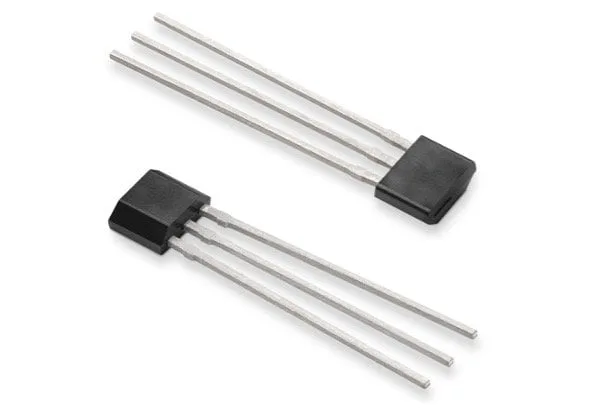
CHICAGO, Ill. — In an aggressive move to address the evolving demands of modern engineering design, industrial technology manufacturer Littelfuse, Inc. has announced the official launch of the TX00AT314AMA omnipolar TMR switch sensor. This newest addition to the company’s proprietary TX00 Tunnel Magnetoresistance (TMR) switch family brings the proven high-performance capabilities of the existing TX00 platform into a traditional TO-92 package complete with wire leads.
Designed to provide engineers with greater mechanical versatility, ultra-low power consumption, and enhanced supply chain resilience, the TX00AT314AMA represents a strategic pivot toward versatile sourcing options. By manufacturing the sensor in South Korea, Littelfuse is directly addressing global supply chain vulnerabilities, offering an alternative production origin that helps design teams mitigate geopolitical and tariff-related risks without compromising on technical fidelity.
Main Facts: Core Capabilities and Packaging Innovation
The introduction of the TX00AT314AMA bridges the gap between ultra-compact surface-mount technology and robust through-hole assembly requirements. At its core, the sensor integrates an advanced precision TMR sensing element alongside comprehensive CMOS signal processing circuitry on a single silicon substrate.
Key Technical Specifications at a Glance:
- Package Type: TO-92 with wire leads, supporting through-hole PCB mounting and straightforward prototyping.
- Sensing Technology: Tunnel Magnetoresistance (TMR) combined with CMOS signal processing.
- Sensitivity: High sensitivity (14 Gauss operating threshold).
- Power Consumption: Ultra-low typical supply current of 1.5 µA.
- Switching Frequency: Capable of high-speed detection up to 1 kHz.
- Detection Type: Omnipolar (responds equally to both North and South magnetic poles).
- Magnetic Axis: X-axis (in-plane) sensing, detecting magnetic fields parallel to the sensor surface.
- Country of Origin: South Korea.
- Packaging Format: Supplied in convenient ammunition-style packaging for automated or manual handling.
By packaging these characteristics into a TO-92 form factor, Littelfuse ensures that designers who prefer through-hole mounting—often utilized in industrial controls, white goods, and heavy-duty prototyping—do not have to sacrifice the superior performance metrics typically reserved for surface-mount devices like the SOT-23-3-packaged TX00AS314TRA.
Chronology and Strategic Evolution of the TX00 Platform
To understand the significance of the TX00AT314AMA release, it is essential to examine the strategic rollout of the TX00 platform by Littelfuse.
- The Foundation: Littelfuse initially established its footprint in advanced magnetic sensing by developing robust, high-efficiency switches aimed at battery-powered and energy-constrained applications. The introduction of the TX00 family marked a major leap forward, leveraging TMR technology to drastically reduce power draws compared to legacy Hall-effect or anisotropic magnetoresistance (AMR) solutions.
- The SOT-23-3 Standard: The platform gained widespread industry adoption largely through the success of surface-mount components like the TX00AS314TRA. While highly effective for space-constrained consumer electronics and dense printed circuit boards, the SOT-23-3 format presented limitations for applications requiring through-hole durability, manual assembly, or educational and rapid-prototyping environments.
- Supply Chain Realities (2023–2024): As global electronics manufacturing faced increasing pressures related to trade policies, geographic concentration risks, and tariff fluctuations, industrial buyers increasingly sought diversified manufacturing hubs outside of traditional single-source regions.
- The Launch of TX00AT314AMA: Responding directly to these pressures, Littelfuse engineered the TX00AT314AMA. By shifting production to South Korea and adopting the classic TO-92 package, the company has effectively solved two major engineering pain points simultaneously: mechanical integration flexibility and geographic supply chain redundancy.
Supporting Data and Technological Superiority
The engineering marvel of the TX00AT314AMA lies in how it harmonizes advanced physics with semiconductor manufacturing. To fully appreciate its utility, industry professionals must evaluate how TMR technology stacks up against older sensing methodologies, as well as the internal architectural mechanics that keep the device stable in noisy environments.
TMR vs. Hall-Effect Sensors
For decades, Hall-effect sensors have been the default choice for magnetic detection. However, they suffer from a fundamental drawback: high power consumption. Hall-effect sensors typically require significant electrical currents to generate usable output signals, making them poorly suited for always-on, battery-operated devices.
Tunnel Magnetoresistance (TMR) technology fundamentally alters this equation. TMR sensors exhibit a much larger resistance change in response to magnetic fields. This inherent sensitivity translates directly into two major advantages:
- Drastically Lower Power Consumption: Operating at a mere 1.5 µA, the TX00AT314AMA consumes a fraction of the power required by standard Hall-effect switches. This dramatically extends battery lifespans in portable, wearable, and remote IoT devices.
- Smaller Magnet Requirements: Because TMR elements are exceptionally sensitive, engineers can use smaller, lower-cost magnets to trigger the sensor, reducing the overall bill of materials (BOM) and physical footprint of the host assembly.
Internal Circuitry and Noise Immunity
Precision magnetic sensing is frequently compromised by electrical noise generated by nearby motors, power supplies, or radio frequency interference. Littelfuse addressed this vulnerability by integrating a sophisticated CMOS signal processing chain directly into the sensor package.
The architecture includes:
- An Integrated Voltage Generator: Ensures stable internal biasing regardless of minor fluctuations in the supply voltage.
- A Low-Noise Amplifier: Boosts the weak signals generated by the TMR element without introducing background electrical interference.
- A Precision Comparator and Schmitt Trigger: Works in tandem with built-in hysteresis to establish sharp, well-defined operate and release thresholds. This prevents false triggering, chatter, and signal bounce, guaranteeing clean, digital square-wave outputs even in electrically harsh industrial environments.
Omnipolar Operation and Axis Design
The sensor features omnipolar detection, meaning it is blind to magnetic polarity. Whether a North pole or a South pole approaches the sensor face, the device responds identically. This simplifies mechanical alignment during manufacturing, eliminating the risk of assembly errors caused by reversed magnets. Furthermore, the X-axis (in-plane) magnetic sensor configuration detects fields running parallel to the sensor surface, granting mechanical designers greater freedom in how they position the sensor relative to moving parts in doors, switches, and rotary encoders.
Official Responses and Industry Perspective
Industry leaders at Littelfuse emphasize that the TX00AT314AMA was developed with a deep understanding of the practical hurdles modern hardware engineers face on a daily basis.
"The TX00AT314AMA gives design engineers a new way to access the proven performance of the TX00 platform," stated Bavly Obaid, Global Product Manager, Sensors at Littelfuse.
Obaid elaborated on the dual benefits of the new release, highlighting both the mechanical and geopolitical advantages built into the product’s design:
"The TO-92 package supports through-hole assembly and prototyping-friendly integration, while the South Korean origin gives our customers a concrete option for supply chain diversification—two things that matter greatly in today’s design environment."
By listening closely to customer feedback regarding manufacturing bottlenecks and assembly preferences, Littelfuse has positioned the TX00AT314AMA not merely as a component upgrade, but as a strategic enabler for resilient product development.
Implications for Design Engineers and Global Supply Chains
The launch of the TX00AT314AMA carries far-reaching implications across multiple sectors, ranging from consumer goods to heavy industrial automation.
1. Simplified Prototyping and Manufacturing
Surface-mount devices (SMDs) require reflow soldering equipment, specialized stencils, and precise pick-and-place machinery. For early-stage prototyping, educational labs, or low-volume specialized industrial equipment, SMD components can slow down the development cycle. The introduction of the wire-leaded TO-92 package allows engineers to breadboard, hand-solder, and rapidly iterate designs on standard through-hole printed circuit boards.
2. Supply Chain De-risking and Tariff Mitigation
In an era marked by shifting trade agreements and import tariffs, the country of origin has become a critical specification for corporate procurement teams. Manufacturing the TX00AT314AMA in South Korea provides electronics manufacturers with a reliable, high-quality sourcing path that bypasses single-country dependencies. Because the electrical and magnetic performance of the TX00AT314AMA matches the SOT-23-3-packaged TX00AS314TRA exactly, engineering teams can switch package types or diversify their supplier base without needing to redesign their circuit boards or re-run lengthy qualification tests.
3. Expanded Application Horizons
With its combination of ultra-low power consumption, high sensitivity, and rugged packaging, the TX00AT314AMA is ideally suited for a wide array of demanding applications:
- Smart Utility Meters: Where multi-year battery life and tamper detection are mandatory.
- Proximity and Position Switches: In industrial automation, robotics, and white goods (e.g., detecting whether a washing machine door or refrigerator lid is securely closed).
- Portable and Handheld Electronics: Where space, battery preservation, and reliability dictate commercial success.
- Security and Access Control Systems: Utilizing magnetic door/window contacts that require stable operation over millions of switching cycles.
Frequently Asked Questions (FAQ)
What makes TMR technology superior to traditional Hall-effect sensors?
TMR sensors offer significantly higher sensitivity and consume a fraction of the electrical power required by Hall-effect devices. This superior sensitivity allows engineers to use smaller, more cost-effective magnets while dramatically extending battery life in always-on applications.
What are the operational advantages of omnipolar detection?
Omnipolar sensors are capable of detecting both North and South magnetic poles. This eliminates the need for strict polarity alignment during manufacturing, drastically simplifying mechanical design and reducing the potential for assembly errors.
How does the TX00AT314AMA compare to the existing TX00AS314TRA?
Electrically and magnetically, the two sensors are identical. Both offer a 1.5 µA supply current, 14 Gauss sensitivity, and a 1 kHz switching speed. The primary differences are the packaging—the TX00AT314AMA utilizes a TO-92 package with wire leads rather than an SOT-23-3 surface-mount package—and the country of origin, which is South Korea for the new model.
Why is the South Korean country of origin significant for procurement teams?
For companies navigating complex international trade policies, tariffs, or corporate risk-mitigation mandates, the South Korean manufacturing origin provides a qualified, non-Chinese sourcing alternative. It allows organizations to diversify their supply chains without requiring a product redesign.
How does the sensor maintain signal integrity in electrically noisy environments?
The TX00AT314AMA integrates an on-board Schmitt trigger and precise internal hysteresis. This architecture prevents false triggering, eliminates contact bounce, and guarantees clean, stable digital output signals even when operating near heavy electrical machinery or noisy power supplies.
Availability and Ordering Information
The TX00AT314AMA omnipolar TMR switch sensor is available immediately in its standard TO-92 package configuration, supplied in efficient ammunition-style packaging designed for automated or manual insertion processes.
Engineering teams and procurement specialists looking to evaluate the component can request product samples through any authorized Littelfuse global distributor. Detailed datasheets, application notes, and technical support resources can be accessed directly by visiting the official Littelfuse website at Littelfuse.com.