SEATTLE — Amazon Web Services (AWS) has announced a major expansion of its artificial intelligence portfolio with the public preview of Amazon BedrockManagedAgentspowered by OpenAI. Built on a customized version of OpenAI’s Agents API, this new offering is engineered to be fully AWS-native, bridging the gap between cutting-edge foundational model technology and enterprise-grade cloud infrastructure.
The announcement, detailed by AWS Principal Developer Advocate Channy Yun, marks a significant step forward in multi-model enterprise architectures. By enabling organizations to leverage OpenAI-driven agent capabilities while maintaining the security, compliance, and governance frameworks native to AWS, the tech giant is positioning Amazon Bedrock as a flexible, unified control plane for generative AI development.
Alongside this flagship release, AWS continues to refine its cloud ecosystem, updating its frontier model options, outlining upcoming product lifecycle changes, and preparing developers for a busy season of community events leading up to AWS re:Invent.
Main Facts
The headline release of the week is the public preview of Amazon Bedrock Managed Agents powered by OpenAI. This service allows developers and enterprises to construct, deploy, and scale intelligent agents optimized specifically for OpenAI models, but running entirely within the AWS ecosystem.
Key aspects of the new service include:
AWS-Native Integration: The agents seamlessly integrate with existing AWS resources, leveraging established enterprise identity management, granular permissions, and robust governance controls already deployed within an organization’s AWS environment.
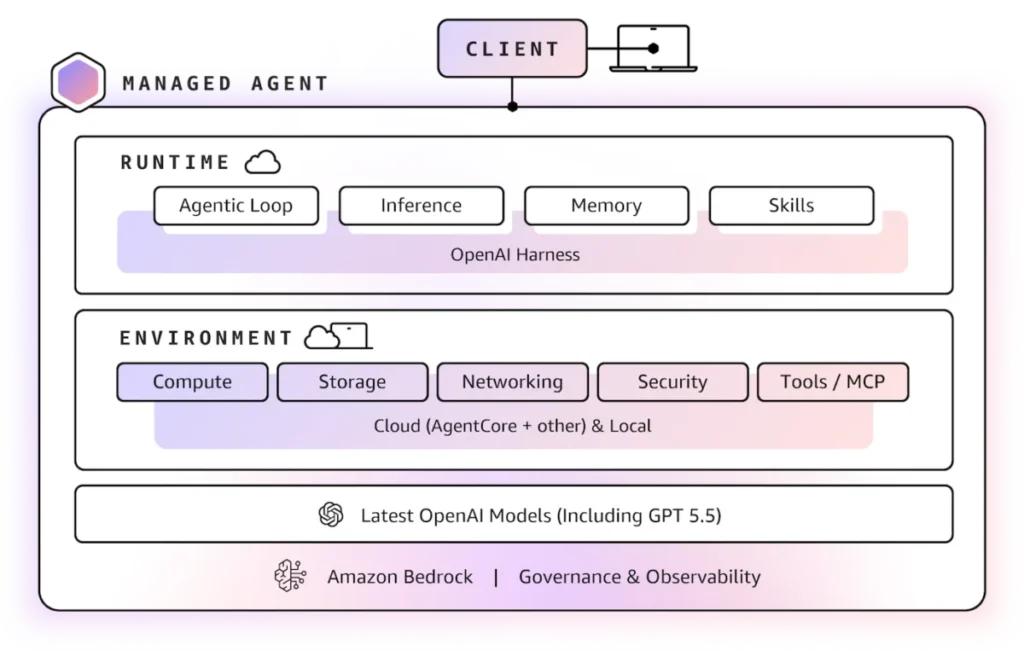
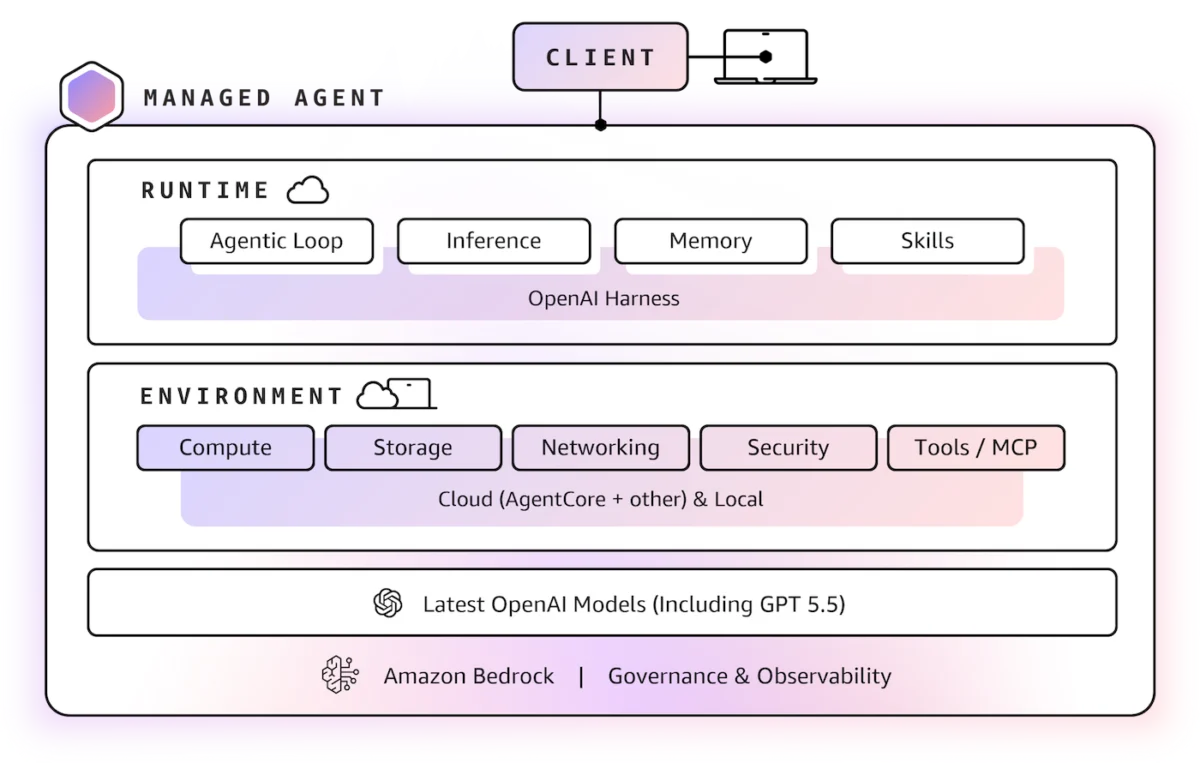
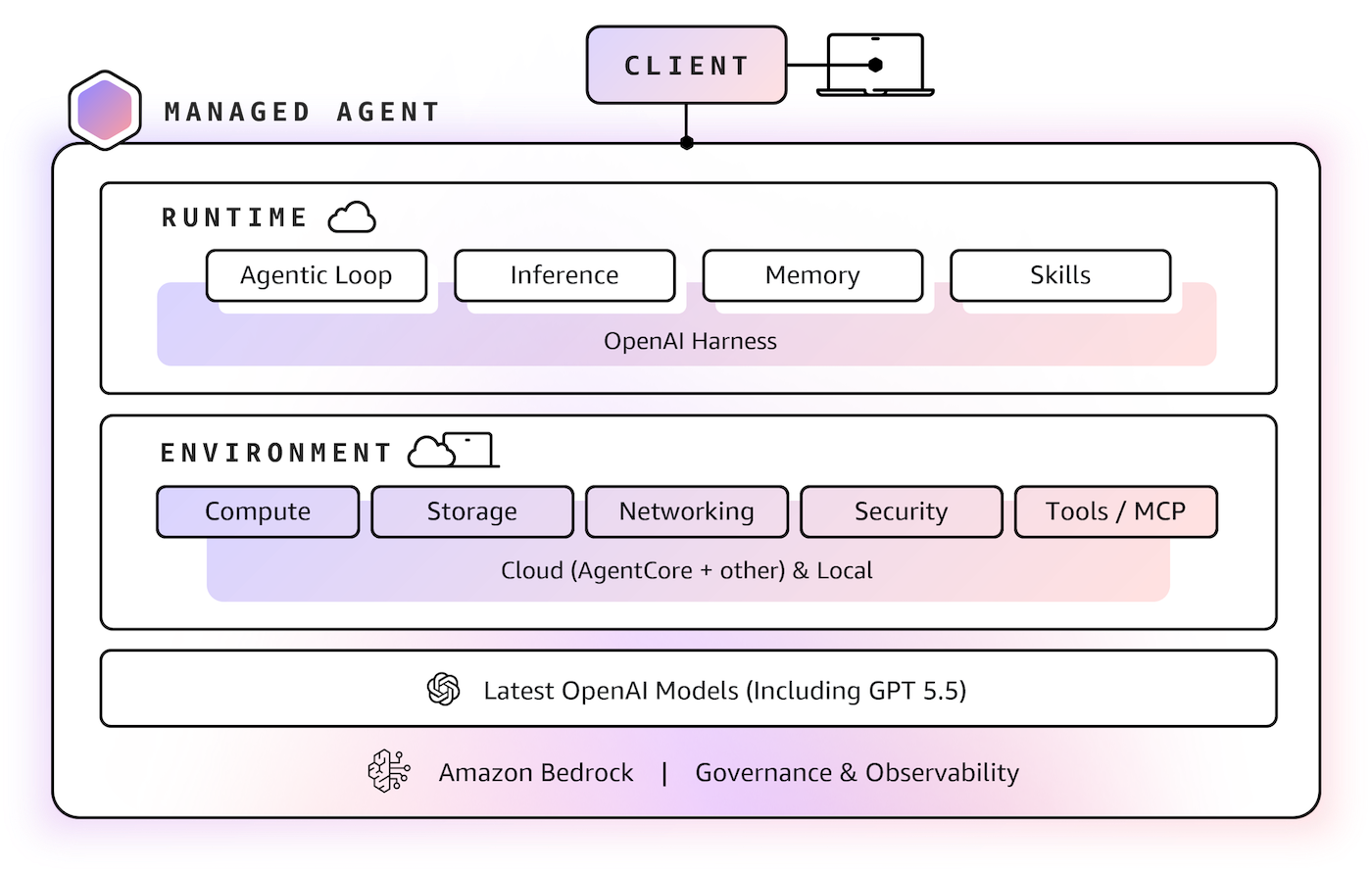
Flexible Execution Environments: Developers are not locked into a single hosting paradigm. They can choose between:
Self-Hosted Compute: Allowing development teams to utilize existing local development machines, customized containers, or standalone compute environments.
Amazon Bedrock AgentCore Runtime: A fully managed runtime session environment that offers configurable storage directly inside the user’s AWS account, minimizing operational overhead.
Expanded Model Choice: AWS continues to build out Amazon Bedrock as a multi-model hub, steadily integrating new frontier models to give developers the freedom to select the precise neural architecture best suited for their specific workloads.
Lifecycle Management and Governance: Concurrent with these new AI launches, AWS has updated its Product Lifecycle Changes roadmap, establishing clear timelines for services moving into Maintenance, Sunset, and End-of-Support phases to help enterprise architects plan their infrastructure migrations proactively.
Chronology
The rollout of these updates follows a deliberate sequence of engineering milestones and administrative notices issued by AWS through late September and early October 2026:
Late September 2026 (September 29): AWS published critical updates to its Product Lifecycle Changes documentation. This update outlined the scheduled deprecation pathways for specific legacy features and services, setting a strict clock for enterprise migrations ahead of the October deadlines.
Early October 2026: AWS officially launched the public preview of Amazon Bedrock Managed Agents powered by OpenAI. Accompanying architecture blueprints and documentation went live on the official Amazon Bedrock user guide portals.
Ongoing (October 2026): Technical teams and developers began testing self-hosted compute options versus the Amazon Bedrock AgentCore Runtime. Simultaneously, community outreach intensified regarding upcoming developer conferences, builder meetups, and the rapidly approaching annual AWS re:Invent conference.
Supporting Data & Technical Architecture
To understand the scope of Amazon Bedrock Managed Agents powered by OpenAI, enterprise architects must examine how the service interacts with existing cloud infrastructure.
Execution Environment Flexibility
The architectural framework provides two distinct operational paths:
Development & Local Testing (Self-Hosted): Ideal for rapid prototyping. Developers can hook into the Bedrock-managed control plane while executing agent loops locally or within custom CI/CD pipelines and containerized clusters (such as Amazon ECS or Amazon EKS).
Production-Grade Scaling (Bedrock AgentCore Runtime): Designed for enterprise workloads requiring high availability, automated session management, and persistent storage managed natively via AWS accounts. This abstracts away the underlying infrastructure management while keeping data residency and access policies strictly bounded by AWS Identity and Access Management (IAM).
Service Lifecycle Metrics & Deadlines
As part of its ongoing operational hygiene, AWS enforced vital lifecycle shifts on September 29, 2026:
Entering Maintenance: Selected older services and feature sets have been transitioned to maintenance status, meaning they will become completely inaccessible to new customers starting October 29, 2026.
Entering Sunset: Multiple auxiliary utilities and older integration endpoints have entered the sunset phase, signaling their impending retirement.
End of Support: Certain legacy components reached formal End of Support status on September 29, 2026. AWS has directed affected clients to consult specific service documentation and engage AWS Support for direct migration paths to modern alternatives.
Official Responses and Industry Context
The introduction of OpenAI-powered managed agents within Amazon Bedrock underscores a broader industry shift toward interoperability and ecosystem flexibility. Rather than forcing enterprises into a single proprietary model stack, major cloud providers are increasingly recognizing that customers demand the freedom to mix and match foundation models with their preferred cloud infrastructure.
In his weekly developer briefing, Channy Yun emphasized the practical benefits of the new release:
"You can now build agents optimized for OpenAI models that run entirely inside AWS with the identities, permissions, and governance controls you already use."
This approach directly addresses the primary barrier to enterprise AI adoption: security and compliance. By wrapping external agent architectures in native AWS identity wrappers, organizations can experiment with and deploy advanced reasoning agents without compromising internal data governance policies or breaching regulatory frameworks.
Furthermore, AWS is actively encouraging user feedback during the public preview phase. Developers are urged to review the updated architectural diagrams available on the Amazon Bedrock documentation portal and test the runtime configurations within non-production sandboxes.
Implications for Enterprise Architecture and Developers
The convergence of OpenAI’s agent capabilities with AWS’s robust enterprise foundation carries profound implications for software engineering, cloud cost management, and AI strategy:
1. Streamlined AI Agent Development
Historically, building autonomous agents required stitching together disparate API endpoints, managing custom vector databases, and writing bespoke authorization layers to secure agentic workflows. By utilizing Bedrock Managed Agents, developers inherit native AWS security logging, audit trails (via AWS CloudTrail), and encryption standards. This drastically reduces the time-to-market for complex, multi-step generative AI applications.
2. Elimination of Model Lock-In
The expansion of Amazon Bedrock reinforces a multi-model strategy. Enterprises no longer need to migrate their entire cloud infrastructure just to take advantage of a specific model provider’s architectural breakthroughs. Teams can run OpenAI-based agents alongside Anthropic Claude, Meta Llama, and Amazon Titan models within the same unified AWS control plane.
3. Rigorous Infrastructure Maintenance
On the operational side, the latest AWS Product Lifecycle updates serve as a reminder of the fast-paced nature of cloud evolution. Enterprise IT departments must establish proactive monitoring for service deprecations. Failing to track lifecycle changes—such as those moving to maintenance or sunset status ahead of October 29—risks unexpected operational disruptions.
4. Community and Continuous Learning
As AWS ramps up toward major industry events like AWS re:Invent and regional AWS Community Days, developers have ample opportunity to engage with peers and AWS engineers. Participation in the AWS Builder Center and upcoming startup events will be crucial for teams looking to master these new agentic architectures and stay ahead of best practices.
Looking Ahead
As the public preview of Amazon Bedrock Managed Agents gathers momentum, developers are encouraged to experiment with both self-hosted and Bedrock AgentCore Runtime environments. With weekly updates continuing to drop across the AWS ecosystem, engineering leaders should maintain close vigilance over the What’s New with AWS portal and official AWS blogs.
For tailored migration support regarding services entering maintenance or sunset phases, organizations should consult the updated AWS Product Lifecycle documentation or reach out directly to their AWS account teams and support channels. Stay tuned for next week’s roundup as the countdown to re:Invent accelerates.