The Decentralized Frontier: MeshLive and the Evolution of Peer-to-Peer Mobile Communication
In an era defined by hyper-connectivity, our reliance on centralized telecommunications infrastructure has become a double-edged sword. While global networks allow us to bridge vast distances instantly, they also create single points of failure, centralized surveillance vulnerabilities, and dependencies on corporate service providers. For the hacker community and privacy advocates, the dream of a truly decentralized communication network—one that bypasses towers, fiber-optic backbones, and internet service providers—has long been a "holy grail."
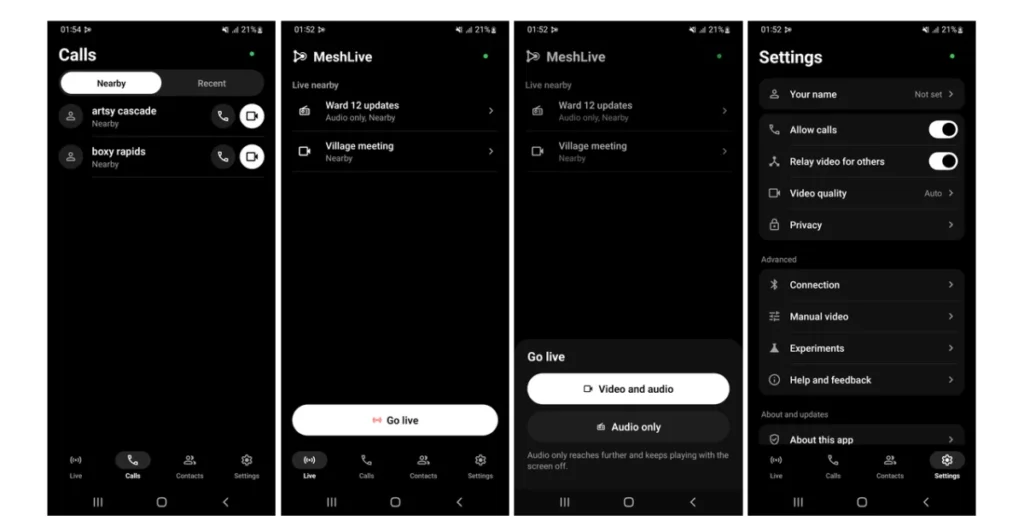
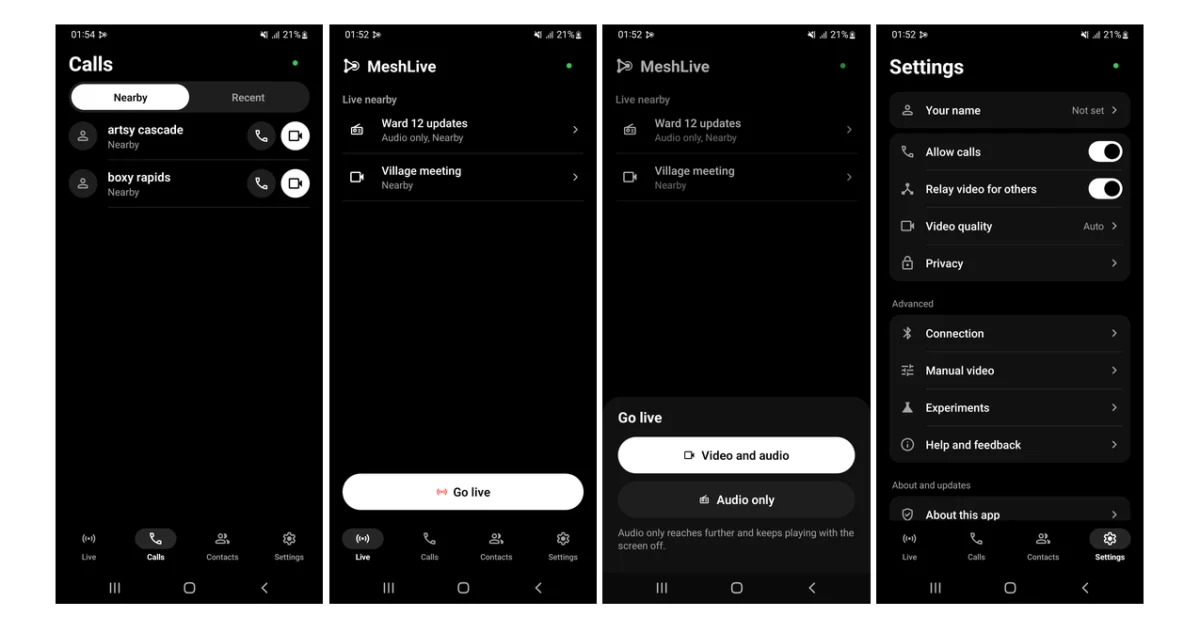
Enter MeshLive, an ambitious Android-based project developed by [Gautam] that seeks to turn every smartphone into a node in a decentralized mesh network. By leveraging existing Bluetooth hardware, MeshLive facilitates voice and video communication without the need for cellular data or Wi-Fi, challenging the traditional paradigms of how we conceptualize telephony.
Main Facts: How MeshLive Operates
At its core, MeshLive is a software-defined approach to mesh networking. Unlike previous iterations of decentralized communication, which often required users to carry specialized LoRa (Long Range) transceivers or dedicated radio hardware, MeshLive is purely application-based. It resides on the Android operating system, utilizing the Bluetooth chipsets already present in nearly every modern smartphone.
Key Technical Pillars:
- Decentralization: The network functions through a "store-and-forward" mechanism. Each participating phone acts as both an endpoint and a router, passing data packets along to other devices within range until the message reaches its intended recipient.
- Privacy and Encryption: Security is baked into the foundation. All voice and video calls are protected by end-to-end encryption (E2EE), ensuring that even as data hops across intermediate devices, it remains inaccessible to unauthorized parties.
- Anonymity: MeshLive employs a rotating identity system. Users are assigned a unique identifier for known contacts, but for those outside their trusted circle, the app generates a random, ephemeral identifier that refreshes every 15 minutes. This prevents passive tracking and "sniffing" by external observers.
- Multimodal Communication: While text-based mesh networks have existed for years, MeshLive pushes the boundaries by supporting voice calling and experimental two-way video calling, as well as one-way video broadcasting.
Chronology: The Quest for Off-Grid Connectivity
The history of decentralized communication is marked by a transition from specialized hardware to the democratization of consumer electronics.
The Era of Dedicated Hardware (2015–2020)
Early attempts at mesh networking were almost exclusively the domain of amateur radio enthusiasts and preppers. Projects like GoTenna and early LoRa-based messengers proved that long-range, low-bandwidth communication was possible. However, these solutions were hindered by the "hardware barrier"—users had to purchase proprietary devices and carry them alongside their phones.
The Rise of Software-Defined Meshing (2021–2024)
As mobile processing power increased, developers began looking at the hardware already in our pockets. Experiments with Wi-Fi Direct and Bluetooth Low Energy (BLE) began to surface. During this period, the community explored QMesh and other LoRa-based voice implementations. While successful, these projects struggled with the limitations of LoRa’s bandwidth, which is excellent for text but notoriously difficult to scale for high-fidelity audio or video.
The MeshLive Breakthrough (2025–Present)
MeshLive represents the current peak of this evolution. By optimizing the Bluetooth stack for Android, the project moved beyond the "text-only" limitations of its predecessors. Recent testing has demonstrated the viability of streaming audio and, more recently, broadcasting video packets. The project’s focus has now shifted from basic proof-of-concept to stability, particularly in refining the experimental two-way video calling feature.
Supporting Data: Technical Constraints and Performance
While MeshLive is a technological milestone, it is not without significant physical constraints. Understanding these is essential for evaluating the project’s practical utility.
The Achilles Heel: Range and Throughput
The primary limitation of MeshLive is the physical range of the Bluetooth radio. Standard Bluetooth Class 2 devices typically have a range of approximately 10 to 20 meters in real-world conditions.
- Node Density: Because the network relies on relaying, the density of users is critical. In a crowded city center, a MeshLive network could theoretically cover a large area via a "daisy chain" of devices. In a rural or sparsely populated area, the network essentially collapses.
- Bandwidth Bottlenecks: Bluetooth is not designed for high-bandwidth multimedia streaming. Video calling, in particular, requires aggressive compression algorithms. While one-way video broadcasting is currently stable, two-way, low-latency video remains an experimental work-in-progress, as packet loss during relay can lead to jitter and dropped frames.
Comparison to Existing Protocols
| Feature | MeshLive (Bluetooth) | LoRa Mesh | Satellite/Cellular |
|---|---|---|---|
| Hardware | Existing Phone | Dedicated Dongle | Infrastructure-reliant |
| Range | Short (20m/hop) | Long (km/hop) | Global |
| Data Rate | Medium (Voice/Video) | Very Low (Text) | High |
| Cost | Free (App) | High (Hardware) | Recurring Subscription |
Official Perspectives and Community Reception
The developer, [Gautam], maintains that MeshLive is not intended to replace the global telephone network, but rather to provide a "safety valve" for situations where infrastructure is either non-existent, compromised, or censored.
The Security Community’s Take
Privacy advocates have lauded the project for its commitment to open-source principles and E2EE. However, some security researchers have raised concerns regarding metadata leakage. Even with rotating identifiers, the physical proximity of devices within a mesh network can lead to "traffic analysis" attacks, where an observer mapping the physical location of devices could potentially correlate users based on signal patterns.
The "Hacker" Ethos
Within the Hackaday community and similar forums, the response has been overwhelmingly positive. The project aligns with the core philosophy of "owning your own stack." By removing the need for a central server, MeshLive effectively puts the power of telecommunications back into the hands of the end-user, regardless of political or corporate intervention.
Implications: The Future of Off-Grid Telephony
The emergence of projects like MeshLive signals a shift in how we perceive telecommunications. If voice and video can be successfully routed through a mesh of consumer hardware, the implications for disaster relief, civil unrest, and personal privacy are profound.
Disaster Resilience
In the event of a major earthquake, hurricane, or infrastructure collapse, centralized cellular towers are often the first to go offline. A decentralized mesh network could serve as a vital lifeline, allowing survivors to coordinate and share information without relying on damaged or overwhelmed public infrastructure.
The Challenge of Scale
Can MeshLive scale? The challenge is not just technical, but social. For a mesh network to be effective, it requires a "critical mass" of users. If only one in a thousand people uses the app, the network will be too fragmented to relay information effectively. The future of MeshLive will depend on its ability to integrate with other protocols or gain widespread adoption to ensure that the density of nodes is sufficient to maintain a persistent network.
Regulatory and Ethical Considerations
As decentralized communications become more capable, they will inevitably attract the attention of regulators. In jurisdictions where encryption is restricted or telecommunications are strictly licensed, software that enables peer-to-peer, untraceable communication may face legal challenges. Furthermore, the potential for misuse—such as the coordination of illicit activities through untraceable channels—remains a subject of ongoing debate.
Conclusion: A Work in Progress
MeshLive is currently a fascinating, experimental bridge between the rigid, centralized networks of today and a potential future where connectivity is fluid, local, and user-governed. While it lacks the range of satellite communications and the reliability of fiber-optic grids, it provides a crucial alternative. For those who prioritize autonomy and resilience, MeshLive is not just an app—it is a proof-of-concept for a future where communication belongs to the people, not the providers.
As the development continues, the integration of long-range extensions (such as external directional antennas) and the refinement of video compression algorithms will be the primary metrics of success. Whether it becomes a standard tool for the average user or remains a specialized niche for the security-conscious, MeshLive stands as a testament to the ingenuity of the decentralized movement. The future of communication may very well be sitting in our pockets, waiting for the right software to set it free.