A Pocket-Sized Revolution: Celebrating 25 Years of the Apple iPod
It is a milestone that marks the true beginning of the modern digital lifestyle. Twenty-five years ago, Steve Jobs walked onto a stage, reached into his pocket, and changed the trajectory of the music industry forever. To mark the silver anniversary of the original iPod, Apple has unveiled a charming, interactive digital tribute hidden within the depths of the Apple Music website—a nostalgic Easter egg that allows users to once again experience the tactile magic of the iconic "click wheel."
The Digital Relic: An Easter Egg for the Ages
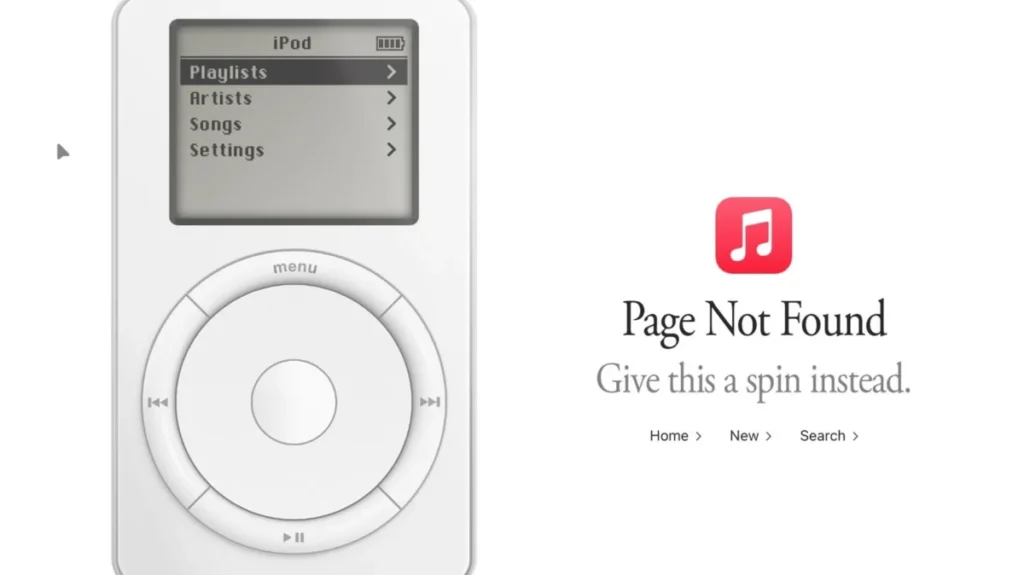
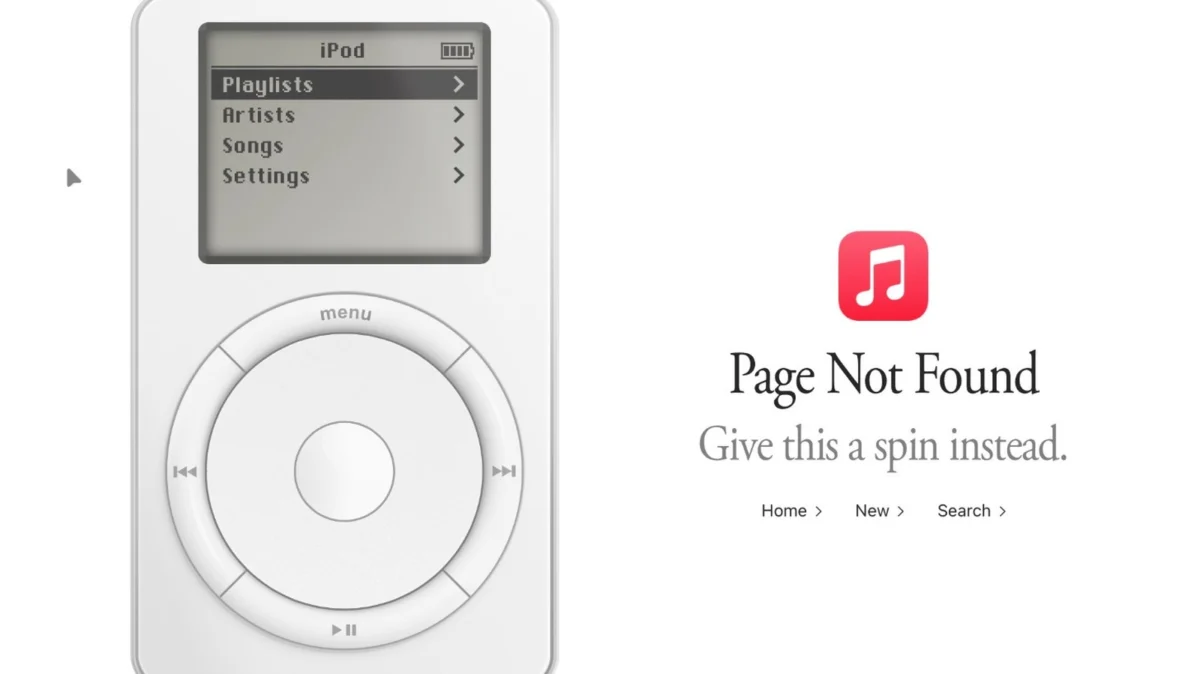
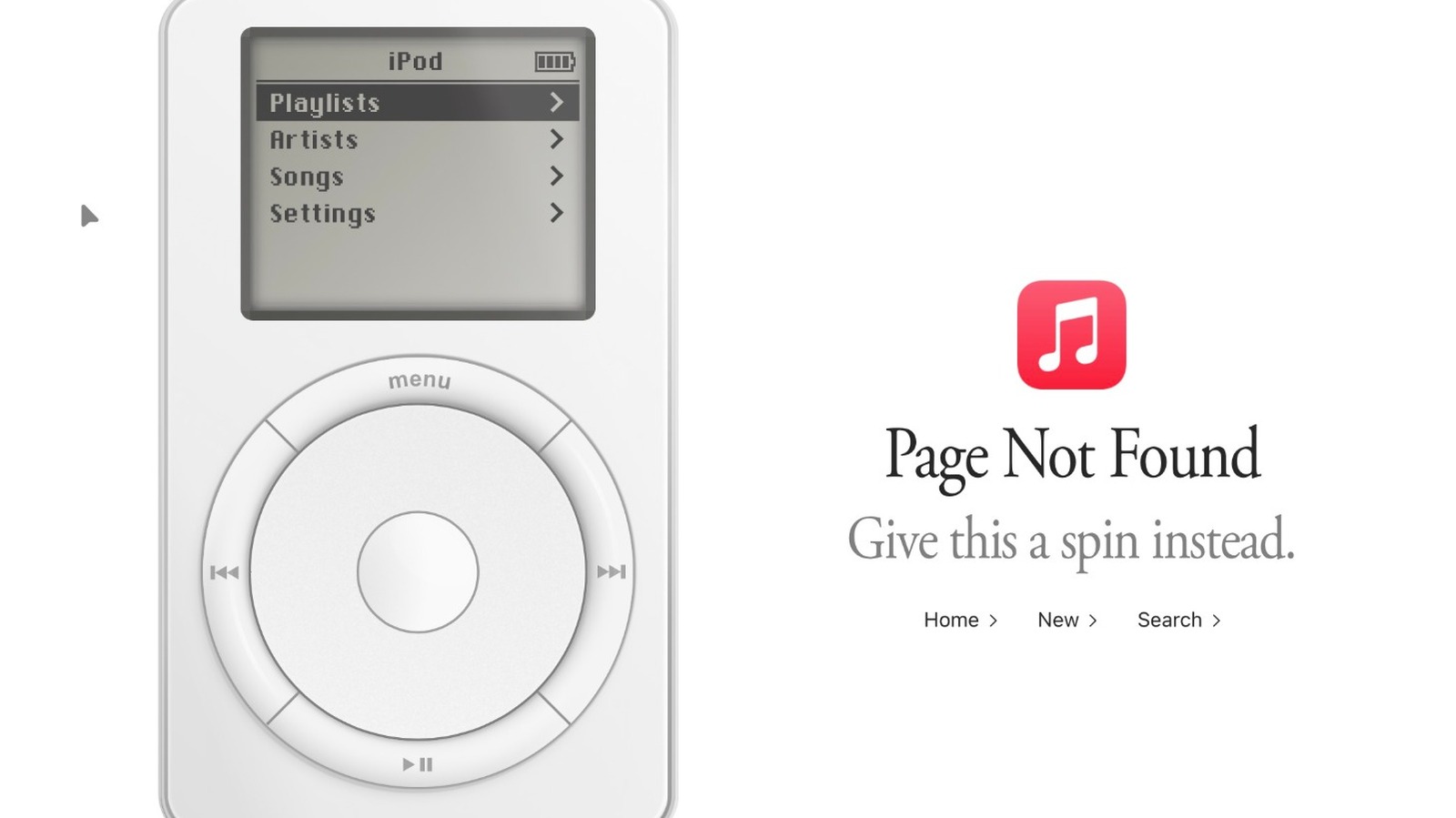
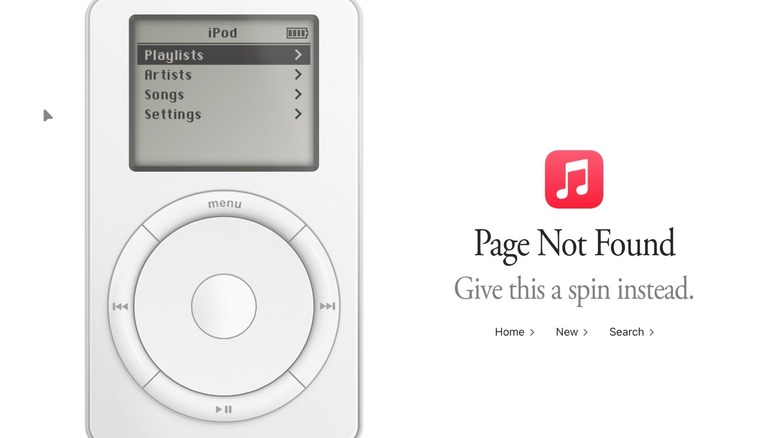
For those looking to take a walk down memory lane, Apple has hidden a fully functional, interactive simulation of the first-generation iPod behind the 404 error page of its Apple Music website. By navigating to a non-existent URL on the service, users are greeted not with a standard error message, but with a virtual interface that looks and behaves exactly like the hardware that defined an entire generation.
Below the standard "page not found" notification, the site prompts visitors to "give this a spin instead." What follows is a faithful recreation of the classic monochrome interface, complete with the legendary click wheel. Users can navigate a library of 1,029 songs, flipping through folders labeled Playlists, Artists, Songs, and Settings.
The attention to detail is remarkable. The tracklist is curated with a heavy dose of early 2000s culture, featuring anthems from artists like blink-182, Eminem, and Baha Men. While the tracks are limited to 90-second previews, the experience captures the specific, low-fidelity charm of the early digital music era. Most impressive is the inclusion of Brick, the Breakout-style game that served as a secret hidden feature on the original hardware. By navigating to the "About" screen and holding the center button, users can unlock the game—a nod to the hidden features that made the original device feel like a personal discovery for every owner.
Chronology: How the iPod Conquered the World
To understand why this digital tribute is so significant, one must look back at the timeline of Apple’s ascendancy.
2001: The Debut
On October 23, 2001, Apple introduced the iPod. At the time, the market was flooded with clunky, difficult-to-use MP3 players that lacked the storage capacity to be truly useful. Apple’s pitch was simple yet revolutionary: "1,000 songs in your pocket." With a 5GB hard drive and a mechanical scroll wheel, it set a new standard for industrial design.
2003: The iTunes Store
The iPod was a success, but it was the launch of the iTunes Store in 2003 that truly turned the tide. By allowing users to purchase songs legally and easily for 99 cents each, Apple effectively legalized the digital music market, transitioning consumers away from piracy and toward a centralized, digital ecosystem.
2004–2007: The Golden Era
This period saw the introduction of the iPod Mini, the Nano, and the Shuffle. Each iteration refined the user experience. The Mini introduced colors, the Nano made the device thinner than a pencil, and the Shuffle removed the screen entirely to encourage a more spontaneous listening experience. This era culminated in 2007 with the release of the iPod Touch—a device that essentially served as an iPhone without the cellular connectivity.
2014–2022: The Sunset
As the iPhone began to subsume the functionality of the iPod, the product line slowly faded. The iPod Classic was discontinued in 2014, and in May 2022, Apple officially announced that the final remaining model—the iPod Touch—would be discontinued, effectively closing the book on the hardware that had built the modern Apple empire.
Supporting Data: A Statistical Snapshot of a Cultural Phenomenon
The iPod was not merely a consumer product; it was a financial juggernaut. At its peak, the iPod accounted for nearly 40% of Apple’s total revenue.
- Market Share: By 2005, the iPod commanded over 70% of the digital music player market in the United States.
- Unit Sales: Over its lifespan, Apple sold roughly 450 million iPod units across all variations.
- The Library: The "1,000 songs" promise was massive at the time, given that most competing devices held only a dozen or so tracks on expensive, fragile flash memory. The use of the 1.8-inch Toshiba hard drive was a masterstroke of engineering that provided the density needed for a true music library.
- The Click Wheel: The invention of the touch-sensitive scroll wheel remains one of the most cited examples of superior UX design in history. It allowed users to scroll through thousands of songs in seconds with a single finger, a feat that felt like magic in 2001.
Official Responses and Industry Context
Apple has remained characteristically tight-lipped regarding this Easter egg. There has been no official press release or marketing campaign to accompany its discovery; it exists purely as an "if you know, you know" nod from the software engineers to the core fanbase.
Industry analysts suggest that this low-key tribute is emblematic of Apple’s current philosophy toward its legacy. While the company is now focused on spatial computing (the Vision Pro) and high-end services (Apple Music, Apple TV+), it understands the power of brand heritage. By placing this interactive site on its official domain, Apple is acknowledging that the iPod was the "Trojan Horse" that allowed it to move from a niche computer company to the world’s most valuable consumer brand.
Tech historians have praised the move. "It’s a masterclass in emotional marketing," says Dr. Elena Vance, a historian of digital media. "By replicating the bugginess and the specific limitations of the original hardware—like the 90-second song limit—they aren’t just showing a picture of an iPod. They are allowing a new generation to feel the specific friction and joy of the early 2000s tech experience."
The Implications: Why the iPod Still Matters
Why does a 25-year-old gadget still resonate with us in an era of infinite streaming and AI-generated playlists? The answer lies in "curated ownership."
In 2001, the iPod was a physical manifestation of your personality. You curated your library, you synced it with your computer, and you carried your taste in your pocket. Today, music is an ephemeral utility—a cloud-based stream that feels less like a collection and more like a subscription. The iPod reminds us of a time when we were more intentional about our media.
Furthermore, the iPod proved that hardware and software, when designed in total tandem, could create a level of intimacy that had never been seen before. The "Click Wheel" was more than just a user interface; it was a tactile bridge between the human hand and digital information. Its success paved the way for the multi-touch interface of the iPhone, which was essentially an iPod that could also make calls and browse the web.
A Closing Note on Nostalgia
As we look at the virtual, browser-based iPod in 2024, it serves as a sobering reminder of how fast technology moves. In another 25 years, the iPhone itself may be a relic, replaced by wearables or brain-computer interfaces. Yet, the iPod remains the gold standard for how to introduce a new technology to the public: with simplicity, with style, and with a promise that the future is just one click away.
Whether you were a fan of the original 5GB model or you waited for the video-capable versions, the Apple Music Easter egg is a welcome reminder of the day the music industry changed forever. So, head over to the site, spin that virtual wheel, and remember the days when 1,000 songs felt like all the music in the world.