AWS and Open-Source Communities Converge in Seoul: A Deep Dive into OpenSearch 3.7, Valkey 9.1, and the Future of Enterprise Data
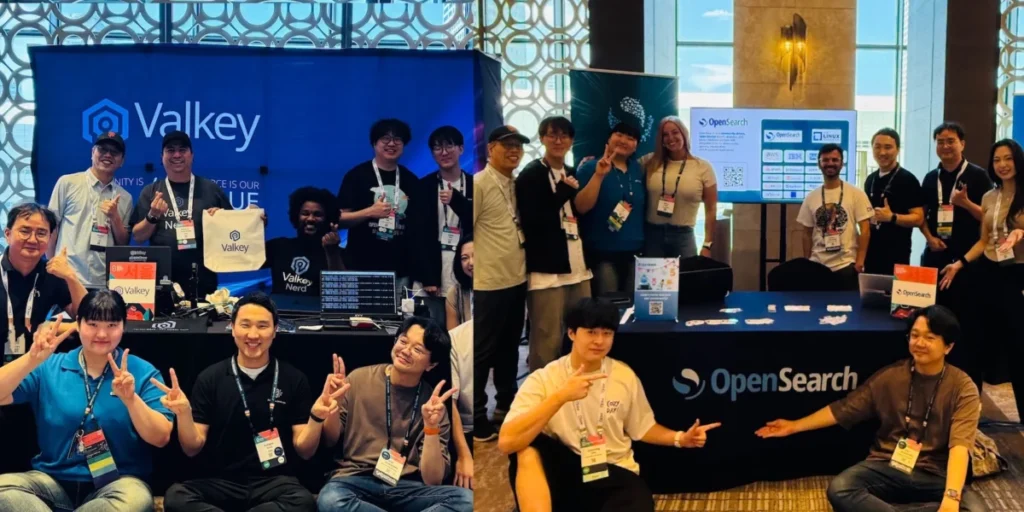
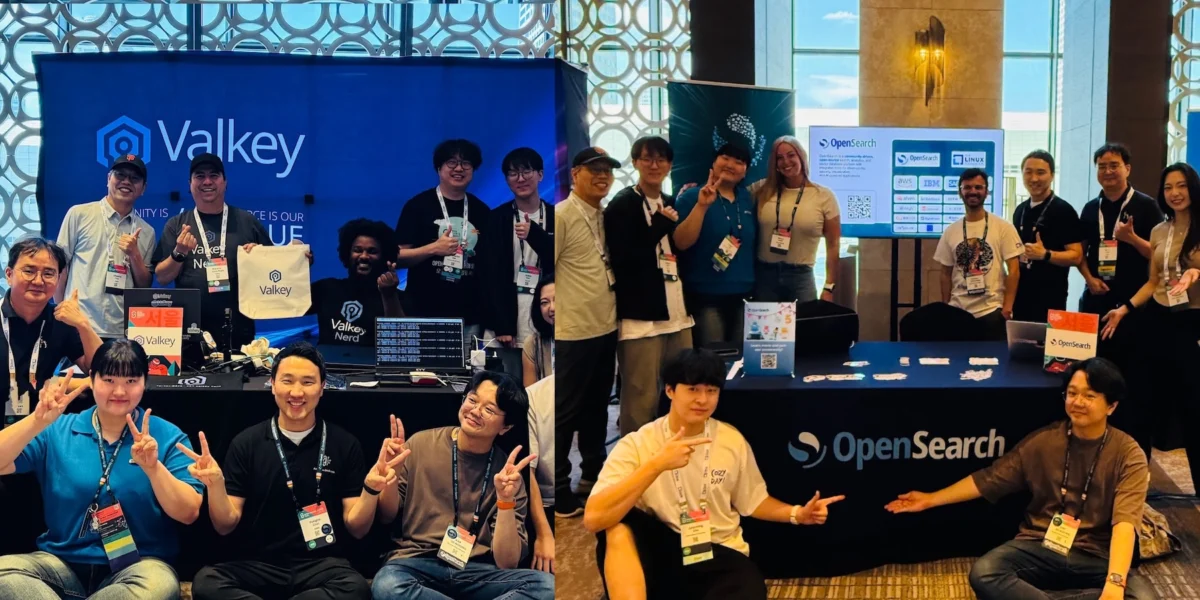
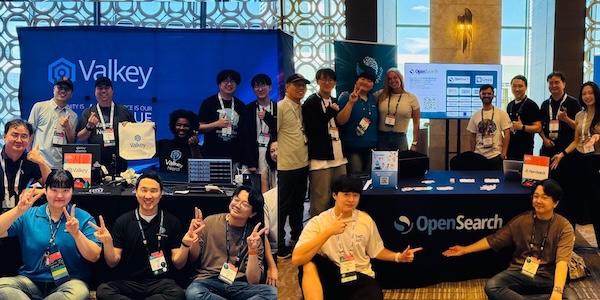
SEOUL, South Korea — Over four action-packed days last week, the vibrant heart of South Korea’s technology sector played host to a powerful convergence of global open-source innovation and cloud computing leadership. AWS contributors joined thousands of developers, architects, and open-source evangelists at the highly anticipated Open Source Summit Korea 2026 and the co-located MCP DevSummit Seoul 2026.
Against the backdrop of Seoul’s bustling tech scene, Linux Foundation project leaders, community advocates, and enterprise users gathered to collaborate, exchange technical knowledge, and chart the future of foundational open-source tools. Among the focal points of the conference were two pillars of modern cloud architecture: OpenSearch and Valkey.
The event underscored a broader industry shift: hyperscale cloud providers are no longer just consumers of open-source software; they are active, deeply integrated co-creators, fostering local developer communities while aggressively pushing the performance boundaries of enterprise-grade tooling.
Main Facts: The Seoul Convergence
The joint presence of AWS, the OpenSearch Project, and the Valkey community at Open Source Summit Korea 2026 highlighted the immense traction these technologies have gained across Asia-Pacific markets.
- Community-Led Engagement: Korean OpenSearch community leaders played an instrumental role during the four-day event, volunteering at exhibition booths and hosting a dedicated OpenSearch Project Seoul user group meetup. These interactive sessions provided local developers with a direct channel to provide feedback, ask architectural questions, and network with global maintainers.
- OpenSearch 3.7 Integration: Following its June 2026 release, OpenSearch 3.7 has captured enterprise attention through massive observability upgrades and up to 5.5x faster vector retrieval speeds. AWS quickly integrated these breakthroughs into Amazon OpenSearch Service as of July 30, 2026.
- Valkey 9.1 Optimization: Valkey—the high-performance, open-source key/value datastore that emerged as a community-driven alternative for caching and message queuing—rolled out version 9.1 in May 2026. Delivering up to a 17% boost in throughput and a 20% reduction in memory usage for small strings, Valkey 9.1 became generally available on Amazon ElastiCache on June 23, 2026.
The collaborative atmosphere in Seoul demonstrated that regional developer ecosystems are vital drivers of global software lifecycles, translating local enterprise requirements into upstream code contributions.
Chronology: A Roadmap of Recent Milestones
To understand the weight of the announcements made in Seoul, it is helpful to trace the rapid, methodical cadence of updates shipped by the OpenSearch and Valkey communities, alongside their rapid deployment across AWS managed infrastructure over the first half of 2026.
The Spring and Summer of Open-Source Innovation
- May 19, 2026 – Valkey 9.1 Launch: The Valkey project officially released version 9.1. This major update introduced a completely redesigned I/O threading model explicitly engineered to alleviate bottlenecks in multi-tenant and high-throughput environments. Furthermore, it optimized string memory allocations for data payloads under 128 bytes.
- June 9, 2026 – OpenSearch 3.7 Launch: The OpenSearch project rolled out version 3.7. The headline feature was a revolutionary leap in vector search capabilities, alongside unified observability tooling designed to let engineering teams correlate logs, metrics, and traces through a singular pane of glass while tracking Service Level Objectives (SLOs) seamlessly.
- June 23, 2026 – AWS Integration for Valkey 9.1: Moving at cloud-speed, AWS announced general availability for Valkey 9.1 within Amazon ElastiCache. Node-based clusters instantly gained access to the new I/O threading architecture, enhanced security primitives, and tighter multi-tenant isolation controls.
- July 30, 2026 – Amazon OpenSearch Service Adopts 3.7: AWS rolled out OpenSearch 3.7 support across Amazon OpenSearch Service. Users gained immediate access to Query Insights, sharper search relevance tuning, and the blazing-fast vector performance required for modern generative AI and retrieval-augmented generation (RAG) pipelines.
- Mid-August 2026 – Open Source Summit Korea 2026: Culminating months of technical releases, AWS contributors and Korean open-source leaders met face-to-face in Seoul to evaluate real-world deployments of these exact versions, gathering field telemetry and user stories.
Supporting Data: Performance Metrics and Benchmarks
The engineering narratives driving OpenSearch 3.7 and Valkey 9.1 are rooted in hard performance data. As data lakes swell and real-time application requirements become more demanding, marginal efficiency gains compound into massive infrastructure cost savings.
OpenSearch 3.7 Performance Indicators
- 5.5x Vector Retrieval Speedup: Powered by algorithmic and architectural refinements in how k-NN (k-nearest neighbors) vector search indexes are queried and traversed, OpenSearch 3.7 slashes latency for similarity searches. This is a critical metric for enterprises deploying semantic search, recommendation engines, and GenAI applications.
- Unified Telemetry Metrics: By fusing logs, metrics, and traces into an intuitive observability framework, organizations report reduced Mean Time to Resolution (MTTR) during system outages. Teams can now configure automated alerting rules mapped directly against custom SLOs without jumping between disparate tooling interfaces.
Valkey 9.1 Performance Indicators
- 17% Throughput Improvement: Through a redesigned I/O threading model, Valkey 9.1 extracts vastly more transactions per second from identical underlying hardware configurations. This allows high-traffic web properties and financial services applications to handle traffic spikes with fewer provisioned nodes.
- 20% Memory Reduction for Sub-128-Byte Strings: Caching architectures frequently process millions of tiny keys, metadata objects, and session tokens. By trimming the memory overhead for strings under 128 bytes by up to 20%, Valkey 9.1 dramatically improves RAM utilization, directly lowering the total cost of ownership (TCO) for memory-bound workloads in production environments.
Official Responses and Industry Perspectives
The convergence of global tech giants and regional communities in Seoul highlights a maturing philosophy of stewardship within the open-source landscape.
Industry analysts tracking the Linux Foundation projects note that the collaborative energy witnessed at Open Source Summit Korea 2026 is a direct byproduct of open governance models. When developers retain agency over project roadmaps, corporate contributions act as an accelerator rather than a monopolizing force.
"The willingness of global cloud maintainers to meet local developer communities on their home turf changes the entire dynamic of software adoption," remarked an open-source community organizer during the Seoul meetup. "When Korean engineers can sit down with AWS contributors and project maintainers to discuss real-world constraints—such as complex multi-tenant isolation or high-concurrency caching—the feedback loop tightens from months to days."
AWS representatives at the summit echoed this sentiment, emphasizing that customer obsession in the cloud era requires active participation in the open-source trenches. By upstreaming patches, optimizing runtime performance, and supporting regional user groups, AWS aims to ensure that projects like OpenSearch and Valkey remain resilient, vendor-neutral, and lightning-fast for workloads of any scale.
Implications: What This Means for Enterprise Architecture
For chief technology officers, software architects, and DevOps engineers, the developments stemming from Open Source Summit Korea 2026 and the recent software releases carry profound implications for infrastructure strategy.

1. Accelerated AI and Vector Search Adoption
With OpenSearch 3.7 delivering a 5.5x boost in vector search speeds—and fully managed variants available via Amazon OpenSearch Service—organizations no longer need to maintain siloed vector databases for generative AI projects. Enterprise data platforms can now combine traditional full-text search, observability log analytics, and vector embeddings into a unified, high-performance data store.
2. Cost Optimization in Memory-Intensive Workloads
Inflationary cloud budgets and the relentless demand for efficiency mean that infrastructure teams are perpetually searching for ways to do more with less. Valkey 9.1’s 20% reduction in small-string memory consumption and 17% throughput enhancement provide an immediate pathway to optimize Amazon ElastiCache deployments. Architects can scale down cluster sizes or absorb higher request volumes without expanding their hardware footprint.
3. The Power of Community-Driven Open Source
The active involvement of local chapters, such as the OpenSearch Project Seoul user group, proves that enterprise software can no longer be developed in a vacuum. Regional feedback loops ensure that global projects account for diverse regulatory environments, language-specific search nuances, and unique operational scaling challenges.
Looking Ahead
As the summer conference circuit winds down, the momentum generated in Seoul is already rippling outward. AWS contributors and community leaders have announced plans to continue their outreach at upcoming OpenSearch events and Valkey community gatherings worldwide.
For developers looking to stay on the bleeding edge of cloud and open-source infrastructure, engagement opportunities abound:
- Keep a close eye on the What’s New with AWS page for rolling service updates.
- Explore upcoming AWS Summits and AWS Community Days to network with local builders.
- Join the AWS Builder Center to collaborate on architectural patterns, share solutions, and access technical enablement content.
As enterprise demands for speed, scale, and cost-efficiency continue to escalate, the partnership between hyper-scalers and open-source communities—on display last week in Seoul—will undoubtedly remain the primary engine of modern software evolution.