AWS Unveils Next-Generation Bedrock Console: A New Era for Generative AI Development
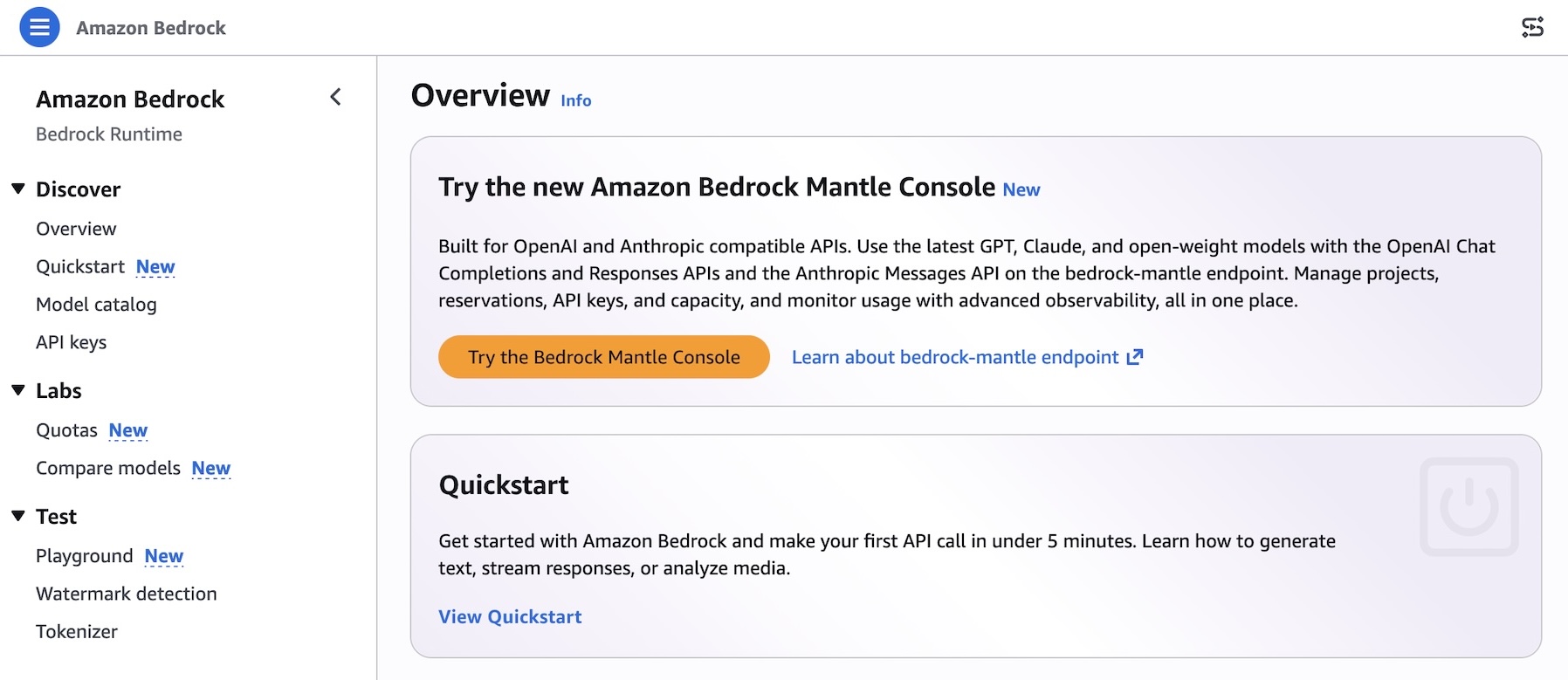
In a significant leap forward for developers and enterprise architects, Amazon Web Services (AWS) has officially launched a redesigned console experience for Amazon Bedrock. This update introduces the bedrock-mantle inference engine, a high-performance, security-focused architecture designed to streamline the lifecycle of generative AI applications—from initial experimentation to large-scale production deployment.
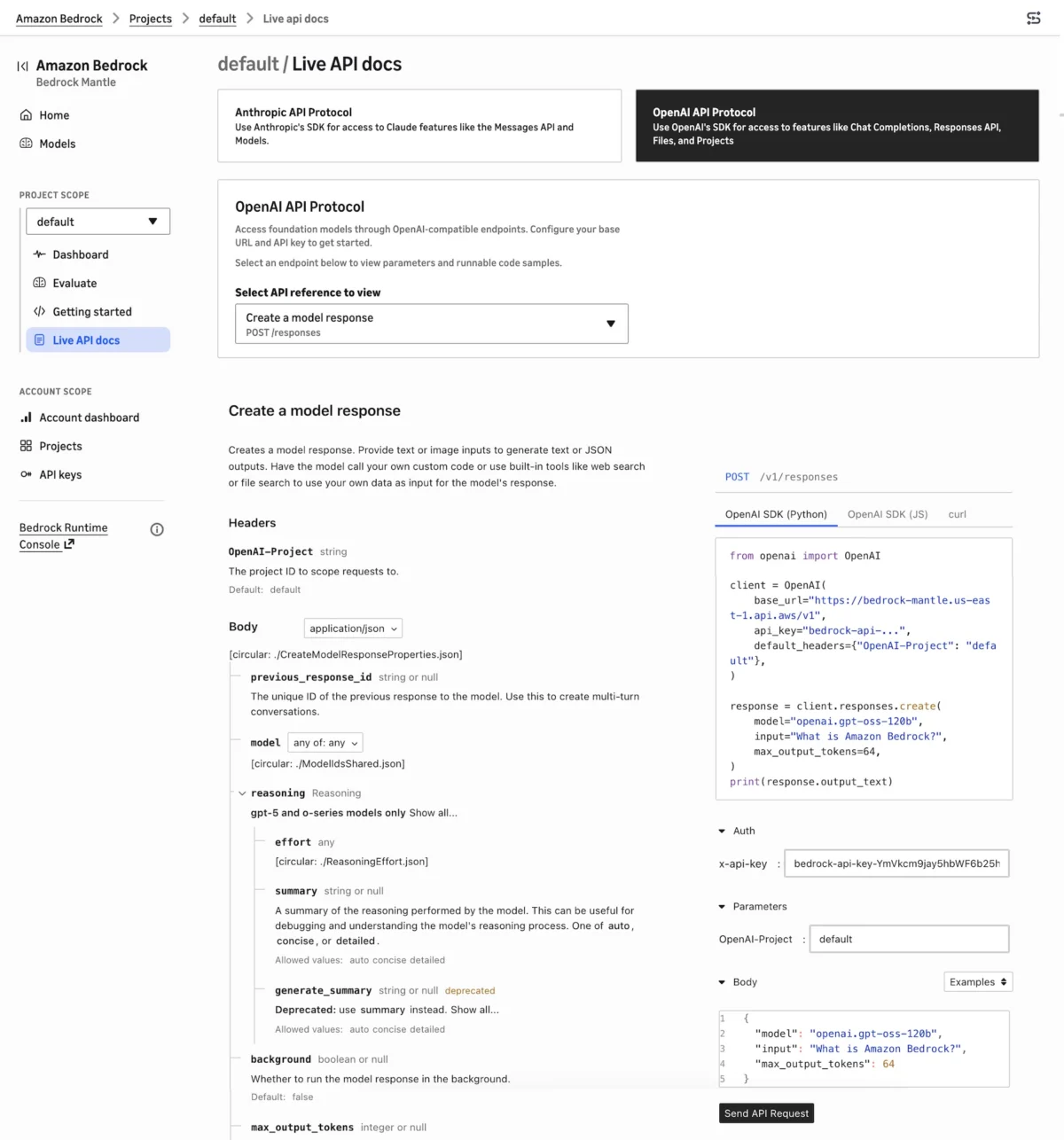
By integrating support for industry-standard APIs, including OpenAI’s Chat Completions and Anthropic’s Messages API, AWS is positioning Bedrock as the definitive hub for building with top-tier foundation models, ranging from proprietary GPT and Claude architectures to advanced open-weight models.
Main Facts: The "Mantle" Paradigm Shift
The core of this announcement is the bedrock-mantle endpoint, which represents a fundamental shift in how developers interact with AI models on the AWS cloud. Unlike the existing bedrock-runtime endpoint, which continues to support specialized features like Agents, Knowledge Bases, and Guardrails, the Mantle engine is optimized specifically for rapid iteration and high-throughput inference.
Key Features of the New Console:
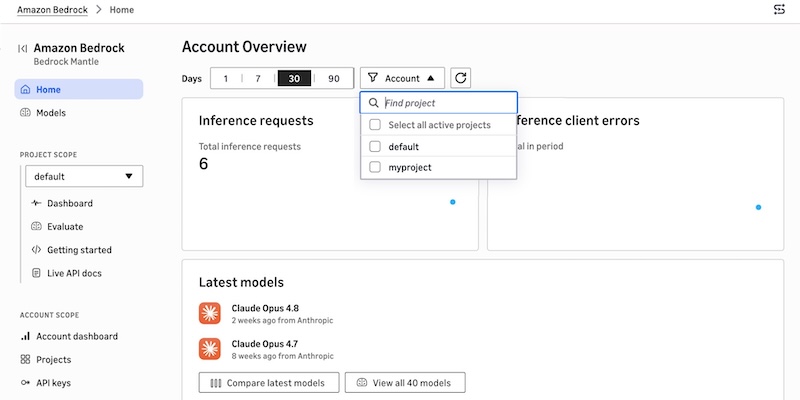
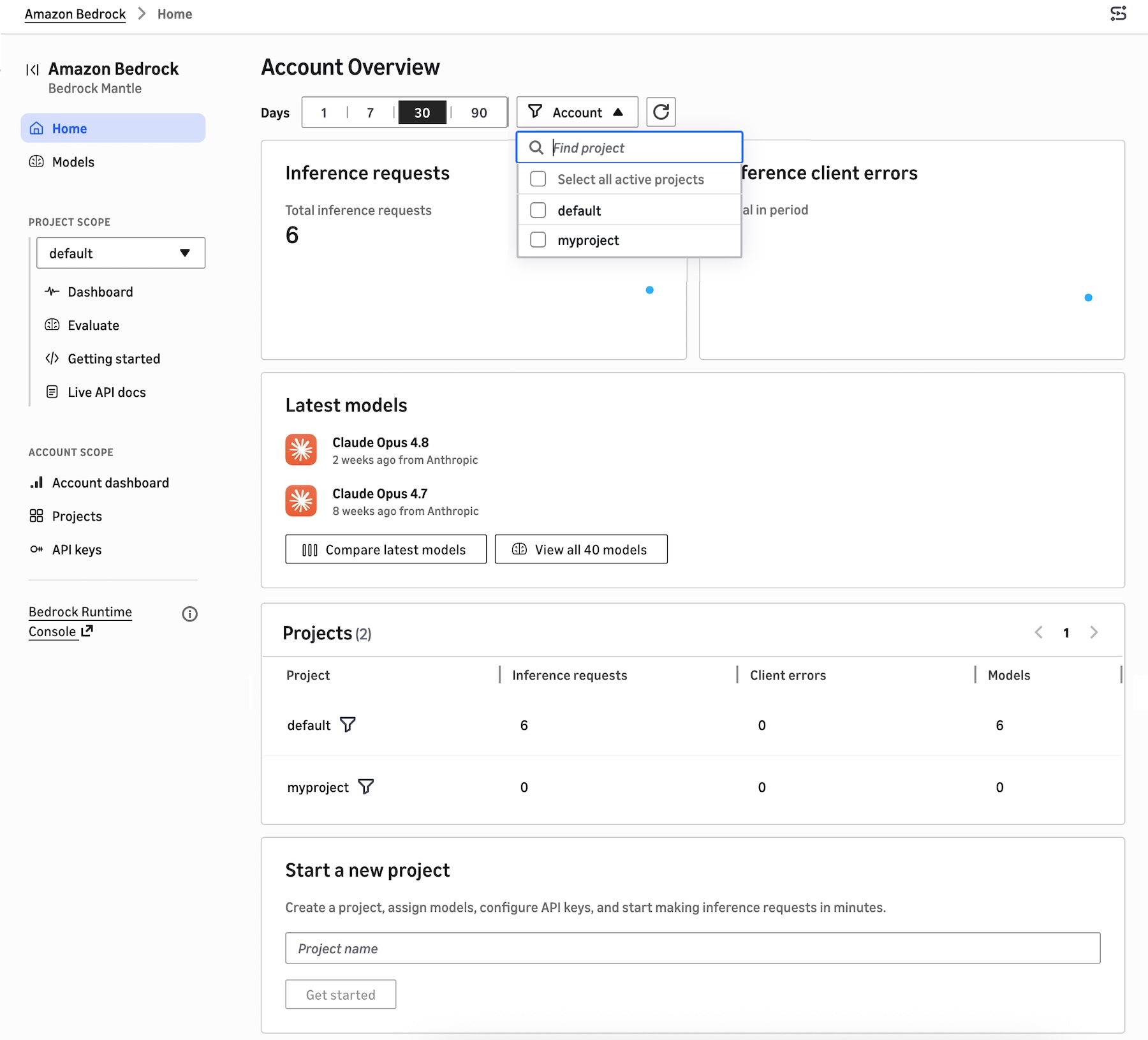
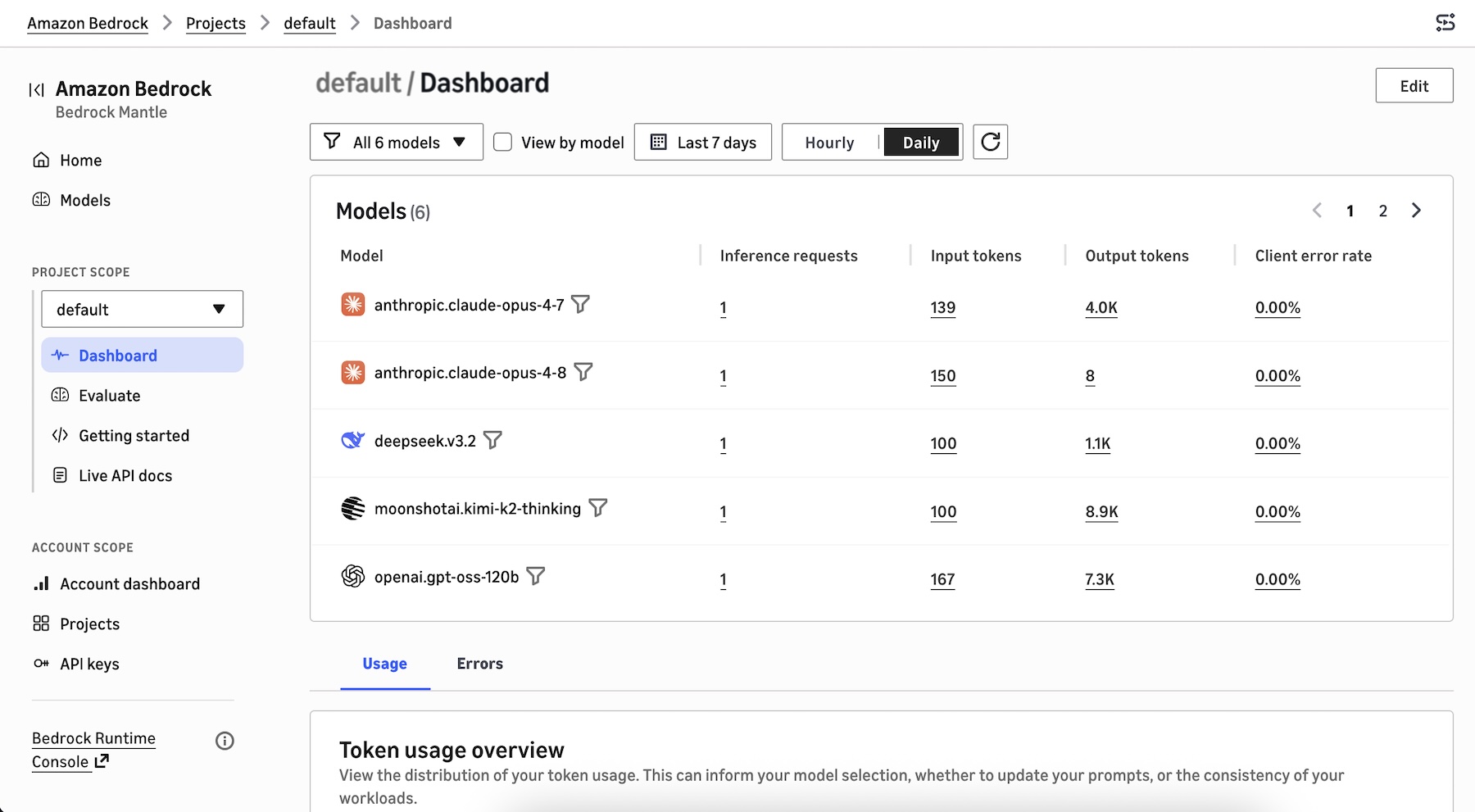
- Unified Project Management: Developers can now organize their AI efforts into discrete "projects." Each project dashboard provides granular visibility into inference requests, error rates, and historical usage trends, allowing for data-driven decisions regarding model performance.
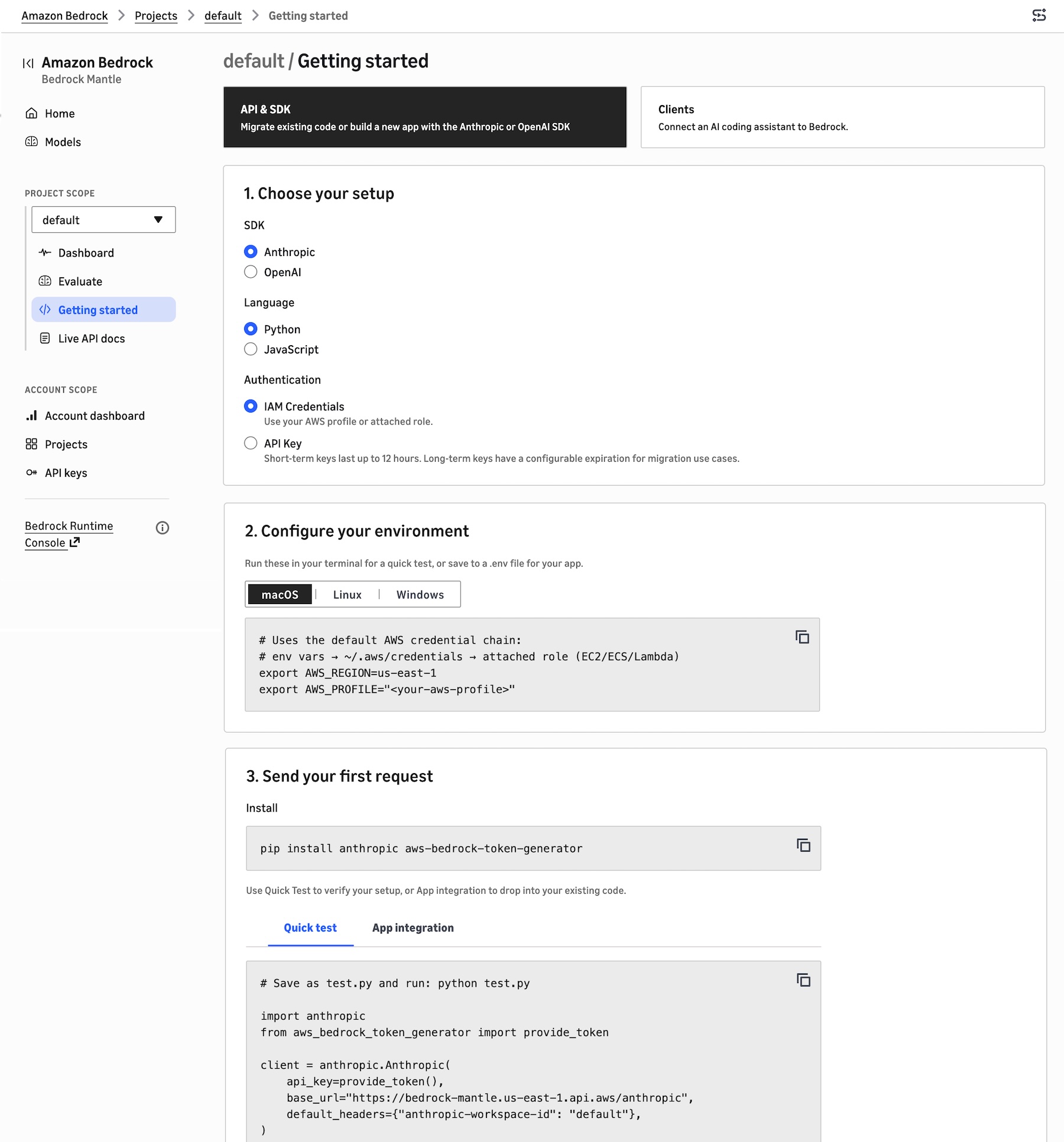
- Standardized API Compatibility: By natively supporting OpenAI and Anthropic SDKs, the new console eliminates the friction traditionally associated with migrating AI workloads. Developers can now swap out model backends with minimal code changes.
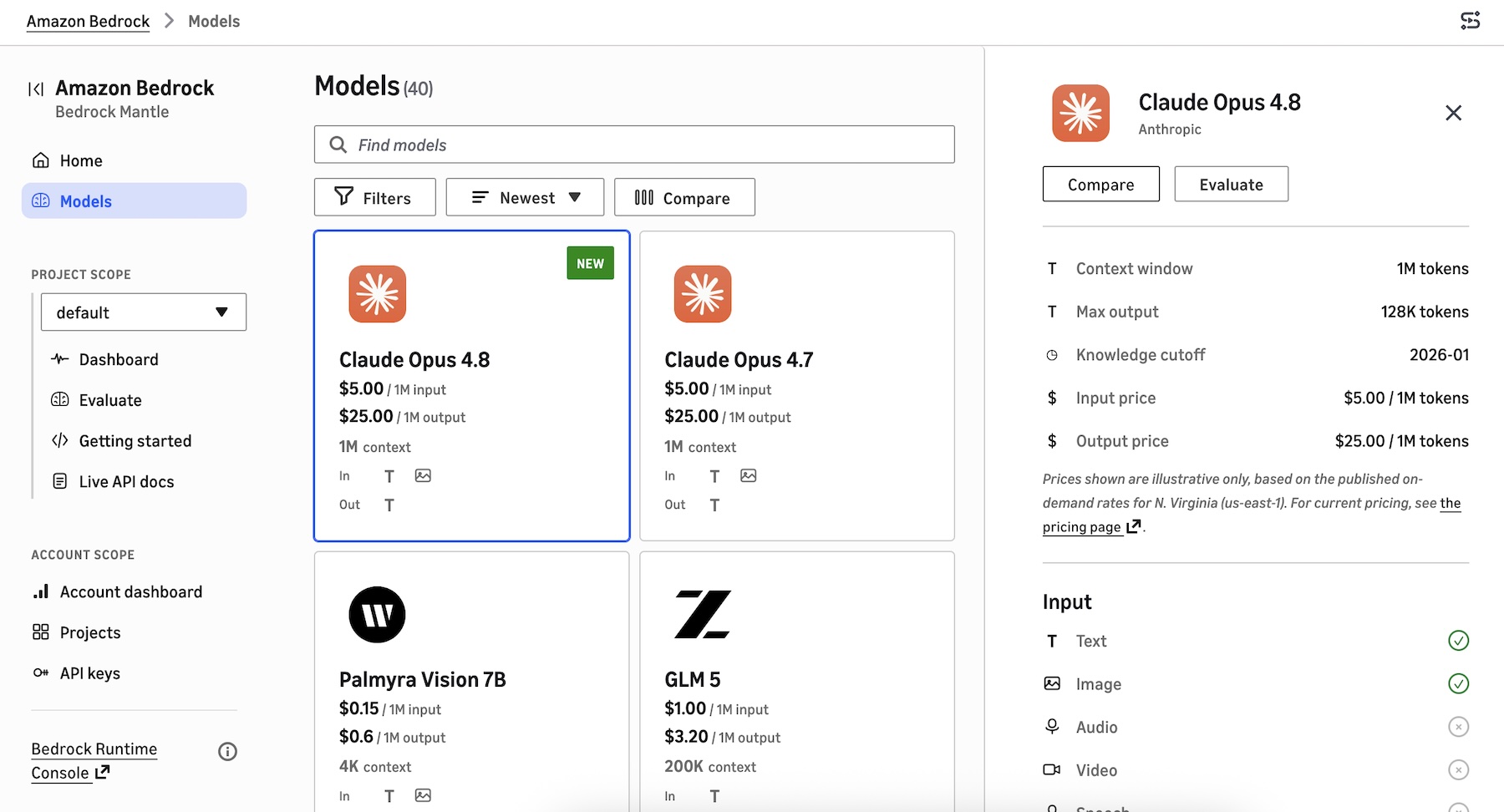
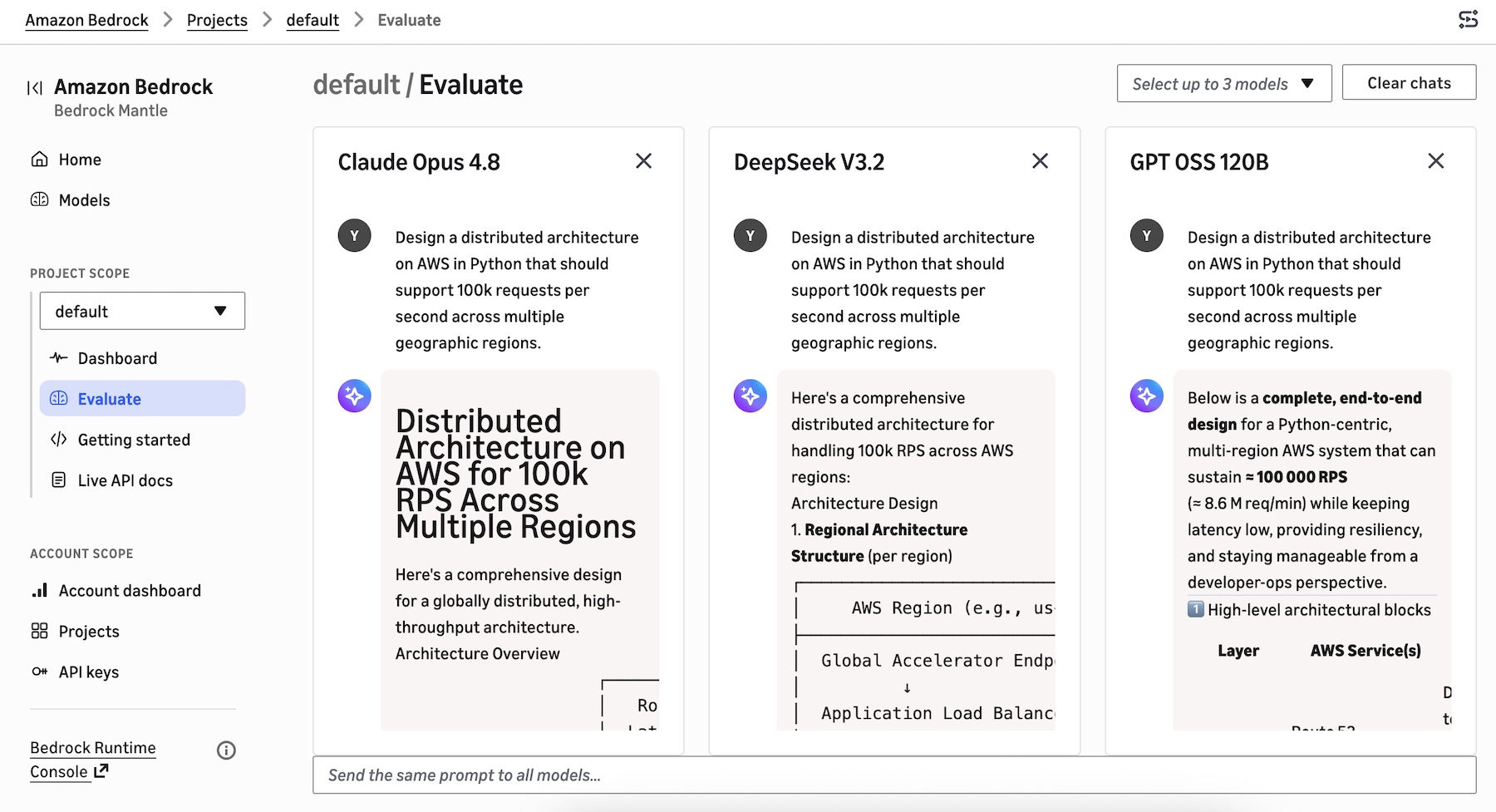
- Side-by-Side Model Evaluation: The console features a robust comparison tool that allows users to test up to three models simultaneously using the same prompt. This is a game-changer for benchmarking performance, latency, and response quality.
- AI Agent Integration: The platform now provides seamless "out-of-the-box" connectivity for popular coding agents, including Claude Code, Cline, Cursor, and OpenCode, facilitating a more integrated development environment (IDE) experience.
Chronology: From Concept to Console
The evolution of Amazon Bedrock has been marked by a transition from specialized service offerings to a comprehensive AI operating system.

- Early 2023: AWS introduces Amazon Bedrock as a serverless service to build generative AI applications using foundation models via API.
- Late 2023 – Early 2024: Rapid expansion of the model catalog, including the integration of Llama, Mistral, and advanced Claude iterations.
- Mid-2024: AWS identifies a growing need for "developer-first" tooling that mirrors the experience of external AI platforms while maintaining the rigorous security and compliance standards of the AWS ecosystem.
- June 2026 (Current): The launch of the
bedrock-mantleconsole, formalizing the split between the specialized "Runtime" services (Agents/Guardrails) and the high-speed "Mantle" inference engine.
Supporting Data: Quantifying Performance and Usage
The new console is built around transparency. For teams scaling their AI operations, the platform provides deep-dive analytics that were previously difficult to aggregate manually.
Metrics at a Glance:
- Token Usage Distribution: The dashboard tracks total token consumption, tokens per minute (TPM), and tokens per inference request. This data is critical for cost management, especially for enterprises operating under strict cloud budgets.
- Regional Availability: As of launch, the
bedrock-mantleengine is available across a global footprint, including US East (N. Virginia, Ohio), US West (Oregon), Asia Pacific (Jakarta, Mumbai, Sydney, Tokyo), Europe (Frankfurt, Ireland, London, Milan, Stockholm), and South America (São Paulo). - Model Comparison: The ability to compare three models in a single interface reduces the evaluation phase of the software development lifecycle (SDLC) by an estimated 40% to 60%, according to preliminary internal AWS testing.
The platform’s "Live API Docs" are particularly noteworthy. These documents dynamically update based on the user’s project settings. When a developer switches a model in the console, the API documentation reflects the precise model_id, endpoint URL, and authentication keys needed, effectively eliminating "copy-paste" errors during configuration.
Official Responses and Strategic Intent
In his announcement, Channy Yun, a prominent voice for AWS developer advocacy, emphasized that this update is a direct response to the "developer experience gap."
"We are empowering teams to move from a whiteboard idea to a production-ready API call in minutes," Yun noted. The strategy behind the new console is clearly focused on lowering the barrier to entry for developers who are already familiar with the OpenAI or Anthropic ecosystems but require the enterprise-grade security, data privacy, and scalability of AWS.
Industry analysts observe that this move is a defensive and offensive maneuver. By offering native compatibility with OpenAI protocols, AWS is effectively inviting developers to bring their existing codebases to Bedrock without needing a complete refactor. Simultaneously, it leverages the massive AWS global infrastructure, ensuring that low-latency access to models is a standard feature rather than an architectural challenge.
Implications: The Future of Enterprise AI
The launch of the Mantle console carries several long-term implications for the enterprise AI landscape:
1. Commoditization of Inference
By making it trivial to switch between GPT, Claude, and open-weight models, AWS is contributing to the commoditization of foundation models. For businesses, this means the "best model" for a specific task may change monthly or even weekly. The Bedrock console makes this transition fluid, preventing vendor lock-in at the model layer.
2. The Rise of the "AI-Native" Developer
The inclusion of direct hooks for tools like Cursor and Cline signals a shift in how applications are built. Rather than developers writing every function manually, they are increasingly orchestrating AI agents that write the code. By providing a secure, authenticated, and logged pipeline for these agents to interact with Bedrock, AWS is essentially providing the "plumbing" for the next generation of autonomous software engineering.
3. Focus on Security and Compliance
While other platforms prioritize raw speed, the Mantle console remains deeply rooted in AWS Identity and Access Management (IAM). Every request routed through the Mantle engine inherits the robust security policies of the AWS account. For regulated industries—such as healthcare, finance, and government—this provides a distinct advantage over third-party API providers that may lack enterprise-grade data governance.
4. Streamlining the "Experiment-to-Production" Loop
The most significant impact will likely be felt by startup and enterprise product teams. By integrating evaluation, testing, and production-level deployment into a single, cohesive workflow, the "time to market" for generative AI features is significantly compressed. The ability to see real-time error rates and token usage directly alongside code snippets creates a feedback loop that allows developers to optimize prompts and model parameters on the fly.
Conclusion
The release of the new Amazon Bedrock console represents more than just a UI refresh. It is a strategic consolidation of AWS’s generative AI capabilities, designed to satisfy the needs of both the individual developer building a prototype and the large-scale enterprise managing global AI workloads.
As the industry continues to move toward more complex, multi-model agentic systems, the tools provided by the bedrock-mantle engine will become essential infrastructure. By focusing on ease of integration, granular observability, and API-first compatibility, AWS has provided a clear roadmap for how it intends to dominate the next phase of the artificial intelligence revolution.
For those looking to explore the platform, the transition is straightforward: current Bedrock users can opt into the new experience via the AWS console homepage, while new users are guided through a streamlined onboarding process that emphasizes immediate, hands-on experimentation. As AWS continues to add regions and model support, the Bedrock console is set to remain the epicenter of the generative AI development lifecycle.