Beyond the Standard: Mastering Global IoT Connectivity in the Age of SGP.32
As the Internet of Things (IoT) matures from a collection of experimental pilots into the backbone of global enterprise infrastructure, the challenges of scale have evolved. Organizations today are no longer just connecting dozens of devices in a controlled local environment; they are managing millions of assets that cross national borders, operate in extreme conditions, and require a decade-long lifecycle of uptime. In this high-stakes landscape, connectivity is the foundational layer upon which business success is built.
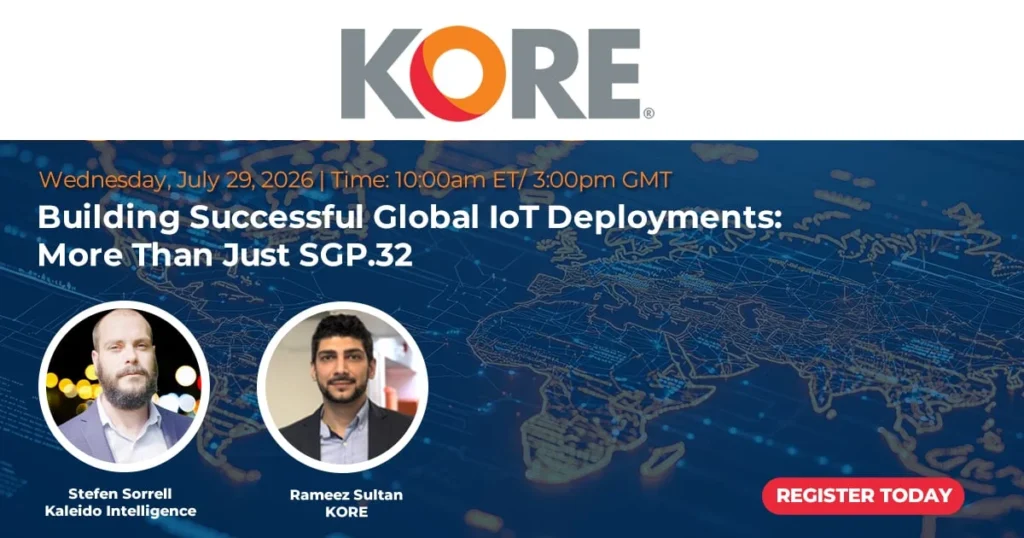
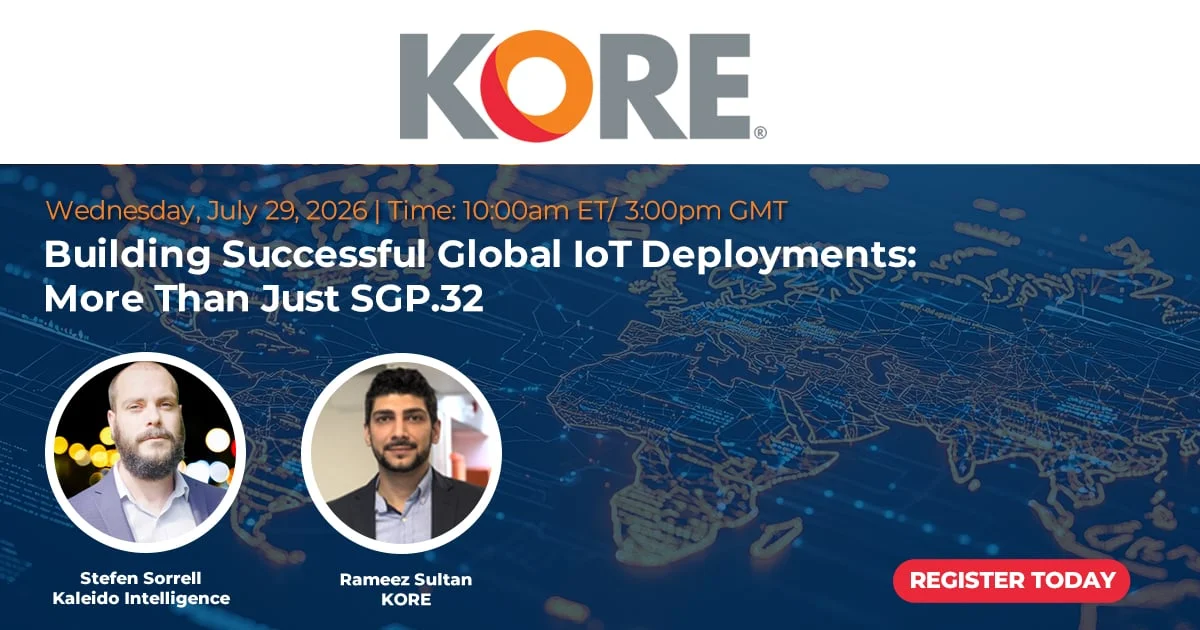
However, the industry has reached a critical juncture where relying solely on hardware specifications or singular connectivity standards is no longer sufficient. To address the complexities of modern global deployments, KORE and Kaleido have announced a collaborative webinar, "Building Successful Global IoT Deployments: More Than Just SGP.32," scheduled for Wednesday, July 29, 2026, at 10:00 a.m. ET / 3:00 p.m. GMT. This session aims to demystify the noise surrounding new connectivity standards and provide a roadmap for long-term operational resilience.
The Main Facts: Why Global IoT is Reaching an Inflection Point
The sheer velocity of IoT growth is staggering. Projections indicate that by the late 2020s, the number of active IoT devices will reach tens of billions. Yet, for the enterprise, the "number of devices" is a vanity metric; the true challenge is "connectivity longevity."
A global IoT deployment is essentially an exercise in logistics and compliance. When a device is deployed in Germany, managed from a headquarters in the United States, and manufactured in Southeast Asia, the connectivity provider must navigate a labyrinth of international roaming agreements, local regulatory data residency laws, and shifting network technologies.
The webinar hosted by KORE and Kaleido seeks to address this by moving the conversation away from "what" technology is being used and toward "how" it is orchestrated. The core premise is that while innovations like SGP.32 (the GSMA’s specification for remote SIM provisioning in M2M/IoT contexts) offer revolutionary technical flexibility, they are merely a tool within a much larger toolkit.
Chronology of a Connectivity Strategy
To understand why this discussion is happening now, one must look at the evolution of IoT connectivity.
- The Era of Physical SIMs (2010–2018): Deployments were largely static. If a device moved or a carrier failed, it required a "truck roll" to manually swap a SIM card.
- The Rise of eUICC (2019–2023): The industry embraced eSIM technology, allowing for over-the-air (OTA) provisioning. This solved the physical access problem but introduced fragmented, non-standardized implementations that were often difficult to scale.
- The Standardization Wave (2024–2025): The introduction of SGP.32 provided a much-needed standardized framework for the IoT ecosystem. It promised to simplify remote management by making it easier to switch profiles between network operators.
- The Current Landscape (2026): We are now in the "Orchestration Era." With SGP.32 now a reality, the challenge has shifted from "how do we switch profiles?" to "how do we manage millions of profile switches, security protocols, and compliance requirements without human intervention?"
Supporting Data: The Cost of Connectivity Failure
The pressure on enterprises to get their connectivity strategy right is fueled by mounting costs. According to recent industry research, the "hidden costs" of IoT—including connectivity outages, regulatory fines, and truck rolls—can consume up to 40% of the total cost of ownership (TCO) for a large-scale deployment.
Key Factors Impacting IoT Success
- Regulatory Compliance: Data sovereignty laws are becoming more stringent. For instance, storing data generated in the EU on a non-compliant server can lead to massive penalties. A robust connectivity strategy must account for local breakout capabilities.
- Carrier Flexibility: Relying on a single carrier is a single point of failure. If that carrier has a blackout or loses roaming agreements in a specific region, the entire fleet is effectively bricked.
- Security Posture: As IoT devices become high-value targets for cyberattacks, the way they connect—and how that connection is managed—is the first line of defense.
- Operational Longevity: A device deployed today may need to function until 2036. The strategy must accommodate network sunsets (e.g., the transition from 4G LTE to 5G/NB-IoT).
Official Perspectives: KORE and Kaleido
Industry leaders from KORE and Kaleido emphasize that SGP.32 is a "component of success, not the definition of it."
"Many organizations fall into the trap of ‘technology fetishism,’" says an industry analyst familiar with the upcoming webinar. "They hear about SGP.32 and assume it’s a ‘magic bullet’ that will automatically solve their roaming issues and cost problems. The reality is that SGP.32 is a protocol. You still need an orchestration layer, a management platform, and a partner who understands the legal and technical nuances of every market you operate in."
The experts participating in the July 29 session will argue that successful deployment requires a "Connectivity Lifecycle Management" (CLM) approach. This involves:
- Strategic Sourcing: Working with providers that offer a global footprint with local presence.
- Dynamic Provisioning: Utilizing SGP.32 to move traffic to the most cost-effective or highest-performing carrier in real-time.
- Proactive Monitoring: Using AI-driven analytics to predict connectivity degradation before it results in a total device failure.
Implications for the Enterprise
For CTOs, CIOs, and IoT program managers, the implications of this shift are clear: the strategy for 2026 and beyond must be hardware-agnostic and provider-agnostic.
What Attendees Will Gain
The KORE/Kaleido webinar is designed to be highly practical, moving beyond abstract theories to address:

- Integration Roadmaps: How to transition existing fleets to modern, SGP.32-compliant management systems without downtime.
- Risk Mitigation: Identifying the "blind spots" in current connectivity contracts that often lead to "bill shock" or unexpected compliance failures.
- Future-Proofing: Strategies for designing IoT ecosystems that can pivot when the next generation of connectivity standards arrives.
Who Should Attend
The session is specifically curated for:
- IoT Program Managers: Those responsible for the operational success of large-scale, cross-border deployments.
- Product Managers: Leaders developing the next generation of connected hardware who need to understand the connectivity constraints their products will face.
- Enterprise Architects: Professionals designing the backend infrastructure that supports IoT data ingestion and device management.
- Procurement and Strategy Officers: Decision-makers who need to understand the long-term TCO impacts of different connectivity models.
Conclusion: Preparing for the Future
As the session on July 29 approaches, it is vital to remember that IoT is not a "set it and forget it" industry. The complexities of global trade, regional telecommunications policies, and the rapid pace of technical innovation create an environment where the status quo is a liability.
By attending "Building Successful Global IoT Deployments: More Than Just SGP.32," organizations will gain the knowledge necessary to transform their connectivity from a potential bottleneck into a competitive advantage. The ability to keep devices connected, compliant, and operational regardless of geography is what separates market leaders from those struggling with the operational burdens of scale.
Register now to secure your place in this essential conversation. As IoT continues to redefine the boundaries of what is possible in the enterprise, having a strategy that looks beyond the latest standard is the only way to ensure your organization stays online, profitable, and secure.
For more information and to register, visit the official webinar portal.