Bridging the Cloud Divide: Vercel and AWS Integrate Amazon S3 Natively for Web and AI Developers
Main Facts: A New Era of Unified Cloud Storage and Frontend Development
In a major development bridging the gap between hyperscale cloud infrastructure and modern frontend deployment, Vercel and Amazon Web Services (AWS) have announced the native integration of Amazon Simple Storage Service (Amazon S3) directly into the Vercel Marketplace and v0 by Vercel.
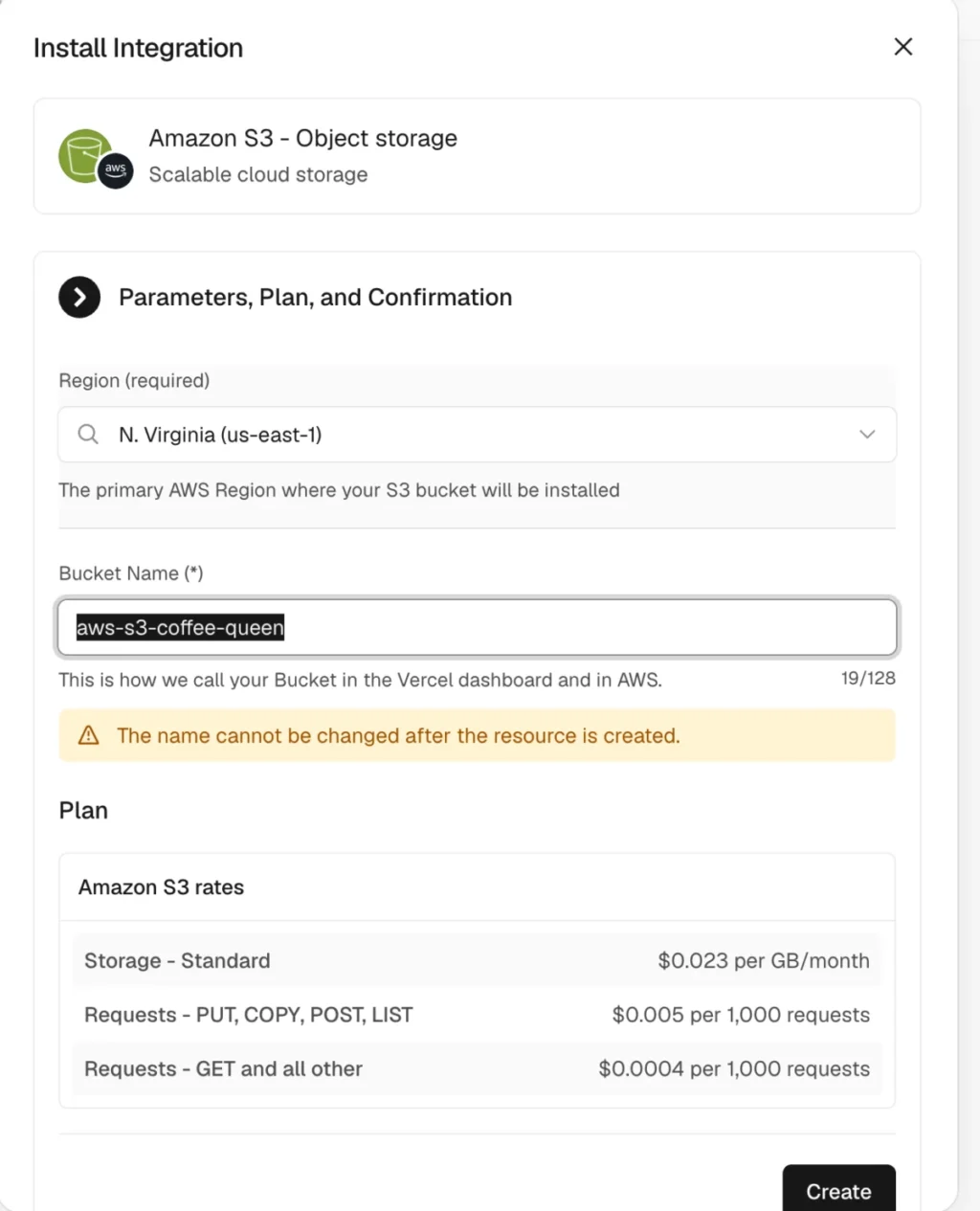
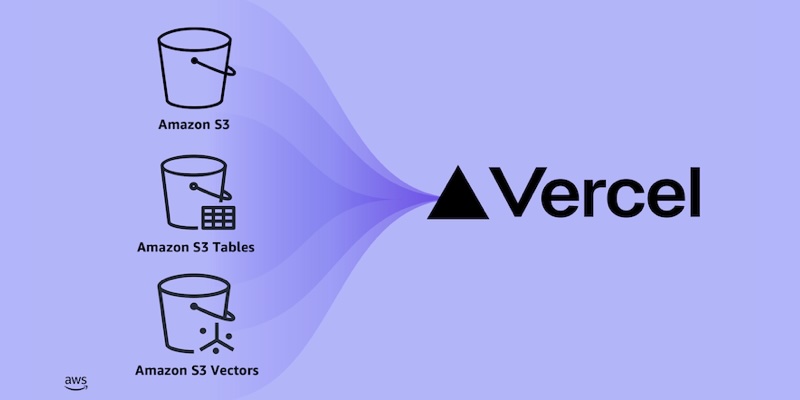
This new capability allows millions of developers building web applications, analytics engines, and artificial intelligence (AI) systems to provision, configure, and manage S3 resources—including specialized tiers like Amazon S3 Tables and Amazon S3 Vectors—without ever needing to manually navigate the AWS Management Console.
The integration covers three core pillars of modern application architecture:
- Everyday Storage: General-purpose object storage for file uploads, media assets, and static files.
- Analytics: Purpose-built S3 Tables offering fully managed Apache Iceberg compatibility to support high-performance analytical queries as data volumes scale.
- AI Workloads: S3 Vectors, delivering specialized, cost-optimized vector storage designed specifically for Retrieval-Augmented Generation (RAG), AI agents, semantic search, and machine learning inference.
By streamlining the setup process into a few clicks within the Vercel dashboard or via natural language prompts in v0, developers can seamlessly link robust cloud storage to serverless functions, establishing a unified application stack backed by a single AWS account and a unified billing model.
Chronology: How the Vercel-AWS Ecosystem Evolved
The path to native Amazon S3 integration on Vercel represents the culmination of a strategic, multi-phase partnership aimed at removing friction between frontend workflows and enterprise-grade backend infrastructure.
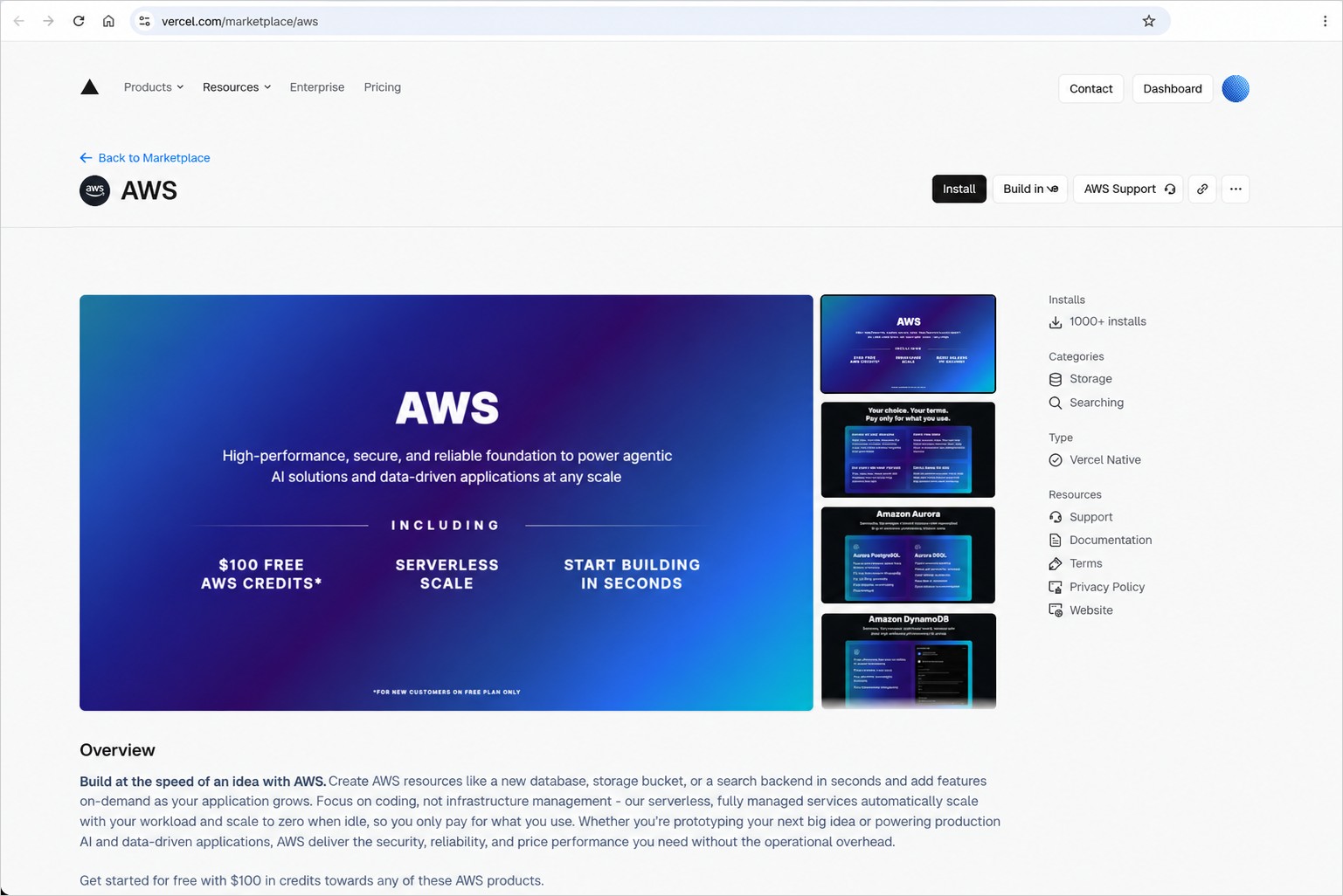
- Phase 1: Establishing Database Foundations: Vercel initially expanded its platform capabilities by introducing native integrations for core AWS database and backend services, including Amazon Aurora, Amazon DynamoDB, and Amazon OpenSearch Serverless. These integrations laid the groundwork for secure, credential-managed connectivity between Vercel’s serverless runtime and AWS resources.
- Phase 2: The Rise of AI and Generative Prototyping: As generative AI transformed software development, Vercel launched
v0, an AI-powered development tool allowing users to build components and applications via natural language descriptions. At the same time, AWS introduced advanced workload-specific storage classes, such as S3 Tables for analytics and S3 Vectors for embedding management. - Phase 3: Native S3, S3 Tables, and S3 Vectors Launch: Bringing together object storage, analytics, and vector capabilities, Vercel and AWS launched native S3 provisioning inside the Vercel Marketplace and
v0. This eliminated the final major hurdle in full-stack serverless deployment: manual object storage configuration and static credential management.
Supporting Data, Architecture, and Technical Implementation
To understand the scale and efficiency of this release, it is essential to examine how security and performance are handled under the hood.
Secure, Passwordless Authentication via OIDC
Historically, connecting serverless functions to S3 required generating, storing, and rotating static AWS IAM access keys—a practice fraught with security risks. The new Vercel-AWS integration eliminates static keys entirely.
When an S3 resource is linked to a Vercel project, the integration automatically injects essential environment variables:
AWS_REGIONAWS_ROLE_ARNAWS_RESOURCE_ARNS3_BUCKET_NAME(or specialized bucket names for tables and vectors)
At runtime, the awsCredentialsProvider function from @vercel/functions/oidc dynamically exchanges a short-lived OpenID Connect (OIDC) token with the AWS Security Token Service (AWS STS). This generates temporary, highly scoped credentials on the fly, ensuring that no long-term credentials reside in your codebase or environment variables.
Code Implementations Across Workloads
1. General-Purpose Object Storage (Next.js Route)
Developers can instantly ingest user uploads using the AWS SDK for JavaScript (@aws-sdk/client-s3) paired with Vercel’s OIDC credential provider:

import  S3Client, PutObjectCommand  from "@aws-sdk/client-s3";
import  awsCredentialsProvider  from "@vercel/functions/oidc";

const s3 = new S3Client(
  region: process.env.AWS_REGION,
  credentials: awsCredentialsProvider(
    roleArn: process.env.AWS_ROLE_ARN,
  ),
);

export async function POST(request)
  const formData = await request.formData();
  const file = formData.get("file");

  await s3.send(new PutObjectCommand(
    Bucket: process.env.S3_BUCKET_NAME,
    Key: file.name,
    Body: Buffer.from(await file.arrayBuffer()),
    ContentType: file.type,
  ));

  return Response.json( success: true );
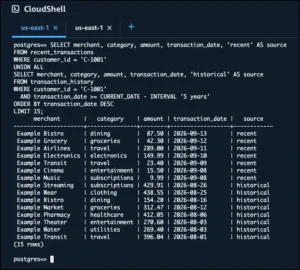
2. Lightweight Analytics with S3 Tables and DuckDB
S3 Tables provide fully managed Apache Iceberg tables designed to scale automatically. Developers can run high-performance analytical queries directly inside a Vercel Function using DuckDB without spinning up a separate data warehouse cluster:
import  DuckDBInstance  from "@duckdb/node-api";
import  awsCredentialsProvider  from "@vercel/functions/oidc";

const creds = await awsCredentialsProvider(
  roleArn: process.env.AWS_ROLE_ARN,
)();

const db = await DuckDBInstance.create();
const conn = await db.connect();

await conn.run("INSTALL aws; LOAD aws; INSTALL httpfs; LOAD httpfs; INSTALL iceberg; LOAD iceberg;");

await conn.run(`
  CREATE SECRET s3cred (
    TYPE s3,
    KEY_ID '$creds.accessKeyId',
    SECRET '$creds.secretAccessKey',
    SESSION_TOKEN '$creds.sessionToken',
    REGION '$process.env.AWS_REGION'
  );
`);

await conn.run(`
  ATTACH '$process.env.AWS_RESOURCE_ARN' AS s3tables (
    TYPE iceberg,
    ENDPOINT_TYPE s3_tables
  );
`);

const rows = await (await conn.run(`
  SELECT town_city, AVG(median_price) AS avg_price
  FROM s3tables."$process.env.S3_TABLES_NAMESPACE".town_monthly
  GROUP BY town_city
  ORDER BY avg_price DESC
  LIMIT 10
`)).getRowObjects();
3. Semantic Search and RAG with S3 Vectors
For artificial intelligence workflows, S3 Vectors removes the operational overhead of managing dedicated vector databases. Embeddings generated by external models can be queried directly via the S3 Vectors client:
import  S3VectorsClient, QueryVectorsCommand  from "@aws-sdk/client-s3vectors";
import  awsCredentialsProvider  from "@vercel/functions/oidc";

const vectors = new S3VectorsClient(
  region: process.env.AWS_REGION,
  credentials: awsCredentialsProvider(
    roleArn: process.env.AWS_ROLE_ARN,
  ),
);

export async function POST(request)
  const  embedding  = await request.json();

  const result = await vectors.send(new QueryVectorsCommand(
    vectorBucketName: process.env.S3_VECTOR_BUCKET_NAME,
    indexName: "documents",
    queryVector:  float32: embedding ,
    topK: 5,
    returnMetadata: true,
  ));

  return Response.json( matches: result.vectors );
Prototyping with v0
The integration extends directly into natural language workflows via v0. Developers can prompt the system with requests like "Build a photo gallery where users upload images using AWS" or "Create a support bot that answers questions from my PDFs." v0 automatically provisions the corresponding general-purpose bucket or S3 Vectors resource, hooks up the necessary OIDC authentication bindings, and generates fully functional UI and backend code.
Official Responses and Strategic Vision
While the partnership brings together two of the most influential entities in modern cloud and web development, industry observers note that the move highlights a broader shift toward developer experience (DevEx) as a primary driver of enterprise cloud adoption.
Cloud architects and platform engineers have long recognized AWS S3 as the gold standard for durability, scalability, and cost-effectiveness in object storage. However, the operational overhead of managing IAM policies, cross-origin resource sharing (CORS), bucket policies, and credential rotation has historically slowed down frontend teams accustomed to instant, zero-config deployments.
By abstracting these infrastructure hurdles into the Vercel dashboard and v0, AWS and Vercel are effectively lowering the barrier to entry for enterprise-grade cloud capabilities. Developers no longer have to choose between the velocity of modern frontend frameworks like Next.js and the robust, enterprise compliance of AWS infrastructure; they can now leverage both simultaneously within a unified environment.
Implications for Developers, Enterprises, and the Cloud Landscape
The arrival of native Amazon S3, S3 Tables, and S3 Vectors on Vercel carries profound implications for software development teams across startups and enterprise organizations alike:
-
Accelerated Time-to-Market: By eliminating the context-switching traditionally required to configure cloud storage in the AWS Console, engineering teams can prototype, deploy, and scale data-intensive applications in a fraction of the time.
-
Enhanced Security Posture: The elimination of static API keys in favor of short-lived, OIDC-based temporary tokens significantly reduces the attack surface of modern web applications, neutralizing common vulnerabilities associated with leaked credentials.
-
Unified Financial and Resource Governance: Organizations can link existing AWS accounts (or spin up new ones directly through Vercel) to maintain centralized governance, security tooling, and billing while empowering frontend developers with self-service provisioning capabilities.
-
A Complete Full-Stack Serverless Ecosystem: Combined with existing integrations for Amazon Aurora, DynamoDB, and OpenSearch Serverless, developers now possess an end-to-end cloud stack—spanning relational databases, NoSQL stores, search engines, object storage, open table formats, and vector indexes—all managed natively through Vercel.
Pricing and Availability
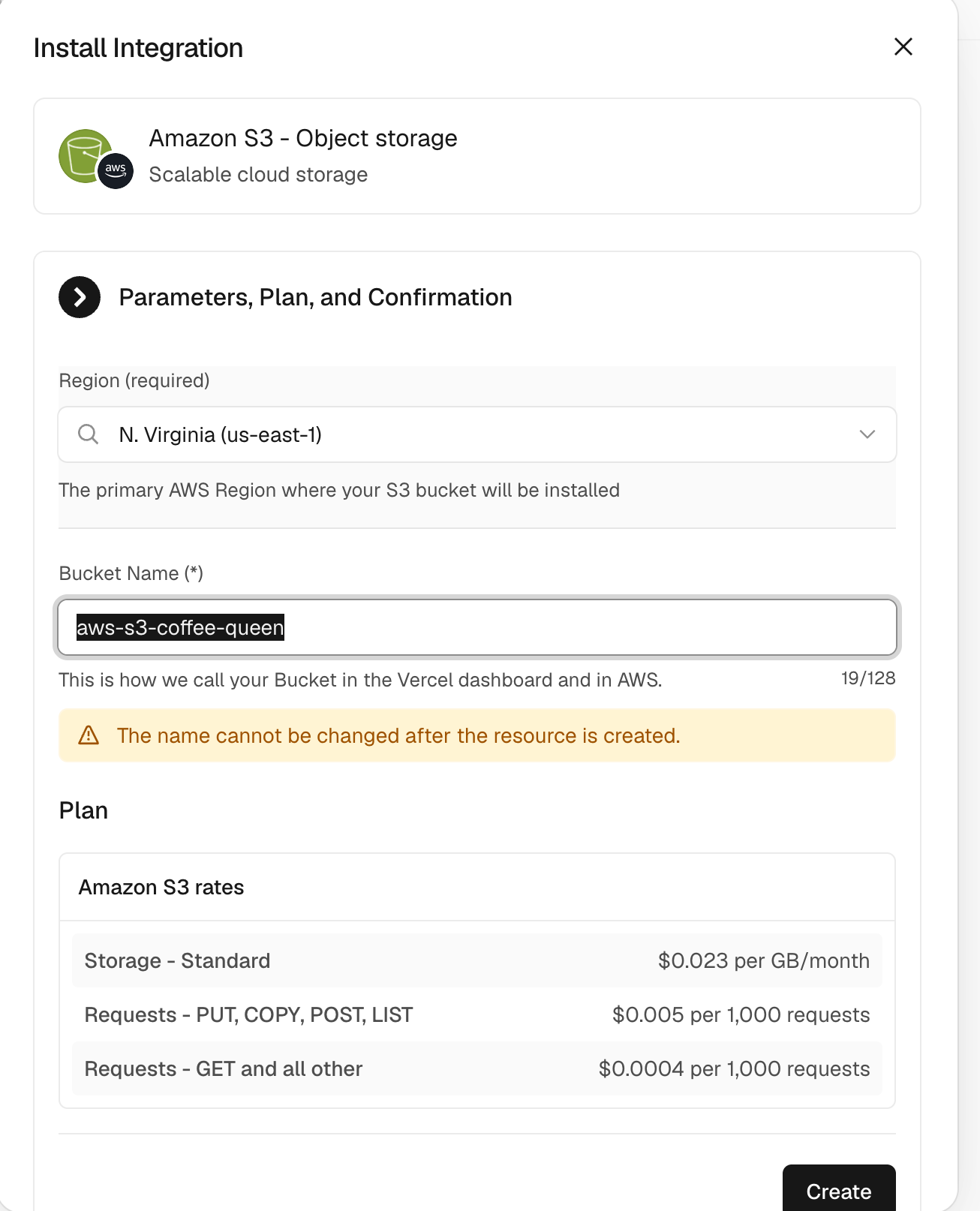
The integration itself carries no additional licensing fee from Vercel; developers simply pay standard AWS pricing for the S3 resources consumed. Furthermore, new AWS accounts created via the Vercel integration qualify for $100 in AWS credits valid for six months. The feature is available immediately across all commercial AWS regions supported by Vercel through the Vercel Marketplace and v0.