Chatto: A New Contender in the Open-Source Quest to Replace Slack
For over a decade, Slack has reigned supreme as the quintessential communication tool for modern teams. Its ubiquity is undeniable, driven by a polished interface, seamless integrations, and a promise of real-time efficiency. Yet, for organizations that prioritize data sovereignty, privacy, and the philosophy of "owning your own stack," the reliance on proprietary platforms like Slack, Microsoft Teams, or Discord has long been a point of friction.
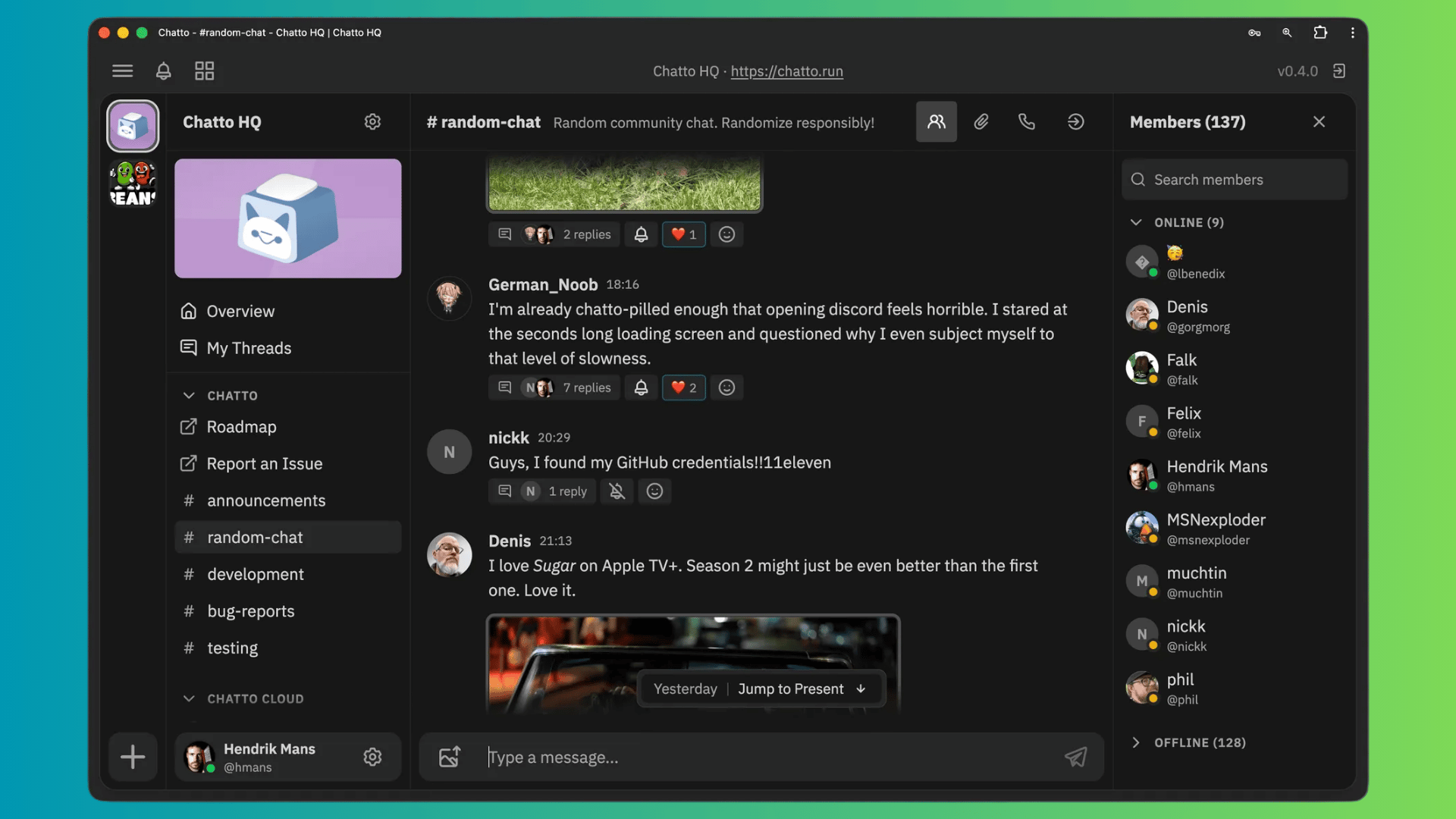
While the open-source community has responded with robust alternatives such as Rocket.Chat, Mattermost, Zulip, and Matrix-based solutions like Element, the market remains hungry for innovation. Enter Chatto, a burgeoning project by developer Hendrik Mans that aims to provide a lightweight, self-hosted, and transparent alternative to the industry giants. Although still in the early stages of its development cycle, Chatto is already positioning itself as a disruptive force in the enterprise messaging landscape.
Main Facts: What is Chatto?
At its core, Chatto is designed to be the "no-nonsense" team communication tool. Unlike some enterprise software that requires a massive engineering team to deploy and maintain, Chatto is built with simplicity as its primary directive.
Hendrik Mans, the lead developer behind the project, has focused on creating a lean executable that allows administrators to deploy a functional communication server with minimal overhead. The project is released under the AGPL-3.0+ license, with specific components utilizing the Apache-2.0 license, reinforcing the project’s commitment to open-source principles.
Key Features Out of the Box:
- Infrastructure Efficiency: Built to be lightweight, ensuring that it doesn’t consume excessive server resources, even as user counts grow.
- Essential Communication: Full support for channels, private rooms, and direct messaging.
- Collaborative Tools: Built-in file sharing and video embedding capabilities.
- Security-First Voice and Video: Chatto features native screen sharing and, crucially, end-to-end encryption for all voice and video calls, ensuring that private conversations remain private.
- Granular Permissions: A sophisticated roles and permissions system allows administrators to dictate precisely who can access specific channels, perform administrative tasks, or view sensitive company data.
The Chronology of Development
The emergence of Chatto is a classic story of an individual developer identifying a gap in the ecosystem and building a solution to fill it.
- Early 2026 (Development Phase): Hendrik Mans begins coding the architecture for Chatto, focusing on a server-first approach that prioritizes ease of deployment.
- July 2026 (The Open Source Pivot): Following several months of private development, Mans announces the project publicly. The decision to open-source the code marks a turning point, inviting community contributions and external audits.
- Current State: The project is currently in a pre-1.0 development phase. The focus is primarily on stabilizing the core server backend and expanding the feature set based on early adopter feedback.
- The Future (Roadmap): The development roadmap includes the integration of a Slack-to-Chatto migration tool, which is critical for lowering the barrier to entry for teams looking to jump ship from the proprietary status quo.
Supporting Data and Technical Architecture
When comparing Chatto to its established peers, one must look at the trade-offs between complexity and control.
Deployment and Scalability
While established players like Slack are SaaS-only, Chatto is designed to be self-hosted. For a technical organization, the ability to keep data within their own private infrastructure is invaluable for compliance with regulations like GDPR or HIPAA.
The "Cloud" Contingency
Recognizing that not every team has the appetite for managing a server, the team is also rolling out Chatto Cloud. This version is designed for teams that want the benefits of the Chatto software without the operational burden of self-hosting. By utilizing European-owned infrastructure, the cloud offering aims to maintain the high standards of privacy and data protection that the self-hosted version promises. The cloud service will include features like:

- Automatic Scaling: Adjusting resources in real-time based on team size.
- Nightly Backups: Ensuring zero data loss in the event of system failures.
- Data Portability: A major focus of the project is avoiding vendor lock-in. Mans has emphasized that moving data into or out of the Chatto Cloud will be straightforward, giving users the ultimate freedom to migrate back to a self-hosted instance whenever they choose.
Official Stance and Philosophy
In an era where "Open Source" is often used as a marketing term for "Open Core" (where the best features are locked behind a paywall), Chatto aims for a more community-centric approach.
According to documentation released alongside the project, the primary motivation was the frustration with the bloat associated with modern messaging apps. Mans describes a vision where a team lead should be able to run a single binary, configure a few environment variables, and have a fully operational, secure communication platform within minutes.
The "no-client" reality is perhaps the most significant hurdle currently faced by the project. As of now, there are no dedicated desktop or mobile applications. Users interact with Chatto primarily through a browser. While this approach has reduced development time, the roadmap indicates that dedicated native clients are in the "discovery phase." Whether these will be developed in-house or via community-led initiatives remains to be seen, but their absence is currently the most notable gap between Chatto and the "Big Three" (Slack, Teams, and Discord).
Implications: The Shift Toward Sovereignty
The arrival of Chatto highlights a broader, growing trend in the software industry: the "re-decentralization" of communication.
1. The Death of Vendor Lock-in
For years, businesses have been held hostage by the proprietary APIs and export restrictions of major chat platforms. When a company grows, it becomes increasingly difficult to leave a platform because the data migration process is intentionally obfuscated. By prioritizing migration tools and clear data exports, Chatto is actively positioning itself as a "migration-friendly" alternative.
2. Regulatory Compliance
As privacy laws become more stringent globally, the ability to control where data is stored is no longer a luxury—it is a legal requirement. Organizations in sectors like healthcare, law, and finance are increasingly prohibited from using third-party cloud services that do not offer strict data residency guarantees. Chatto’s self-hosted nature provides a clean, audit-ready solution for these entities.
3. The Resource Efficiency Argument
Slack is notorious for being a "RAM-hog," with its Electron-based desktop app consuming significant system resources. By building a lightweight, server-centric architecture, Chatto addresses the performance concerns of developers and sysadmins who prefer tools that respect the hardware they run on.
4. Community-Led Innovation
The adoption of the AGPL-3.0+ license ensures that the project remains free for everyone to use, study, and modify. This transparency allows the community to build their own integrations, bots, and plugins, which will be vital for the software’s long-term survival against corporate giants.

Challenges Ahead
Despite the enthusiasm surrounding the project, Chatto faces a steep climb.
- The Network Effect: The primary advantage of Slack is not just the software, but the fact that "everyone is already on it." Convincing a team to switch requires not just a better tool, but a compelling reason to break the network effect.
- The Missing Client Experience: In the modern workplace, mobile notifications and desktop tray integration are expected features. Until Chatto releases native mobile and desktop clients, it will likely remain a niche tool for tech-forward teams rather than a mainstream business communication platform.
- Feature Parity: Slack has spent over a decade perfecting features like thread management, complex emoji reactions, and third-party integrations (Jira, GitHub, etc.). While Chatto has the essentials, closing the "feature gap" will require significant time and continued community interest.
Conclusion: Is Chatto for You?
Chatto is currently at an exciting, nascent stage. For developers, Linux enthusiasts, and privacy-conscious organizations, it represents a bold step toward reclaiming the digital workspace. It is not yet a complete replacement for a fully-featured Slack environment, but it is a proof-of-concept that proves such a replacement is possible.
As the development team moves toward a stable 1.0 release, the trajectory of the project will depend heavily on the feedback loop between the core contributors and the early adopters. If you are a team lead or a sysadmin tired of the constraints of proprietary software, monitoring the development of Chatto is highly recommended.
The software landscape is shifting. As more projects like Chatto gain traction, the reliance on monolithic, "walled-garden" communication platforms will continue to face pressure from the open-source movement. Whether Chatto becomes the standard-bearer for this shift remains to be seen, but for now, it is a project that embodies the best of what open-source development has to offer: simplicity, transparency, and the power of user-owned data.