Empowering the Indie Ecosystem: A Deep Dive into itch.io’s Creator Day
In the sprawling landscape of digital distribution, where corporate giants often command double-digit percentage cuts of every transaction, the indie game development community has found a rare sanctuary. Since its inception, itch.io has distinguished itself not merely as a marketplace, but as an advocate for the creative class. Central to this mission is "Creator Day"—a transformative 24-hour initiative that fundamentally alters the economics of game development by waiving the platform’s revenue share.
This article examines the mechanics, history, and broader industry implications of Creator Day, an event that has become a cornerstone for independent developers, digital artists, and asset creators worldwide.
Main Facts: The Economics of Creator Day
At its core, Creator Day is a strategic financial event designed to maximize the direct earnings of creators. Under standard operating conditions, itch.io—already known for its flexible "pay-what-you-want" revenue share model—maintains a default take rate to sustain platform operations, server infrastructure, and ongoing development. During Creator Day, however, that take rate is reduced to zero.
For a strictly defined 24-hour window, itch.io waives its platform fee entirely. This means that after mandatory tax withholdings and standard third-party payment processor fees (such as those charged by PayPal or Stripe), the creator retains 100% of the remaining revenue.
It is important to clarify that this is not a discount event forced upon developers; it is a revenue-retention event. Unlike traditional "sales" that require creators to lower the price of their games to drive volume, Creator Day allows developers to sell their projects at full price while pocketing the entire transaction amount. For the consumer, it acts as a "call to action"—a psychological nudge to purchase a title, knowing that their support is being funneled directly into the hands of the person who built the game.
A Chronological Evolution: From Experiment to Institution
The concept of Creator Day was not an immediate fixture of the platform’s business model. It emerged as a tactical response to the shifting economic realities of the COVID-19 pandemic, a period that saw a massive surge in both independent game consumption and the number of individuals turning to game development as a primary or secondary source of income.
The Inaugural Launch
The first Creator Day took place on May 14, 2021. The announcement was met with immediate, overwhelming enthusiasm from the developer community. By choosing to forego revenue during a period of high site traffic, itch.io signaled a departure from the "predatory" middleman culture prevalent in the software industry.
Establishing a Pattern
Following the success of the inaugural event, the itch.io team recognized the value of institutionalizing the initiative. It transitioned from a one-off experiment into a recurring feature of the platform’s calendar. Over the subsequent years, Creator Day began to synchronize with existing cultural and retail phenomena.
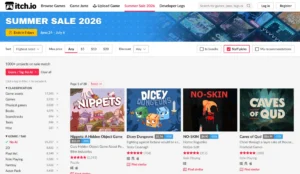
By aligning these 24-hour windows with major shopping events like Black Friday or, conversely, positioning them as standalone events during otherwise quiet retail periods, itch.io has managed to turn the "Creator Day" brand into a reliable rhythm for its user base. Developers now anticipate these dates, using them to coordinate game launches, DLC releases, or major update announcements to capitalize on the heightened visibility and the "feel-good" consumer sentiment surrounding the event.
Supporting Data: Why the Model Matters
To understand why Creator Day is a significant outlier in the digital storefront landscape, one must look at the standard industry revenue share. Major console marketplaces and desktop storefronts typically operate on a 30/70 split—the platform takes 30% of every sale, leaving the developer with 70%. While some competitors have moved toward tiered systems (where the split shifts once a game reaches a certain revenue threshold), the baseline remains tilted in favor of the distributor.
The Impact of 100% Retention
For a solo developer or a small indie team, that 30% gap is not just a rounding error; it is often the difference between being able to afford a new piece of hardware, paying for server hosting, or simply covering the cost of living.
When a developer sells a game for $20 on a standard day, they might net $14 after the platform cut. On Creator Day, that same sale can net them upwards of $18 or $19, depending on the specific payment processor. Across hundreds or thousands of units, this margin expansion provides a massive liquidity boost. For developers in regions with unfavorable exchange rates or high costs of living, these 24-hour windows are effectively a form of direct economic stimulus.
Official Stance: The Philosophy of itch.io
The management at itch.io has been remarkably consistent in their messaging: the platform exists because the creators exist. Their stance is that a healthy marketplace is one where the creators are financially viable.
In official communications, the platform emphasizes that Creator Day is an expression of gratitude. It is an acknowledgment that the "itch.io aesthetic"—a unique blend of experimental, avant-garde, and deeply personal projects—would not exist if developers felt they were merely feeding a corporate machine. By removing the financial barrier between the buyer and the creator, itch.io reinforces the relationship between the two, transforming a transactional software purchase into an act of direct patronage.
Importantly, the process is entirely automated. There is no paperwork, no application, and no hidden fine print. For the creator, the "toggle" happens on the backend. They don’t need to update their tax forms or change their project settings; the system recognizes the event window and adjusts the accounting accordingly. This "low-friction" approach is critical to ensuring that all creators, from the most established studios to the newcomer releasing their first game jam project, can participate equally.
Implications for the Future of Indie Gaming
The existence of Creator Day has profound implications for the future of the gaming industry. It sets a precedent that the traditional "platform tax" is not an immutable law of nature, but a variable that can be manipulated to prioritize the health of the creative ecosystem.
Shaping Consumer Behavior
Creator Day has effectively trained a segment of the gaming audience to think differently about where their money goes. Consumers are increasingly aware of the "platform wars," and they are voting with their wallets. By highlighting the 100% revenue model, itch.io has fostered a loyal user base that prefers buying on the platform specifically because they know the money is going to the developer. This creates a virtuous cycle: the platform supports the developer, the developer brings their audience to the platform, and the audience supports the platform in return.
The Challenge to Competitors
While larger, more monolithic storefronts are unlikely to abandon their revenue share models, the success of itch.io’s Creator Day puts pressure on them to justify their value proposition. If a developer can reach an audience and keep 100% of their earnings through a "Creator Day" model, what service is the 30% fee actually buying them? As this question becomes more common, it forces larger platforms to offer better developer tools, more transparency, and perhaps even their own versions of "indie-first" initiatives.
A Sustainable Blueprint
Ultimately, Creator Day serves as a blueprint for sustainability. It demonstrates that a platform can remain profitable while occasionally prioritizing the creators over its own margins. By treating its community as partners rather than commodities, itch.io has built a moat of goodwill that is difficult for competitors to replicate.
As we look toward the future of digital distribution, the "Creator Day" model stands as a beacon for what is possible when a platform aligns its business incentives with the success of its users. It is more than just a 24-hour sale; it is a statement of values, a commitment to the indie spirit, and a vital lifeline for the creators who continue to push the boundaries of interactive entertainment. Whether you are a buyer looking to support your favorite developer or a creator looking for the best environment to host your work, the existence of these events is a testament to the fact that, in the world of indie gaming, the community comes first.