From Fiction to Function: Recreating the AI-Powered ‘Rocky’ from Project Hail Mary


The intersection of science fiction and hobbyist engineering has long been a fertile ground for innovation. From the early days of Star Trek inspiring the flip phone to the intricate droids of Star Wars populating modern maker fairs, the desire to bring cinematic companions to life is a powerful motivator for the DIY community. The latest entry in this lineage comes from the world of Andy Weir, the author behind the critically acclaimed The Martian. With the upcoming 2026 film adaptation of his novel Project Hail Mary, a new mechanical icon has emerged: Rocky, an enigmatic and highly intelligent alien engineer.
In a recent highlight from the Raspberry Pi Official Magazine (Issue 167), a maker known as Leviathan Engineer has successfully bridged the gap between the silver screen and reality. By leveraging the advanced processing power of the Raspberry Pi 5 and the burgeoning capabilities of integrated Artificial Intelligence, Leviathan Engineer has constructed a functional, interactive model of Rocky that does more than just mimic the character’s appearance—it embodies its spirit.
Main Facts: The Anatomy of a Modern Maker Masterpiece
The project, aptly featured during "Maker Monday," serves as a testament to how far home-brew robotics has come in the last decade. The build is not merely a static prop but a sophisticated robotic platform capable of autonomous interaction, voice recognition, and complex locomotion.
The Brain: Raspberry Pi 5
At the heart of the build is a 4GB Raspberry Pi 5. Released as the most powerful iteration of the single-board computer to date, the Pi 5 provides the necessary computational overhead to handle real-time AI processing. Unlike its predecessors, the Pi 5 features the in-house built RP1 I/O controller, which allows for faster data transfer—a critical requirement when managing simultaneous inputs from microphones and outputs to multiple servo motors.
The Body: 3D Printing and Aesthetic Engineering
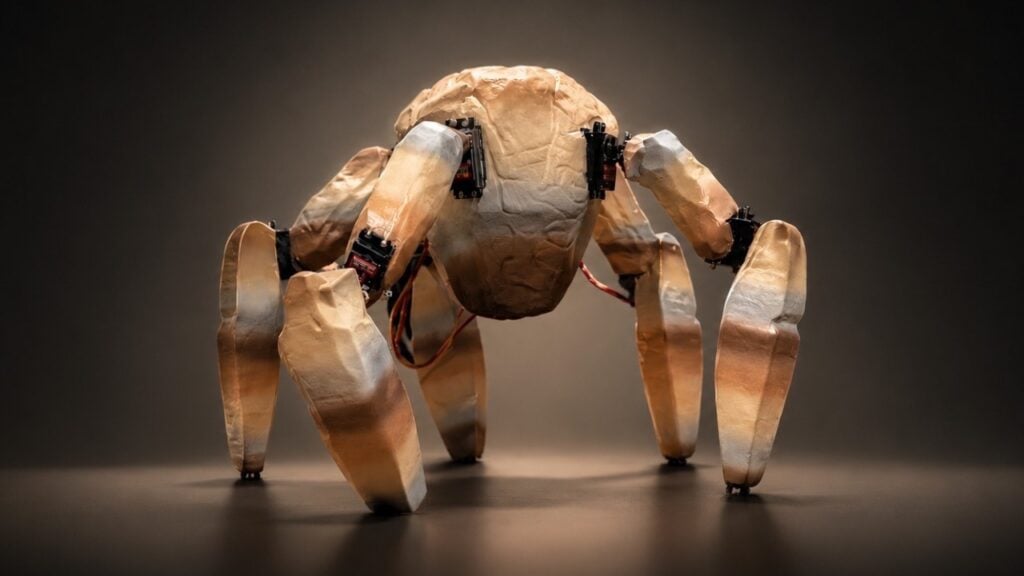
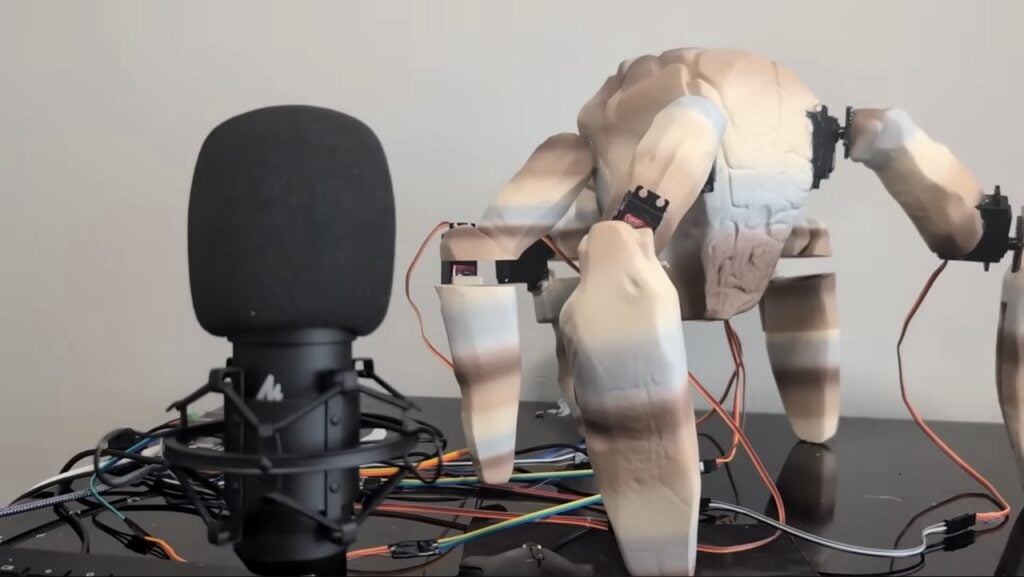
Visually, Rocky is a departure from the humanoid robots often seen in sci-fi. To capture the character’s unique physiology, Leviathan Engineer utilized advanced 3D printing techniques. The body and its five-fold symmetrical limbs were printed using multi-colored filament. To achieve a specific aesthetic—horizontal color gradients that give the robot a geological, "alien" texture—the maker had to manipulate the slicing software. Rather than optimizing for the fastest print time or structural orientation, the parts were arranged to ensure the filament’s color transitions aligned with the robot’s horizontal axis.
The Nervous System: Servos and Drivers
To facilitate movement, the build utilizes seven high-torque servos. Managing these requires more than just the Pi’s GPIO pins. The project employs a PCA9685 servo driver HAT (Hardware Attached on Top), which allows the Raspberry Pi to communicate with multiple servos over the I2C protocol. This offloads the Pulse Width Modulation (PWM) generation to a dedicated chip, ensuring smooth, jitter-free movement.
The Voice: AI and Claude Code
Perhaps the most impressive feat of the project is its interactive capability. Using "Claude Code," an AI-driven development environment, the maker integrated speech-to-text, a Large Language Model (LLM) personality, and text-to-speech. This allows Rocky to not only hear and understand human speech but to respond in the specific cadence and personality of the character from the novel, complete with an internal microphone and speaker system.
Chronology: The Journey from Page to Prototype
The development of the Rocky robot followed a timeline that mirrors the rising hype surrounding the Project Hail Mary film, which is slated for a 2026 release starring Ryan Gosling.
- Inspiration (Late 2025): Following the announcement of the film’s production details and the reveal of the character designs, Leviathan Engineer began conceptualizing a way to bring the character of Rocky to life. The goal was to move beyond a simple toy and create an "intelligent" companion.
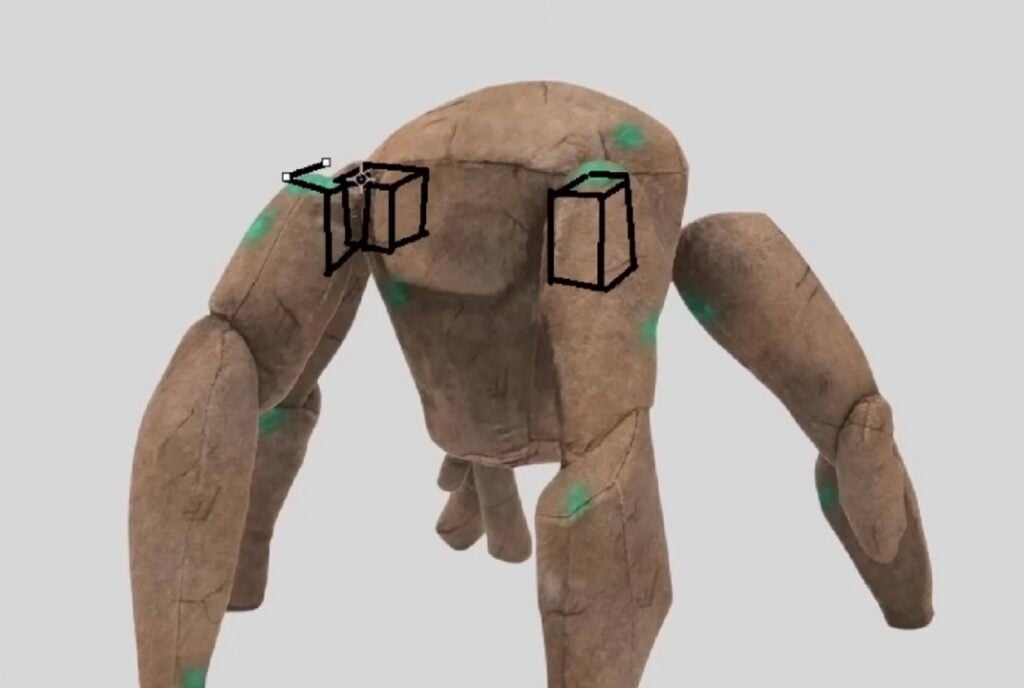
- Design Phase (Early 2026): The maker spent several weeks modeling the robot in CAD software. The challenge lay in the character’s non-humanoid shape, which required a unique distribution of weight and a specialized leg configuration to ensure stability during movement.
- The Printing Marathon: The 3D printing process was an iterative one. Due to the requirement for horizontal gradients, several prints were discarded until the orientation in the slicer was perfected.
- Hardware Integration (Mid 2026): Once the chassis was printed, the Raspberry Pi 5 and the PCA9685 HAT were installed. This stage involved complex wiring, particularly the integration of an external power supply. The maker discovered early on that the seven servos drew more current than the Raspberry Pi’s 5V rail could safely provide, leading to the addition of a dedicated power circuit.
- Software Synthesis: The final stage involved the implementation of the AI. Using Claude Code, the maker scripted the logic that allows Rocky to interpret "unprogrammed" commands. The breakthrough occurred when the AI successfully mapped the verbal request for a "fist bump" to a specific sequence of servo movements without a hard-coded script for that exact action.
Supporting Data: Technical Specifications and Performance
To understand the complexity of the build, one must look at the technical requirements of modern hobbyist robotics.
| Component | Specification | Role |
|---|---|---|
| Processor | Raspberry Pi 5 (4GB RAM) | Central logic and AI processing. |
| Control Interface | PCA9685 I2C HAT | Manages 16-channel PWM for servos. |
| Actuators | 7x High-Torque Servos | Controls leg articulation and "arms." |
| Audio Input | USB/Internal Microphone | Captures user voice commands. |
| Audio Output | Internal 3W Speaker | Provides AI-generated vocal responses. |
| Software Stack | Claude Code / Python | Handles LLM integration and hardware logic. |
| Power | 5V 10A External PSU | Powers servos independently of the Pi. |
The decision to use the Raspberry Pi 5 was driven by the latency requirements of the AI. In previous generations, the delay between a user speaking and the robot responding (the "round-trip time") could take several seconds. With the Pi 5’s improved architecture and the efficiency of Claude Code, the response time is near-instantaneous, creating a much more convincing illusion of life.
Official Responses: The Maker Community and Raspberry Pi
The project has garnered significant attention from the Raspberry Pi Foundation and the broader engineering community. In a feature for the Raspberry Pi Official Magazine, the editorial team noted that projects like Rocky represent a shift in the "Maker" ethos.
"We are seeing a transition from ‘pre-programmed’ robotics to ‘interpretive’ robotics," the magazine stated. "By using AI like Claude Code, makers are no longer limited by their own ability to write complex state machines. They can now give their creations a ‘personality’ that can handle edge cases—like a user asking for a fist bump—that the maker never explicitly planned for."
The team at the magazine also highlighted the project as a prime example of why they continue to support the print and digital distribution of Issue 167. They noted that the documentation provided by Leviathan Engineer serves as a blueprint for others looking to integrate LLMs with physical hardware. To encourage further innovation, the magazine is currently offering a free Raspberry Pi Pico 2 W to new subscribers, aiming to lower the barrier to entry for the next generation of roboticists.
Implications: The Future of Interactive Sci-Fi Tech
The successful creation of the Rocky robot has implications that extend far beyond the hobbyist’s workbench. It signals a new era in the democratization of high-end technology.
1. The Death of the Hard-Coded Robot
Traditionally, a robot could only do what its programmer specifically told it to do. If a programmer forgot to code a "wave" gesture, the robot could never wave. Leviathan Engineer’s Rocky proves that by using an LLM as a middle-layer controller, robots can now "understand" intent. This allows for a more natural human-robot interaction that mimics the "Everyman Scientist" themes found in Andy Weir’s writing—using logic and general knowledge to solve unforeseen problems.
2. Physicalizing AI
While AI has largely been confined to screens and speakers (like Alexa or Siri), this project demonstrates the potential for AI to inhabit a physical form. The "fist bump" example is a milestone; it shows an AI interpreting a social cue and translating it into physical spatial movement. As AI becomes more integrated into the physical world, we can expect more "social" robots in domestic and educational settings.
3. The "Weir Effect" on Engineering
Andy Weir’s influence on the engineering community cannot be overstated. By focusing on "hard" science and the "competence porn" of solving problems with math and physics, his stories inspire a specific type of maker. The Rocky project is a physical manifestation of that inspiration. It shows that the fans of these stories are not just passive consumers; they are active participants in the technological frontier, using the same "scientific survival" spirit to overcome the hurdles of 3D printing and power management.
As the 2026 premiere of Project Hail Mary approaches, the DIY Rocky stands as a precursor to a wave of interactive, AI-driven movie memorabilia. It is a reminder that in the modern age, the line between the science we watch on screen and the science we build in our garages is thinner than ever before. For those looking to follow in Leviathan Engineer’s footsteps, the resources are available, the hardware is accessible, and the only limit is the imagination of the maker.