PERTH, Australia — Law enforcement authorities in Australia, working in tandem with the Federal Bureau of Investigation (FBI) and local police, have arrested two men believed to be the driving forces behind TeamPCP, a prolific and disruptive cybercrime syndicate. The group is widely blamed for orchestrating the longest-running softwaresupplychain attack spree in history, compromising thousands of global businesses and humiliating major technology giants along the way.
According to an official statement released by the Australian Federal Police (AFP), two men from Western Australia, aged 21 and 23, were taken into custody following a coordinated international disruption operation. The suspects are accused of running a sophisticated cybercrime enterprise that engineered malicious open-source software to pillage corporate networks worldwide.
Subsequent news reports from the Australian Broadcasting Corporation (ABC) identified the 21-year-old suspect as Ruben Ian Thomson of Cottesloe, a beachside suburb of Perth, and the 23-year-old as Michael Gaebler, who allegedly operated under the handle @pcpcasper.
The arrests mark a dramatic conclusion to a months-long cat-and-mouse game involving international law enforcement, threat intelligence firms, and investigative journalists. TeamPCP’s reign of terror highlights a terrifying evolution in modern cybercrime: a decentralized collective of digitally fluent, substance-dependent youths utilizing artificial intelligence to execute systemic breaches at an unprecedented scale—only to collapse under the weight of catastrophic operational security (OpSec) failures.
Main Facts: The Anatomy of the TeamPCP Syndicate
TeamPCP burst onto the global cybercrime landscape in late 2025, quickly distinguishing itself not as a traditional, hierarchical ransomware gang, but as a fluid amalgamation of independent threat actors hailing from multiple underground forums.
Rather than deploying conventional phishing emails or exploiting perimeter firewalls, TeamPCP weaponized the modern software development lifecycle. Their primary vector was the open-source ecosystem, where they embedded malicious payloads into widely used software libraries and development tools.
At the center of their arsenal was Shai-Hulud, a self-propagating worm. The worm targeted open-source developers whose credentials at public code repositories—such as GitHub and NPM—had been compromised via credential stuffing or social engineering. Once a developer’s machine was infected, Shai-Hulud silently injected malicious code into the software they maintained, effectively weaponizing the tool for downstream users.
As journalist Andy Greenberg described in Wired, TeamPCP mastered a cyclical exploitation model:
"The hackers gain access to a network where an open source tool commonly used by coders is being developed… The malware allows TeamPCP’s hackers to steal credentials that let them publish malicious versions of those software development tools, too. The cycle repeats, and TeamPCP’s collection of breached networks grows."
The group’s targets were monumental. In March, TeamPCP compromised LiteLLM, an open-source AI gateway connecting users to over 100 large language models. Security firm CloudSEK later revealed that this single attack harvested cloud service keys and corporate secrets from more than 2,500 organizations, including elite global technology companies. By May, the group claimed credit for breaching at least 3,800 code repositories on Microsoft-owned GitHub.
Chronology of a Global Spree: From Inception to Arrest
Late 2025: TeamPCP emerges, introducing the Shai-Hulud worm and embedding malicious backdoors into hundreds of open-source software packages. Forum identities like EllisD25 (aka BulkDMT and Express) begin advertising stolen corporate data and selling access on dark web forums like DarkForums and Breachforums.
September 2025: Ruben Thomson launches DMT Host, a virtual private server (VPS) service on cybercrime forums, while utilizing residential IP addresses in Perth, Australia, and South Africa.
March 2026: TeamPCP executes its high-profile supply chain attack against LiteLLM, compromising thousands of corporate pipelines. According to statements later made by syndicate leaders, internal burnout and struggles with substance abuse prompt a shift in leadership.
May 2026: TeamPCP releases the source code for Shai-Hulud 3.0 and launches a malicious hacking contest on Telegram. The group offers a $1,000 Monero (XMR) baseline prize to incentivize hackers to compromise the most heavily downloaded code packages, serving as a recruitment funnel for future talent and stolen access.
June 2026: Security researchers and investigative journalists begin mapping the digital footprint of TeamPCP’s leadership, linking forum aliases directly to real-world infrastructure in Western Australia. Concurrently, Microsoft-owned GitHub introduces a mandatory three-day "cooldown" period for Dependabot updates to thwart similar supply chain attacks.
August 2026: The AFP, alongside the FBI and Western Australian Police, executes early-morning raids, arresting Ruben Thomson (21) and Michael Gaebler (23). Both men are denied bail following an initial hearing in the Perth Magistrates Court.
Supporting Data: The Interconnected Web of the "Cybercats"
Security analysts emphasize that TeamPCP was less of a structured business and more of an ideological and criminal peer community. The central nervous system of this ecosystem was a Matrix chat server dubbed "Cybercats," created by prominent exploit developer George Prepakis (known online as @kernelstub).
The Cybercats server hosted an elite roster of cross-pollinating threat actors:
Boxturtle (@xpl0itrs): A data breach broker linked to major automotive heists, including unauthorized data leaks from BMW Group, Audi, Honda, Mercedes-Benz, Volvo, and Toyota.
SeesawSec: The alias representing Fulcrumsec, a ransomware and data extortion outfit responsible for high-profile attacks against pharmaceutical giant Novo Nordisk, data broker LexisNexis, and Fortune 500 distributor Avnet.
Ellis (Ruben Thomson): Operating under nicknames like BulkDMT, Express, and Deadcatx3, Thomson served as a primary organizer and spokesperson for TeamPCP.
Despite their technical brilliance, the group’s operational security was severely undermined by personal vulnerabilities. Threat intelligence platforms like Intel 471, SpyCloud, and Flashpoint tracked the group’s digital exhaust, noting that key members openly discussed their struggles with heavy narcotics—specifically methamphetamine, ketamine, and synthetic DMT—on public messaging channels.
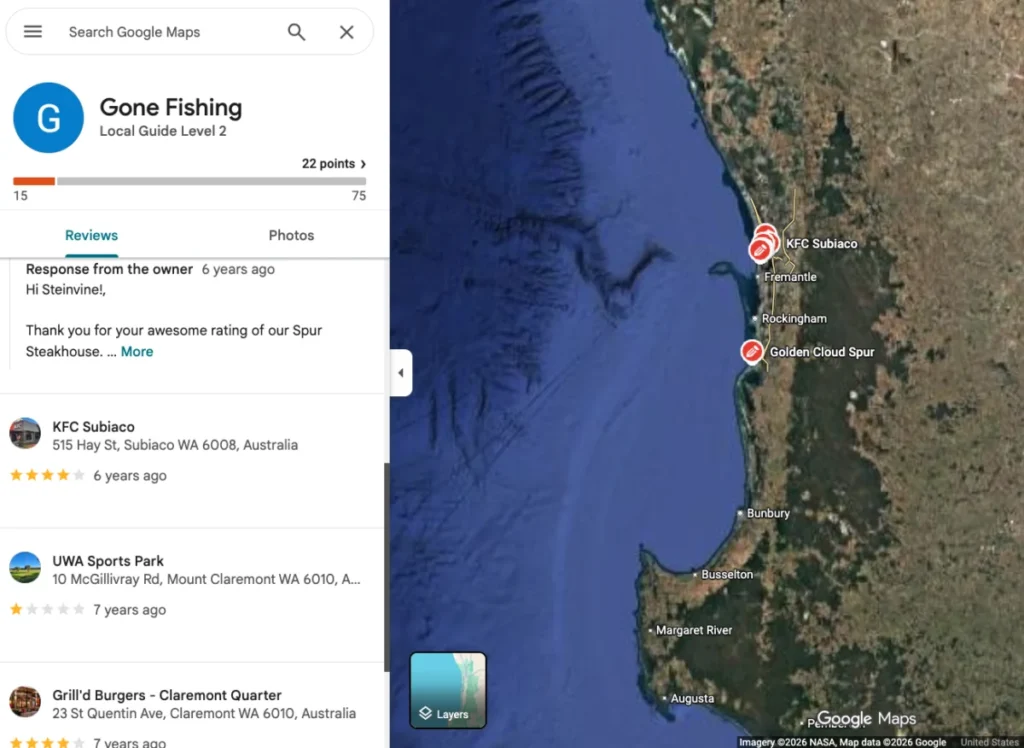
Thomson’s downfall was hastened by a trail of glaring digital oversights. He reused email addresses (such as [email protected]) across benign freelance platforms like Upwork, commercial Airbnb bookings, and notorious cybercrime forums. Most damningly, Thomson registered an account on the bug-bounty platform HackerOne using the handle Deadcatx3—an alias security firms had already definitively tied to TeamPCP. Furthermore, he incorporated Australian businesses under names like OPSEC Express, hilariously violating the very tenets of operational security.
Official Responses and Legal Proceedings
The swift dismantling of the Perth cell has drawn praise from international cybersecurity stakeholders, though legal battles are only just beginning.
In its official press briefing, the Australian Federal Police confirmed that the two suspects face a combined 14 cybercrime offenses. Following their initial appearance in the Perth Magistrates Court, Ruben Thomson was remanded in custody after being denied bail, while Michael Gaebler’s defense counsel did not press for release. Both men are scheduled to return to court on September 18.
Charlie Eriksen, a security researcher at Aikido Security, noted that TeamPCP represents a dangerous new breed of cybercriminal:
"They are not a state actor, not quite organized cybercrime, and not purely ideological. Their motivations seem to mix money, disruption, attention, and ideology."
Eriksen pointed out that the proliferation of Large Language Models (LLMs) has compressed the learning curve for malicious actors, allowing individuals with strong technical intuition but poor discipline to orchestrate attacks of staggering proportions.
Implications: The Legacy of TeamPCP on Software Security
While the arrest of Thomson and Gaebler effectively neutralizes a core cell of TeamPCP, the syndicate’s legacy has fundamentally altered the security posture of the global software supply chain.
For years, cybersecurity advocates pleaded with technology monoliths to implement stricter guardrails for open-source package repositories. It required an onslaught of brazen attacks by TeamPCP—culminating in the Shai-Hulud worm—to force systemic change.
In response to the chaos sown by TeamPCP, GitHub introduced a mandatory three-day "cooldown" period for Dependabot updates in late July, buying critical windows of time for maintainers to intercept poisoned code before it propagates into production environments. Similar cooldown mechanisms have since been adopted across Python and JavaScript packaging ecosystems.
Reflecting on the group’s chaotic impact, Eriksen offered a paradoxical conclusion:
"They managed to wake up Microsoft to the fact that they had become negligent in terms of security. By compromising GitHub and stealing their source code, they humiliated Microsoft into action, making them finally act on what we had been asking them to do and take seriously for a while now."
TeamPCP’s brief, destructive, and ultimately tragic trajectory serves as a stark warning to the tech industry. It underscores a fragile reality: while artificial intelligence and open-source collaboration empower innovation, they simultaneously hand immense destructive capabilities to volatile operators who may ultimately destroy themselves—and their targets—in a haze of digital and chemical chaos.