Mastering the Flow: A Comprehensive Deep Dive into Modern Current Sensing Technology
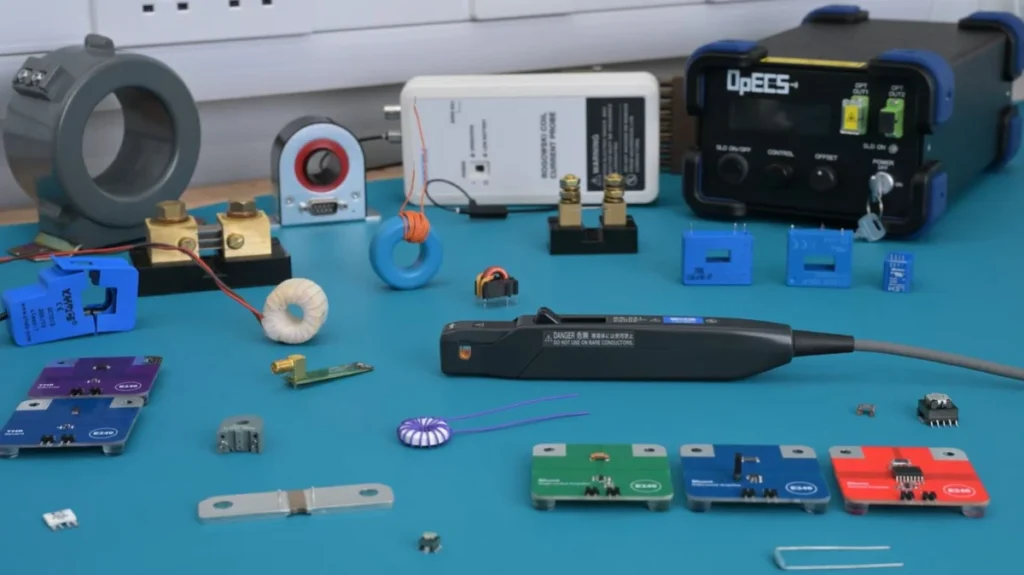
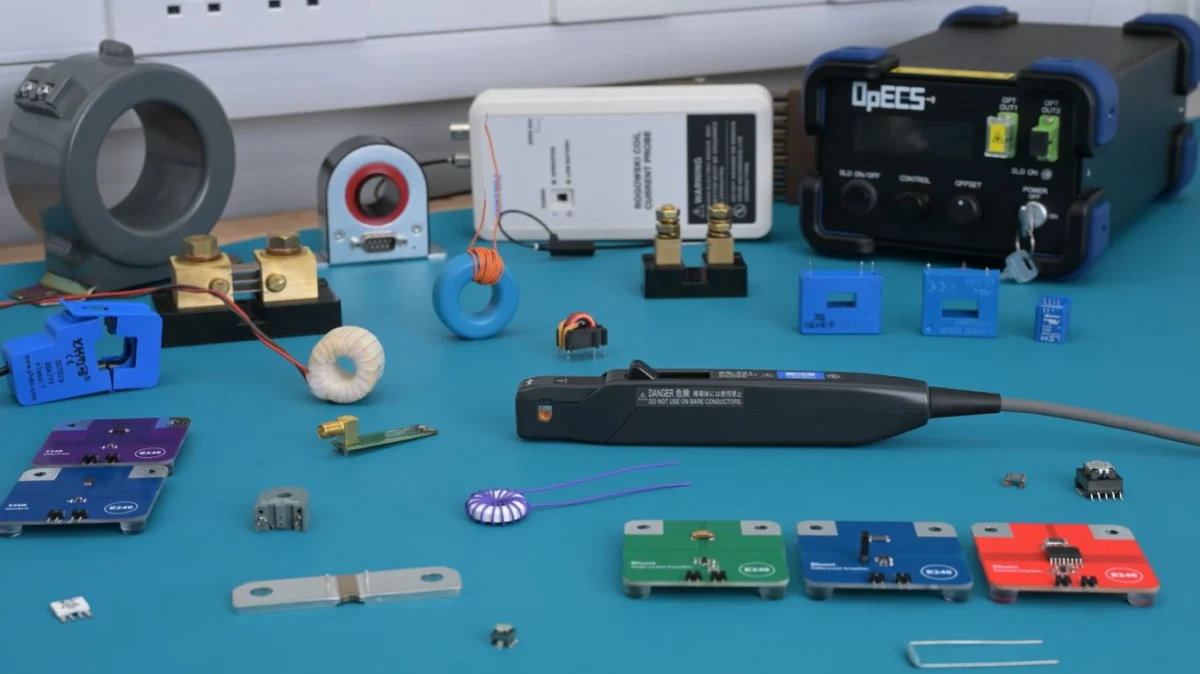
In the intricate world of electrical engineering, the ability to accurately measure current is the cornerstone of system reliability, efficiency, and safety. Whether managing the power delivery of a high-performance graphics card or monitoring the massive loads in an industrial grid, engineers must navigate a complex landscape of sensing technologies. A recent deep-dive exploration by [ElectrArc240] has shed new light on the vast spectrum of current sensors available today, highlighting the trade-offs between simplicity, cost, and precision.
Understanding the "how" and "why" of current measurement is not merely an academic exercise; it is a critical skill set that determines the longevity and performance of virtually every electronic device in operation today.
The Fundamentals of Current Sensing: Main Facts
At its most basic level, measuring electrical current—the flow of charge carriers—requires interacting with the physical properties of that flow. Because electrons moving through a conductor produce both heat and magnetic fields, most sensors are designed to exploit these two phenomena.
The most ubiquitous method, the shunt resistor, relies on Ohm’s Law ($V=IR$). By placing a known, precise resistance in series with the load, an engineer can measure the voltage drop across that resistor to calculate the current flowing through it. It is the "gold standard" for low-voltage, low-power applications.
However, as systems scale in voltage and current, the shunt resistor’s inherent limitations—specifically heat dissipation and the lack of galvanic isolation—become significant liabilities. This leads designers to explore magnetic-based sensing, which allows for "non-intrusive" measurement. By detecting the electromagnetic flux surrounding a conductor, sensors can determine current levels without direct electrical contact, providing both safety and the ability to measure high-side currents without complex instrumentation amplifiers.
Chronology of Innovation: From Basic Resistors to Fiber Optics
The evolution of current sensing has tracked the growth of the power electronics industry.
The Era of the Shunt (Mid-20th Century)
The shunt resistor has remained the baseline for decades. In the early days of computing and consumer electronics, it was the only economically viable way to track current. Today, it remains embedded in everything from smartphone battery management systems (BMS) to the power-delivery modules (VRMs) on modern GPUs. Modders often exploit this by bypassing these resistors to "trick" the system into providing more power for overclocking.
The Rise of Magnetic Coupling (1970s–1990s)
As industrial motors and large-scale power distribution systems expanded, the need for safe, high-voltage measurement grew. This era saw the standardization of current transformers (CTs) and the refinement of Hall-Effect sensors. The Hall-Effect, discovered in 1879, finally became a practical tool for electronics designers once integrated circuits made it possible to amplify the tiny voltages generated by these sensors reliably.
The Exotic Frontier (2000s–Present)
In the last two decades, the focus has shifted toward extreme precision and high-bandwidth sensing. Technologies like TMR (Tunnel Magnetoresistance), fluxgate sensors, and fiber-optic current sensors (FOCS) have emerged. These technologies represent the bleeding edge, utilizing quantum effects and optical interference to measure current with a level of accuracy that was previously unimaginable, albeit at a significant price premium.
Supporting Data: Comparative Analysis of Sensor Technologies
When selecting a sensor, engineers must balance four key metrics: Cost, Bandwidth, Accuracy, and Isolation.
| Sensor Type | Cost | Isolation | Bandwidth | Typical Application |
|---|---|---|---|---|
| Shunt Resistor | Very Low | No | Very High | Consumer Electronics |
| Current Transformer | Moderate | Yes | Low (AC only) | Utility Metering |
| Hall-Effect | Moderate | Yes | Moderate | Motor Controllers |
| Fluxgate | High | Yes | High | Precision Instrumentation |
| Fiber-Optic | Very High | Yes | Ultra-High | Power Grid/Rail |
The Role of the Faraday Effect
One of the most sophisticated methods discussed by [ElectrArc240] is the use of the Faraday Effect. This phenomenon involves the interaction between light and a magnetic field in a transparent medium. When light travels through an optical fiber exposed to a magnetic field, the plane of polarization of the light rotates. By using an interferometer to measure this phase shift, engineers can derive the current with extreme precision. This method is immune to electromagnetic interference (EMI), making it perfect for high-voltage environments where traditional electronic sensors would be overwhelmed by noise.
Official Industry Perspectives: The Engineering Trade-offs
Industry experts often emphasize that there is no "perfect" sensor; there is only the "right" sensor for the job. In a recent technical symposium, power electronics designers noted that the "gotchas" in current sensing are rarely the sensors themselves, but rather the implementation.
"The biggest failure point is rarely the component, but the signal integrity," noted a senior application engineer. "When using shunt resistors, the layout of your Kelvin connections is everything. When using Hall-Effect sensors, the stray magnetic fields from nearby inductors are your worst enemy."
The general consensus among industry leaders is that as we transition toward high-density power delivery—such as in GaN (Gallium Nitride) and SiC (Silicon Carbide) power modules—the bandwidth requirements for current sensing are outpacing current sensor development. The industry is currently pushing for sensors that can operate at multi-megahertz frequencies without significant phase delay.
Implications: The Future of Electrical Systems
The implications of these sensing technologies extend far beyond the laboratory. As the world accelerates its transition to electric vehicles (EVs) and renewable energy, the demand for sophisticated current sensing will only grow.
Safety and Grid Stability
The shift to smart grids relies heavily on accurate, real-time current data. Fiber-optic sensors, for instance, are becoming instrumental in monitoring high-voltage DC (HVDC) transmission lines, where traditional iron-core transformers are too heavy and bulky.
The Consumer Electronics Paradox
In the consumer space, the "non-intrusive" requirement is driving innovation. As devices get smaller, the "thermal budget" becomes tighter. If a shunt resistor is too large, it wastes power as heat; if it is too small, the signal-to-noise ratio drops. The ongoing research into integrated Hall-Effect sensors—placing the sensor directly inside the power IC—is a direct response to this need for space and efficiency.
Conclusion: Knowing the Theory is Essential
Even if an engineer relies on off-the-shelf components, understanding the underlying physics is non-negotiable. Whether it is the simplicity of a shunt resistor in a laptop or the complexity of a fluxgate sensor in a medical imaging device, the principles of current measurement define the limits of what a system can achieve.
As [ElectrArc240] aptly demonstrates, the breadth of the field is immense. For the student or the seasoned professional, revisiting these fundamental concepts—the way we "see" the flow of electrons—is a vital reminder that at the heart of every technological marvel lies the humble, yet essential, measurement of current. As we move toward a more electrified future, the sensors that allow us to monitor this energy will continue to be the unsung heroes of engineering innovation.
By keeping these various technologies in the design toolkit, engineers can ensure that the systems of tomorrow are not only powerful but also efficient, safe, and built to withstand the rigors of the modern electrical landscape.