Raspberry Pi Bridges Industrial Computing and Commercial Displays with the Launch of the Smart Display Module
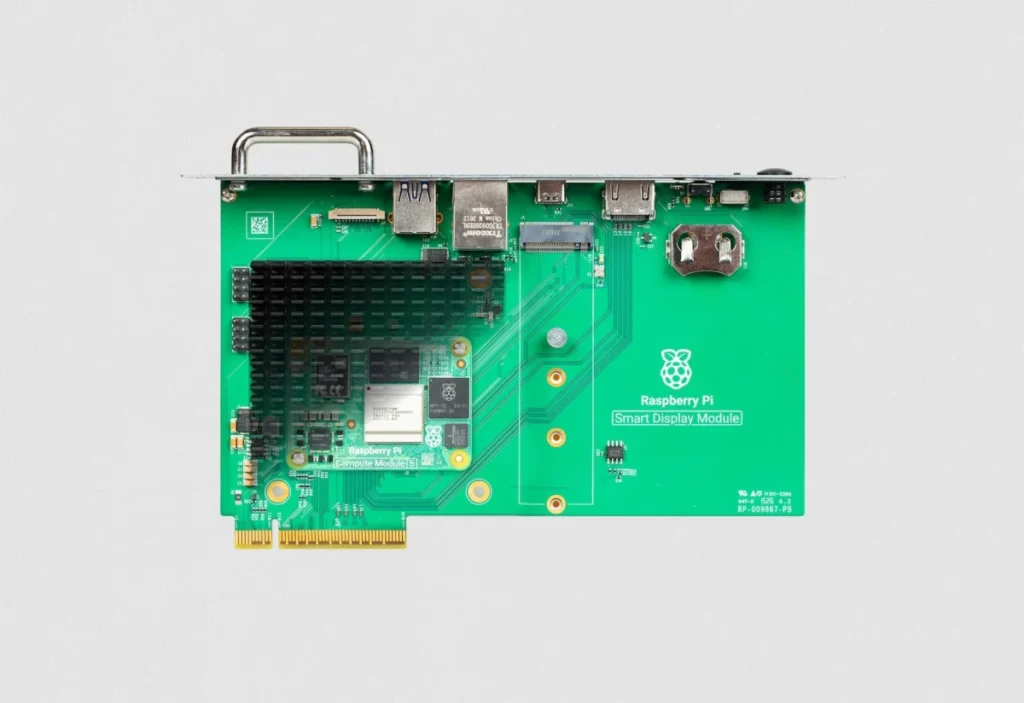
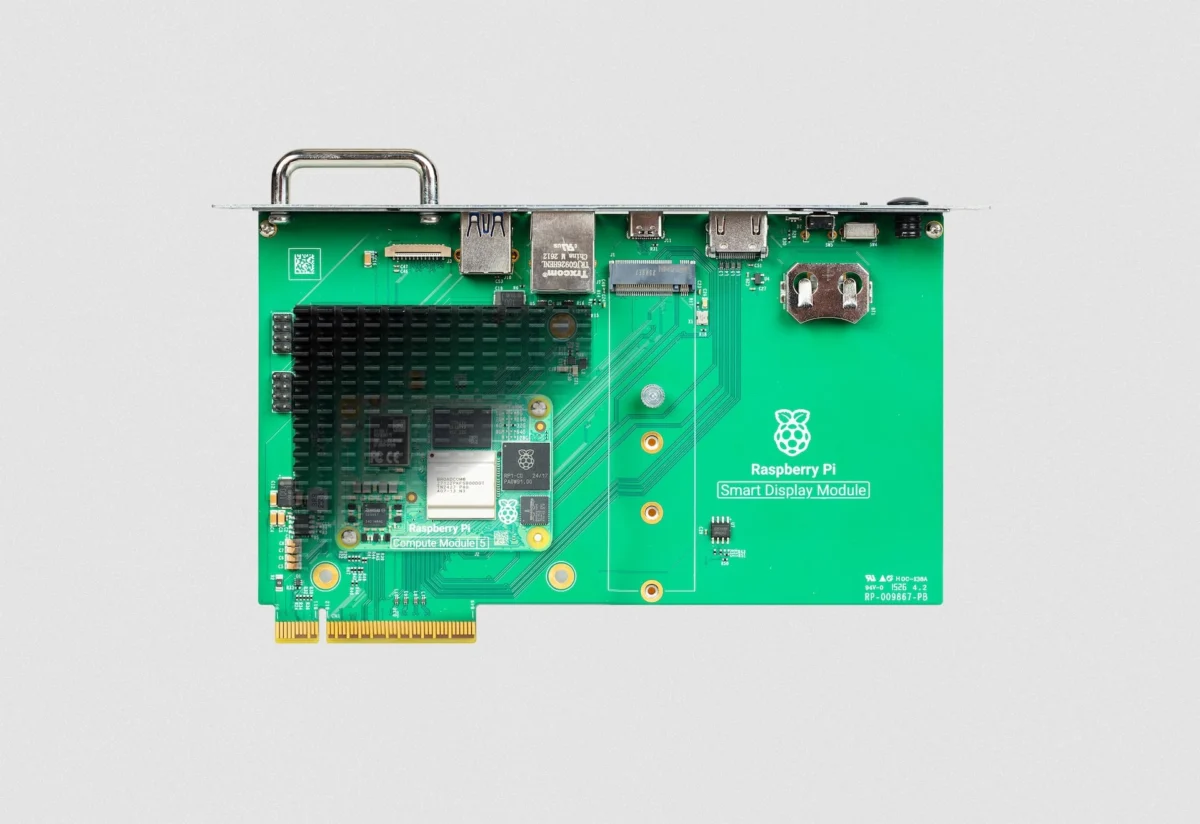
CAMBRIDGE, UK — Following months of eager anticipation after its initial preview in January, Raspberry Pi has officially launched its Smart Display Module (SDM). Developed in close strategic collaboration with Sharp Display Solutions Europe, the new adapter board is designed specifically for the Compute Module 5, bringing Raspberry Pi’s signature high-performance, cost-effective computing directly into enterprise-grade digital signage, public information systems, and professional visual installations.
Priced at an accessible $30 (with the Compute Module 5 sold separately), the Smart Display Module is available immediately through Raspberry Pi’s global network of Approved Resellers. By bridging the gap between open-source single-board computing and standardized commercial display architecture, the release aims to disrupt the multi-billion-dollar digital signage and visual communications market.
Main Facts
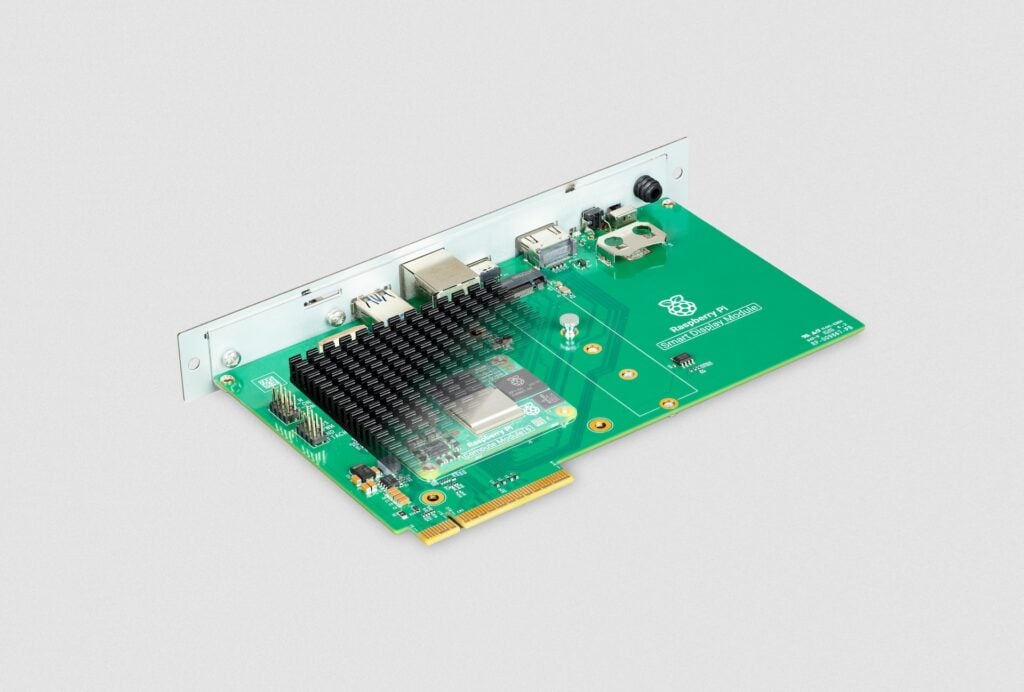
The Raspberry Pi Smart Display Module is an enterprise-focused adapter board engineered to slide seamlessly into any monitor, commercial display, or projector conforming to the Intel® Smart Display Module (SDM) specification. Key specifications and features include:
- Compute Engine: Designed natively for the Raspberry Pi Compute Module 5, delivering robust processing power and native 4K video playback capabilities.
- Standardized Form Factor: Adheres to the Intel SDM specification, providing internal, cable-free connections for power, video, audio, data, and control interfaces.
- Expandability: Features an on-board M.2 expansion slot, allowing integrators to add high-speed NVMe storage or dedicated AI acceleration modules (such as Hailo processors) for edge-computing workloads.
- Thermal Design: Completely fanless and silent, making it engineered for reliable, continuous 24/7 operation in sensitive or public environments.
- Ecosystem Compatibility: Fully compatible with existing content management systems (CMS) that already support the Raspberry Pi 5 or Compute Module 5.
- Pricing & Availability: Available now through official Raspberry Pi Approved Resellers at an MSRP of $30.
Chronology: From Concept to Commercial Reality
The path to the commercial release of the Smart Display Module reflects Raspberry Pi’s measured, industry-focused product development cycle:
- January: Raspberry Pi formally introduces the Smart Display Module concept, identifying it as an adapter board built to drive high-quality, low-power display experiences for commercial deployment.
- February: The hardware makes its public debut at Integrated Systems Europe (ISE) in Barcelona, Spain. The showcase attracts widespread attention from AV integrators, enterprise IT directors, and digital signage providers.
- Early Spring to Summer: A select group of enterprise partners and managed service providers—such as digital signage firm Media Looper—receive early evaluation units. Over a three-month testing period, these companies stress-test the hardware inside Sharp commercial displays in real-world environments.
- Today: Raspberry Pi officially announces general availability, opening global channels via its Approved Reseller network.
Supporting Data and Technical Architecture
The architecture of the Smart Display Module is tailored to solve persistent pain points in commercial AV deployment: clutter, maintenance overhead, and high hardware costs.
Eliminating Cable Clutter and External Power Supplies
Traditional digital signage setups typically require a standalone media player, an external power brick, an HDMI cable, a USB control line, and custom mounting brackets attached to the back of a display. These external components are frequent points of failure; cables can be accidentally unplugged, power supplies can overheat, and external boxes are vulnerable to tampering in public spaces.
The Intel SDM specification eliminates these external variables by integrating everything directly into the chassis of the display itself. When the Raspberry Pi Smart Display Module (mated with a Compute Module 5) slides into an SDM-compatible slot, it establishes an internal, blind-mating connection. Power, data, and high-definition video are handled internally, resulting in a sleek, tamper-proof installation.
Advanced Capabilities: 4K Playback and AI Integration
Despite its compact footprint and low power draw, the module does not compromise on performance. Powered by the Compute Module 5, it effortlessly drives 4K video playback, meeting the modern standard for high-definition retail advertisements, corporate dashboards, and transit maps.
Furthermore, the inclusion of an on-board M.2 expansion slot future-proofs the hardware. Enterprise customers are increasingly demanding edge intelligence—such as audience measurement, automated content triggering, and computer vision analytics. By pairing the M.2 slot with an AI accelerator like a Hailo processor or high-speed local storage, the Smart Display Module transforms from a simple media player into an intelligent, data-driven edge node.
Target Vertical Markets
Raspberry Pi has designed the hardware to excel across several specific commercial sectors:
- Flight Information Display Systems (FIDS): Airports and transit hubs require ultra-reliable 24/7 uptime to display real-time scheduling data without system crashes.
- Wayfinding: Interactive and static directory kiosks in hospitals, university campuses, and corporate headquarters.
- Retail and Corporate Signage: Dynamic promotional displays, menu boards, and internal corporate communication networks.
- Pro AV and Immersive Experiences: When integrated into SDM-compatible projectors, the module can drive complex visual exhibits, museum installations, and artistic projections.
Official Responses and Early Field Testing
Publicly unveiled at ISE in Barcelona, the module has already undergone rigorous real-world validation. Companies that participated in the early-access evaluation phase have reported overwhelmingly positive results.
Jon McIntosh, founder of Media Looper—a managed digital signage service tailored for small businesses—tested the Smart Display Module paired with a Sharp commercial display over a three-month trial period. Highlighting the elimination of physical vulnerabilities, McIntosh noted:
"It does everything our Raspberry Pi 5 does, with no cable, power supply, or bracket for a customer to disturb. We would deploy it as our default for any customer whose display has an SDM slot."
This sentiment echoes the strategic vision shared by Raspberry Pi leadership: making industrial-grade, reliable computing accessible and straightforward for businesses of all sizes, from local storefronts to multinational transport hubs.
Implications for the Digital Signage and AV Industries
The release of the $30 Raspberry Pi Smart Display Module carries significant implications for the broader audiovisual and digital signage markets, traditionally dominated by proprietary, high-cost hardware ecosystems.
Democratizing Pro-AV Hardware
Historically, commercial displays equipped with Intel SDM slots relied on proprietary x86-based compute modules that could cost hundreds—or even thousands—of dollars. By introducing an ARM-based, Linux-compatible alternative at a fraction of the cost, Raspberry Pi is lowering the financial barrier to entry for professional digital signage.
Leveraging an Established Software Ecosystem
One of the most compelling advantages of the Raspberry Pi ecosystem is its massive software library. Because the Smart Display Module runs on the Compute Module 5, it is instantly compatible with an extensive array of established Content Management Systems (CMS) and Linux-based toolsets that already support Raspberry Pi 5 architecture. Integrators do not need to build proprietary software stacks from scratch; they can deploy existing, trusted signage software onto the new hardware platform immediately.
Reliability in 24/7 Environments
Commercial environments are notoriously harsh on consumer electronics. Dust, vibration, and continuous operation cause traditional fan-cooled media players to fail prematurely. The fanless, solid-state design of the Smart Display Module—combined with the industrial pedigree of Sharp’s display hardware—provides a dependable, maintenance-free solution designed for continuous, round-the-clock operation.
Looking Ahead
With the Smart Display Module now globally available through Raspberry Pi’s Approved Reseller network, businesses, systems integrators, and AV professionals can begin incorporating the hardware into their upcoming infrastructure deployments.
Organizations interested in evaluating the Smart Display Module for large-scale enterprise rollouts, or those wishing to learn more about compatible display and projector manufacturers supporting the SDM form factor, can reach out directly to the Raspberry Pi sales team via the official contact portal on the Raspberry Pi website.