Revolutionizing Music Discovery: How Spotify Leverages TensorFlow and Reinforcement Learning to Simulate Listening Experiences

By Tech & AI Industry Correspondent
In the modern landscape of digital streaming, keeping listeners engaged requires far more than simply housing millions of tracks in a cloud database. The true magic lies in the delivery—curating ordered sequences of music that align precisely with a user’s immediate context, mood, and evolving tastes. For music streaming giant Spotify, solving this music recommendation puzzle is an ongoing, high-stakes engineering challenge.
Recently, a team of researchers and engineers at Spotify—featuring Surya Kanoria, Joseph Cauteruccio, Federico Tomasi, Kamil Ciosek, Matteo Rinaldi, and Zhenwen Dai—published groundbreaking work detailing how the company has turned to Reinforcement Learning (RL) to craft next-generation listening experiences. By combining the power of TensorFlow, TF-Agents, and custom-built user simulators, Spotify has unlocked a scalable blueprint for training intelligent recommendation agents offline, drastically reducing the risks associated with live experimentation.

Main Facts: The Intersection of Reinforcement Learning and Music Streaming
At its core, music recommendation is a sequential decision-making process. Every time a user skips a track, replays a song, or abandons a playlist, they are providing implicit feedback that shapes their preferences. Traditional machine learning models often treat recommendations as isolated events or simple multi-class classification problems, failing to capture the long-term trajectory of a listening session.
To address this, Spotify’s engineering team explored Reinforcement Learning, a paradigm where software "agents" learn optimal strategies by interacting with an environment to maximize cumulative rewards. However, deploying untrained or half-baked RL agents directly onto a live platform with hundreds of millions of active users is out of the question; poor recommendations could degrade user satisfaction and alienate listeners.
To bypass this roadblock, the team designed a robust, offline, model-based simulation environment utilizing TensorFlow Agents (TF-Agents). By simulating user behavior using deep learning models trained on historical data, Spotify can safely train, evaluate, and iterate on complex recommendation policies before ever exposing them to real-world audiences.

Chronology: From Concept to Production-Scale RL
The journey toward a fully functional simulation ecosystem required a methodical, multi-phase engineering effort.
Phase 1: Choosing the Right Ecosystem
Spotify’s production machine learning stack heavily relies on TensorFlow and its broader ecosystem, including TFX and TensorFlow Serving. Recognizing the immense efficiency gains of integrating future experiments directly into their existing infrastructure, the team selected TF-Agents as their foundational RL library. This choice ensured that experimental prototypes could eventually transition into robust production pipelines with minimal friction.
Phase 2: Designing the Offline Simulator
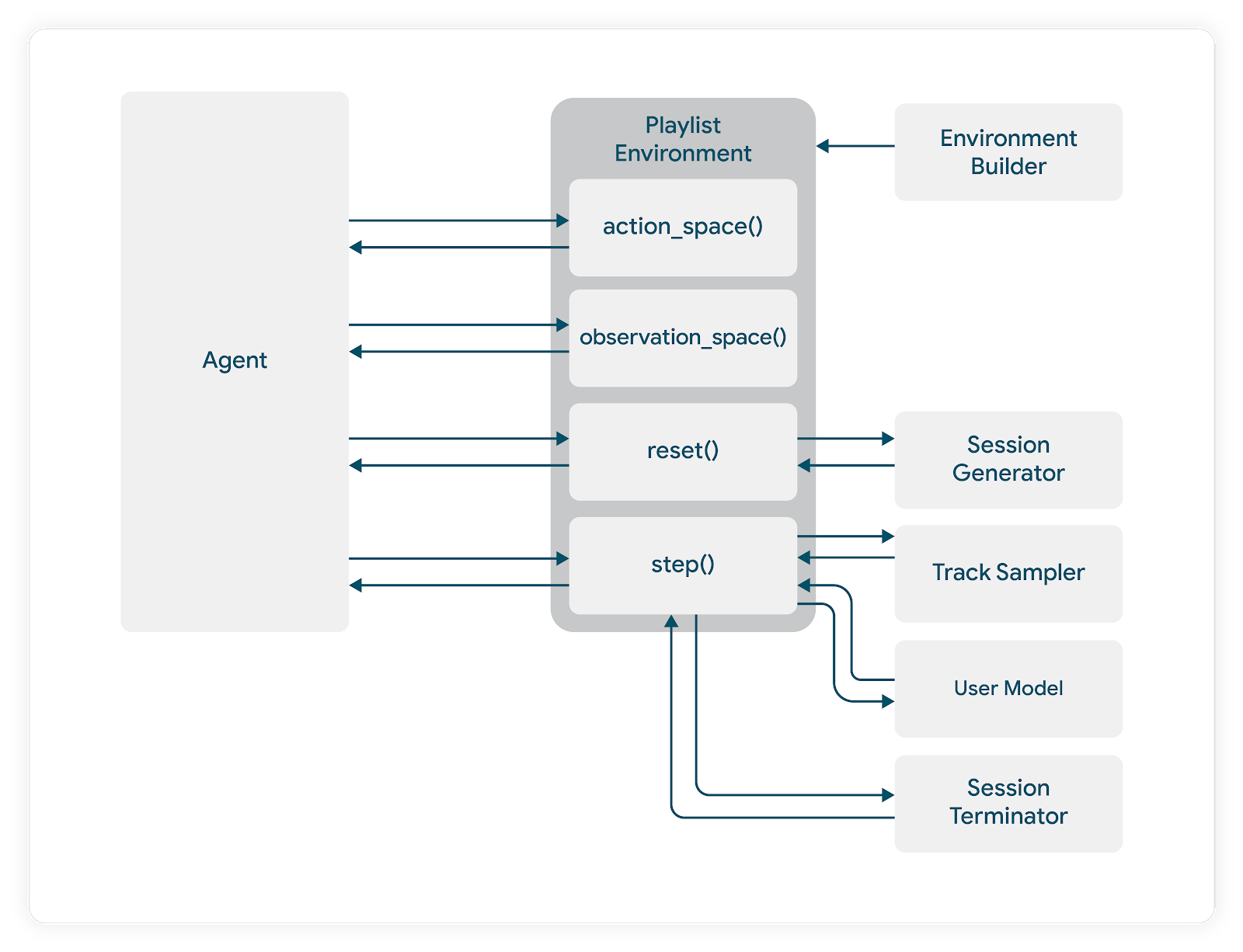
With the library chosen, the engineers faced a missing technical link: an offline environment capable of mimicking real Spotify listening sessions. Utilizing TF-Agents’ Environment primitives, the team built a modular, extendable simulator. This simulator relied on two primary components:
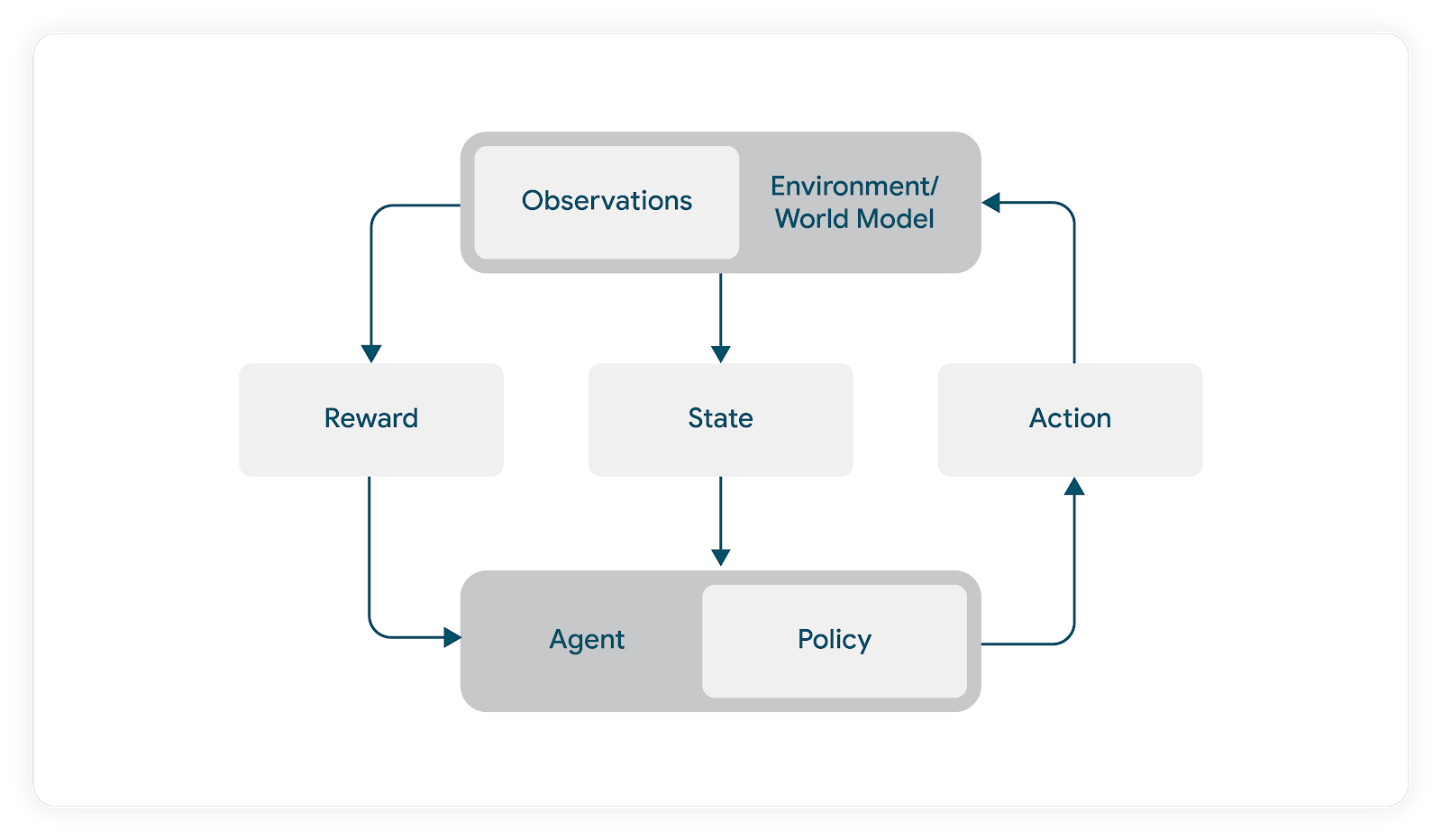
- An Episode Sampler (
_episode_sampler): Responsible for seeding the simulation with hypothetical user profiles and content tracks derived from historical sessions. - A User Model (
_user_model): Built using Keras, this model predicts how a simulated user will react to a specific sequence of recommended tracks, translating those reactions into numerical rewards.
Phase 3: Developing Custom RL Architectures
Standard RL algorithms often struggle with Spotify’s massive state and action spaces, particularly because users interact with multiple items in a slate (playlist) rather than making a single binary choice. To overcome this, Spotify developed a modified Deep Q-Network known as the Action-Head DQN (AH-DQN).
Phase 4: Offline-to-Online Validation
Once the agents were trained within the simulator, the team ran rigorous offline evaluations. Crucially, they compared these offline performance metrics against live A/B testing results. The findings revealed a strong positive correlation between simulated performance estimates and real-world online outcomes, validating the accuracy and reliability of the simulation framework.
Supporting Data and Technical Architecture
Building a simulator capable of mimicking human music consumption required rigorous architectural design. The Spotify team formalized their environment around abstract base classes that mirrored the standards established by TF-Agents.

The Environment Abstraction
At the heart of the codebase lies the AbstractEnvironment class, which mandates the implementation of core RL methods:
class AbstractEnvironment(ABC):
    _user_model: AbstractUserModel = None
    _track_sampler: AbstractTrackSampler = None
    _episode_tracker: EpisodeTracker = None
    _episode_sampler: AbstractEpisodeSampler = None

    @abstractmethod
    def reset(self) -> List[float]:
      pass

    @abstractmethod
    def step(self, action: float) -> (List[float], float, bool):
      pass

    def observation_space(self) -> Dict:
      pass

    @abstractmethod
    def action_space(self) -> Dict:
      pass
Bridging Custom Environments with TF-Agents
To leverage the out-of-the-box training algorithms and replay buffers provided by TF-Agents, the team established a three-tier conversion pipeline:
- Concrete Environment Definition: Creating domain-specific classes like
PlaylistEnvironmentthat inherit fromAbstractEnvironment. - Environment Builder Classes: Utilizing an
EnvironmentBuilderto bundle user models, track samplers, and episode samplers into a unified instance. - TF-Agents Conversion: Wrapping the custom environment inside a
TFAgtPyEnvironmentsubclass (py_environment.PyEnvironment), making it fully compatible with TF-Agents’ training loops and replay buffers.
Handling Massive Action Spaces with AH-DQN
In traditional recommendation tasks, agents select a single item. In playlist generation, the agent must curate an ordered set of tracks from an ever-changing pool of millions of songs. The combinatorial complexity of this task rendered standard slate recommendation algorithms ineffective.

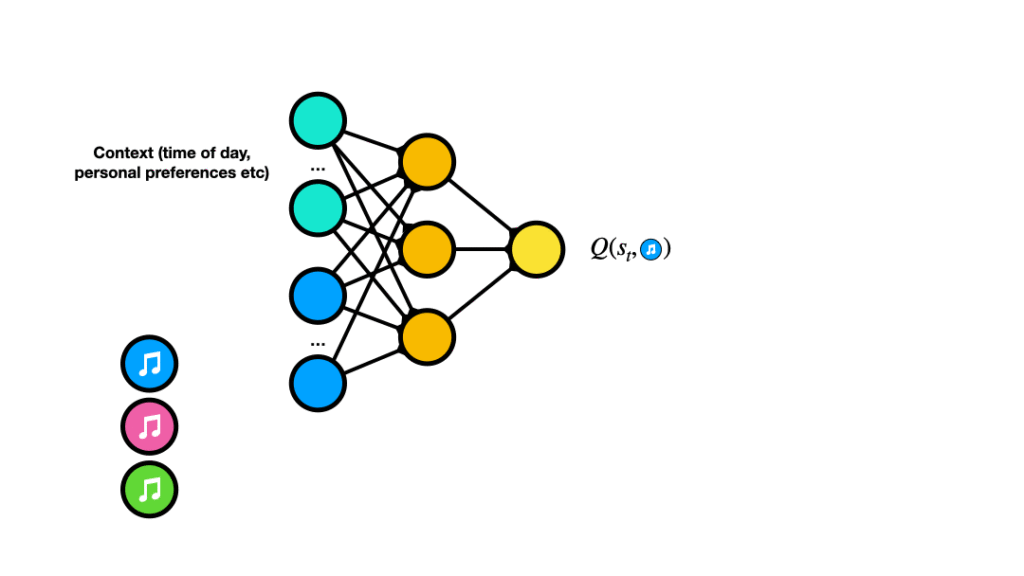
Spotify’s Action-Head DQN (AH-DQN) solves this by evaluating the current state against individual available actions to produce a single Q-value per item. The system iteratively selects the track with the highest Q-value, appends it to the playlist, and repeats the process until the slate is fully constructed. Furthermore, built-in safeguards ensure that duplicate tracks are never recommended within the same session.
Official Responses and Industry Reception
The success of this methodology culminated in a research paper presented at KDD 2023 by Federico Tomasi, Joseph Cauteruccio, Surya Kanoria, Kamil Ciosek, Matteo Rinaldi, and Zhenwen Dai.
Industry experts have lauded the work for bridging the gap between theoretical reinforcement learning and industrial-scale production. By demonstrating that offline simulations can accurately predict online user satisfaction, Spotify has provided a blueprint for safely applying RL to domains where direct online exploration is economically or socially risky.
The authors also expressed gratitude to their broader engineering community, specifically acknowledging early contributions from Mehdi Ben Ayed in developing the foundational RL codebase, as well as the TensorFlow Agents team for ongoing support and maintenance of the open-source library.
Implications: The Future of AI-Driven Personalization
The implications of Spotify’s successful integration of TF-Agents and model-based RL extend far beyond automated playlist generation.
- Scalable Experimentation: By proving that offline simulators can reliably forecast online metrics, Spotify has effectively removed a major bottleneck in machine learning research. Engineers can now test thousands of policy iterations overnight without risking user churn.
- Dynamic Adaptation: Unlike static machine learning models that require batch retraining on historical logs, RL agents are inherently designed to adapt to sequential feedback. This paves the way for hyper-responsive recommendation systems that can pivot in real-time as a user’s mood shifts throughout a listening session.
- Broader Industry Adoption: The architectural patterns established by Spotify—particularly the use of Keras-based user models paired with TF-Agents environments—offer a replicable template for other domains facing complex sequential decision-making challenges, such as e-commerce, digital advertising, and dynamic content feeds.
As streaming platforms continue to compete for user attention, innovations like Spotify’s Action-Head DQN and simulation pipelines demonstrate that the future of personalization lies at the intersection of deep reinforcement learning and robust engineering infrastructure.