Skyward Precision: How One Maker Transformed a Budget Pan-Tilt Head into an Automated Aircraft Tracker
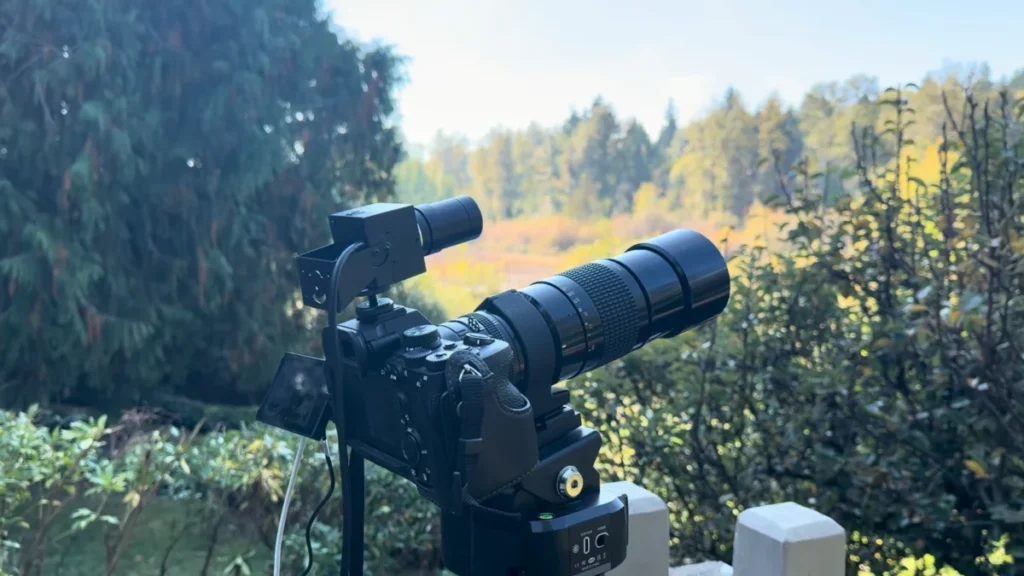
In the specialized world of aviation photography, capturing the perfect shot of a high-altitude aircraft requires more than just a powerful lens; it demands split-second timing, precise tracking, and an intimate knowledge of flight paths. For most enthusiasts, this is a labor of love defined by manual focus and erratic panning. However, Kyle Housley, an innovative maker and engineer, has bridged the gap between amateur photography and industrial-grade automation.
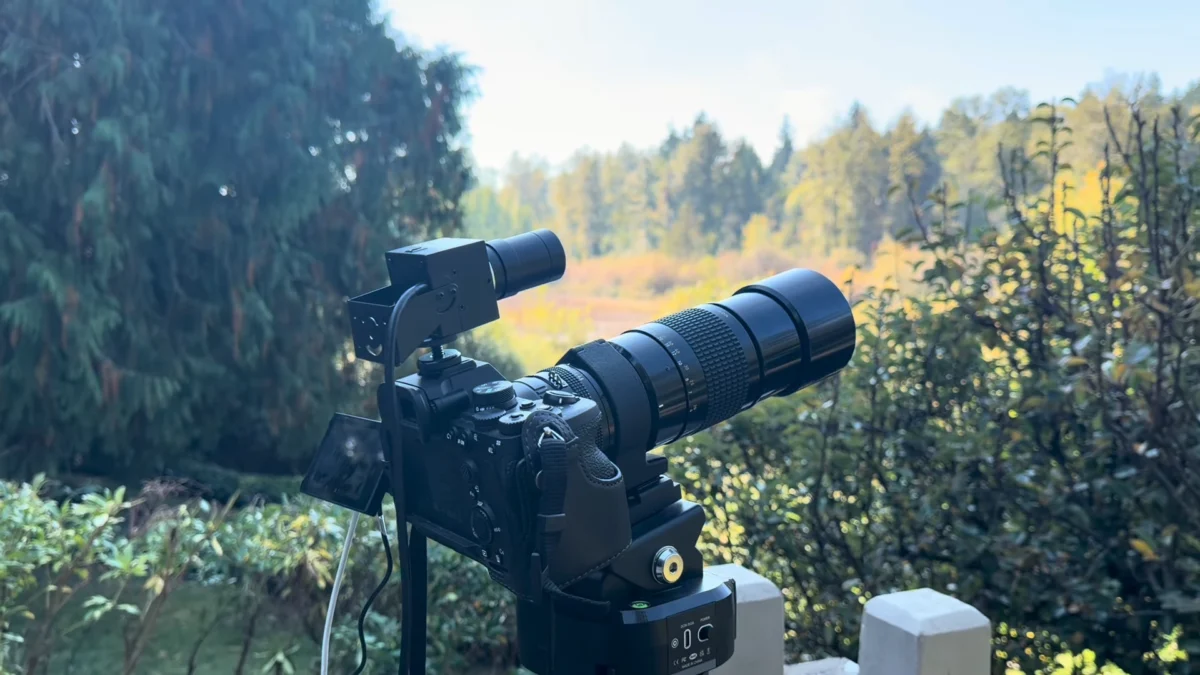
By reverse-engineering the Soonpho M7 Pan-Tilt Head—a budget-friendly piece of gear—Housley has developed a sophisticated wireless control system. Utilizing an ESP32-S3 microcontroller and a Yolo-based computer vision model, he has effectively transformed a standard consumer accessory into a robotic, autonomous motion-tracking rig capable of locking onto and photographing aircraft in real time.
Main Facts: The Anatomy of an Upgrade
At the heart of the project lies the Soonpho M7, a pan-tilt head typically used for static videography or basic remote monitoring. While functional, the M7 is limited by its proprietary, out-of-the-box controller, which offers little in the way of programmable precision. Housley’s intervention involved bypassing this limitation entirely to gain granular, programmatic control.
The hardware architecture of the custom controller is elegant in its efficiency. Housley employed an ESP32-S3—a dual-core microcontroller renowned for its integrated Wi-Fi and Bluetooth capabilities—as the primary processing unit. This is paired with an NRF24L01 wireless transceiver module.
The system operates in two distinct stages:
- Command Processing: A host computer, running a custom-written script, processes visual data. It sends serial commands to the ESP32-S3, which interprets the required spatial movements.
- Wireless Execution: The ESP32-S3 transmits these movement vectors over a 2.4GHz link to a secondary NRF24L01 module. This receiving module is surgically integrated into the original M7 controller’s circuitry, essentially “tricking” the device into thinking it is receiving legitimate user input.
This modification allows the M7 to move to absolute coordinates or execute smooth, calculated motions along a vector, while simultaneously triggering the camera’s shutter via a dedicated signal.
Chronology of Development: From Concept to Sky-Scan
The journey to an automated tracking rig was not instantaneous. It began with an assessment of the M7’s internal communication protocols.
Phase I: The Reverse Engineering Effort
Housley began by dissecting the M7’s stock remote control. By analyzing the communication between the remote and the base unit, he identified the wireless signaling patterns used for pan and tilt functions. This was the most critical hurdle; without understanding how the M7 interpreted "left," "right," "up," and "down" commands, the project would have been impossible.
Phase II: Firmware and Integration
Once the communication protocol was decoded, Housley shifted his focus to the ESP32-S3 firmware. The challenge was to ensure that the wireless handshake between the custom controller and the M7 remained stable, preventing lag or “jitter” that would ruin a long-exposure or telephoto shot.
Phase III: The Yolo Integration
With the mechanical control solved, the software layer followed. Housley integrated a Yolo (You Only Look Once) vision model. Yolo is a state-of-the-art, real-time object detection system. By training the model to recognize the specific silhouettes of aircraft, Housley enabled the computer to feed coordinate data back to the M7. If an aircraft drifts to the right of the frame, the model detects the shift and commands the M7 to compensate instantly.
Supporting Data: Why Computer Vision Matters
The shift from manual tracking to computer vision (CV) is a game-changer for aviation photography. To understand the significance of Housley’s setup, one must look at the variables involved in tracking a moving target.
The Physics of Tracking
An aircraft flying at 30,000 feet travels at approximately 500 knots. When viewed through a 600mm lens, the angular velocity of the subject is immense. A human photographer, using a joystick or manual gimbal, suffers from latency: the time it takes to see the movement, react, and physically move the camera.
Housley’s system eliminates the “human-in-the-loop” delay. By utilizing Yolo, the system achieves:
- Reduced Latency: The CV model processes frames in milliseconds, keeping the aircraft centered in the frame with mathematical consistency.
- Predictive Motion: The system can be calibrated to account for the speed of the aircraft, ensuring the camera doesn’t just react to the current position, but leads the target slightly.
- Automatic Shutter Triggering: By defining a "sweet spot" in the frame, the system only triggers the shutter when the target is centered and in focus, saving storage and shutter life.
Official Responses and Industry Context
While Soonpho has not issued a formal statement regarding the modification of their M7 units, the broader maker community has embraced the project with enthusiasm. The open-source nature of Housley’s code—hosted on Codeberg—has already sparked discussions among hobbyists regarding the scalability of such a system.
Industry experts note that this project mirrors, on a micro-scale, the technology used in military-grade automated turrets and high-end cinematic motion control rigs. While those systems cost tens of thousands of dollars, Housley’s build demonstrates that high-performance automation is becoming increasingly accessible to the prosumer market.
"The democratization of robotics and computer vision is moving at breakneck speed," says Dr. Aris Thorne, a robotics engineer who reviewed the project’s documentation. "What Housley has done is effectively democratize a capability that was once restricted to high-budget production studios. By using an ESP32 and an NRF24L01, he’s achieved a level of precision that makes the M7 look like it costs ten times its market value."
Implications: The Future of Automated Imaging
The successful deployment of this tracking rig opens the door to several significant advancements in photography and remote sensing.
ADS-B Integration: The Next Frontier
As noted in recent technical discourse, the logical evolution of this project is the integration of ADS-B (Automatic Dependent Surveillance–Broadcast) data. ADS-B is a surveillance technology in which an aircraft determines its position via satellite navigation and periodically broadcasts it, enabling it to be tracked.
If Housley’s system were to tap into an ADS-B receiver (such as an RP2040-powered unit), the M7 could track aircraft that are not yet visible to the camera, or even obscured by clouds. The camera would know the exact GPS coordinates and altitude of the target, allowing it to pre-position itself before the aircraft even enters the frame.
Implications for Citizen Science
The implications extend beyond aesthetics. This technology could be repurposed for:
- Wildlife Monitoring: Tracking birds or other animals in flight/motion without human presence, which minimizes disturbance.
- Atmospheric Research: Automatically capturing high-resolution imagery of weather phenomena or debris.
- Security and Perimeter Defense: Automating camera coverage for large areas, triggered by specific, pre-defined motion profiles.
The Ethical Landscape
As with any technology that can track and photograph moving objects automatically, there are discussions regarding privacy. While Housley’s project is strictly focused on aviation, the same software framework could, in theory, be applied to other moving targets. The maker community, however, remains focused on the educational and creative potential, emphasizing that such tools are meant to augment the photographer’s vision rather than replace the need for responsible and ethical use.
Conclusion
Kyle Housley’s modification of the Soonpho M7 is a masterclass in modern hardware hacking. By synthesizing low-cost hardware with sophisticated AI, he has achieved a level of mechanical precision that challenges the status quo of amateur photography equipment. As the project continues to evolve, the integration of real-time flight data and more advanced machine learning models will likely set a new benchmark for what is possible in the hobbyist space.
For now, the sky is no longer the limit for the Soonpho M7. It is simply the canvas, and with a few lines of code and a bit of clever engineering, the camera is always ready to capture the moment of flight, perfectly centered and razor-sharp.