Surveillance Under Fire: Flock Safety Braces for Major Layoffs Amid Bipartisan Backlash
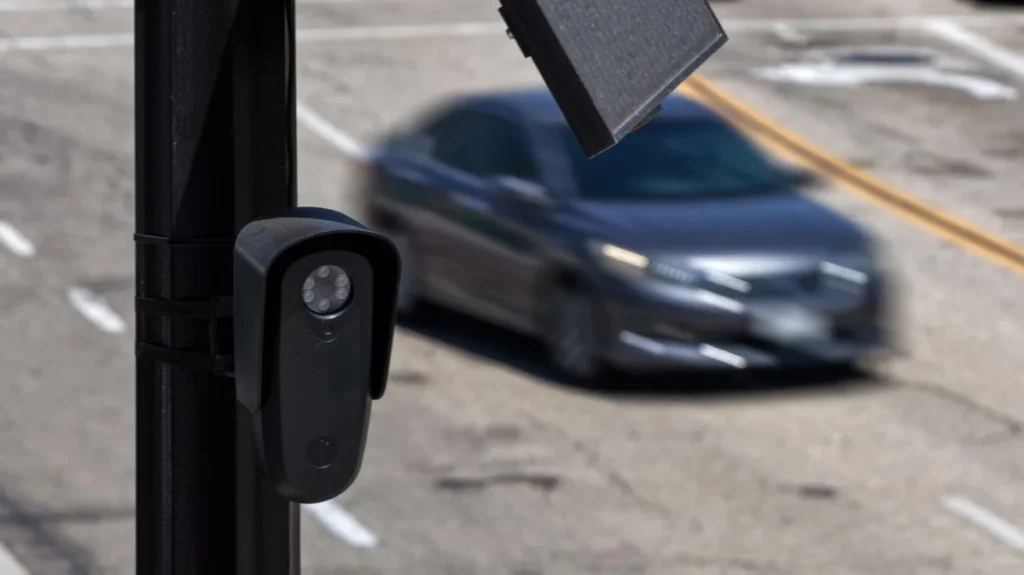
Morale at Flock Safety, once heralded as the darling of the "smart city" security revolution, has plummeted to historic lows. As the company faces a reckoning with its aggressive expansion into the public sphere, reports indicate that the AI-surveillance giant is preparing to shed 18 percent of its workforce. This reduction, affecting approximately 270 employees out of a 1,500-person staff, marks a significant turning point for a company that has spent years embedding itself into the fabric of American law enforcement.
The Shrinking Horizon: A Major Restructuring
The impending layoffs, scheduled to take effect at the end of October, represent more than just a standard corporate downsizing; they signal a deep-seated crisis of identity and viability for the company. Reports from Reuters confirm that the cuts are a direct consequence of both internal turbulence and a volatile external environment.
This development comes on the heels of a preemptive effort by the company to mitigate the damage. Three weeks prior to the news of forced layoffs, WIRED reported that Flock had initiated a voluntary buyout program, offering generous severance packages to staff members who wished to depart. The program appeared to be a response to growing employee discontent—a sentiment fueled by the mounting moral and political opposition to the company’s core product: automated license plate reader (ALPR) cameras. It remains unclear how many of the 270 employees facing termination were part of the initial buyout pool, but the dual-track reduction suggests that Flock is attempting to stabilize its balance sheet in the face of dwindling public and government support.
Chronology of a Controversial Rise
To understand the current volatility, one must look at how Flock Safety ascended to dominance. Founded on the promise of "eliminating crime," the company marketed its solar-powered, AI-equipped cameras as a non-intrusive way for neighborhood associations and police departments to track stolen vehicles and suspects in real-time.
- 2017–2020: The Growth Phase: Flock successfully leveraged fears of rising property crime, rapidly deploying thousands of cameras across suburban enclaves. Their business model—subscription-based surveillance—was hailed by municipal governments as a cost-effective alternative to hiring more officers.
- 2021–2023: The Expansion: The company moved beyond HOAs and into major urban centers, integrating its software with existing law enforcement databases. The promise of "Big Data" policing became a standard feature of modern American municipal governance.
- 2024: The Turning Point: As the scale of data collection became clear, privacy advocates began to raise alarms. The realization that Flock cameras were not just recording crime scenes, but creating a permanent, searchable log of the daily movements of ordinary, law-abiding citizens, sparked a grassroots firestorm.
- 2025–2026: The Bipartisan Backlash: The current year has seen a collapse in support for the company. From viral videos of vigilantes dismantling cameras to formal legislative bans, the "Flock phenomenon" has become a target for politicians across the entire ideological spectrum.
Supporting Data: A Bipartisan Rejection
The resistance to Flock Safety is one of the few issues in contemporary American politics that transcends the traditional red-blue divide. The company’s inability to find a safe political harbor is perhaps its greatest strategic failure.
The Conservative Stance: Fear of the "Surveillance State"
While Flock built its brand on a "law-and-order" platform, it has alienated the very conservatives who championed that rhetoric. Florida Governor Ron DeSantis, a prominent voice in the movement against excessive government reach, recently spearheaded a ban on the use of such cameras on state highways, explicitly stating, "I don’t want to have this become a surveillance state." Similarly, in Texas, Governor Greg Abbott—a staunch advocate for police funding—allowed state funding for such surveillance programs to be cut, effectively signaling that the perceived cost to individual liberty now outweighs the utility of the technology.
The Progressive Perspective: Data Privacy and Civil Rights
On the left, the opposition is equally fierce. Critics point to the inherent biases in AI policing, arguing that surveillance tools are disproportionately deployed in marginalized communities. Pennsylvania Democrat Josh Shapiro has publicly panned the technology, labeling it an overreach and expressing a willingness to sign legislation that would restrict or outright ban the use of these devices in the state. Furthermore, major metropolitan centers, such as Los Angeles, have opted not to renew their contracts with the company, citing both ethical concerns and a lack of clear evidence regarding the efficacy of the cameras in reducing violent crime.
The Cultural Shift
Beyond the halls of government, the "culture of resistance" has taken a visceral form. On platforms like X (formerly Twitter) and TikTok, "camera hunting" has emerged as a subculture. Viral videos showing individuals disabling or removing Flock cameras have garnered millions of views and, tellingly, widespread support in the comment sections. This normalization of civil disobedience against surveillance infrastructure suggests that the brand damage to Flock may be irreversible. Even cultural commentators as disparate as Hasan Piker and Tucker Carlson have found common ground in their condemnation of the company’s pervasive reach, effectively turning Flock into a universal symbol of the "Orwellian" present.
Official Responses and Corporate Strategy
Flock Safety has remained largely tight-lipped regarding the specific mechanics of the upcoming layoffs, issuing only brief statements emphasizing "operational efficiency" and "long-term sustainability." However, internal documents suggest that leadership is scrambling to pivot. The company has reportedly begun to pivot its marketing strategy, focusing more on internal "trust and transparency" initiatives, such as stricter data retention policies and improved auditing processes.
Industry analysts suggest that these measures may be too little, too late. "The problem isn’t just the product," says tech policy analyst Sarah Jenkins. "The problem is that the public has lost trust in the utility of the surveillance. When you have a company that has become a lightning rod for anti-government sentiment, no amount of ‘transparency’ rebranding can fix the fact that the client base—the government—is fleeing."
Implications: The Future of Urban Surveillance
The impending layoffs at Flock Safety have profound implications for the broader surveillance industry.
1. The Chilling Effect on Smart City Tech
The fall of a company as ubiquitous as Flock acts as a warning to other tech startups in the public safety space. Investors are likely to become more cautious about backing companies that rely on government contracts for public-facing surveillance, fearing the same legislative and social blowback that has crippled Flock.
2. The Legal Precedent
The legislative bans in Florida and Texas are creating a patchwork of legal precedents that could make it impossible for nationwide surveillance firms to operate. If other states follow suit, we may see a move toward highly localized, fragmented security solutions, ending the era of national, unified surveillance networks.
3. The Human Cost
At the center of this are the 270 employees whose livelihoods are currently in limbo. For many tech workers, the ethical dilemma of working for a company that has become a symbol of state overreach has been a point of contention for months. The exodus of talent from Flock may trigger a broader industry trend where engineers and data scientists place a higher premium on the social impact of their work, potentially leading to a "brain drain" for controversial security firms.
Conclusion: A Reckoning in Real-Time
As October approaches, the future of Flock Safety hangs in the balance. Whether the company can survive by downsizing and reframing its mission remains to be seen. However, the current crisis serves as a stark reminder of the limits of technological intervention in public life. In a society that is increasingly sensitive to the nuances of data privacy and government overreach, a company that builds its foundation on the assumption of unconditional support from the state and the public is built on sand.
For now, the cameras remain on the poles, but their presence is increasingly contested. The upcoming layoffs are the first major tremor in what could be a seismic shift in how American cities manage public safety, privacy, and the role of private corporations in the enforcement of law. The era of the "smart city" as an unquestioned good is coming to an end; in its place is a more skeptical, more litigious, and more defiant public, unwilling to trade their anonymity for the promise of algorithmic safety.