The Analog Renaissance: Bridging 8-Bit History with Modern Retrocomputing
In the digital landscape of 2026, the humble terminal emulator is ubiquitous. With a simple keystroke, modern developers summon a command-line interface that runs atop layers of abstraction, emulating hardware that once occupied entire desks. Yet, for a dedicated subset of the computing community, the emulation of an experience is no longer sufficient. They seek the tactile, noisy, and deliberate nature of the vintage era.
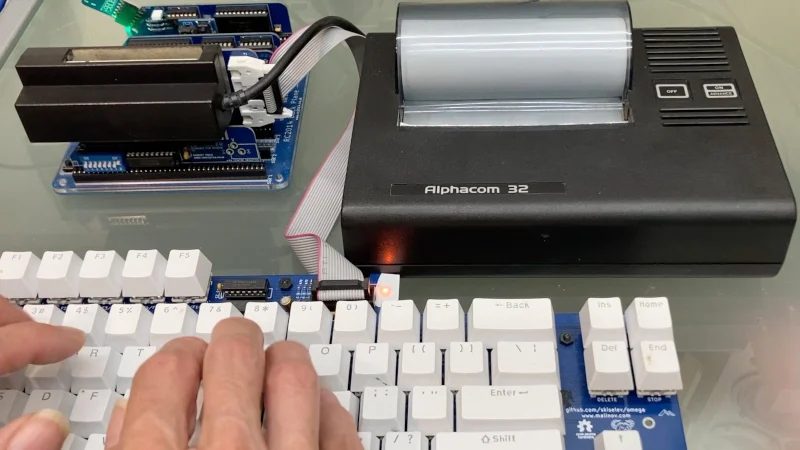
Enter Sheila Dixon, a hobbyist and engineer who has embarked on a project to bridge the gap between the modern RC2014 Z80 retrocomputer and the distinct, thermal-printed reality of early 1980s computing. By repurposing the Alphacom thermal printer—a historical relic once relegated to the shadows of the ZX81—Dixon is proving that the hardware-software symbiosis of the past remains a viable, albeit challenging, endeavor for the modern builder.
The Evolution of the Terminal Experience
To understand the significance of Dixon’s work, one must first appreciate the evolution of the "terminal." In the early days of computing, a terminal was not a software window on a high-resolution display; it was a physical manifestation of input and output. Whether it was the rhythmic clatter of a Teletype machine or the soft hum of an early CRT, the terminal was a bridge between human intent and machine logic.
The RC2014, a popular modular Z80-based retrocomputer kit, serves as the perfect canvas for this exploration. Designed to be built from the ground up, the RC2014 allows users to understand the architecture of the 8-bit era. However, most users interact with it via a serial connection to a modern PC. Dixon’s project strips away that modern convenience, forcing the RC2014 to communicate with "period-appropriate" peripherals: a physical keyboard and a thermal printer.
Chronology: From Sinclair’s Shadow to Modern Integration
1. The ZX81 Legacy (1981–1984)
The story begins with Sir Clive Sinclair’s ZX81, a machine that democratized computing but faced immense challenges regarding peripherals. The original Sinclair thermal printer was notoriously unreliable, leading to a vacuum in the market. The Alphacom printer emerged as the "third-party hero," offering a more robust, albeit still primitive, thermal printing solution that connected directly to the ZX81 expansion bus.
2. The Era of Stagnation
For decades, these printers sat in closets or landfills. Their proprietary ROM routines and bus-specific requirements made them difficult to interface with anything other than a Sinclair machine. As the 8-bit era gave way to the 16-bit and 32-bit revolutions, the Alphacom was largely forgotten, preserved only by collectors.
3. The RC2014 Revival (2019–2024)
The rise of the RC2014 platform provided a new home for legacy components. As hobbyists began expanding their Z80 builds with custom cards, the possibility of integrating older hardware became a reality. Dixon’s work represents the current pinnacle of this movement, shifting from mere hobbyist play to functional, integrated terminal emulation.
Supporting Data: The Architecture of the Build
Dixon’s project is not merely an aesthetic choice; it is a significant engineering challenge involving bus management and I/O programming.
Interfacing with the Z80 Bus
The core of the Alphacom printer’s operation relies on direct bus access. Unlike modern USB printers that rely on sophisticated drivers, the Alphacom required the host CPU to manage the thermal print head directly. Dixon successfully mapped the Alphacom to the RC2014’s Z80 bus, effectively tricking the printer into believing it was still connected to a ZX81.
ROM Routines and Firmware
The "glue" of this project lies in the custom ROM routines. To make the printer function as a system terminal, Dixon had to write software that redirects standard output (STDOUT) to the printer’s specific memory-mapped I/O addresses. This involved:
- Initialization: Ensuring the printer was in a ready state.
- Buffer Management: Handling the slow print speed of the thermal head to prevent buffer overflow.
- Character Mapping: Translating ASCII input from the keyboard into the specific bit-patterns required by the Alphacom’s printing logic.
Input Hardware: The Keyboard
Dixon’s input device evolved through two distinct phases. Initially, she utilized an MSX-standard keyboard, ensuring a degree of retro-compatibility. Subsequently, she transitioned to a custom-built keyboard featuring mechanical switches topped with vintage typewriter keycaps. This tactile feedback is essential to the "terminal experience," providing the physical resistance that modern membrane keyboards lack. The entire input chain is scanned via an 8255 I/O port card, mimicking the hardware polling methods of the late 1970s and early 80s.
The Perspective of the Maker
In technical correspondence regarding the project, Dixon noted the "teething troubles" inherent in such a build. The primary hurdle was not the hardware itself, but the timing requirements of the Z80 bus. "Modern components are often too fast for these legacy peripherals," she explained. "Implementing wait-states and ensuring the bus timing aligns with the printer’s ROM requirements was the most demanding aspect of the development cycle."
This work is part of a broader trend within the retrocomputing community known as "hardware archaeology." By reviving hardware that was never intended to work together, enthusiasts like Dixon are creating new pathways for interaction that honor the limitations of the original machines.
Implications: Why We Still Need Physical Terminals
The implications of Dixon’s project extend beyond the niche interest of vintage hardware enthusiasts.
1. Understanding Computational Constraints
Modern software development often ignores the cost of cycles and memory. By forcing a Z80 processor to drive a thermal printer, developers are reminded of the efficiency required when hardware resources are finite. It is a lesson in minimalism that is increasingly lost in an era of multi-gigabyte software updates.
2. Preservation of Tactile History
As digital-only interfaces become the norm, the physical history of computing is at risk of being forgotten. Projects that integrate physical hardware ensure that the "feel" of computing—the sound of the printer, the weight of the keycap, the heat of the electronics—is documented and experienced by a new generation.
3. The Future of the RC2014 Ecosystem
The successful integration of the Alphacom printer suggests a roadmap for future RC2014 expansions. If one can successfully bridge a proprietary thermal printer to the Z80 bus, the possibilities for other legacy hardware—such as ancient disk drives, digitizer tablets, or even early light pens—become significantly more accessible.
Conclusion
Sheila Dixon’s recreation of the terminal experience is more than a technical curiosity; it is a profound act of preservation. In 2026, when computing is largely invisible and seamless, the sound of a thermal printer scratching characters onto a roll of paper serves as a vital reminder of our origins.
The project stands as a testament to the ingenuity of the retrocomputing community. By bridging the gap between the ZX81’s legacy peripherals and the modular flexibility of the RC2014, Dixon has not only built a terminal—she has built a time machine. For those who believe that the future of computing should be informed by its past, the clatter of the Alphacom is the sound of progress.
As we look toward the next phase of retrocomputing development, one thing is clear: the journey back to the hardware roots of the 1980s is far from over. Whether it is for the sheer challenge of the engineering or the nostalgic joy of the final output, projects like this ensure that the spirit of the early digital age remains alive, printing one line at a time.