The Architect of Modern Linux: Mirko Brombin on AI, Immutability, and the Future of Open Source
If you have navigated the Linux landscape over the last decade, you have likely benefited from the work of Mirko Brombin. From the foundational utility of Bottles—a tool that transformed the friction-heavy experience of running Windows software via Wine into a seamless, user-friendly endeavor—to his visionary leadership at Vanilla OS, Brombin has become a central figure in the Linux desktop evolution. Today, his focus shifts toward the bleeding edge of operating system architecture with Singularity OS (now evolving into the Sinty ecosystem).
Following our initial 2022 conversation, much has shifted in Brombin’s trajectory. Now working full-time at fabricators, he continues to push the boundaries of what Linux can achieve, balancing the maintenance of community-driven projects with the development of ambitious, proprietary-adjacent tools like the Raven project. In an exclusive follow-up, we explored his evolving philosophy on AI, the "cloning" controversy in the open-source community, and the future of desktop immutability.
Chronology: From Bottles to Singularity
Brombin’s career is defined by a refusal to accept the "command-line status quo" of Linux.
- 2017: The inception of Bottles. At a time when tools like PlayOnLinux and Lutris existed, Brombin sought a specific kind of simplicity—a way to manage Windows applications without the user needing to understand the underlying "tangled mess" of DLLs and dependencies.
- 2022: The rise of Vanilla OS. Brombin aimed to create an immutable, developer-focused distribution that stayed true to GNOME principles.
- Present: Transitioning Vanilla OS to a community-run project, Brombin now focuses on Sinty OS and Atom Loops, a new approach to system immutability that departs from standard ABRoot implementations.
The AI Paradox: A Tool for Construction, Not Creation
One of the most pressing questions in software development today is the role of Artificial Intelligence. For Brombin, the relationship is pragmatic, cautious, and deeply critical. He utilizes AI agents for "mechanical" tasks, allowing him to manage an output volume that would be impossible for a single developer. However, he remains wary of the "black box" nature of current Large Language Models (LLMs).
The Architect’s Stance
"I’ve always had a rather complicated relationship with LLMs," Brombin explains. "The problem isn’t the quality of the code; it’s understanding why that code was produced. When I design software, I start from the architecture—how components interact, how to handle errors, and which compromises to accept."
Brombin argues that delegating architecture to an AI is a fundamental mistake. He provides his own documentation, constraints, and patterns to the models, ensuring that the AI acts as a scribe rather than a lead engineer. He reviews every line, noting, "If it does something badly, it’s because I accepted it."
The "Amus" Research Project
Brombin’s skepticism has led him to develop Amus, a research project intended to explore an alternative to current LLMs. He is dissatisfied with the statistical nature of current models, which lack a "causally verifiable representation of knowledge." With Amus, he hopes to build systems where the logical relationship between a conclusion and its data is transparent and verifiable, rather than merely "statistically plausible."
The Controversy of "Cloning" Software
The open-source community is currently witnessing a wave of applications that appear to be pixel-perfect clones of Microsoft Office and Adobe Creative Cloud. While some argue this lowers the barrier to entry for users migrating to Linux, Brombin views this trend with deep concern.
Intellectual Property vs. Fair Competition
"I don’t like how the identity of other people’s products is being violated," he states. He questions the integrity of "clean-room design" claims when developers use swarms of AI agents to replicate proprietary software down to the millimeter.
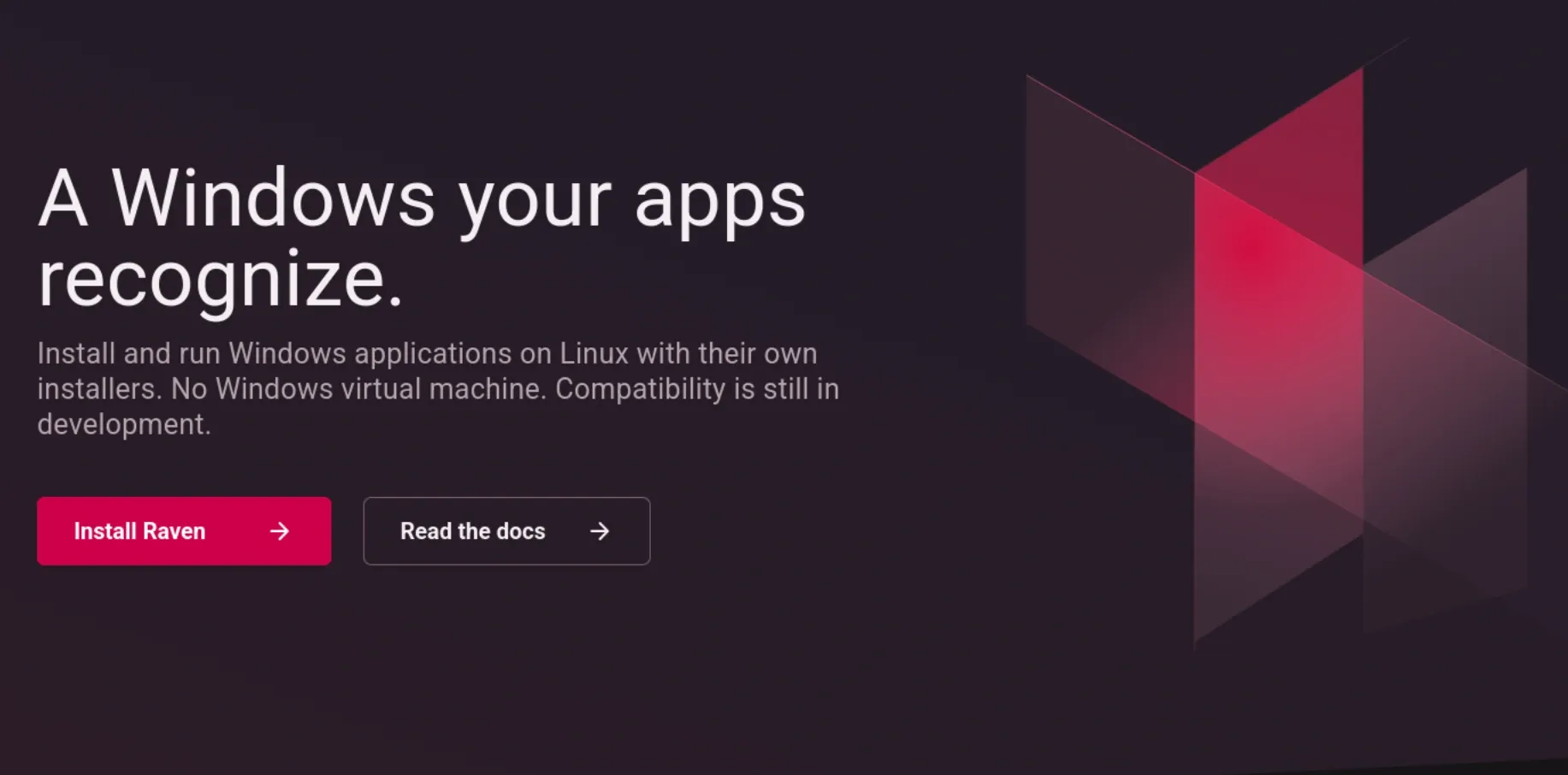
Brombin distinguishes between creating a functional equivalent and "stealing" a visual identity. He notes that while the practice may not always be illegal, it borders on unfair competition and violates the spirit of innovation. He posits a challenging question: "Do we really need another Microsoft Office, identical down to the very last pixel?" For Brombin, the value of FOSS lies in creating new ideas, not simply imitating the past.
Technical Innovation: Atom Loops and Sinty OS
While Vanilla OS maintains a strict adherence to the GNOME desktop and standard Linux paradigms, Sinty OS represents Brombin’s "creative laboratory."
Beyond Traditional Immutability
Sinty OS is built upon Atom Loops, a proprietary immutable technology. Unlike traditional ABRoot systems, Atom Loops manages immutability from the very first millisecond of the boot process. By utilizing EROFS (Enhanced Read-Only File System) for the root filesystem and UKI (Unified Kernel Image) for kernel management, Sinty OS provides a secure, consistent environment that avoids the partition-heavy overhead of other distributions.

Key technical differentiators include:
- Unified Encryption: Instead of standard LUKS, Sinty OS uses unique keys for individual user files.
- Minimalist Init: It moves away from the standard systemd-everything approach toward an ultra-minimal solution that remains compatible with systemd units.
- User-Centric Storage: By utilizing image files for the root system, the entirety of the physical disk space is formatted as F2FS, giving the user total control over their data storage.
Why Microsoft Office Still Matters
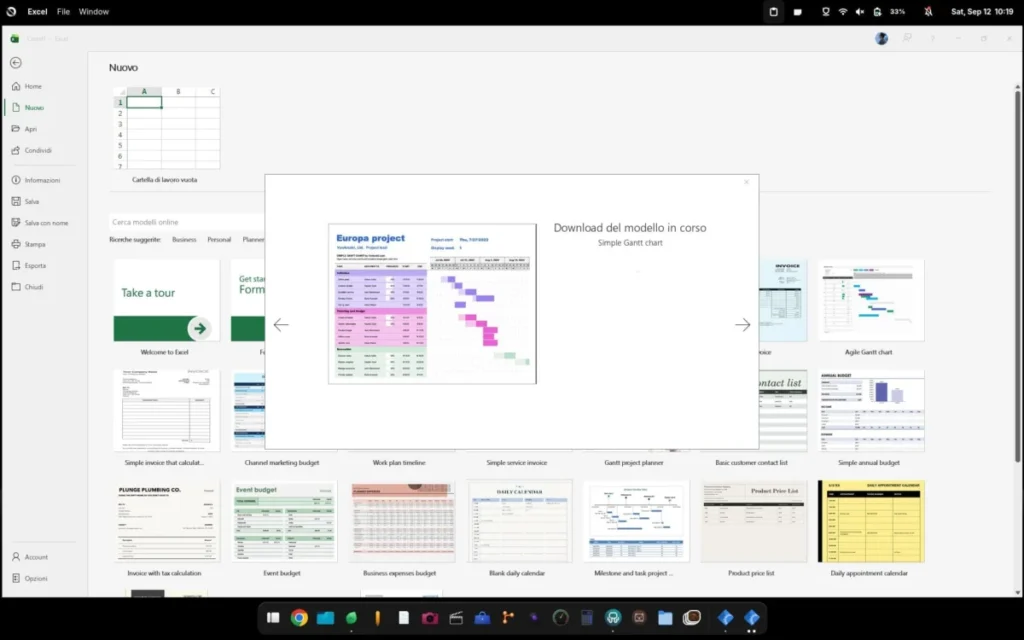
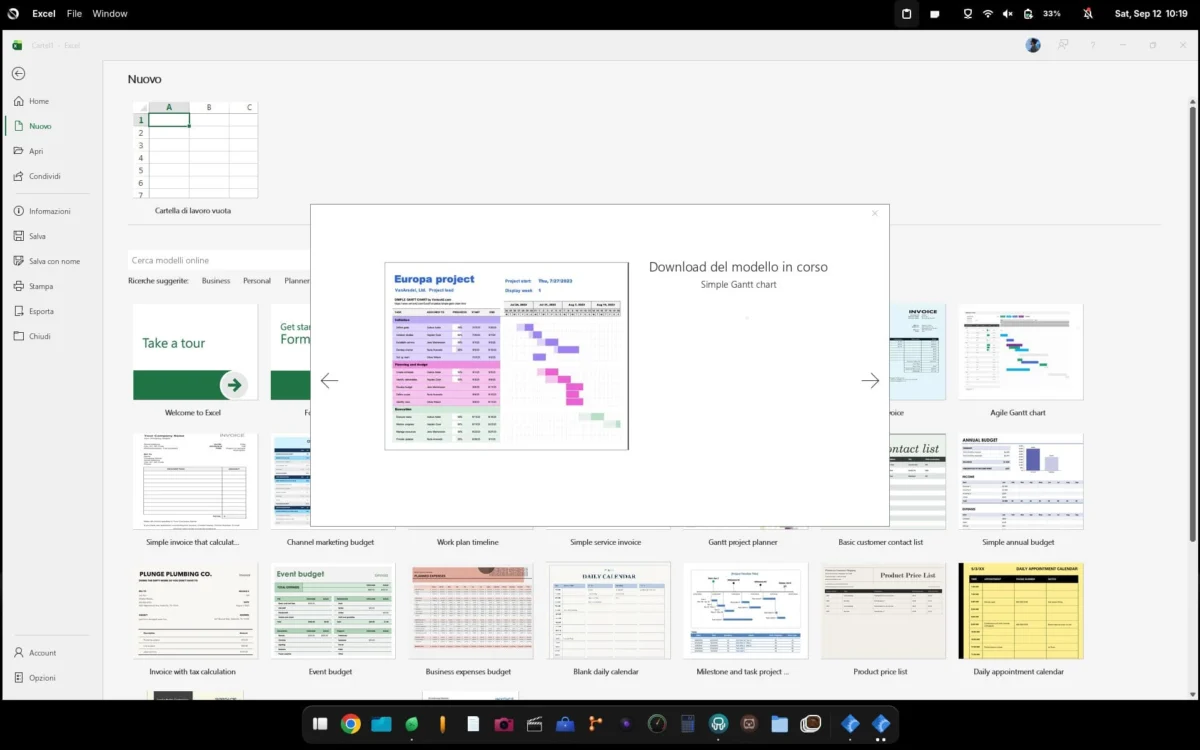
Brombin’s work on running MS Office through the Bottles and Soda projects often invites criticism from FOSS purists who believe time should be spent exclusively on LibreOffice or ONLYOFFICE. Brombin’s defense is rooted in the reality of the professional world.
"I have the privilege of using whatever I want at work," he acknowledges, "but almost all of my clients and partners use Microsoft Office. For support, certification, and professional collaboration, we simply can’t afford to make the choices we’d like to make."
His goal is not to abandon open-source alternatives, but to bridge the gap for those who are forced into proprietary ecosystems. He plans to contribute these improvements to the upstream Wine project, provided the code meets the high standards required for integration.
Implications: The Future of the Linux Desktop
Brombin’s trajectory highlights a growing divide in the Linux community: the tension between those who prioritize "purity" and those who prioritize "utility."
- The Rise of Specialized Tools: Projects like Raven—which aims to run Windows applications with their own native installers—suggest that the future of Linux interoperability lies in high-level abstraction layers that respect the user’s need for familiarity.
- A Shift in Governance: As Vanilla OS moves to a community-run model, it sets a precedent for how individual developers can transition from "founders" to "architects," ensuring project longevity beyond their own personal bandwidth.
- The Quest for Transparent AI: If projects like Amus prove successful, they could fundamentally change how we interact with code, moving away from opaque, hallucinatory models toward systems that prioritize logical traceability.
Mirko Brombin remains an outlier in the best sense—a developer who treats the operating system not as a static environment, but as a canvas for architecture. His advice to the community remains characteristically bold: "People need to experiment more. It would be predictable to say that limits are made to be overcome; it is much more exciting to think about how to overcome them."
As Sinty OS nears its next development milestones, the industry will be watching to see if Brombin’s vision of immutability and transparent, agent-assisted development can redefine the desktop experience for the next decade.