The Creeping Innovation: ETH Zurich’s Autonomous Robotic Hand Redefines Locomotion
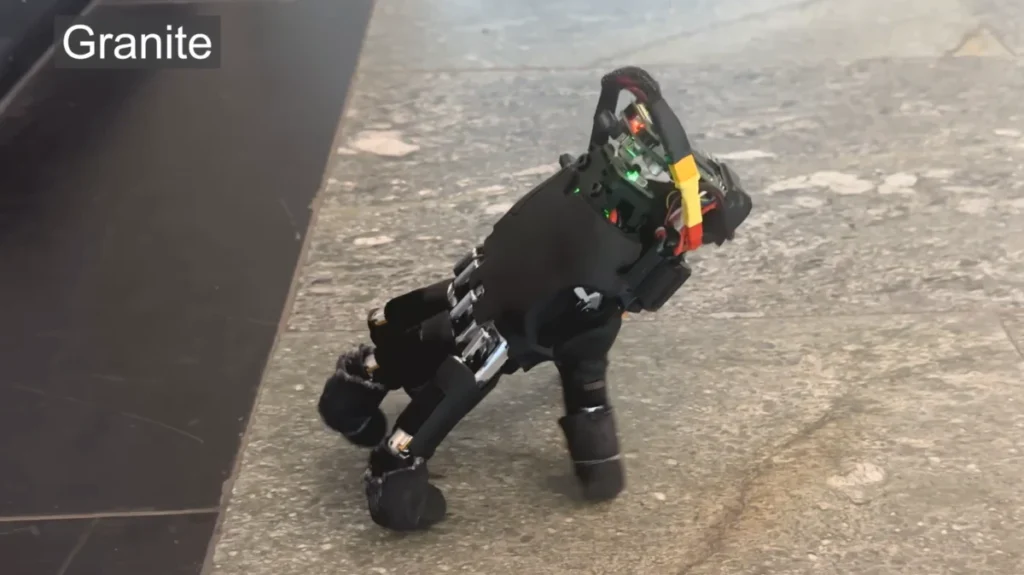
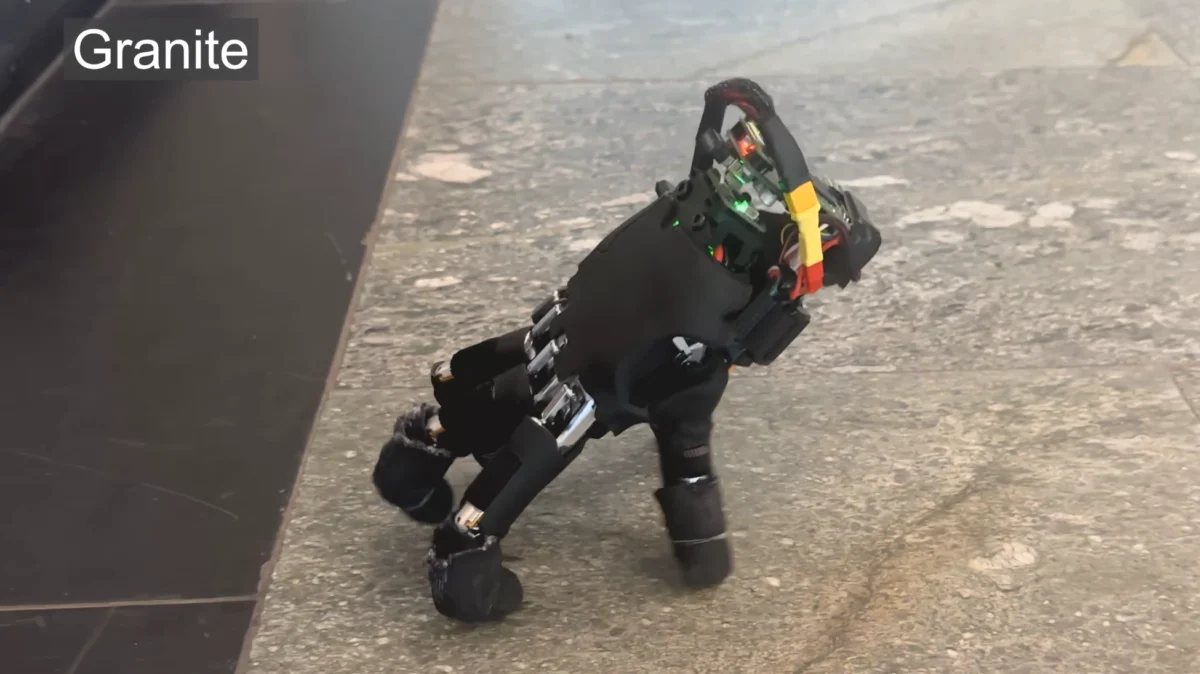
Just in time for the Halloween season, a development from the labs of ETH Zurich has captured the collective imagination of the robotics community. Researchers have unveiled a disembodied, anthropomorphic robotic hand capable of independent locomotion, using its fingers as legs to navigate terrain, manipulate objects, and perform complex tasks. While the aesthetic might lean into the uncanny valley, the engineering behind this "walking hand" represents a significant leap forward in reinforcement learning and modular robotics.
Main Facts: A Hand That Walks
The project, detailed in a recent paper, features a commercially available robotic hand integrated with a Raspberry Pi Zero 2 W and a bespoke battery pack. Unlike traditional robotic hands, which are usually mounted on stationary arms or industrial pedestals, this device functions as an autonomous, self-contained unit.
Equipped with twenty joints—four per finger—the hand utilizes neural-network-based control software to facilitate movement. By iteratively outputting the next joint state based on previous actions and environmental feedback, the hand can achieve locomotion without a central nervous system. It has demonstrated the ability to move in straight lines, execute turns, and, perhaps most impressively, recover from falls. In rigorous testing, the hand managed to right itself within twenty seconds in 21 out of 25 attempts, showcasing a level of physical agility rarely seen in such compact, non-legged form factors.
Chronology: From Simulation to Surface
The journey to this walking appendage began with a transition from virtual environments to the physical world—a classic pipeline in modern robotics known as "Sim-to-Real" transfer.
The Simulation Phase
Researchers began by constructing a high-fidelity digital twin of the robotic hand. Using this simulated model, they applied reinforcement learning (RL) algorithms. The goal was to teach the hand how to distribute its weight and coordinate its fingers to create forward momentum. Interestingly, the researchers discovered that their RL-trained model achieved significantly higher walking speeds than a model adapted from standard quadrupedal (four-legged animal) movement patterns.
The Training Phase
Once the neural network was sufficiently trained in the virtual sandbox, the software was ported to the hardware. The physical hand was tasked with navigating fourteen distinct types of surfaces, ranging from standard rubber mats to challenging, uneven terrain like gravel and grass.
The Refinement Phase
During the testing phase, the researchers identified a persistent geometric bias: the hand exhibited a natural drift to the right. To compensate, they implemented a constant correction loop, allowing the hand to maintain a straight path despite the mechanical asymmetry of its fingers. While the device cannot currently "see" its environment—it lacks an integrated camera—it has demonstrated an uncanny ability to push light objects toward designated targets, proving that its utility extends beyond simple mobility.
Supporting Data: Performance Metrics
The efficacy of this project is rooted in the precision of its control architecture. By leveraging the Raspberry Pi Zero 2 W, the team managed to keep the device lightweight enough to support its own weight without compromising the speed of its onboard computation.
- Joint Configuration: 20 total joints, with a 4-joint-per-finger ratio, allowing for high degrees of freedom (DoF).
- Success Rate: 84% recovery rate during fall-recovery testing (21/25).
- Terrain Versatility: 14 distinct surface types traversed, demonstrating robustness against varying friction and stability profiles.
- Computational Load: The neural network calculates joint states in real-time, relying on history-based feedback loops rather than bulky external processing.
The decision to move away from traditional quadrupedal gait models in favor of a custom, hand-specific locomotion model proved to be the project’s turning point. By treating the hand as a unique kinematic chain rather than a generic walking machine, the researchers unlocked speeds and stability metrics that were previously considered impossible for a limb not designed for walking.
Official Responses and Researcher Vision
The authors of the study, representing ETH Zurich’s robotics division, emphasize that this project was not designed merely for novelty. Instead, they view it as a proof-of-concept for the future of "modular dexterity."
"The idea is to decouple the hand from the arm," the researchers noted in their documentation. They envision a future where large-scale industrial or service robots utilize a modular approach. If a robot arm is tasked with a job that requires reaching into a confined or distant space, the hand would not be restricted by the limitations of the arm’s reach. Instead, it could detach, walk to the object, perform the task, and return to the primary unit.
This shift in perspective—viewing the hand as an independent "agent" rather than an end-effector—challenges the fundamental architecture of modern robotics. By offloading the "last mile" of a task to a mobile hand, the range of motion for any robot could be effectively multiplied.
Implications: A New Frontier in Robotics
The implications of this research are profound, touching on both industrial efficiency and the democratization of robotics.
The "Hackability" Factor
One of the most exciting aspects of this research is its accessibility. The project utilizes off-the-shelf components—the same hardware that DIY enthusiasts and hackers have been using for years. By proving that advanced locomotion can be achieved on a Raspberry Pi, ETH Zurich has effectively invited the global maker community to iterate on their design. This aligns with the long history of robotic hand development, where individual hobbyists have previously mimicked human anatomy to achieve high levels of dexterity.
Autonomous Manipulation
While the current prototype lacks vision, the integration of sensors is the natural next step. Imagine a hand that can walk across a room, identify a key on a table, grasp it, and return to its host unit. The potential for search-and-rescue operations, where small, nimble robots are required to navigate debris, is immense.
The Future of Human-Robot Interaction
While the "walking hand" might be a staple of horror movies, its real-world application is deeply grounded in logistics and engineering. As robots move from the factory floor into our homes and offices, they will need to be smaller, more modular, and more adaptable. The ability for a robotic appendage to traverse a carpeted floor or a tiled kitchen, navigate around a table leg, and perform a delicate task represents the end of the "static" era of robotics.
Ethical and Safety Considerations
As with all developments in autonomous robotics, the question of safety arises. A device capable of independent movement must have robust safeguards to prevent accidents. However, the ETH Zurich team’s focus on fall-recovery and stability indicates that they are prioritizing the safety and reliability of the movement protocols, ensuring that even if the hand loses its balance, it does not become a hazard.
Conclusion
The ETH Zurich walking hand is more than just a viral video-worthy curiosity; it is a serious exploration into the limits of reinforcement learning and modular hardware. By successfully teaching a disembodied hand to walk, the team has pushed the boundaries of what we consider an "end-effector."
Whether this leads to a new generation of mobile service robots or simply serves as a benchmark for future RL research, one thing is clear: the era of the stationary robot is drawing to a close. As we look toward the future, we may find that the most versatile robot in the room isn’t the one with the most sensors or the biggest motors—it’s the one that can walk across the floor to pick up what you need, entirely on its own. For now, the researchers continue to refine the neural network, aiming for greater speed, better navigation, and eventually, the integration of computer vision to turn this autonomous hand into a truly independent tool.