The Modern Stake: How One Machinist is Reimagining Folklore Defense with Precision Engineering
In the realm of hobbyist machining and mechanical engineering, few content creators possess the charismatic technical prowess of the YouTuber known as "This Old Tony." While his channel typically serves as a masterclass in lathe work, milling, and the nuances of industrial craftsmanship, his latest project has taken a detour into the surreal. Departing from the mundane creation of brackets, gears, and engine components, Tony has applied high-end machining techniques to a problem as old as folklore itself: the production of high-performance vampire-slaying stakes.
The project, which has garnered significant attention from both the maker community and horror enthusiasts, sees Tony transform a solid block of aircraft-grade aluminum into a high-precision, drill-powered pencil sharpener. By doing so, he has effectively automated the creation of wooden stakes, turning a rudimentary survival tool into an exercise in mechanical perfection.
The Intersection of Myth and Metallurgy: Main Facts
The core of this project lies in the tension between ancient tradition and modern manufacturing. Folklore dictates that a wooden stake—typically fashioned from hawthorn, ash, or oak—is the primary implement for neutralizing the undead. However, hand-whittling a stake is a time-consuming, inconsistent process.
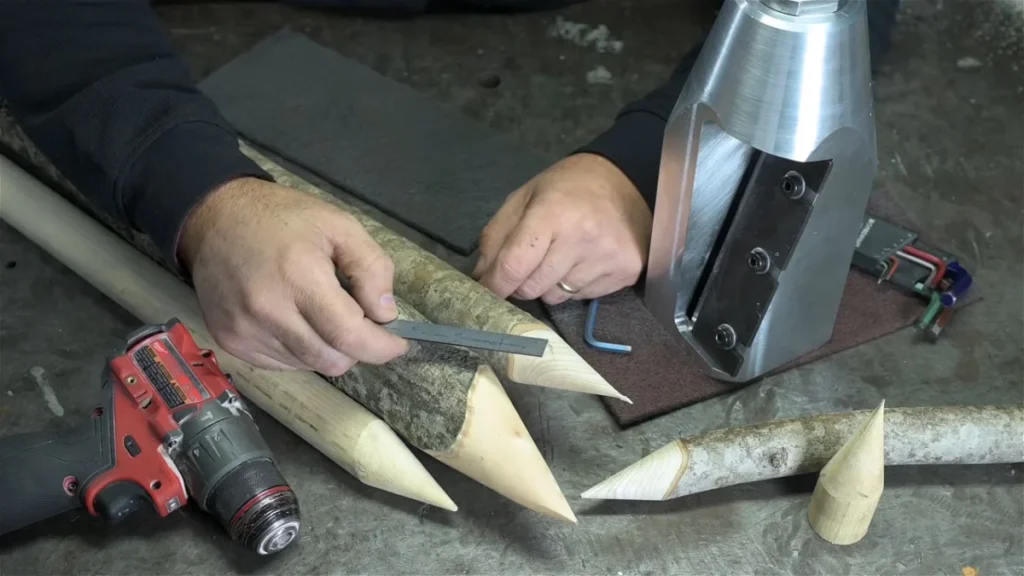
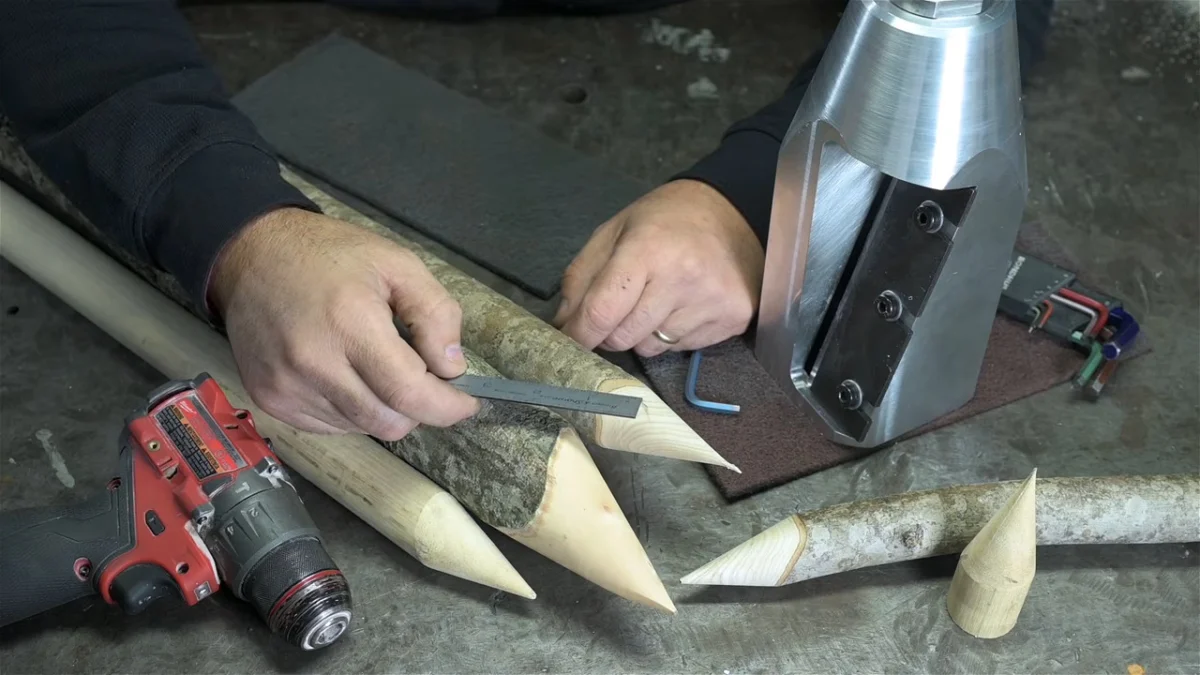
Tony’s solution is a bespoke aluminum jig that acts as a specialized cutting guide. By mounting a hardened steel blade at a precise tangent to an internal 30-degree cone, the tool allows any standard wooden branch to be inserted into a power drill and "turned" into a perfectly sharpened, uniform stake in seconds.
The technical specifications of the build are impressive. The housing is machined from a solid billet of aluminum, requiring delicate work to hollow out the conical interior—a process that is as nerve-wracking to watch as it is rewarding to see completed. The blade mount, which must be perfectly aligned to ensure the wood is shaved rather than crushed, demonstrates a mastery of geometric tolerances. The result is a device that bridges the gap between the legendary "stake through the heart" and the industrial efficiency of a modern machine shop.
Chronology of the Build: From Billet to Blade
The development of the device was a rigorous, multi-stage process, captured in a 22-minute documentary-style video that tracks the evolution of the concept from a raw block of metal to a functional, if unconventional, defensive tool.
Phase I: Planning and Material Selection
The project began with the identification of a suitable material. Aluminum was chosen for its excellent machinability and weight-to-strength ratio. Tony opted for a heavy-duty steel blade, sourced from a commercial tool, to handle the high-friction environment of wood shaving.
Phase II: The Internal Cone
The most critical stage of the process involved cutting the 30-degree internal cone. This required the use of a compound slide on the lathe, adjusted to the exact degree to ensure the taper of the stake would be consistent. This phase was noted for its intensity; the roughing cuts on the aluminum required high-speed interaction that left little margin for error.
Phase III: Tangent Blade Integration
Once the cone was finished, the focus shifted to the blade mounting. To ensure the wood is sliced cleanly, the blade had to be mounted at a precise tangent to the cone’s radius. This required complex measurement and drilling of the mounting holes, ensuring that the blade depth could be adjusted as it dulled over time.
Phase IV: Testing and Optimization
The final phase involved testing the jig with various wood species. By inserting a piece of wood into a cordless drill and driving it into the jig, the tool acted as a giant, powered pencil sharpener. The results were consistent: highly tapered, sharp, and structurally sound stakes capable of penetrating dense materials.
Supporting Data: Why Engineering Matters
While the subject matter is undeniably whimsical, the engineering principles applied are grounded in reality. The efficacy of a stake relies entirely on two factors: sharpness (to minimize the force required for initial penetration) and material integrity (to prevent the stake from splintering upon impact).
- Geometry: The 30-degree cone creates a long, tapered point. In ballistics and penetration testing, a longer taper reduces the "drag" of the material it is piercing. By achieving a uniform 30-degree angle, Tony has created a geometry that maximizes the mechanical advantage of the user.
- Material Science: The use of hardwood in conjunction with a perfectly machined guide ensures that the grain of the wood remains intact. Hand-whittling often compromises the fibers of the wood, creating "soft spots" that lead to failure. The precision-machined jig acts as a support sleeve, ensuring the wood is cut cleanly without micro-fractures.
- Production Speed: Traditional stake-making can take 10 to 15 minutes of manual labor. The drill-powered jig reduces this to less than 10 seconds per unit, a massive increase in efficiency for anyone anticipating a "vampiric incursion."
Official Responses and Cultural Context
The release of the video has been met with a mix of humor and admiration. Within the machining community, the project is seen as a clever "stress test" of Tony’s skills. On platforms like Hackaday, which previously covered his DIY CNC table build, the response has been overwhelmingly positive.
"The beauty of this project isn’t really the outcome," notes one industry analyst. "It’s the demonstration of how a skilled machinist views the world. When Tony looks at a block of aluminum, he doesn’t just see a metal cube; he sees a solution to a problem, even if that problem is something as absurd as hunting fictional monsters. It’s a testament to the versatility of the lathe and the human imagination."
While there have been no "official" comments from paranormal research groups—mostly because such groups are either non-existent or currently preoccupied with other matters—the video has sparked a lighthearted debate among fans regarding the best wood types for the job. Experts in the "folklore community" suggest that ash wood remains the gold standard, a fact that Tony has acknowledged in his project notes.
Implications: The Future of Maker-Driven Defense
The implications of this project are largely cultural, but they speak to a broader trend in the maker community: the desire to use professional-grade tools for creative, storytelling-driven projects. By documenting the entire build, Tony is not just teaching people how to make a tool; he is teaching them how to think like a machinist.
The Democratization of Precision
The ease with which Tony turns a solid block of aluminum into a complex jig highlights the increasing accessibility of high-end manufacturing. A decade ago, such a project would have required access to a university-level machine shop. Today, with hobbyist-grade lathes and mills, such projects are well within the reach of a dedicated enthusiast.
The "Cutting Wit" of Content Creation
The success of the video also points to a shift in how technical information is consumed. By injecting humor, narrative, and a "cutting wit" into the process, Tony has managed to make a dry, 22-minute video about machining aluminum accessible to a general audience. This "edutainment" approach is likely to set the standard for future technical content, proving that even the most esoteric subjects can be compelling if presented with enough personality.
Beyond the Stake
While the vampire-slaying application is the "hook," the device is, in reality, a high-quality wood-tapering tool. Its potential applications in woodworking, furniture making, or even specialized construction are significant. The ability to create perfectly tapered dowels or structural wooden pins with a portable drill is a genuine utility that many viewers have already begun to replicate.
Conclusion
"This Old Tony" has once again proven that he is at the top of his game. Whether he is building a complex CNC machine or a specialized tool for hunting the undead, his commitment to precision, safety, and high-quality video production remains constant.
This project is a whimsical reminder that the tools we build are only as limited as our imagination. As we move further into an era where digital manufacturing and traditional craftsmanship collide, projects like these remind us that there is still room for humor and creativity in the workshop. While the likelihood of needing a stake for a real-life vampire remains statistically negligible, it is comforting to know that, should the need arise, the precision-machined solution is only a drill-press away.