
The Open Source Conundrum: Why the IFPI is Targeting yt-dlp for EU Piracy Blacklisting
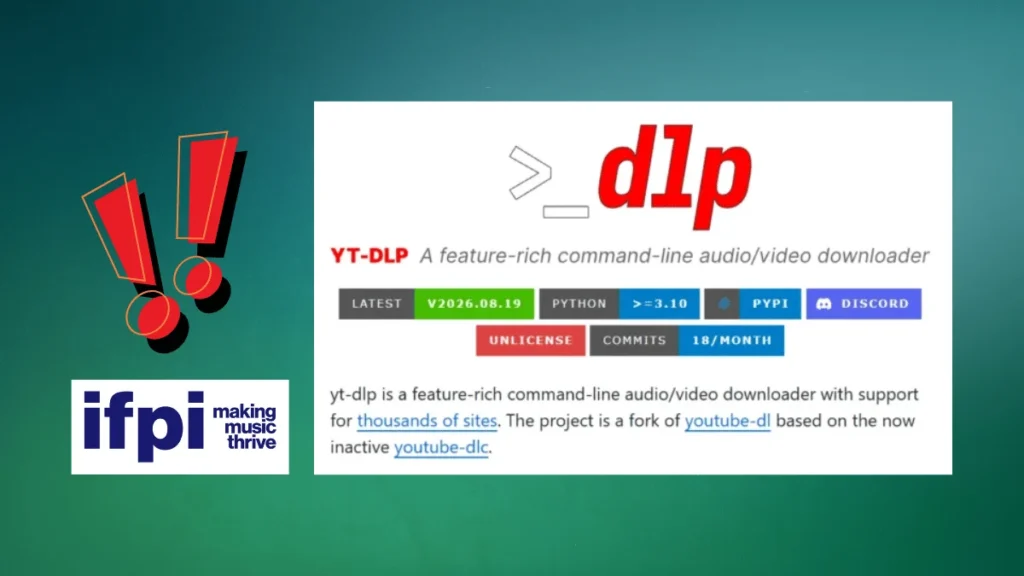
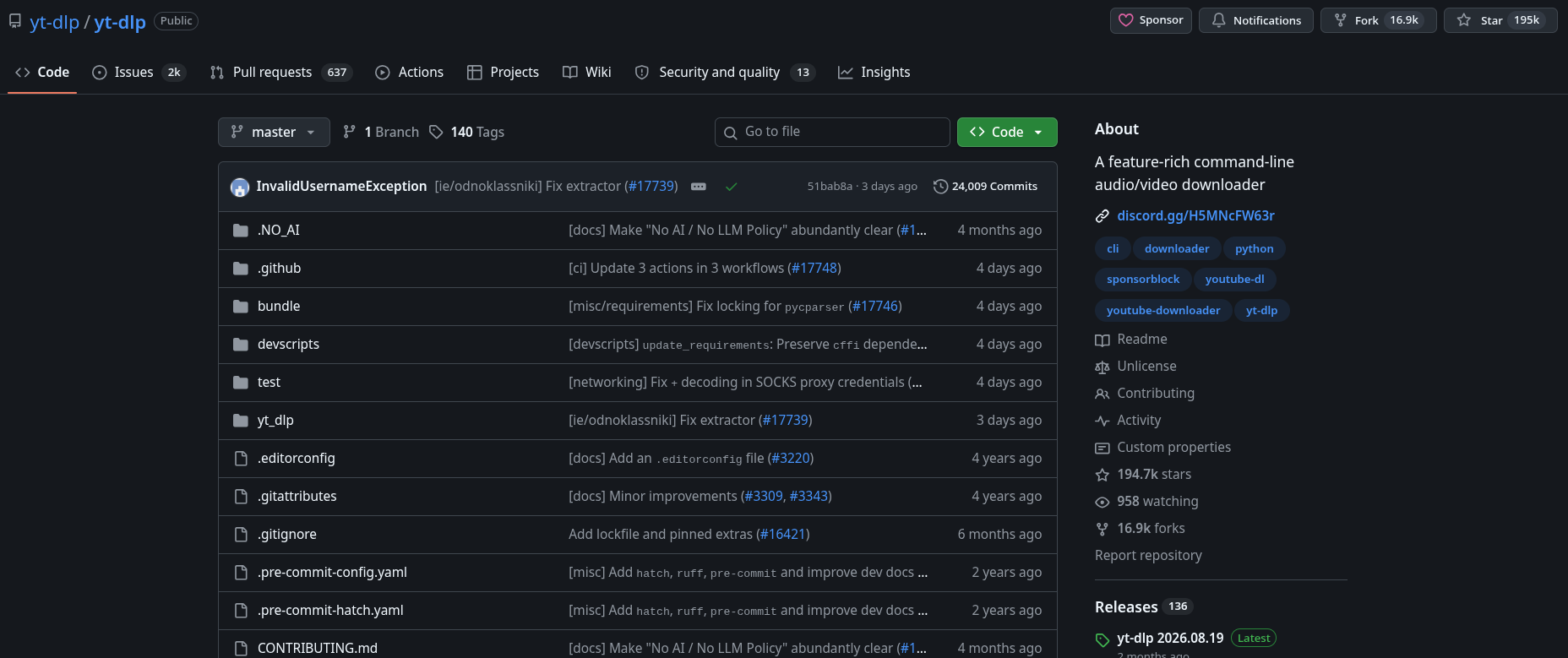
In the sprawling ecosystem of open-source development, few projects command the utility and popularity of yt-dlp. With over 195,000 stars on GitHub and an infrastructure capable of parsing data from thousands of digital platforms, it has become an indispensable tool for researchers, archivists, and developers. However, its immense success has made it a target. The International Federation of the Phonographic Industry (IFPI)—a powerful lobbying group representing approximately 8,000 music labels across 70 nations—is now pushing for yt-dlp to be officially designated as a piracy threat on the European Union’s "Counterfeit and Piracy Watch List."
This move marks a significant escalation in the ongoing tension between copyright enforcement agencies and the open-source community. By attempting to label a general-purpose command-line utility in the same breath as commercial "stream-ripping" websites, the IFPI is raising profound questions about the nature of software, developer liability, and the future of digital tool distribution.
The Mechanics of the EU Piracy Watch List
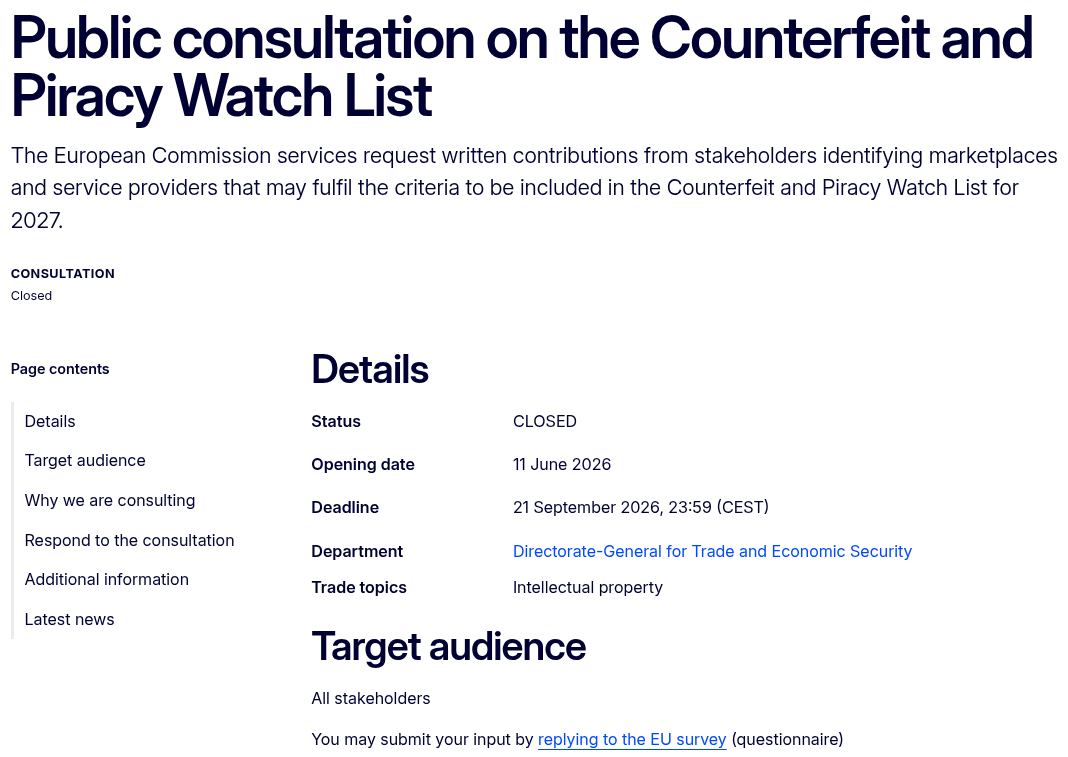
To understand the gravity of the IFPI’s request, one must first understand what the European Union’s Counterfeit and Piracy Watch List actually is. Administered by the European Commission’s Directorate-General for Trade and Economic Security, this document serves as a periodic survey of online services and physical marketplaces located outside the EU that are alleged to engage in or facilitate large-scale intellectual property infringement.
It is critical to note that this watch list is not a judicial instrument. It does not carry the weight of a court order, nor does it mandate immediate legal action against the entities listed. Instead, it acts as a high-profile "naming and shaming" exercise. By placing a service on this list, the European Commission aims to exert political and economic pressure on non-EU governments and operators to crack down on these services. For the 2027 edition, the Commission has been compiling submissions through September 2026, with the final roster expected to be unveiled in the second quarter of 2027.
The IFPI’s Case Against yt-dlp
The IFPI’s submission to the Commission is exhaustive, covering a broad spectrum of what the organization considers modern copyright threats. This includes, among others, unauthorized AI-generated music, "cyberlockers" that store infringing content, and automated streaming fraud.
Within this landscape, the IFPI has explicitly categorized yt-dlp under the banner of "stream-ripping." They argue that the tool’s primary function—retrieving media content by parsing web page data and interacting with platform playback endpoints—is inherently detrimental to the music industry. Perhaps most controversially, the IFPI’s submission identifies four of the project’s maintainers by their specific GitHub handles: pukkandan (the project’s founder who led development from 2021 to 2024), and core maintainers coletdjnz, bashonly, and Grub4K.
The IFPI contends that GitHub serves as the primary distribution channel for the software’s source code, pre-compiled binaries, and documentation. By naming individual contributors, the IFPI is moving beyond targeting the software itself and is effectively placing the developers under the microscope of international trade enforcement.
A Fundamental Mismatch: Software vs. Service
The central irony of the IFPI’s campaign is that yt-dlp does not fit the typical profile of a "piracy service." The European Commission’s criteria for the Watch List are generally designed to target online service providers—commercial entities that host, facilitate, or profit from the distribution of copyrighted works.

yt-dlp is neither an online service provider nor a hosting entity. It is an open-source command-line tool distributed under the Unlicense. As the IFPI itself concedes in its submission, the decentralized nature of the project makes it "difficult to contain and/or remove." There is no central server to seize, no payment processor to block, and no corporate entity to sue into submission. The code is distributed globally, allowing anyone with the technical proficiency to compile and execute it on their own hardware.
By conflating this tool with commercial piracy sites like Y2mate or Savefrom, the IFPI is effectively ignoring the functional distinction between a general-purpose utility and a platform designed specifically for copyright infringement. A web browser, after all, can also be used to access pirated content, yet it is rarely the target of such enforcement actions.
The Chronology of Enforcement
The attempt to list yt-dlp is not an isolated incident but rather the latest chapter in a long-standing struggle. The IFPI has found success with the Watch List in the past. In 2025, a landmark enforcement action in Vietnam resulted in the shutdown of Y2mate.com and eleven other major stream-ripping websites—many of which had appeared on previous iterations of the EU Watch List.
However, the legal landscape is far from settled. In 2024, a German court held a host provider liable for facilitating the operations of youtube-dl.org, creating a legal precedent that complicates the hosting of such tools. While this case did not result in the destruction of the project, it signaled that European courts are increasingly willing to hold intermediaries accountable for the tools they host. The IFPI is clearly hoping that by adding yt-dlp to the EU’s diplomatic watch list, they can replicate this pressure on a continental, if not global, scale.
The Implications for Open Source
The implications of this move for the open-source community are far-reaching. If a project as widely used as yt-dlp is officially labeled a "piracy threat" by the European Commission, it could create a chilling effect on developer activity.
- Developer Liability: By specifically naming project maintainers in their submission, the IFPI is engaging in a tactic that could intimidate contributors. If developers fear that their association with a popular tool could lead to being flagged by international trade bodies, they may be less likely to commit code or maintain projects that have potential dual-use applications.
- Platform Responsibility: GitHub, owned by Microsoft, has long managed the delicate balance between fostering open-source innovation and complying with copyright law. A formal inclusion of
yt-dlpon an EU Watch List could force GitHub to re-evaluate how it handles repositories that are explicitly targeted by industry lobbying groups. - The "Dual-Use" Dilemma: Many tools in the developer ecosystem are "dual-use"—they can be used for legitimate purposes (such as digital archiving, data journalism, or offline accessibility) and for copyright infringement. Labeling such tools as "piracy" ignores the legitimate utility they provide to millions of users, including academic institutions and media professionals.
Official Responses and Industry Outlook
While the European Commission has yet to publish the final 2027 list, the inclusion of yt-dlp in the submission has ignited a firestorm of debate. Advocacy groups for digital rights argue that the IFPI’s approach is a fundamental misunderstanding of how the internet works in 2026. They contend that the music industry, rather than targeting the tools, should focus on evolving their business models to better serve the digital-native audience that uses these tools for personal convenience and archival purposes.
Conversely, the IFPI maintains that they are simply protecting the livelihoods of creators. They argue that the existence of tools like yt-dlp facilitates the unauthorized extraction of value from content creators, and that the "open source" label should not provide immunity for activities that result in massive revenue loss for the music industry.
Conclusion: A Precedent for the Future
The attempt to blacklist yt-dlp represents a pivotal moment for the intersection of copyright law and open-source software. As the European Commission prepares its final report for 2027, the tech world will be watching closely.
If the Commission decides to include yt-dlp on the list, it will signal a new era of enforcement where the developers of neutral software tools are held increasingly accountable for the end-user actions facilitated by their code. If, however, the Commission chooses to exclude it, it will serve as an acknowledgment that there is a line between commercial piracy services and the utility-based software that forms the backbone of the modern digital landscape.
For now, the project remains active, its code remains available, and its community remains steadfast. But the battle for the future of digital tools is far from over. The IFPI’s submission serves as a reminder that in the eyes of powerful industry groups, the "open" in open source does not mean "free" from the reach of the law. As we look toward 2027, the case of yt-dlp will likely remain a benchmark for how the digital world balances the rights of creators with the rights of the open-source developer community.








