
The Resurrection of Syntax: Thoreau BASIC Bridges the Gap Between the 1980s and the UEFI Era
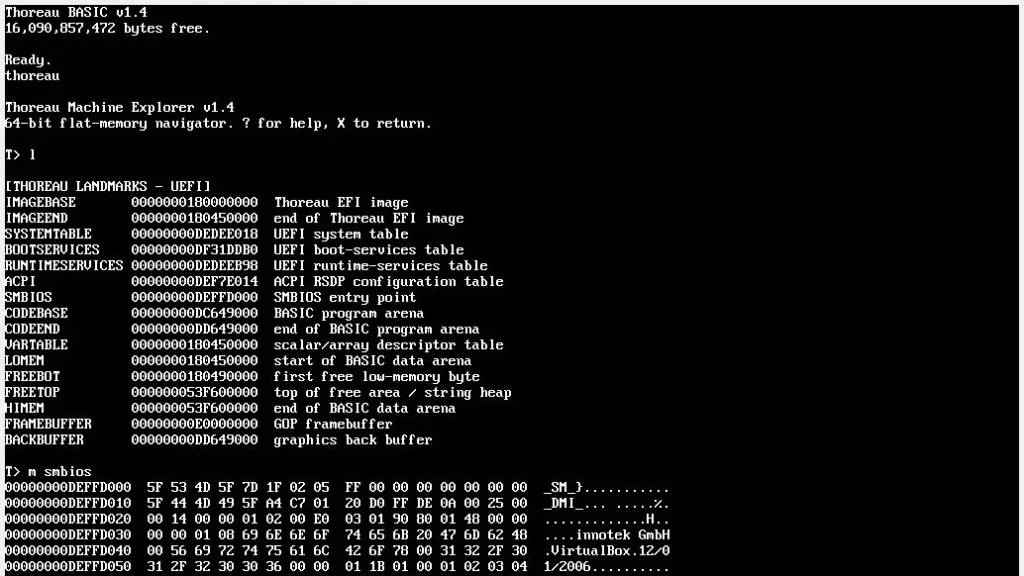
For a generation of computer users who came of age during the 1980s, the experience of turning on a computer was synonymous with the blinking cursor of a BASIC interpreter. Before the graphical user interface became the industry standard, and long before the "App Store" era, computing was an interactive dialogue. You didn’t just consume software; you tinkered with it, broke it, and wrote it yourself.
While the industry largely moved on to more complex, structured languages, a new project titled Thoreau BASIC is challenging the notion that the era of line-numbered programming is dead. By fusing the nostalgic syntax of GW-BASIC with the raw power of modern 64-bit architecture, Thoreau BASIC is not merely an emulator—it is a bridge between the infancy of personal computing and the sophisticated hardware of the 21st century.
Main Facts: What is Thoreau BASIC?
Thoreau BASIC is a modern re-implementation of the classic GW-BASIC language, designed to function as a bridge between legacy code and contemporary computing environments. Unlike traditional emulators that wrap old code in a layer of software abstraction, Thoreau BASIC is designed to be highly performant.
The project boasts several key technical advancements that distinguish it from mere hobbyist ports:
- Code Compatibility: It is designed to be fully compatible with legacy GW-BASIC source code. Yes, this includes the infamous line numbers and the ubiquitous
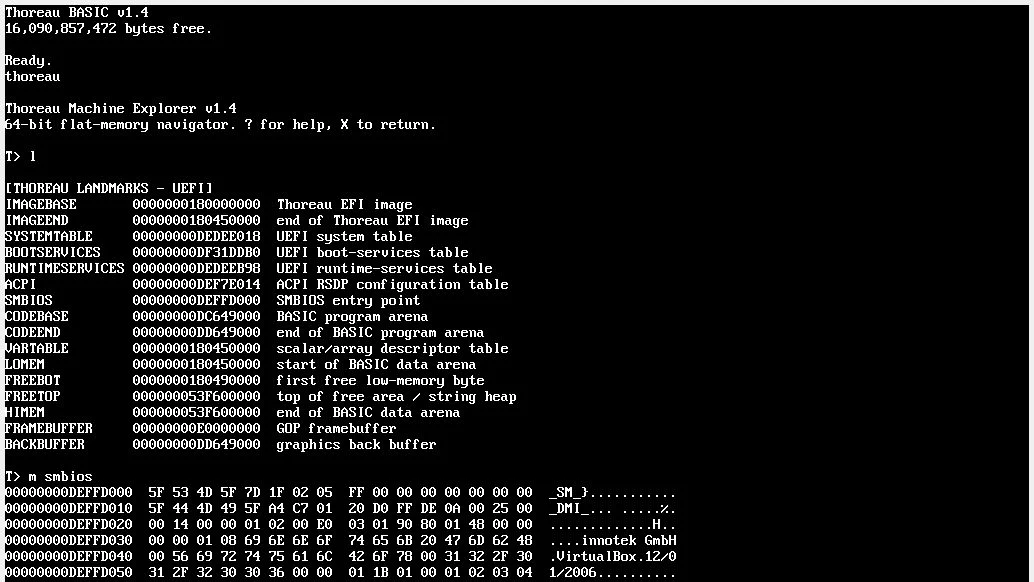
GOTOstatements that defined early software development. - Dual Deployment: The language operates as both an interpreter and a compiler. Users can write code in a familiar environment and then compile it to run as a standalone executable on Windows or boot it directly on modern x86 hardware via UEFI (Unified Extensible Firmware Interface).
- Modern Hardware Utilization: While the syntax is retro, the engine is not. Thoreau BASIC supports 64-bit memory addressing, multithreading, and 24-bit color graphics at any resolution supported by the user’s monitor.
- Extended Command Set: The language has been updated with modern primitives, including robust file management, sprite handling, mouse and keyboard input, and 32-channel sound support.
Currently, the project is available via the itch.io platform under a "pay-what-you-want" model, signaling a community-focused approach to distribution rather than a strict commercial enterprise.
Chronology: From ROM to UEFI
To understand the significance of Thoreau BASIC, one must understand the trajectory of BASIC (Beginner’s All-purpose Symbolic Instruction Code).
The ROM Era (1981–1985)
When the IBM PC was introduced in 1981, it famously shipped with IBM BASIC (Cassette BASIC) built directly into the machine’s ROM. For the early adopter, the computer was not a gateway to the internet, but a blank canvas. If you wanted to calculate a mortgage payment or play a simple game, you wrote the code yourself.
The GW-BASIC Dominance (1985–1991)
As MS-DOS matured, Microsoft introduced GW-BASIC (Gee-Whiz BASIC). It became the de facto standard for the IBM-PC compatible market. It was an essential tool for students, hobbyists, and early systems administrators. However, as Windows gained prominence in the 1990s, the structured nature of C and eventually the object-oriented paradigm of C++ and Java pushed BASIC into the periphery.
The Long Twilight (1995–2020)
For decades, BASIC existed in a state of "zombie" development. It was either relegated to Visual Basic (which bore little resemblance to its ancestor) or maintained by niche enthusiast groups. Projects like MoonBASIC and BASIC-256 attempted to modernize the syntax, but often failed to capture the "bare metal" feel that made the original so compelling.
The Modern Resurrection (2024–Present)
The emergence of Thoreau BASIC represents a shift in retro-computing. Developers are no longer content with running code inside a sluggish DOSBox emulator. They are now targeting the "bare metal"—the UEFI firmware layer—allowing a BASIC program to act as the primary operating environment, effectively turning a modern $2,000 workstation into a high-powered 8086-style development kit.
Supporting Data: Modernizing the Interpreter
The transition from a 16-bit real-mode environment to a modern 64-bit multi-core processor is non-trivial. The developers of Thoreau BASIC have had to overcome several architectural hurdles to maintain the "feel" of the 80s while utilizing the power of the 2020s.
Graphics and Sound
In the 1980s, the CGA and EGA color palettes were limited. Thoreau BASIC maps these old-school command structures to modern GPU pipelines. By supporting 24-bit color and high-resolution scaling, the language allows developers to write code that looks like a 1985 classic but performs with the fluid frame rates of a modern application. The 32-channel sound support is a massive leap from the original PC speaker’s single-channel "beep," allowing for complex synthesis that would have been impossible on original hardware.
Memory Management
One of the most significant constraints of original GW-BASIC was the 640KB RAM barrier. Modern systems have gigabytes of memory. Thoreau BASIC manages this by abstracting the memory heap, allowing programs to allocate vast amounts of data that would have been unthinkable forty years ago. Crucially, the compiler handles the translation of these legacy scripts into machine code that leverages multi-core threading, preventing the "interpreter bottleneck" that plagued early software.
Official Perspectives and Community Response
The reception of Thoreau BASIC has been polarized but largely enthusiastic. Proponents argue that the project serves an important role in digital preservation. By allowing legacy code to run on modern, UEFI-compliant motherboards, the project ensures that the "software archeology" of the 80s remains functional long after the original IBM-PC hardware has crumbled into dust.
However, some industry observers remain skeptical. In a recent roundtable regarding the state of modern programming, critics noted that while BASIC is a fantastic teaching tool, its reliance on GOTO statements creates "spaghetti code" that is difficult to maintain in large-scale professional applications.
"The project is a brilliant piece of engineering," says one lead software architect. "But we must be careful not to confuse nostalgia with progress. Thoreau BASIC is a wonderful playground for developers who want to understand the foundations of the craft, but it is unlikely to replace Rust or Python in the enterprise sector."
Despite the skepticism, the project’s creator has noted that the primary goal is not to overtake Python or JavaScript, but to provide a "nostalgic workspace" that feels familiar to those who spent their youth in front of a green-phosphor monitor.
Implications: The Future of "Retro-Modern" Development
The existence of Thoreau BASIC raises significant questions about the future of software development education and the preservation of digital culture.
A Tool for Education
For many educators, the biggest failure of modern computer science curricula is the extreme level of abstraction. Students often start with high-level frameworks where they never see the hardware. By introducing students to a language like Thoreau BASIC, educators can demonstrate the direct relationship between input, processing, and output without the intimidating learning curve of C or Assembly.
The "Bare Metal" Movement
Thoreau BASIC is part of a growing movement of developers who are eschewing bloated operating systems. By writing code that can execute directly from the UEFI, developers are finding they can achieve near-instant boot times and unprecedented control over the hardware. This has significant implications for embedded systems, digital signage, and specialized kiosk software where a full Windows or Linux installation is simply too heavy.
Preserving the Legacy
Finally, there is the matter of historical preservation. Much of the software written between 1980 and 1995 is currently trapped on decaying floppy disks and hardware that is increasingly difficult to repair. By creating a modern, cross-platform interpreter, Thoreau BASIC allows that history to be accessed on a modern laptop, ensuring that the logic and creativity of that era survive for future generations.
Conclusion
Thoreau BASIC is not intended to be the next industry-dominant language, and it doesn’t try to be. Instead, it serves as a sophisticated, high-performance bridge to the past. By stripping away the complexity of modern development environments, it allows programmers to return to the essence of the craft: the immediate, iterative, and deeply satisfying process of watching a program come to life on the screen.
Whether it is used for teaching the next generation, developing lightweight applications for modern hardware, or simply indulging in the comfort of a well-remembered syntax, Thoreau BASIC proves that while technology may evolve, the joy of writing code remains as timeless as the language itself. As the project continues to evolve, it invites us all to ask: what would you build if you had the power of the present and the simplicity of the past?







