Two Decades in the Cloud: How Amazon EC2 Redefined Global Computing Infrastructure
SEATTLE — Two decades ago, a single blog post quietly published by Jeff Barr altered the trajectory of the technology industry forever. On that day, Amazon Web Services introduced the public beta of Amazon Elastic Compute Cloud (EC2), offering developers something that had previously been unimaginable: resizable, pay-as-you-go Linux virtual servers available on demand in the cloud.
What began in a single AWS Region (US East) with just one humble instance type—the m1.small—has since grown into the invisible engine powering a massive share of the modern internet. Celebrating its 20th anniversary, Amazon EC2 stands not merely as a pioneer of cloud infrastructure, but as the foundational architecture upon which entire digital economies, enterprise transformations, and the current generative AI boom are built.
Main Facts: The Genesis and Evolution of Cloud Computing
The core premise introduced by Amazon EC2 in 2006 was deceptively simple: abstract away the physical burden of data center management, hardware procurement, and capital expenditure, replacing it with utility-style computing billed by the hour.
Today, that foundational capability has scaled to staggering proportions:
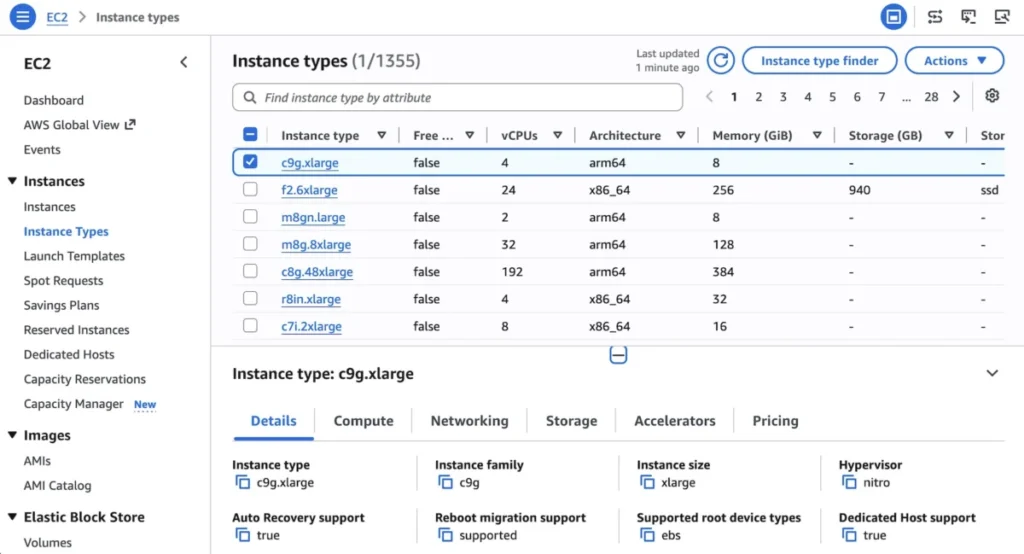
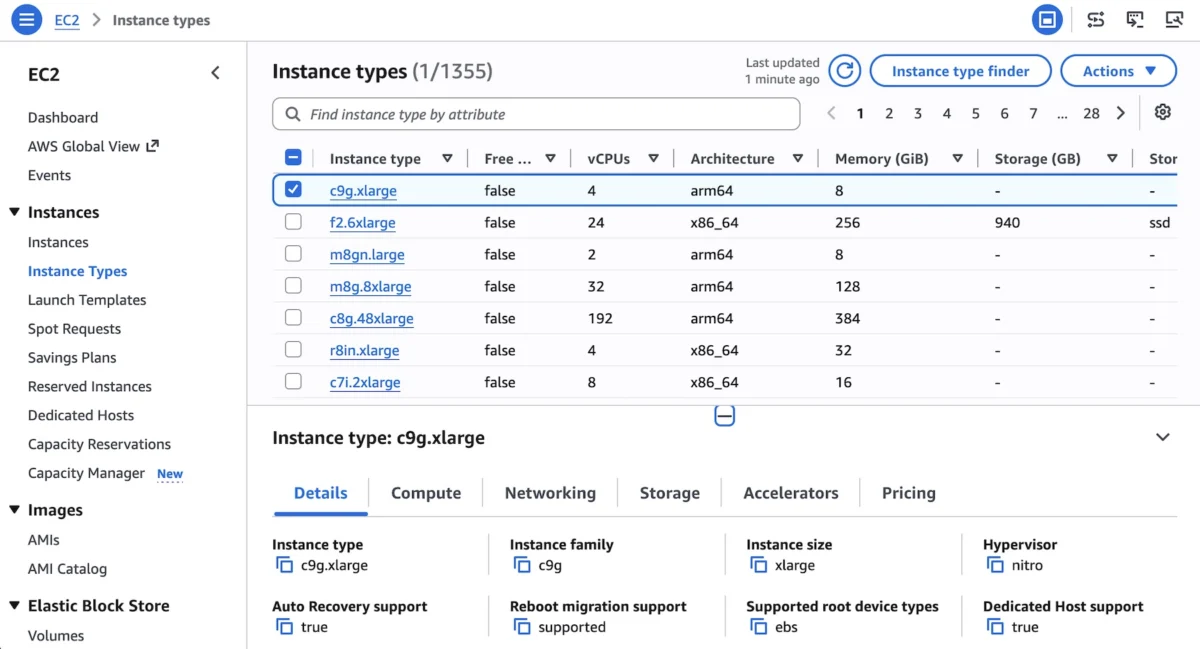
- Explosive Variety: EC2 has expanded from a solitary instance type to over 1,200 distinct instance types, meticulously optimized for general-purpose computing, memory-intensive operations, storage performance, high-performance computing (HPC), and heavily accelerated AI workloads.
- Global Footprint: From a single Region, AWS has scaled its infrastructure to 39 geographic Regions worldwide.
- Hybrid and Edge Expansion: Through innovations like AWS Outposts, AWS Local Zones, and AWS Wavelength, EC2 has broken past traditional data center boundaries to live on-premises, inside metropolitan centers, and directly within 5G telecommunications carrier networks.
- The Ubiquitous Foundation: Modern higher-level services—ranging from container orchestrators like Amazon ECS and Amazon EKS to serverless frameworks like AWS Lambda and AWS Fargate, as well as machine learning hubs like Amazon SageMaker AI and Amazon Bedrock—all ultimately draw their underlying power from EC2 capacity.
Despite twenty years of continuous technological leapfrogging, the fundamental value proposition remains unaltered: secure, resizable compute capacity delivered in minutes, billed strictly by consumption, and engineered to scale infinitely without long-term commitments.
Chronology: A 20-Year Timeline of Infrastructure Milestones
To understand how Amazon EC2 evolved from a basic virtual private server experiment into a globe-spanning computational grid, one must examine the critical architectural blocks introduced over the past two decades:
Phase 1: Establishing the Building Blocks (2006–2009)
- August 2006: The launch of the Amazon EC2 Beta by Jeff Barr, introducing on-demand Linux virtual machines.
- 2008: The introduction of Amazon Elastic Block Store (EBS), providing persistent, low-latency block storage volumes essential for running production databases and stateful applications in the cloud.
- 2009: A monumental year for enterprise readiness. AWS rolled out Elastic Load Balancing (ELB), Auto Scaling, and Amazon CloudWatch, granting developers the tools to build self-healing, highly available applications.
- 2009: The release of Amazon Virtual Private Cloud (VPC), giving businesses the ability to provision logically isolated, secure virtual networks within the public cloud.
Phase 2: Hardware-Accelerated Innovation (2017–2018)
- 2017: The debut of the AWS Nitro System. By offloading virtualization functions to dedicated hardware and software modules, Nitro delivered near bare-metal performance, enhanced cloud security, and accelerated the pace at which new instance types could be brought to market.
- 2018: The launch of AWS Graviton processors, custom-built ARM-based chips designed specifically to deliver superior price-performance ratios for scale-out cloud workloads.
- 2018: The introduction of AWS Outposts, extending native AWS infrastructure and operating models directly into customer on-premises data centers.
Phase 3: Edge Computing and Hyper-Scale AI (2019–Present)
- 2019: AWS launched AWS Local Zones to bring compute and storage closer to end-users in major metropolitan areas, alongside AWS Wavelength to embed EC2 instances directly into 5G networks for ultra-low latency mobile applications.
- 2021–2026: As generative artificial intelligence captured the global imagination, EC2 pivoted rapidly to support massive machine learning clusters, housing trillion-parameter foundation model training jobs on specialized accelerated computing instances.
Supporting Data: By the Numbers
The metrics outlining EC2’s two-decade journey illustrate the astonishing velocity of cloud adoption:
[2006] ----------------------------------------------> [2026]
 1 Region (US East)                                      39 Regions Globally
 1 Instance Type (m1.small)                             1,200+ Instance Types
 Standard Linux VMs                                      Custom Silicon (Graviton, Nitro, AI Accelerators)
 Local Data Centers Only                                 Global Hybrid, Edge, & 5G Integration
Furthermore, EC2’s architectural model transformed enterprise balance sheets. By shifting computing from a CapEx (Capital Expenditure) model—where companies bought physical servers that sat idle during low-traffic periods—to an OpEx (Operational Expenditure) utility model, AWS democratized software entrepreneurship. A garage startup in 2006 suddenly possessed the same raw compute power as a Fortune 500 enterprise, accessible via a credit card and an API call.

Official Responses and Reflections
Reflecting on the milestone, AWS leadership emphasized that the core philosophy driving the team in 2006 remains unchanged today.
"We made strong foundational decisions in 2006, and we left room for the service to grow," noted AWS engineering representatives in anniversary retrospectives. "Twenty years later, that strategy of creating services that are minimal-yet-useful, launching quickly, and iterating rapidly in response to your feedback continues to guide how we build."
Industry analysts frequently point to the launch of EC2 as the official birth of modern cloud computing. While competitors eventually entered the space, Amazon’s early-mover advantage and relentless pace of customer-obsessed iteration allowed EC2 to maintain its status as the benchmark for enterprise infrastructure.
Long-time AWS evangelist Jeff Barr, who authored the original announcement, has frequently highlighted how the constraints of 2006 forced the engineering team to focus on pure utility. The goal was never to predict every future use case, but rather to construct a flexible, extensible canvas that developers could mold to their own imaginations.
Implications: The Next Twenty Years of Cloud and AI
As Amazon EC2 enters its third decade, the computing landscape looks radically different from the Linux-centric environment of 2006. Today, the primary drivers of infrastructure demand are no longer just traditional web applications and relational databases, but massive, data-hungry generative AI pipelines, real-time edge processing, and quantum-classic hybrid workloads.
Yet, the strategic implications of EC2’s design remain intact:
- The Abstracted Data Center: Physical hardware has become completely invisible to the application developer. Innovation cycles are now measured in software deployment speeds rather than supply chain lead times for server racks.
- Silicon Customization is King: The era of relying exclusively on off-the-shelf merchant silicon has ended. Through custom-built Nitro, Graviton, and specialized machine learning chips, AWS has proven that cloud providers must design their own hardware to maximize efficiency, performance, and sustainability.
- AI at Scale: Just as EC2 once democratized web hosting, it is now democratizing artificial intelligence. Trillion-parameter models that previously required nation-state-level resources can now be spun up by enterprise teams using elastic GPU and accelerator clusters on demand.
The next twenty years will undoubtedly introduce technological demands that cannot currently be envisioned. However, as long as developers seek secure, scalable, and frictionless compute capacity, Amazon EC2 will remain the bedrock upon which the future of the internet is written.